Flathead Catfish in Maryland Rivers
Anglers in Maryland's freshwater rivers often encounter a truly impressive, and sometimes intimidating, species: the flathead catfish. While many might be familiar with the common channel catfish or even the rapidly expanding blue catfish, the flathead presents its own unique challenges and opportunities, often confusing anglers who aren't quite sure what they've reeled in. Understanding this powerful fish, its habits, and its impact on our local ecosystems is crucial for anyone fishing Maryland's diverse waterways, especially since it behaves quite differently from its whiskered cousins.
Identifying the Flathead Catfish: A Closer Look at the River Monster
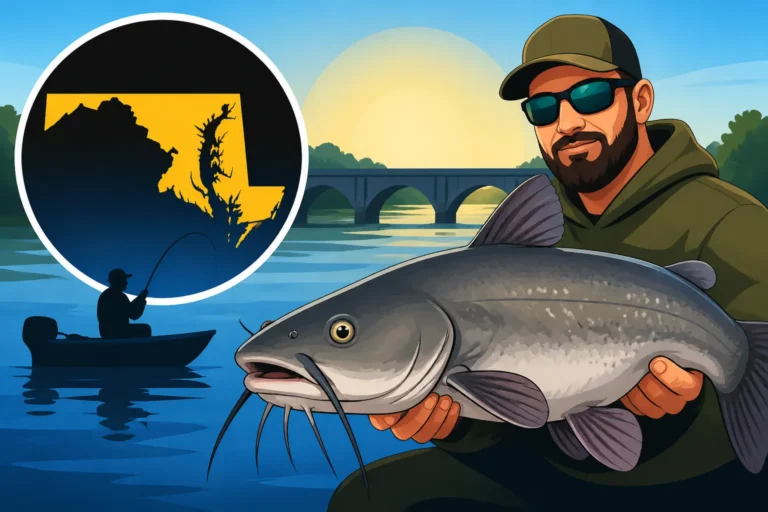
When you're out on a Maryland river, especially the larger, slower-moving ones, and you hook into something that feels like a submerged log suddenly coming to life, chances are you've got a catfish on the line. But is it a flathead? Distinguishing a flathead from a channel catfish or even the burgeoning blue catfish can be tricky at first glance, but a few key features will help you identify this river monster. Knowing these traits isn't just for bragging rights; it's essential for understanding the fish you're targeting and, if applicable, adhering to any specific regulations.
Physical Traits and Distinctive Features
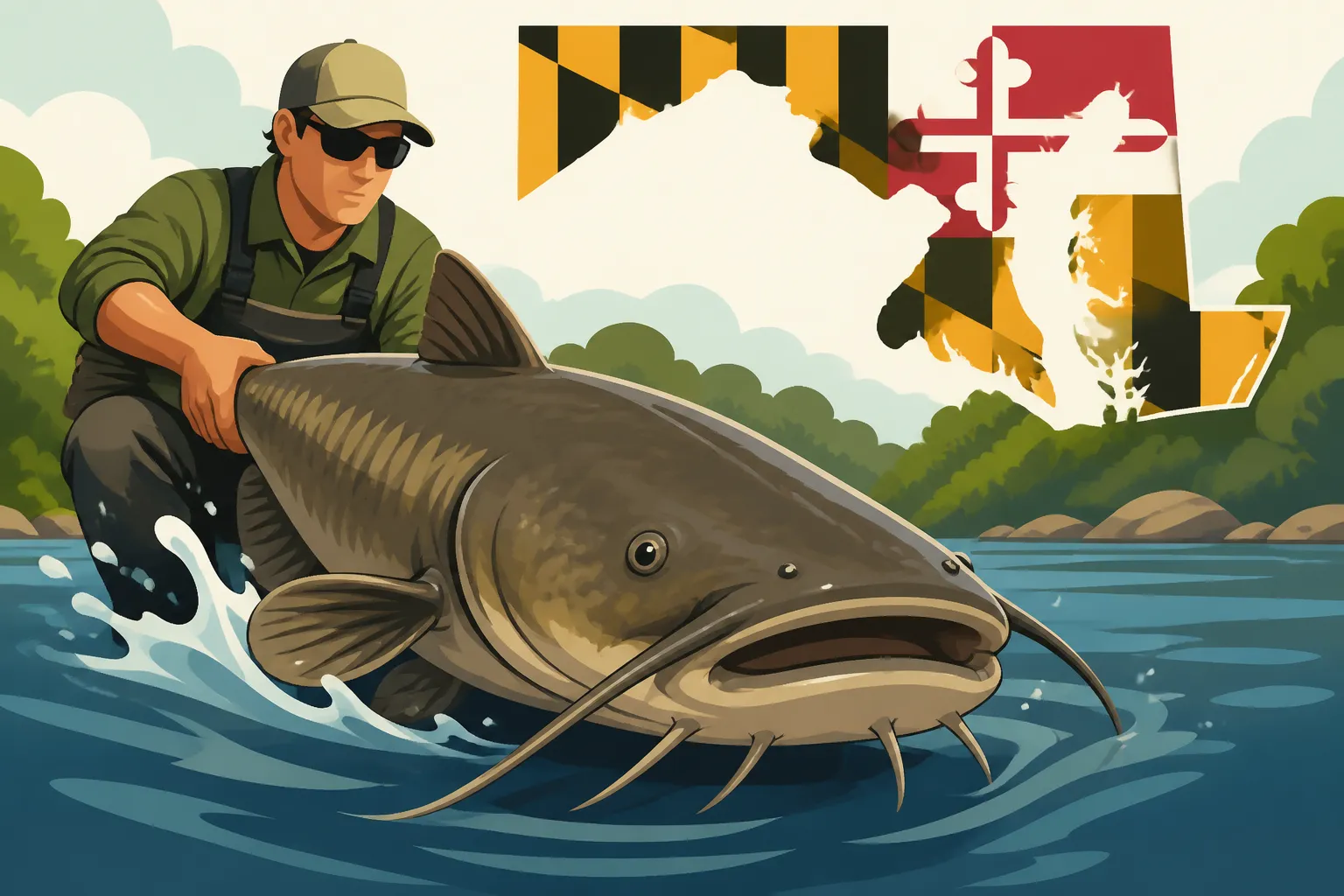
The flathead catfish, true to its name, boasts a noticeably broad and flattened head. This is perhaps its most defining characteristic, setting it apart immediately from the more rounded or subtly sloped heads of other catfish species. Their lower jaw protrudes slightly beyond the upper jaw, giving them a determined, almost grumpy expression. Look closely at their eyes, too – they're relatively small for the size of the fish, often giving them a somewhat predatory, tunnel-visioned appearance.
Beyond the head, the body of a flathead is generally stout and robust, tapering towards a moderately forked tail. Unlike channel catfish, which have deeply forked tails, the flathead's tail is only moderately forked, sometimes even appearing almost square-cut on very large specimens. The coloration can vary quite a bit depending on the water clarity and substrate where the fish lives, but they are typically mottled with shades of yellow, brown, and olive, often with darker spots and blotches. This camouflaged pattern helps them blend in with the bottom and submerged structure, making them ambush predators. Their skin is smooth, lacking scales, a common trait among catfish. On average, flathead catfish can grow to impressive sizes, with individuals easily topping 30 pounds and some pushing much heavier, making them a truly formidable catch. If you’re curious about just how big these fish can get, you might wonder How Big Do Flathead Catfish Get in Maryland?.
Distinguishing Flatheads from Other Catfish Species
Maryland's rivers are home to several species of catfish, and while they share some family resemblance, there are distinct differences, especially between the flathead, channel, and blue catfish. The most common mistake anglers make is confusing a flathead with a blue catfish, particularly when both species can grow quite large. However, a quick visual check can clear up any confusion.
| Feature | Flathead Catfish | Blue Catfish | Channel Catfish |
|---|---|---|---|
| Head Shape | Broad, noticeably flat, with a protruding lower jaw | Conical, sloped, not flat | Slightly rounded or sloped |
| Tail Shape | Moderately forked, often appearing somewhat squared | Deeply forked, almost V-shaped | Deeply forked |
| Coloration | Mottled yellow, brown, olive with dark blotches | Silvery-blue to slate gray, often unspotted | Olive-brown to gray, often with distinct dark spots |
| Anal Fin Rays | Typically 14-17 (shorter, rounded) | Typically 30-35 (longer, straight edge) | Typically 24-29 (moderately long, rounded) |
| Lower Jaw | Protrudes beyond upper jaw | Upper jaw protrudes slightly beyond lower jaw | Jaws are typically equal or upper slightly protrudes |
The anal fin is a critical identifier. The flathead has a relatively short, rounded anal fin with a straight or slightly convex edge, containing 14 to 17 rays. In contrast, the blue catfish has a much longer, straight-edged anal fin with 30-35 rays, and the channel catfish has a moderately long, rounded anal fin with 24-29 rays. So, if you've got a heavily mottled, flat-headed catfish with a moderately forked tail and a shorter, rounded anal fin, you're looking at a flathead. For a deeper dive into the nuances of identification, check out Flathead Catfish vs Blue Catfish, How to Tell Them Apart. Knowing these differences is not just academic; it helps you appreciate the distinct ecological roles each species plays and ensures you're following the right guidelines for each.
Habitat and Distribution of Flathead Catfish in Maryland Rivers
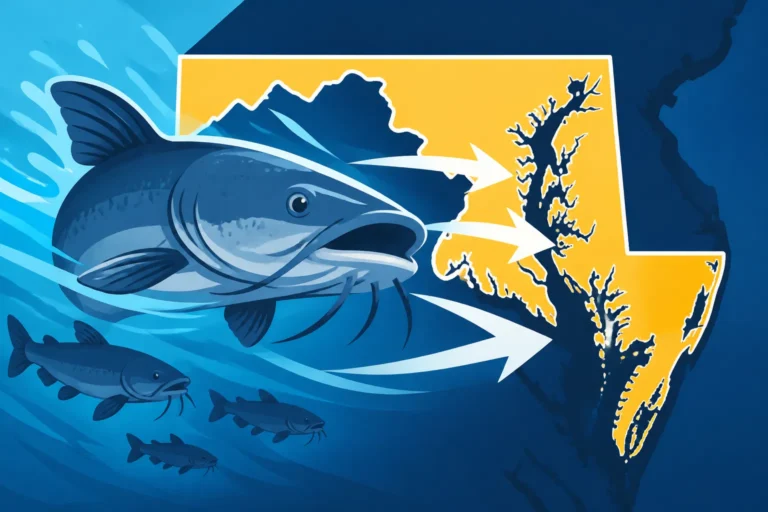
Flathead catfish are not native to Maryland. They are an introduced species, meaning they were brought here, likely through bait bucket releases or intentional stockings in the past, and have since established thriving populations. Their presence has significant ecological implications, which we'll discuss later. For now, let's explore where these formidable fish prefer to set up shop in our local waterways.
Preferred River Sections and Structure
In Maryland, flathead catfish have found a comfortable home in the state's larger, slower-moving rivers, particularly those with abundant structure and ample prey. The Potomac River is a prime example, especially its tidal and upper tidal sections, where flatheads thrive. Other rivers, like the Susquehanna below the Conowingo Dam and even some Eastern Shore tributaries, also hold good numbers. They are not typically found in fast-flowing mountain streams or small, clear creeks.
Flatheads are ambush predators, and their habitat preferences reflect this hunting style. They seek out areas with deep pools, submerged logs, rock piles, fallen trees, and undercut banks. These structures provide perfect hiding spots from which they can dart out and ambush unsuspecting prey. You'll often find them lurking in the deeper holes created by bends in the river or below dams and significant current breaks. They prefer soft, muddy, or sandy bottoms but will readily use rocky areas if suitable cover is present. During the day, they are usually found tucked away in these dense covers, becoming more active under the cover of darkness. Understanding their preference for structure is key to locating them, whether you're targeting them specifically or just trying to avoid them while fishing for other species.
Spawning Grounds and Life Cycle
Flathead catfish typically spawn in late spring to early summer when water temperatures reach around 70-75 degrees Fahrenheit. Unlike some other fish species that broadcast their eggs, flatheads are cavity nesters. The male constructs a nest, usually a depression in the substrate, often under a log, rock ledge, or in a hollow created by tangled roots. This protective cover is essential for the survival of their eggs and fry.
Once the nest is prepared, the female lays a large clutch of eggs, sometimes numbering in the tens of thousands, which the male then fertilizes. The male takes on the primary responsibility of guarding the nest and fanning the eggs to ensure proper oxygenation and to keep silt from accumulating. He will aggressively defend the nest from any perceived threats until the eggs hatch, which typically takes about a week. After hatching, the fry remain in the nest for a short period, continuing to be protected by the male, until they are strong enough to venture out on their own. This strong parental care contributes to the survival rate of their young and their ability to establish robust populations in new environments. Their resilience and adaptability have certainly helped them spread throughout Maryland's river systems, carving out a niche in these important waterways.
Diet and Foraging Habits of Flathead Catfish
If you're going to catch a flathead catfish, you need to understand what makes them tick – or, more accurately, what makes them bite. Flathead catfish are supreme predators with a diet that sets them apart from their more omnivorous catfish relatives. They are opportunistic feeders, but they overwhelmingly prefer live prey, a fact that's critical for any angler hoping to land one of these giants.
Primary Food Sources
Flathead catfish are obligate carnivores, meaning they primarily eat other fish. While channel catfish and blue catfish will readily consume cut bait, invertebrates, and even plant matter, a flathead's diet is almost exclusively live fish, particularly as they grow larger. They are not scavengers in the traditional sense, preferring to hunt and ambush their meals rather than relying on scent to find carrion.
Their menu is extensive and includes a variety of forage fish found in Maryland's rivers. Smaller flatheads might target minnows, crayfish, and insects, but as they mature, their diet shifts dramatically to larger prey like sunfish, suckers, carp, and even other catfish. They are not particularly picky about the species of fish, as long as it's alive and presents a suitable meal. This predatory nature means they exert significant pressure on native fish populations, often outcompeting or consuming species that are vital to the ecosystem. Knowing their preference for live prey is the first, most important step in choosing the right bait for flatheads.
Foraging Habits and Preferred Hunting Times
Flathead catfish are primarily nocturnal hunters. While they can be caught during the day, especially if you present bait directly into their daytime lairs, their most active feeding periods are from dusk through dawn. As the sun sets and light levels drop, flatheads emerge from their cover to prowl the river bottom and structure, searching for their next meal. This makes night fishing a particularly effective strategy for targeting them.
They employ an ambush style of hunting, often lying in wait in areas with current breaks, behind submerged logs, or at the edges of deep holes. When a suitable prey fish swims by, they explode from their cover with surprising speed, engulfing the unfortunate victim with their large mouths. They also patrol along channel edges, underwater humps, and any significant changes in bottom contour where prey fish might congregate or be disoriented by current. Anglers who understand these habits often focus their efforts on these key locations during the twilight hours and into the night, using strong lights and heavy gear. If you're targeting other catfish species, you might be interested in What Do Blue Catfish Eat in the Potomac River?, which highlights how different their diets can be.
Fishing Techniques and Gear for Flathead Catfish
Landing a flathead catfish is a battle, pure and simple. These fish are incredibly strong and stubborn fighters, capable of peeling line off a reel with surprising force. To successfully target them, you need specialized techniques and gear that can withstand their power and match their predatory instincts.
Best Baits and Lures
Because flathead catfish prefer live prey, live bait is hands down the most effective way to catch them. Forget the stink baits and chicken livers often used for channel or blue catfish – while a flathead might occasionally sample them, live bait is what truly triggers their predatory drive. The best live baits are hearty, locally available fish that can withstand being hooked and stay active in the water for extended periods.
- Sunfish (Bluegill, Green Sunfish): These are often the go-to baits. They're tough, lively, and a natural food source for flatheads.
- Small Carp or Goldfish: Again, durable and appealing.
- Suckers (White Suckers, Creek Chubs): Excellent choice, especially in rivers where they are common.
- Large Minnows: While smaller, they can still be effective, especially for medium-sized flatheads.
When presenting live bait, remember to hook them in a way that allows them to swim naturally and stay alive. Hooking them through the back (above the lateral line, avoiding the spine) or through both lips are common methods. Many anglers find great success presenting these baits on a Bottom Fishing Techniques for Maryland Catfish rig, usually a slip sinker rig that allows the fish to pick up the bait without feeling immediate resistance. For general catfish bait recommendations, you can also look at Best Bait for Blue Catfish in Maryland Rivers, but always prioritize live options for flatheads.
While live bait is king, some anglers have had success with large artificial lures that mimic wounded baitfish, particularly large swimbaits or lipless crankbaits, especially when fished at night. However, this is far less consistent than live bait.
Rods, Reels, and Tackle Recommendations
You absolutely cannot skimp on gear when targeting flathead catfish. These fish will exploit any weakness in your setup.
- Rods: You'll need a heavy-action rod, typically 7 to 9 feet long. Look for rods designed for musky, saltwater surf fishing, or heavy catfish duty. They need enough backbone to handle a 30-pound fish in current and the stiffness to cast heavy baits and sinkers. A good example might be a 7'6" heavy-action rod with a strong butt section.
- Reels: A robust baitcasting reel is preferred, capable of holding a significant amount of heavy line. Look for models with a strong drag system and a high line capacity, often rated for saltwater use. Penn, Shimano, and Abu Garcia all make excellent reels suitable for flathead fishing. You can usually find a good selection of these heavy-duty reels and lines on Amazon, ensuring you get reliable gear delivered right to your door.
- Line: Braided line is highly recommended for its strength, abrasion resistance, and lack of stretch, which provides better hooksets. A minimum of 50-80 pound test braided line is common, often paired with a heavy monofilament or fluorocarbon leader of similar or slightly lower breaking strength to absorb shock and provide some stealth.
- Hooks: Large, strong hooks are a must. Circle hooks are excellent for flathead fishing as they promote jaw hooking (which is safer for the fish if you plan to release it) and are incredibly effective. Sizes 6/0 to 10/0 are standard, depending on the size of your bait.
- Sinkers: You'll need heavy sinkers to keep your bait on the bottom in current. Egg sinkers or flat, no-roll sinkers weighing 3-8 ounces or more are common. A slip sinker rig, where the sinker slides freely on the main line above a swivel, allows the fish to pick up the bait without feeling resistance, often leading to a more confident take.
- Other Essential Tackle: Heavy-duty swivels, strong snaps, and a reliable hook remover are also crucial. A sturdy net or a good pair of lip grippers is invaluable for landing and handling these large, powerful fish safely. A dedicated catfish fishing kit, complete with leader material, swivels, and a range of hooks, can easily be found on Amazon, helping you stay organized.
Techniques for Success
Night fishing is often the most productive time for flatheads. Set up your rods in key structural areas described earlier, like deep holes, logjams, or channel bends. Cast your live bait near these structures and let it settle to the bottom. It's often beneficial to fish multiple rods if regulations allow, spreading out your baits to cover different depths or specific pieces of structure. Patience is key; flatheads often take their time with a bait, but when they commit, they usually hit hard. Many anglers use rod holders with bells or electronic bite alarms to detect strikes in the dark.
When you get a bite, let the fish take the bait for a few seconds to ensure it has fully committed before setting the hook firmly. Once hooked, prepare for a sustained fight. Flatheads will dive deep, run hard, and use their broad bodies to leverage the current against you. Keep your drag set appropriately and steadily work the fish towards you, being mindful of any submerged snags where it might try to entangle your line.
Ecological Impact and Management of Flathead Catfish
While a thrill for anglers, the presence of flathead catfish in Maryland's rivers is not without its challenges. As an introduced species, they can have significant ecological impacts on native fish populations and the overall health of the aquatic ecosystem. Understanding these impacts is crucial for responsible angling and effective fisheries management.
Invasive Species Status and Threats to Native Fish
Flathead catfish are considered an invasive species in Maryland, much like their blue catfish cousins. Their introduction, whether accidental or intentional, has disrupted the natural balance of the rivers they inhabit. The primary concern stems from their voracious predatory nature and their preference for live fish. They are highly efficient predators, often outcompeting or directly preying upon native species that have not evolved defenses against such a formidable predator.
Native species like white perch, yellow perch, various sunfish, and even juvenile striped bass can become targets for large flatheads. This intense predation can lead to declines in native fish populations, altering food webs and potentially impacting the biodiversity of Maryland's waterways. They can also compete with native predatory fish, such as largemouth bass or pickerel, for food resources and prime habitat. The long-term consequences of widespread flathead populations are still being studied, but the pattern seen with other invasive predators suggests a significant shift in ecosystem dynamics. You can learn more about how other invasive species affect local waters by reading Maryland Invasive Fish Rules: Blue Catfish and Snakehead, which offers a broader perspective.
Management Strategies and Angler Responsibilities
Given their invasive status, Maryland fisheries managers encourage anglers to harvest flathead catfish whenever possible. There are generally no size or creel limits on flatheads, similar to blue catfish, in an effort to reduce their populations and mitigate their impact on native species. This contrasts sharply with many native game fish, which have strict regulations to ensure sustainable populations. It's always wise to consult the latest Maryland's DNR Fishing and Boating Guide, Explained for the most current rules and recommendations.
As anglers, we have a vital role to play in managing invasive species. If you catch a flathead catfish, you are encouraged to keep it and not release it back into the water, especially if it's caught in waters where it's considered non-native. This isn't about wanton killing; it's about actively participating in conservation efforts to protect native fish stocks. Always be absolutely sure of your identification before culling a fish, referring back to the identification table provided earlier to ensure you don't accidentally keep a protected native species.
Additionally, responsible angling practices are paramount. Never transport live flathead catfish from one body of water to another. This is how many invasive species are spread, and it can lead to devastating consequences for new ecosystems. Always drain bait buckets before leaving a fishing site and never release unused baitfish, as these too can introduce non-native species or diseases. Being informed and acting responsibly is the best way we can help maintain the health of Maryland's diverse aquatic environments.
Culinary Aspects and Preparation of Flathead Catfish
After the thrill of the catch, many anglers wonder: "Is this thing good to eat?" When it comes to flathead catfish, the answer is a resounding yes! They are widely regarded as one of the best-tasting freshwater fish, offering firm, flaky, white meat with a mild flavor that stands up well to various cooking methods.
Taste Profile and Meat Quality
Flathead catfish meat is highly prized for its mild, sweet flavor, which is often described as cleaner and less "muddy" than that of channel catfish. This superior taste is largely attributed to their carnivorous diet of live fish, as opposed to the more varied, sometimes scavenging diet of other catfish species. The meat itself is firm, white, and flaky, holding together well during cooking. It's not as oily as some saltwater fish, making it versatile for different culinary applications.
Many anglers compare the texture and flavor of flathead catfish to that of snapper or grouper, high praise indeed for a freshwater fish. This makes them an excellent choice for those who might be wary of the stronger, sometimes earthier taste of other catfish. A fresh flathead, properly cleaned and cooked, can easily become a favorite on your dinner table, proving that invasive doesn't mean inedible.
Cleaning and Cooking Tips
Cleaning a flathead catfish, especially a large one, can be a bit of a project, but it's well worth the effort. Like all catfish, they don't have scales, so the primary method is skinning.
- Skinning: The easiest way to skin a flathead is to use a pair of pliers or a dedicated fish skinner. Start by making an incision behind the head, cutting through the skin all the way around the fish. Then, using pliers, grab the skin firmly at the incision and pull it off, working your way towards the tail. For larger fish, you might need to make additional cuts along the dorsal and ventral sides to help the skin peel cleanly.
- Filleting: Once skinned, fillet the fish by running a sharp, flexible fillet knife along the backbone from head to tail. Then, remove any rib bones and trim away the belly meat, which can sometimes have a stronger flavor. Rinse the fillets thoroughly under cold water to remove any blood or loose bits of meat.
When it comes to cooking, flathead fillets are incredibly versatile.
- Frying: This is a classic method for catfish. Dredge the fillets in a seasoned cornmeal or flour mixture and deep-fry or pan-fry until golden brown and flaky. The firm meat holds up beautifully.
- Baking or Broiling: For a lighter option, season the fillets with herbs, spices, and a squeeze of lemon, then bake or broil them until cooked through. Their mild flavor takes well to various seasonings.
- Grilling: Thick flathead fillets are excellent on the grill. Marinate them briefly or season with a dry rub, then grill over medium-high heat until they develop a nice char and cook thoroughly.
- Fish Tacos: Flaked flathead meat makes fantastic fish tacos. Fry or grill the fillets, then break them into pieces and serve with your favorite toppings.
For proper fish care from the moment it's caught to the kitchen, a reliable cooler is indispensable. You can find high-quality, large coolers perfect for holding these impressive fish, along with dedicated fish processing gloves and fillet knives, on Amazon. A sharp, flexible fillet knife, like those from Dexter-Russell or Rapala, will make the job much easier, and you can certainly find a wide range of options on Amazon to suit your needs and budget. Remember, keeping your catch on ice immediately after harvesting is critical for maintaining the best flavor and quality of the meat.
Disclaimer
This article is for general informational purposes only and does not constitute professional advice. Laws, prices and regulations vary by location and change over time. Consult a qualified professional for guidance on your specific situation.