How to Identify a Northern Snakehead in Maryland
Alright, Maryland anglers, let's talk about a fish that has stirred up quite a bit of conversation in our local waters: the Northern Snakehead. You've heard the stories, maybe seen the pictures, and you know these fish are a big deal. But when you're out on the water, rod in hand, and you pull up something unusual, how do you really know if it's a snakehead or just one of our native species? It's a common struggle, and getting it right is crucial not just for compliance but for the health of our beloved Chesapeake Bay ecosystem. This guide is here to walk you through the distinct features, common confusions, and important actions you need to take when you encounter this formidable invasive species in Maryland.
Why Correct Identification Matters: The Invasive Threat
Catching a fish that you suspect might be a Northern Snakehead isn't just another fishing tale; it's an encounter with an invasive species that poses a significant threat to Maryland's delicate aquatic ecosystems. The Maryland Department of Natural Resources (DNR) has a very clear directive for these fish, and understanding why that directive exists is the first step in responsible angling. You might feel a little uneasy about the "kill on sight" instruction, but it comes from a place of deep concern for our native fish populations and habitats.
Understanding the "Invasive" Label
When a species is labeled "invasive," it means it's non-native to an ecosystem and its introduction causes or is likely to cause economic or environmental harm, or harm to human health. Northern Snakeheads fit this bill perfectly. Originating from parts of Asia, they were introduced to our waters, likely through accidental or intentional releases from exotic pet owners or food markets. Once established, they can reproduce rapidly, have few natural predators, and directly compete with or prey upon our native fish like bass, perch, and even trout. This competition and predation can severely disrupt the food web, reduce populations of desirable game fish, and ultimately alter the entire ecological balance of a waterway. It's not just about taking food from our fish; it's about changing the very fabric of our aquatic communities.
Maryland's Stance and Angler Responsibility
Maryland takes the threat of the Northern Snakehead very seriously, and for good reason. Our rivers and the Chesapeake Bay are vital economic and recreational resources, and their health impacts thousands of jobs and countless recreational opportunities. The DNR actively monitors snakehead populations and educates the public on their identification and management. As an angler, you are on the front lines of this battle. Your ability to correctly identify a snakehead, combined with the commitment to follow the guidelines for their capture and disposal, plays a direct role in mitigating their spread. This isn't just a suggestion; it's a shared responsibility to protect Maryland's natural heritage. Ignoring the issue or misidentifying a snakehead could unintentionally contribute to its proliferation, undermining years of conservation efforts. You can find detailed regulations on Maryland Invasive Fish Rules: Blue Catfish and Snakehead.
Key Visual Identifiers: Spotting a Snakehead
Let's get down to the nitty-gritty of what a Northern Snakehead actually looks like. Many anglers initially confuse them with native species, especially the bowfin, but once you know what to look for, their distinguishing features become quite clear. Think of it like learning to spot a specific bird; at first, they all look alike, but then you start noticing the subtle patterns, the unique beak, the specific flight.
Distinctive Body Shape and Coloration
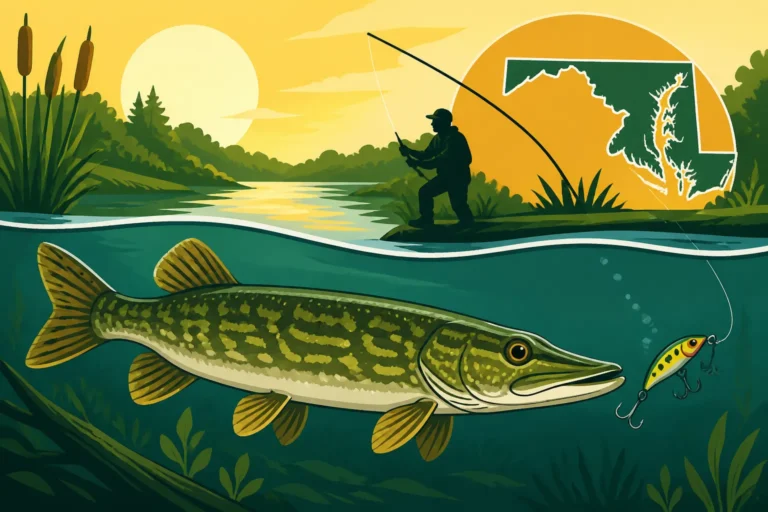
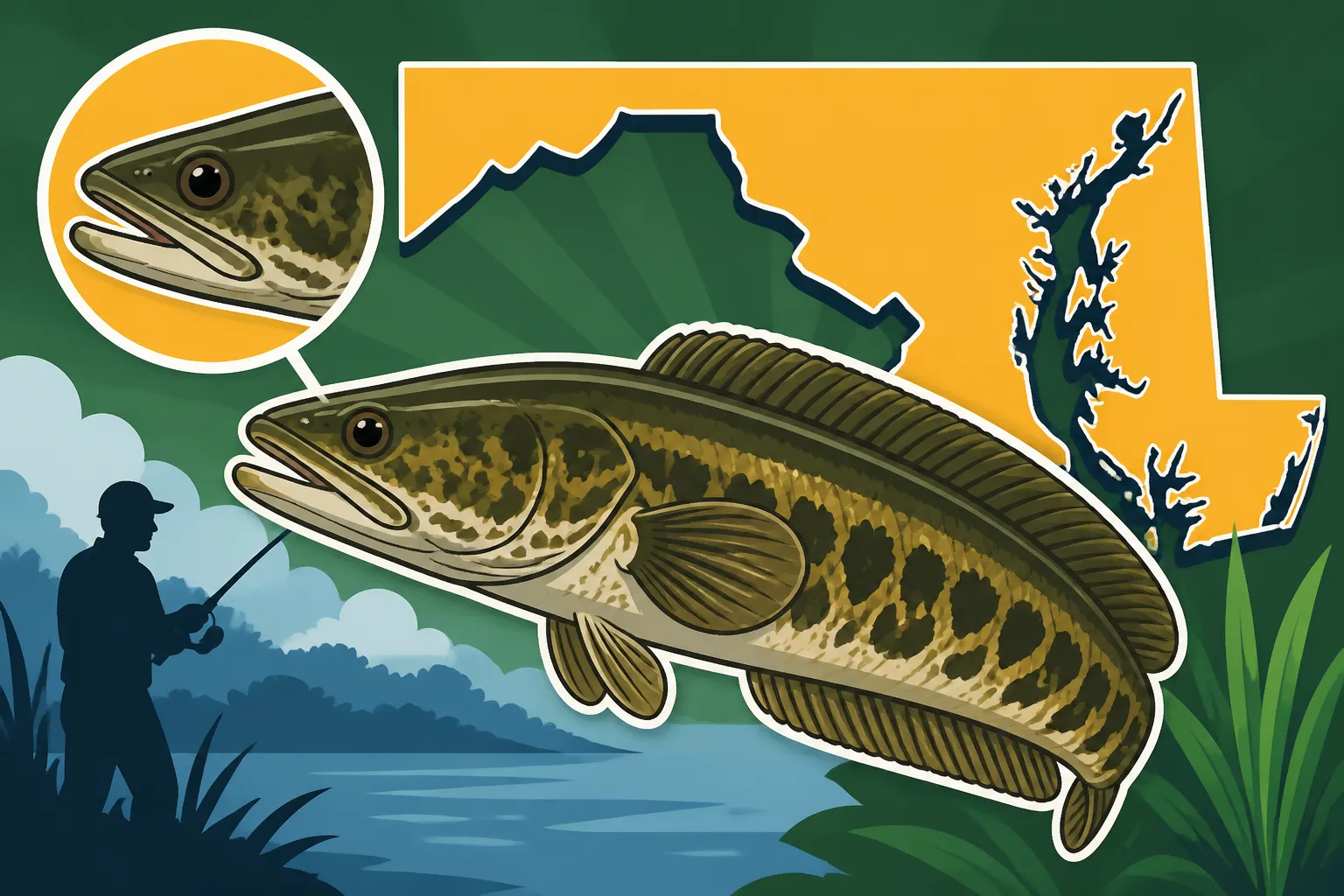
The Northern Snakehead has a long, cylindrical body, very much like a torpedo, which is efficient for moving through dense vegetation. They typically sport a mottled, brown to golden-brown coloration with dark, blotchy patches that often resemble a muddy, reptilian pattern. This camouflage helps them blend into shallow, vegetated waters, making them ambush predators. Their belly is usually lighter, often a pale white or off-white. What really stands out, and contributes to their "snakehead" name, is the elongated head, which is distinctly flattened on top and resembles the head of a snake. It’s almost uncanny. You won't see the typical fish-like pointed snout; instead, it's broad and blunt, with prominent, sharp teeth inside. Imagine a Northern Pike, but with a thicker, more serpentine head.
One crucial detail to look for is the placement of their eyes. Unlike many native fish that have eyes on the sides of their head, a snakehead's eyes are positioned more towards the top and front of its head. This provides them with excellent binocular vision for hunting prey in murky water, another sign of their predatory nature. The overall impression is one of a formidable, almost prehistoric-looking fish, perfectly adapted for hunting in dense cover.
Unique Fin Structure and Head Characteristics
Beyond the body shape and coloration, the fins are your next major clue. Northern Snakeheads possess a very long dorsal fin that runs almost the entire length of their back, from just behind the head all the way to the tail fin. This isn't segmented or deeply notched like a bass's dorsal fin; it's a continuous, low fin. Similarly, their anal fin is also quite long, though not as long as the dorsal, extending about two-thirds of the way back along their underside.
Here’s where it gets critical for distinguishing them from a bowfin:
- Dorsal Fin: A snakehead's dorsal fin is consistently low and long, with no spines, feeling soft to the touch.
- Anal Fin: Crucially, the anal fin is also very long in a snakehead.
- Pectoral Fins: Their pectoral fins are relatively large and rounded.
- Pelvic Fins: The pelvic fins are located directly under the pectoral fins, fairly far forward on the body.
Another key identifier is the presence of large, canine-like teeth in their mouths, perfectly designed for grasping and tearing prey. Their gill covers are also quite bony and tough. Pay close attention to these fin and head details, as they are often the most reliable way to confirm you've got a snakehead on your line. You can compare these features to what you might learn about How Big Do Snakehead Get in Maryland? to understand their full predatory potential.
Snakehead vs. Native Look-Alikes: Avoiding Confusion
This is where many anglers get stumped. Maryland waters are home to a variety of fish, and some of them, at a quick glance, might resemble a Northern Snakehead. Misidentification can lead to unnecessary harm to native species or, conversely, letting an invasive one slip back into the water. Knowing the distinct differences is paramount.
Distinguishing from Bowfin
The bowfin (often called "mudfish" or "grinnel") is the native species most commonly confused with the Northern Snakehead, and for good reason—they share some superficial similarities in body shape and predatory appearance. However, there are several key differences:
| Feature | Northern Snakehead | Bowfin (Native) |
|---|---|---|
| Dorsal Fin | Very long, continuous, no spines, soft rays | Very long, continuous, no spines, soft rays |
| Anal Fin | Long (about 2/3 body length), 37-49 soft rays | Short (about 1/4 body length), 9-12 soft rays |
| Pelvic Fins | Located under pectoral fins (thoracic position) | Located behind pectoral fins (abdominal position) |
| Head Shape | Flattened, snake-like, large scales on top | Rounded, somewhat blunt, no scales on top |
| Tail Spot | No prominent spot (can have faint mottled pattern) | Prominent black "eyespot" (ocellus) at tail base |
| Upper Jaw | Extends beyond eye | Does not extend beyond eye |
| Scales | Large, uniform, extend onto head | Smaller, cycloid, head is naked |
The most reliable differentiator is the anal fin length and the tail spot. A bowfin has a short anal fin, while the snakehead's is long. The bowfin also almost always has a distinct, dark "eyespot" or ocellus at the base of its tail, especially in males, which the snakehead lacks. Furthermore, the bowfin's head is smooth and scaleless on top, whereas the snakehead's head is covered in large, plate-like scales, giving it that reptilian texture. If you're unsure, remember: long anal fin and no tail spot points to snakehead. Short anal fin and a prominent tail spot likely means you're holding a bowfin. Recognizing the difference is a skill that comes with practice, but focusing on these key features will get you there. You might find a good field guide on Amazon to help you study these differences.
Differentiating from Eels and Other Elongated Species
While less common, some anglers might momentarily confuse a snakehead with an American Eel or even a Chain Pickerel due to their somewhat elongated bodies. However, the differences are stark.
An American Eel is easily identifiable by its snake-like, scale-less, slimy body. They lack paired fins (pectoral and pelvic fins are virtually absent or very small) and their dorsal and anal fins are continuous with the tail fin, forming a single fringe along the back and belly. A snakehead, on the other hand, has distinct, large fins and scales. Their bodies are much thicker and more robust than an eel's, and their heads are very different. You'd be hard-pressed to mistake a scaly, finned snakehead for a smooth, slippery eel once you get a good look.
Chain Pickerel are another long, predatory fish found in Maryland, but their identification is also quite distinct from a snakehead. Pickerel have a characteristic "duckbill" snout filled with sharp teeth, and their body is covered in a beautiful, dark chain-like pattern. Their dorsal fin is relatively short and set far back on the body, close to the tail, as is their anal fin. In contrast, the snakehead has that unique, flattened, scaled head and the very long dorsal and anal fins extending far forward. The pattern alone on a chain pickerel, resembling links in a chain, is a dead giveaway, entirely different from the snakehead's blotchy, mottled appearance. You can learn more about specific species identification through resources like Maryland DNR's Fishing and Boating Guide, Explained.
The Perch Family: A Different Body Plan
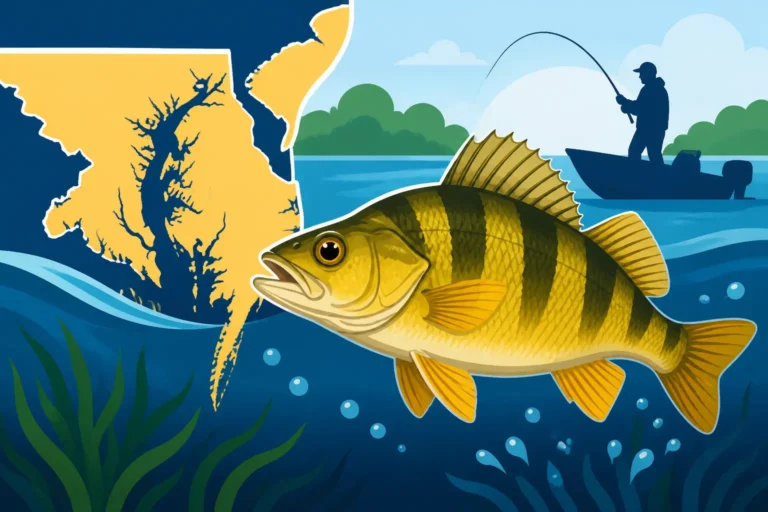
Sometimes, anglers might mistakenly think a large white perch or a yellow perch could be a snakehead, especially in low light or if they're unfamiliar with the fish. However, fish in the perch family have a completely different body plan. Perch are typically deeper-bodied, more compressed laterally, and have prominent, spiny dorsal fins that are often separated into two distinct lobes (a spiny anterior dorsal and a soft-rayed posterior dorsal). Their heads are much more "fish-like" with pointed snouts, and their eyes are positioned on the sides of their heads.
Consider a White Perch: they are silvery, with a tall, distinct dorsal fin and a more compact body. Yellow Perch have vertical bars and a golden hue, also with that characteristic two-part dorsal fin. Neither has the elongated, cylindrical body, the flattened snake-like head, or the long, continuous soft-rayed dorsal and anal fins that are hallmarks of the Northern Snakehead. The differences are quite pronounced once you've had a chance to compare them side-by-side.
Behavioral Cues and Habitat: Beyond Just Looks
While visual identification is your primary tool, observing the fish's behavior and understanding its preferred habitat can also provide strong clues. Northern Snakeheads aren't just unique in appearance; they also have some distinct habits that set them apart from many native Maryland fish.
Surface Activity and Breathing Habits
One of the most striking behavioral traits of the Northern Snakehead is its ability to breathe atmospheric air. Yes, you read that right! They possess a suprabranchial organ, which functions much like a primitive lung. This allows them to gulp air directly from the surface, especially in oxygen-depleted or stagnant waters where other fish would struggle. You might see them rise to the surface, make a distinct "gulping" sound, and then quickly submerge. This adaptation allows them to survive in conditions that would be lethal for most native fish, giving them a distinct advantage in some environments.
This ability also means they can survive for short periods out of water, which is why it's so important to dispatch them quickly and humanely once caught. This air-breathing capability is also what allows them, under specific wet conditions, to "walk" or wriggle short distances over land to find new bodies of water, though this is often exaggerated in popular lore. However, seeing a fish actively gulping air from the surface in healthy water, or thriving in extremely low-oxygen conditions, should immediately raise a red flag that you might be dealing with a snakehead. Many anglers target them using topwater lures, capitalizing on their tendency to strike at the surface, especially in dense vegetation where they are ambushing prey. You can find specialized lures for this technique on Amazon.
Preferred Habitats in Maryland Waters
Northern Snakeheads are ambush predators that thrive in specific types of environments. In Maryland, they have found a perfect home in the shallow, vegetated waters of the Potomac River and its tributaries, as well as various other tidal rivers feeding into the Chesapeake Bay. They particularly favor:
- Shallow, weedy areas: Think lily pads, hydrilla beds, spatterdock, and dense submerged aquatic vegetation (SAV). These areas provide excellent cover for them to hide and ambush unsuspecting prey.
- Stagnant or slow-moving water: While they can be found in more open areas, they tend to congregate in calmer backwaters, creeks, and coves where there's plenty of structure and cover.
- Muddy or turbid conditions: Their mottled coloration and top-positioned eyes help them hunt effectively even when water clarity is poor.
- Warm water: Being a warm-water species, they are most active in the warmer months, but their air-breathing capabilities allow them to endure fluctuating water temperatures and low oxygen levels that might stress other fish.
If you're fishing in a shallow, heavily vegetated creek off the Potomac, especially where you've noticed other fish struggling in warmer, lower-oxygen conditions, your chances of encountering a Northern Snakehead increase significantly. They are becoming more widespread, but these areas remain their stronghold. Knowing Where Snakehead Feed in Shallow Maryland Water can greatly enhance your chances of an encounter, and help you correctly identify them based on their environment.
What to Do When You Catch One: Angler Protocol
So, you've carefully identified your catch, using all the tips and tricks we've covered, and you're certain it's a Northern Snakehead. What now? This is perhaps the most important part of our discussion, as your actions directly impact Maryland's ecosystem management efforts. There's a specific protocol for a reason, and it's essential to follow it.
The "Kill on Sight" Directive Explained
Maryland, like other states battling this invasive species, has a strict "kill on sight" policy for Northern Snakeheads. This isn't about cruelty; it's a necessary measure to prevent their spread and reduce their impact on native fish populations. You are legally required to not release a live Northern Snakehead back into the water once you've caught it.
Here’s what that means in practice:
- Be Prepared: If you're fishing in known snakehead territory (like much of the Potomac and its tributaries), it's wise to have a plan. This might include carrying a blunt object (like a small baseball bat or 'priest') or a sturdy knife to humanely dispatch the fish. Some anglers carry a small cooler with ice to preserve the catch.
- Verify Identification: Double-check your identification. If you're 100% sure it's a snakehead, proceed. If you have any doubt, it's better to release the fish if it's a native species, but for snakeheads, the directive is clear.
- Humanely Dispatch: The most common and humane methods involve a sharp blow to the head or severing the spinal cord behind the head. This ensures the fish is dead and cannot survive if accidentally or intentionally returned to the water.
- Do NOT Release: Under no circumstances should you release a live snakehead. Doing so is illegal and directly contributes to the problem. The penalties for releasing live invasive species can be severe, as detailed in Fine for Transporting a Live Snakehead in Maryland.
This directive is critical because snakeheads are incredibly resilient. Their ability to breathe air and survive out of water means that simply tossing them on the bank might not be enough; they could wriggle back into the water. Therefore, active, humane dispatch is the only sure way to prevent their continued spread.
Proper Handling and Reporting Your Catch
Once you've dispatched the snakehead, your responsibilities aren't quite over. Proper handling and, in some cases, reporting can further aid conservation efforts.
- Safe Handling: Snakeheads have sharp teeth, so handle them with caution, even when dispatched. A fish gripper or heavy gloves are advisable. You might find sturdy fish handling tools on Amazon that can assist with this.
- Consumption: The good news is that Northern Snakeheads are actually quite delicious! They have firm, white, flaky meat with a mild flavor, similar to snapper or cod. Many anglers enjoy eating their catch, turning an ecological problem into a tasty meal. Be sure to properly clean and ice your fish if you plan to keep it for consumption. This is a great way to "do your part" and enjoy the fruits of your labor.
- Reporting (Optional but Encouraged): While not always mandatory for every individual catch, reporting your snakehead catch to the Maryland DNR is always a good idea. This helps fisheries biologists track their distribution and abundance, informing management strategies. You can often report catches through the DNR's website or their designated app. Some agencies even request photos of the fish, especially if it's from a new area where snakeheads haven't been previously confirmed. Check What to Do If You Catch a Snakehead in Maryland for specific reporting instructions from Maryland DNR.
By following these protocols, you're not just complying with regulations; you're becoming an active participant in protecting Maryland's precious aquatic resources from the ongoing threat of invasive species. Every snakehead removed from our waters is a small victory for our native fish populations.
Disclaimer
This article is for general informational purposes only and does not constitute professional advice. Laws, prices and regulations vary by location and change over time. Consult a qualified professional for guidance on your specific situation.