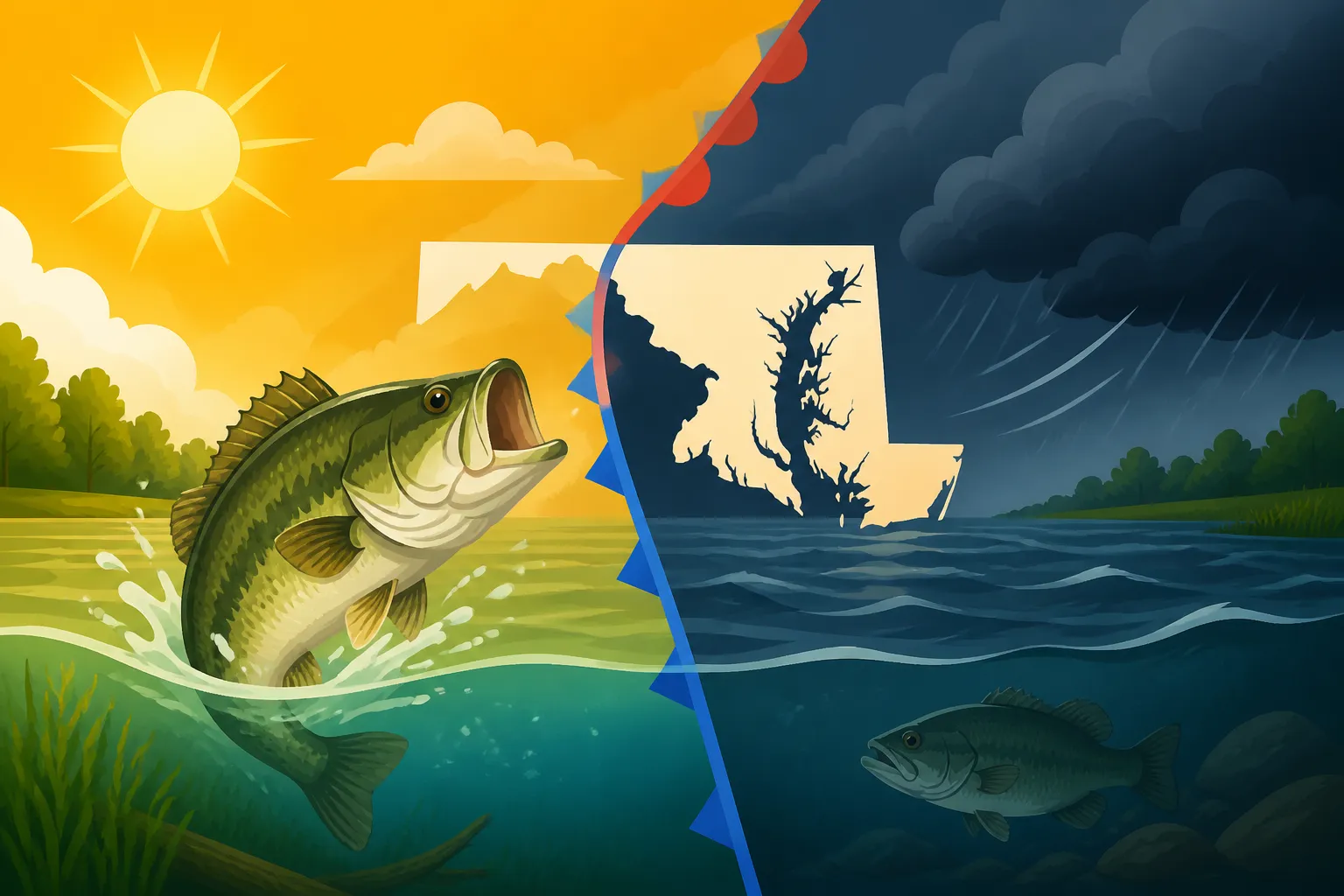
How Weather Fronts Affect Maryland Bass Fishing
We've all been there: you wake up to what looks like a perfect day for bass fishing in Maryland, only to find the fish have completely shut down. Or maybe you're out on the water, the weather shifts, and suddenly the bite is red-hot or stone-cold. It's incredibly frustrating when bass seem to disappear, and often, the invisible hand of a weather front is to blame. This guide will walk you through how different weather fronts impact bass behavior in Maryland's diverse waters, and more importantly, how you can adjust your strategies to keep those lines tight, no matter what the sky throws at you.
Understanding Weather Fronts and Their Immediate Impact on Bass
Think of weather fronts as invisible lines in the sky, marking the boundary between two different air masses. As these fronts move across Maryland, they bring changes in temperature, wind, and crucially, barometric pressure. These shifts have a profound effect on everything in the environment, including our finned friends, the bass.
The Low-Pressure System of a Warm Front
Before a warm front officially arrives, you'll often notice a gradual buildup. The air might feel a bit heavier, the sky could become overcast, and you might experience some light, steady precipitation. This period is characterized by falling or low barometric pressure. For bass anglers, this is often a golden opportunity.
As a warm front approaches, the barometric pressure begins to drop. This change in pressure can have a noticeable effect on a bass's swim bladder, making them feel more comfortable moving shallower and becoming more active. The rising temperatures associated with the approaching warm air mass can also invigorate bass, causing them to move out of deeper holding patterns and start feeding more aggressively. Cloudy skies reduce light penetration, which can make bass feel more secure and less wary, especially in shallower waters. It's during these pre-frontal conditions that you often find bass actively chasing baitfish near structure or along weed lines, making them more susceptible to a variety of lures. They're feeling good, the buffet is open, and they're ready to eat!
The High-Pressure System After a Cold Front
Now, let's talk about the cold front, which for many anglers, feels like the kiss of death for a good fishing day. A cold front typically brings in a mass of colder, drier air, resulting in clear, bluebird skies, often coupled with gusty winds and a significant drop in air temperature. The crucial factor here is the rapid increase in barometric pressure that follows the front's passage.
When a cold front rolls through, especially a strong one, the barometric pressure soars. This sudden and significant increase in pressure can be very uncomfortable for bass, causing their swim bladders to compress and often driving them deeper or tight against heavy cover. Imagine experiencing a sudden, intense head pressure – that's roughly how it feels for a bass. The clearer skies and increased light penetration after a cold front make bass extremely wary and skittish. They'll often tuck into the darkest, densest cover they can find, becoming lethargic and much less willing to chase a meal. The sudden drop in water temperature, especially in shallow areas, can also put them into a state of shock, further reducing their activity levels. This is when you'll hear anglers say the fish have "shut down" or "got lockjaw."
Adapting Your Tactics to Different Frontal Conditions
Knowing how bass react is only half the battle; the real trick is knowing how to adapt your fishing strategy. Maryland offers diverse bass habitats, from the reservoirs like Fishing Loch Raven Reservoir and Fishing Liberty Reservoir to the mighty Potomac River, and understanding these adaptations is key.
Fishing Before a Warm Front Hits
This is the time to be bold and active! As a warm front approaches and the pressure is falling, bass are often on the prowl. This is when your power fishing techniques truly shine. Think about covering water quickly and drawing reaction strikes.
Topwater lures like poppers, frogs, and walking baits can be incredibly effective when bass are actively feeding near the surface or along weed lines. The low light conditions and increased comfort levels make them less hesitant to strike at a bait on top. Crankbaits and spinnerbaits are also excellent choices for covering water and targeting those aggressive fish that are moving shallower. Cast these lures around points, submerged cover, and any areas where baitfish might be congregating. Bass will often be staging in ambush points, waiting for an easy meal to swim by, and the erratic action of these lures can trigger an instinctual strike. Don't be afraid to experiment with retrieve speeds; sometimes a faster retrieve is exactly what's needed to provoke a chase.
Strategies for Post-Cold Front Fishing
After a cold front has passed, patience becomes your most valuable tool. Bass are likely to be deep, tight to cover, and unwilling to chase. This is when finesse fishing takes center stage.
You'll want to slow everything down, almost to a crawl. Jigs, Texas-rigged worms, and wacky worms become go-to choices. Present these baits as naturally and subtly as possible. Focus your efforts on deeper water, such as channel edges, steep drops, and submerged humps. Bass will often seek refuge in these deeper, more stable environments where water temperature fluctuations are less severe. Dense cover, like thick brush piles, fallen trees, or heavy grass beds, will also hold inactive bass looking for security and shade. Consider downsizing your baits and using lighter line to increase your chances of a bite from a reluctant fish. A slow, methodical retrieve with long pauses can often be the trigger needed. Remember, these fish aren't actively hunting; you're trying to coax them into an easy meal right in front of their faces. For deeper reservoir bass, try focusing on spots in Fishing Piney Run Reservoir where there's significant depth change near structure.
Dealing with Stable, "Bluebird" Skies
Often, a few days after a cold front, you'll experience those classic "bluebird" skies – bright, clear, sunny days with stable high pressure. While the immediate shock of the front has passed, the high pressure still makes bass wary and less active than normal.
During these stable high-pressure conditions, bass tend to stay deep or buried in the thickest cover they can find. They're still not in a chasing mood, so finesse presentations remain your best bet. Drop-shot rigs, shaky heads, and small jigs are excellent for targeting fish that are hugging the bottom or suspended in tight schools near structure. Work these baits excruciatingly slowly, giving the bass plenty of time to inspect and commit. Overcast days are generally better for bass, but even on bluebird days, you can find success by focusing on shaded areas, such as under docks, overhanging trees, or deep ledges. Consider a polarized pair of sunglasses (you can find great options on Amazon!) to help you spot subtle movements or changes in water depth. Keep experimenting with colors; sometimes a natural green pumpkin or black and blue will entice a bite when brighter colors won't. What Water Temperature Do Bass Spawn at in Maryland? is a good read, as understanding their spawning behavior in relation to temperature will also aid your bluebird sky strategies.
Key Environmental Factors and Their Influence
While "weather fronts" are the umbrella term, understanding the specific environmental components that make up these fronts can give you an even sharper edge in Maryland's diverse bass fisheries.
Barometric Pressure Swings
This is arguably the most critical factor affecting bass behavior during frontal changes. Barometric pressure refers to the weight of the air above us, and it directly influences the pressure on a fish's swim bladder.
When barometric pressure falls (before a warm front), the pressure on the fish's swim bladder decreases, making them more comfortable and allowing them to move shallower with less effort. This often translates to increased activity and aggressive feeding. Conversely, when pressure rises rapidly (after a cold front), the swim bladder compresses, causing discomfort. Bass will often seek deeper water where the pressure is more stable, or burrow into dense cover to alleviate the sensation. This makes them sluggish and less inclined to bite. Monitoring a portable barometer can be a huge advantage. You don't need a fancy one; even a basic weather app can give you an idea of the pressure trend. Recognizing that falling pressure often means an active bite and rising pressure often means a tough bite is fundamental to successful bass fishing.
Water Temperature and Clarity Shifts
Temperature and clarity are always important for bass, but they become even more pronounced during frontal passages. Bass are cold-blooded, meaning their body temperature mirrors the water around them, directly influencing their metabolism and activity levels.
A rapid drop in water temperature due to a cold front can send bass into a state of shock, dramatically slowing their metabolism and making them less likely to feed. They'll seek areas with more stable temperatures, often deeper water or dense cover that buffers against the cold. Conversely, a gradual rise in water temperature from a warm front can activate them, increasing their metabolism and making them more eager to feed. However, extreme heat can also push bass into deeper, cooler water. Water clarity also plays a significant role. Post-cold front, the air is often drier, leading to clear skies and incredibly clear water. This increased visibility makes bass more cautious and spooky, driving them into thicker cover. Pre-warm front, cloudy skies and light rain can sometimes stain the water slightly, giving bass a sense of security and allowing them to be more active in shallower areas. For specific species, check out Largemouth Bass Fishing in Maryland and Smallmouth Bass in Maryland's Rivers to understand their temperature preferences.
Wind and Precipitation
Don't underestimate the power of wind and rain when a front moves through. These elements can either hinder or help your bass fishing efforts.
Wind, particularly moderate wind, can be a bass angler's friend. It breaks up the surface of the water, making it harder for bass to distinguish your lure from natural prey and reducing their wariness. Wind can also create currents and push baitfish against points, shorelines, or submerged structures, concentrating the food source and, in turn, the bass. However, extreme high winds can make boat control difficult and fishing unpleasant, scattering fish and bait. As for precipitation, light, steady rain associated with a warm front can be excellent. It adds oxygen to the water, washes in nutrients, and often keeps the light levels low, encouraging bass activity. Heavy thunderstorms, on the other hand, especially those accompanying a strong cold front, can quickly muddy the water, drop temperatures, and completely shut down the bite as bass seek refuge from the turbulence.
Gear and Preparation for Maryland's Unpredictable Weather
Being prepared for Maryland's mercurial weather changes is just as important as knowing your fishing techniques. A well-stocked boat or tackle bag can make all the difference.
Essential Gear for Changing Conditions
No matter the forecast, it’s always wise to pack for diverse conditions. Layering your clothing is paramount. A good waterproof and windproof jacket is a non-negotiable item, especially on a Maryland waterway like the Chesapeake Bay or a large reservoir where conditions can change rapidly. You can find excellent options for durable rain gear on Amazon that will keep you dry during an unexpected shower.
Beyond clothing, a diverse tackle box is your best friend. Have a selection of power fishing lures (crankbaits, spinnerbaits, topwaters) ready for pre-frontal feeding frenzies, but also ensure you have a robust selection of finesse baits (jigs, soft plastics for Texas or wacky rigs, drop shots) for those tough post-frontal conditions. A portable barometer can give you a real-time advantage, helping you anticipate those crucial pressure changes. Don't forget a reliable depth finder – understanding where bass are holding vertically is even more critical when they're hugging bottom or suspended after a cold front. Keep an eye on the Best Month to Catch Largemouth Bass in Maryland to ensure your gear is appropriate for the season too.
Local Maryland Considerations for Bass
Maryland offers an incredible variety of bass fishing opportunities, and while the general principles of frontal fishing apply everywhere, there are some local nuances to consider.
In large, deep reservoirs like Loch Raven, Liberty, or Deep Creek Lake, bass might respond to pressure changes by moving into or out of deep creek channels and main lake points. After a cold front, they might dive even deeper, suspending over structure or hunkering down in the thickest brush piles. The clearer waters of these reservoirs also mean bass are likely to be extra spooky under bluebird skies, necessitating ultra-finesse tactics and long casts. On the other hand, in the tidal portions of rivers like the Potomac, bass movements are influenced not only by weather fronts but also by strong tidal currents. A dropping tide combined with a post-cold front condition can make fishing exceptionally tough. However, a rising tide before a warm front can create a feeding frenzy. Understanding Fishing the Potomac River in Maryland in relation to weather patterns is key here. Also, consider the species; smallmouth bass in the upper Potomac or Susquehanna might react slightly differently than largemouth in a pond or reservoir. Read up on Fishing Techniques for Smallmouth Bass in the Potomac for more tailored advice.
| Weather Condition | Bass Behavior | Recommended Tactics | Key Lures/Baits |
|---|---|---|---|
| Approaching Warm Front (Falling Pressure) | Increased activity, move shallower, feed aggressively. | Power fishing, cover water quickly, target ambush points. | Topwater, spinnerbaits, crankbaits, swim jigs. |
| Post-Cold Front (Rising Pressure) | Lethargic, move deeper or tight to cover, shy. | Finesse fishing, slow presentations, target deep structure/heavy cover. | Jigs, Texas-rigged worms, shaky heads, drop shots, small jerkbaits. |
| Stable Bluebird Skies (High Pressure) | Still wary, deep or very tight to cover, less aggressive. | Ultra-finesse, light line, natural colors, very slow retrieves. | Wacky worms, Neko rigs, small jigs, Ned rigs. |
| Windy Conditions (Moderate) | Breaks surface, concentrates bait, less spooky. | Spinnerbaits, chatterbaits, shallow crankbaits, jerkbaits. | Spinnerbaits, Chatterbaits, lipless crankbaits. |
| Rainy Conditions (Light, Steady) | Increased oxygen, low light, can boost activity. | Topwater, shallow crankbaits, soft plastic jerkbaits. | Frogs, poppers, squarebill crankbaits. |
Disclaimer
This article is for general informational purposes only and does not constitute professional advice. Laws, prices and regulations vary by location and change over time. Consult a qualified professional for guidance on your specific situation.