Maryland Recreational Crab Pot Limit Per License
It can be incredibly frustrating to head out to your favorite crabbing spot, excited for a day on the water, only to realize you're unsure about the exact rules for setting your pots. Many folks worry about breaking regulations, especially when it comes to something as specific as how many crab pots you're allowed to use. This guide is here to clear up all that confusion, helping you understand Maryland's recreational crab pot limits per license so you can crab with confidence and enjoy a bountiful catch without any unnecessary stress.
Understanding Maryland's Recreational Crabbing Regulations
Crabbing in Maryland, particularly in the Chesapeake Bay and its tributaries, is a cherished tradition for many. There's nothing quite like the anticipation of pulling up a pot filled with delicious blue crabs. However, to keep this tradition alive and ensure healthy crab populations for future generations, the state has put in place a series of regulations. These aren't meant to make things difficult; rather, they're essential tools for conservation and ensuring everyone gets a fair shot at a catch.
Why Limits Exist: Conservation and Fair Share
Imagine if everyone could set an unlimited number of crab pots. The Chesapeake Bay's blue crab population, while resilient, simply couldn't sustain that kind of pressure. Limits on recreational crab pots are a cornerstone of Maryland's fisheries management strategy. They help prevent overharvesting, allowing crabs to reproduce and grow, maintaining a healthy ecosystem. This approach also ensures that the resource is shared equitably among all recreational crabbers, from those who just enjoy a casual outing to more dedicated enthusiasts. It’s all about balance – enjoying today's bounty while safeguarding tomorrow's. These regulations are often detailed in the annual Maryland's DNR Fishing and Boating Guide, Explained, which is a must-read for any serious angler or crabber.
Who Needs a License and Who Doesn't
Before you even think about how many pots you can set, you need to know if you even need a license to begin with. Generally, any resident 16 years of age or older needs a license to recreationally crab in Maryland. Non-residents have similar requirements. However, there are some key exemptions that can often trip people up. For instance, if you're crabbing from a private property or pier and only using certain gear (like a hand line or dip net), you might not need one. Similarly, if you're under 16, you're usually exempt from requiring a license for either fishing or crabbing. This is similar to the Maryland Fishing License Age Requirements for angling. It’s critical to double-check the current rules because they can sometimes change, and being caught without the proper authorization can lead to fines. You might find it helpful to read our detailed guide on Do You Need a License to Fish for Blue Crabs in Maryland? for a complete breakdown of these requirements.
The Core Rule: Recreational Crab Pot Limits for Licensed Anglers
Now, let's get down to the brass tacks: the actual number of crab pots you're allowed. This is often the most pressing question for recreational crabbers, and it's essential to get it right to avoid any issues with Maryland Natural Resources Police. The rules are designed to be straightforward, but understanding the nuances is key.
The Standard Crab Pot Limit
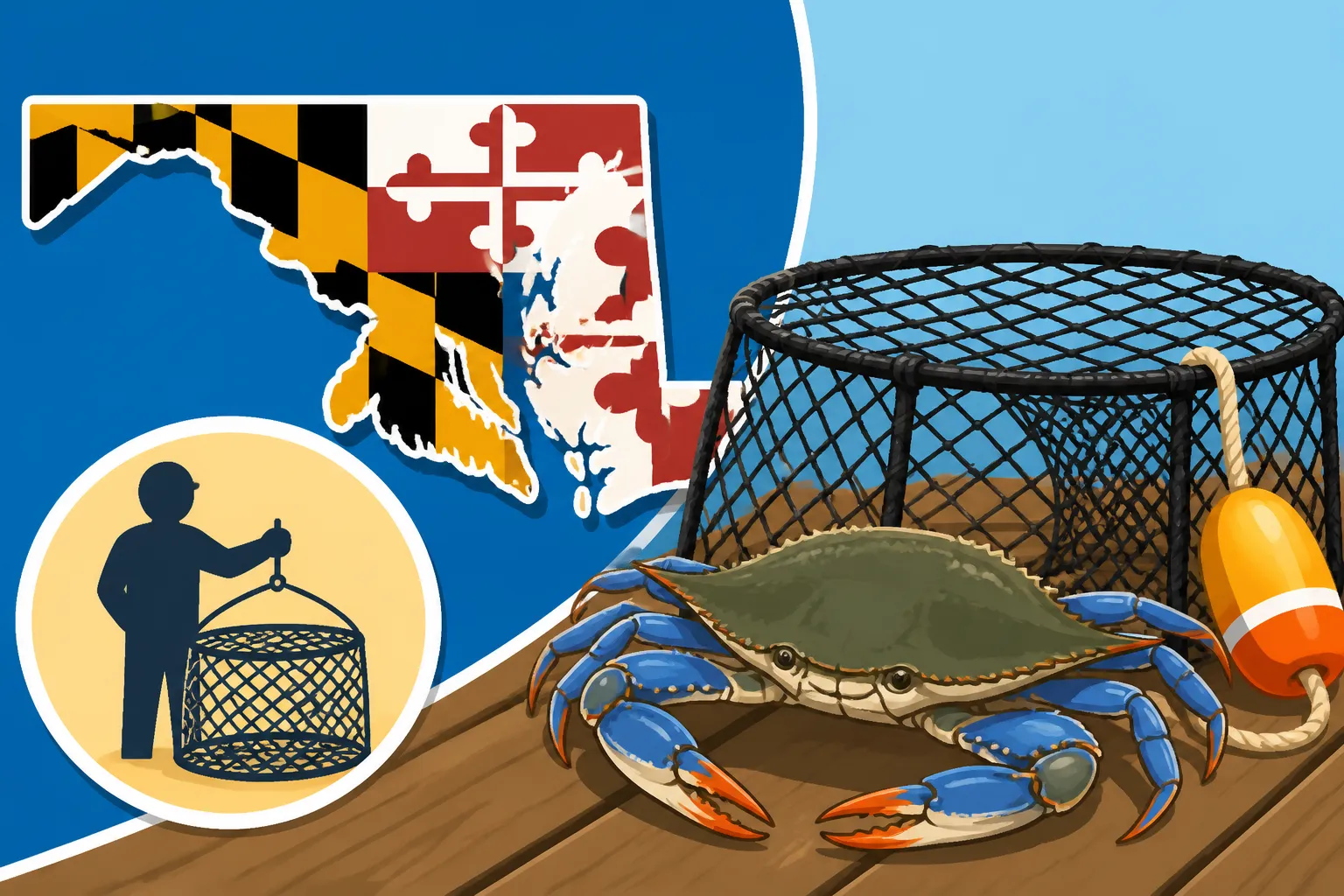
For recreational crabbers in Maryland, the standard limit for crab pots is two pots per licensed individual. This means if you have a valid Maryland recreational crabbing license (which is often combined with a fishing license), you are permitted to set and tend no more than two crab pots. It’s a pretty clear-cut rule, designed to give everyone a chance while preventing any single individual from monopolizing a crabbing area. These pots must be properly marked with your DNR ID number, along with your full name and address. This identification is crucial, not just for enforcement, but also for returning lost gear. Imagine if you misplaced a pot; having it clearly marked drastically increases your chances of getting it back.
Additional Gear Considerations: Trotlines and Dip Nets
While this guide focuses on crab pots, it's worth noting that Maryland also regulates other popular crabbing methods. If you're using a trotline, which is a long line set with bait at intervals, the recreational limit is typically 1,200 feet in length. Again, this line needs to be properly marked with your name, address, and DNR ID number, with floats at both ends. For those who enjoy a more active approach, using hand lines or dip nets typically has no specific gear limit, though you still need to adhere to catch and size limits, and a license might be required depending on where you're crabbing from. These alternative methods offer different experiences and can be very effective, especially during peak seasons. Understanding the Maryland Fishing Size and Catch Limits by Species will also be beneficial here, as it covers blue crabs alongside finfish.
License Requirements for Crab Pots
To legally use those two crab pots, you absolutely need the correct license. In Maryland, a recreational crabbing license is often bundled with a fishing license. Many anglers opt for the Maryland Crabbing and Fishing Combination License because it covers both activities, offering great value and convenience. It's not enough to just have a general fishing license if you intend to use crab pots; you need that specific crabbing endorsement or the combo license. If you're found with pots in the water without the appropriate license, it's considered a violation, and the consequences can range from warnings to significant fines. Always ensure your license is current and covers the gear you intend to use before heading out.
Navigating the Specifics: What "Per License" Truly Means
The phrase "per license" is really important here, and it's where some of the common misunderstandings about crab pot limits arise. It's not about how many people are in your boat, or how many are actively crabbing with you; it's about the individual holding a valid license.
Individual Angler Responsibility
The limit of two crab pots is tied directly to an individual's valid recreational crabbing license. This means that if you're crabbing by yourself, even if you have a huge boat, you are still limited to two pots. It's a personal allowance, not a vessel allowance. This is a crucial distinction. For example, if you and a friend are out on the Chesapeake Bay, and both of you possess individual recreational crabbing licenses, then collectively, you could have four pots in the water (two for you, two for your friend). However, if only one of you is licensed, regardless of how many people are on board, the limit remains two pots. This system places the responsibility squarely on each licensed individual.
Sharing Pots and Group Crabbing Scenarios
This individual license rule also impacts how you approach group crabbing. If you're heading out with family or friends, it's important to clarify who has a license and who plans to operate pots. You cannot, for example, have one person with a license set two pots, and then another unlicensed adult set two more, claiming they are "helping" the licensed individual. The operation of the pots, including setting and tending them, falls under the licensed individual's allowance.
Let's look at a quick table to illustrate this:
| Scenario | Number of Licensed Crabbers | Max. Crab Pots Allowed | Notes |
|---|---|---|---|
| Solo Angler | 1 | 2 | License required for individual. |
| Two Licensed Adults | 2 | 4 | Each individual has their own allowance of 2 pots. |
| One Licensed Adult, One Unlicensed Adult | 1 | 2 | Unlicensed adult cannot set or tend pots under the licensed person's allowance beyond their personal share. |
| One Licensed Adult, Two Kids (under 16) | 1 | 2 | Kids usually don't need a license, but the adult's pot limit still applies to their own gear. |
| Multiple Unlicensed Adults | 0 | 0 | Using crab pots requires a license. Hand lines/dip nets may be allowed without a license in certain areas. |
It's all about clarity and adherence to the "per license" rule. If everyone involved is clear on their licensing status and the rules, your crabbing trip will be much more enjoyable and free from potential issues.
Marking Your Crab Pots Clearly
Proper identification of your crab pots isn't just a suggestion; it's a legal requirement. Every single recreational crab pot must be clearly marked with your full name, address, and your Maryland DNR ID number. This information needs to be legible and durable enough to withstand being in the water. Most crabbers attach a tag or waterproof marker to the buoy of each pot. This system helps the Maryland Natural Resources Police identify ownership and ensure compliance with the two-pot limit. If your pots are unmarked or improperly marked, they could be confiscated, and you could face penalties. It's a small detail that makes a big difference in staying within the rules. Failing to follow these identification rules can fall under the umbrella of Maryland Fishing License Penalties for Violations, so it's best to be diligent.
Practical Tips for Recreational Crab Potting in Maryland
Crabbing with pots is an art as much as it is a science. Beyond just knowing the rules, having some practical knowledge can greatly enhance your success and enjoyment. From choosing the right gear to understanding how to best bait your traps, a little preparation goes a long way.
Choosing the Right Gear
When it comes to crab pots, there's a variety of designs available, each with its own advantages. Traditional wire mesh pots are common and durable, often featuring one or more entry funnels and a top opening for bait and crab retrieval. You'll find options like collapsible pots that are easy to store and transport, and larger, heavier pots designed for stability in strong currents. Brands like Danielson or Promar offer reliable recreational crabbing gear. You can often find a good selection of quality crab pots, bait cages, and buoys on online retailers like Amazon, or at local tackle shops across Maryland. When buying, consider the material (galvanized or vinyl-coated wire is usually best for corrosion resistance), the size (to ensure it fits your desired catch but isn't overly cumbersome), and the overall construction. Investing in sturdy, well-made pots will save you headaches in the long run.
Baiting Your Pots for Success
The effectiveness of your crab pot largely hinges on your bait choice. Blue crabs are scavengers and are attracted to strong-smelling, oily baits. The classic choice, and for good reason, is chicken necks. They're cheap, readily available at most grocery stores, and have a high fat content that releases plenty of enticing scent into the water. Other popular options include razor clams, fish carcasses (like alewife or menhaden), or even various types of scrap meat. The key is to secure your bait within a bait cage inside the pot. This prevents the crabs from eating all the bait too quickly and allows the scent to disperse effectively, luring them inside. Regularly checking and re-baiting your pots, typically every few hours or once a day, is crucial for consistent success.
Avoiding Violations and Penalties
Staying within the law is paramount for an enjoyable crabbing experience. Beyond the two-pot limit and proper marking, there are other common pitfalls to avoid. Always adhere to the daily catch limits and minimum size requirements for blue crabs. Crabs must be measured accurately from tip to tip of the spike. Possession of "sponge" crabs (females carrying eggs) is illegal and strictly enforced to protect the reproductive population. Ensure your pots are not set in navigation channels where they could impede boat traffic, and always keep them out of restricted areas. If you're unsure about specific zones, consult a recent Maryland fishing and crabbing guide. Ignorance of the law is not an excuse, and violating these rules can result in significant fines and the confiscation of your gear. Familiarize yourself with Maryland Fishing License Penalties for Violations to understand the potential consequences.
Beyond the Pots: Other Crabbing Regulations to Remember
While crab pot limits are a big part of the picture, Maryland's crabbing regulations are much broader. To be a truly responsible and successful crabber, you need to understand the full scope of rules, from how many crabs you can keep to when and where you can pursue them.
Daily Catch Limits and Size Restrictions
Even if you're using the legal number of pots, you can't just keep every crab you catch. Maryland has strict daily catch limits and minimum size restrictions designed to protect the blue crab population. For recreational crabbers, the daily limit for male hard crabs is generally two bushels per person. For peelers (crabs shedding their shells) or soft crabs, the limit is usually one dozen. More importantly, hard crabs must meet a minimum size requirement, which is typically 5 inches across the shell from tip to tip of the spikes. Soft crabs and peelers usually have a 3-inch minimum. You absolutely cannot keep female crabs that are "sponge" crabs, meaning they are carrying an external egg mass. These regulations are in place to ensure that crabs have a chance to reproduce and mature, contributing to the overall health of the fishery. These are part of the broader Maryland Fishing Size and Catch Limits by Species.
Seasonality and Waterbody Restrictions
Crabbing isn't a year-round free-for-all; it's subject to specific seasons and, in some cases, certain waterbodies might have unique restrictions or closures. The recreational crabbing season for the Chesapeake Bay and its tributaries typically runs from April 1st through December 31st, though these dates can vary slightly year to year. During the winter months, the crab population is largely dormant, and crabbing is generally closed. Some specific areas might also have temporary closures or unique rules, often related to environmental conditions or conservation efforts. Before heading out, always check the current year's Maryland Department of Natural Resources (DNR) regulations to confirm open seasons and any localized restrictions for your intended crabbing spot. Our guide to the Best Time of Year to Fish in Maryland often touches on crabbing seasons too.
Understanding Your Maryland Fishing and Crabbing Combo License
As mentioned, many recreational crabbers opt for a combined fishing and crabbing license. This is often the most cost-effective and convenient way to enjoy both pastimes in Maryland. This license not only covers your ability to set and tend crab pots but also permits you to engage in recreational fishing activities within the specified waters (tidal or nontidal, depending on the license type). For instance, if you purchase a Maryland Chesapeake Bay Sport Fishing License Explained, it often comes with the option to add crabbing privileges. This integrated approach simplifies compliance, as you only need one license document for multiple recreational activities. It’s always a good idea to confirm exactly what your specific license covers to avoid any surprises. You can purchase these licenses through the Maryland DNR online portal or from authorized retail agents, like many bait and tackle shops or even larger sporting goods stores.
Disclaimer
Please note that fishing and crabbing regulations are subject to change. While we strive to provide the most accurate and up-to-date information, it is always the angler's responsibility to consult the current Maryland Department of Natural Resources (DNR) fishing and crabbing guide or their official website before engaging in any fishing or crabbing activity. This guide is for informational purposes only and does not constitute legal advice.