Fishing Techniques for Maryland’s Fall Striped Bass Run
Oh, the fall run for striped bass in Maryland! If you've ever experienced it, you know it's a mix of pure exhilaration and sometimes, pure frustration. One day they're everywhere, boiling on the surface, and the next they've seemingly vanished into thin air. It's a time of year that gets every Chesapeake Bay angler's heart pumping, but catching those elusive rockfish consistently requires more than just luck – it demands a solid understanding of their behavior and the right techniques. This guide is going to walk you through everything you need to know to truly get in on the action and make the most of Maryland's incredible fall striped bass run.
The Allure of Maryland's Fall Striped Bass Run
There's just something magical about autumn in Maryland, and it's not just the changing leaves. For anglers, it signals the start of the most anticipated fishing event of the year: the fall striped bass run. This period offers some of the most exciting and productive fishing opportunities, drawing seasoned veterans and eager newcomers alike to the Chesapeake Bay and its tributaries.
Why Autumn is Rockfish Gold
So, what makes the fall so incredibly special for catching rockfish? It all boils down to two main factors: water temperature and baitfish migration. As the crisp autumn air cools the Bay's waters, the striped bass become incredibly active. They're on the move, migrating south towards the ocean and their wintering grounds, and along the way, they have one thing on their minds: eating, and eating a lot. They're essentially bulking up for the colder months, which means they're aggressively feeding on whatever baitfish they can find.
This period sees vast schools of baitfish, like bunker (Atlantic menhaden), spot, and even eels, making their own migrations. The stripers follow these schools relentlessly, pushing them to the surface, against points, or into shallower creeks, creating those explosive feeding frenzies we all dream about. It’s a natural phenomenon that transforms the Bay into a vibrant hunting ground, offering a "last hurrah" of incredible fishing before winter sets in and fish become less active. The dropping water temperatures signal an urgency in the fish, making them more aggressive and predictable in their pursuit of food, leading to some truly memorable days on the water.
Where the Action Happens: Prime Fall Run Locations
During the fall run, striped bass can be found throughout the mainstem Chesapeake Bay and its major tributaries, but certain areas consistently stand out as prime hotspots. As the water cools, the fish tend to move out of the shallower summer haunts and concentrate in deeper channels, around prominent structure, and along migration routes.
The mainstem Chesapeake Bay channel, particularly from Annapolis south to the mouth of the Potomac River, becomes a highway for migrating stripers. Look for them holding along channel edges, particularly where depth changes rapidly or where current funnels baitfish. The Chesapeake Bay Bridge is a perennial favorite, its pilings and surrounding structure holding bait and stripers throughout the fall. Anchoring or drifting around these pilings, or trolling near them, can be incredibly productive.
On the Eastern Shore, the mouths and lower reaches of rivers like the Choptank River and Chester River are excellent spots, especially when schools of baitfish are pushed into them by larger predators. For those on the Western Shore, the Patuxent River mouth and the Potomac River mouth become major staging areas. Don't forget about specific lumps, reefs, and drops in the middle of the Bay that act as natural ambush points. These submerged structures can hold massive schools of feeding stripers, often indicated by bird activity above. Knowing Best Time for the Fall Striped Bass Run in Maryland can also help you pinpoint the precise weeks when certain areas are most active.
Gearing Up for the Fall Striper Frenzy
You wouldn't head into battle without the right armor, and fishing the fall striped bass run is no different. Having the correct rods, reels, lines, and an effective arsenal of lures and baits can make all the difference between a frustrating day and a fantastic one. The fish are often large, powerful, and demanding on your tackle, so investing in quality gear is paramount.
Rods, Reels, and Lines Built for Battle
For the fall run, you'll generally want to step up your tackle a bit. These are often larger, migratory stripers, and they can put a serious bend in your rod!
- Rods: Medium-heavy to heavy action rods are the workhorses. For casting artificials, a 7-foot to 7-foot 6-inch spinning rod with a fast action is ideal for long casts and battling bigger fish. If you're trolling or live-lining, a 6-foot 6-inch to 7-foot conventional rod with a moderate to fast action will handle the heavy weights and powerful strikes. You'll want a rod with enough backbone to really lean into a large fish, but with a sensitive tip to detect subtle bites.
- Reels: For spinning setups, look for reels in the 4000 to 6000 size range. These offer good line capacity and a strong drag system. Popular brands offer excellent options in this category. For conventional setups, a reel capable of holding 200-300 yards of 30-50 lb test line is appropriate, with a smooth, reliable drag.
- Line: Braided line has become the standard for most striped bass fishing due to its strength-to-diameter ratio, lack of stretch for better sensitivity, and superior casting distance. A 30 to 50 lb test braid is common. Always use a fluorocarbon leader, typically 30-60 lb test, attached to your main line with a strong knot like an FG knot or an Albright knot. Fluorocarbon is nearly invisible underwater and provides abrasion resistance, which is crucial around structure and when fish have sharp teeth. You can find a fantastic selection of these essential items, from high-performance reels to durable braided lines, readily available on Amazon for competitive prices.
The Arsenal of Lures and Baits
The fall run means stripers are opportunistic feeders, so a diverse tackle box is your best friend.
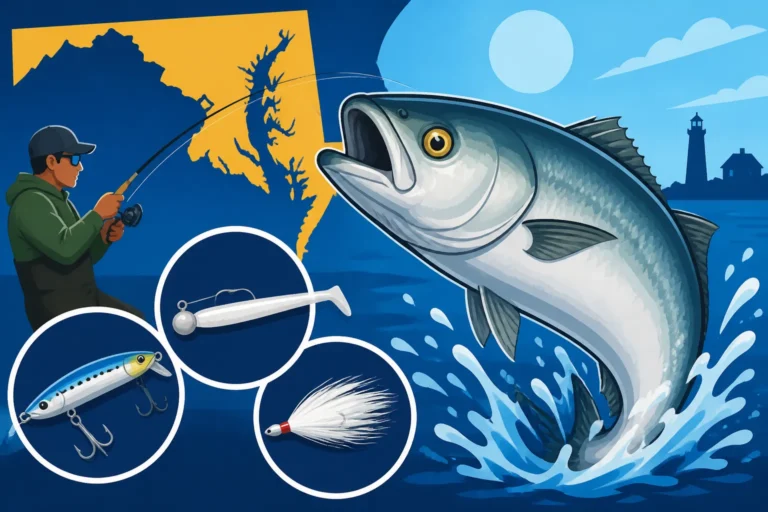
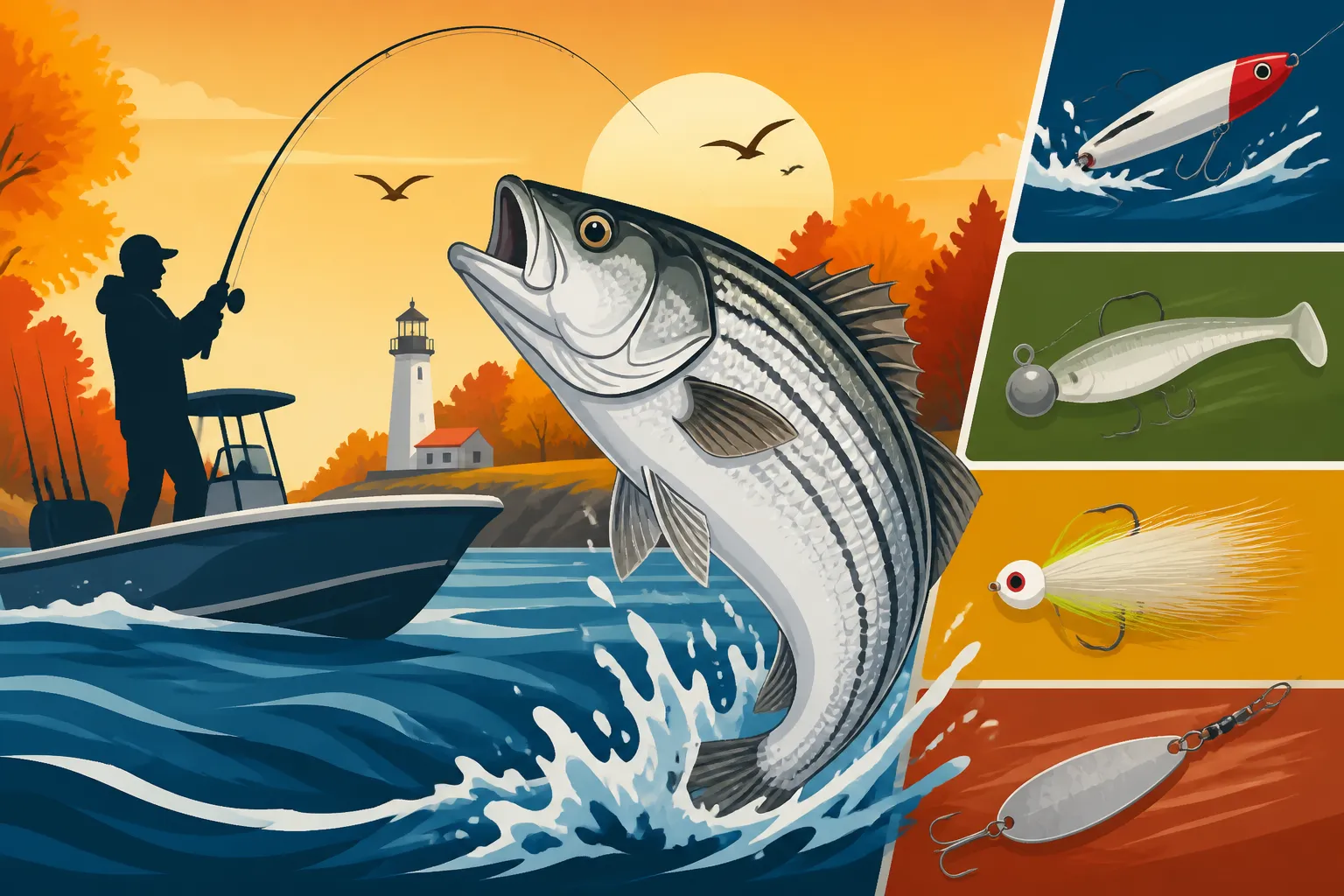
- Jigs: Soft plastic paddle tail jigs (like those from Z-Man, Gulp!, or various local brands you can find on Amazon) on heavy jig heads (1-3 oz, sometimes more) are incredibly effective. White, chartreuse, and pearl are classic colors. Metal jigs like Sting Silvers or Crippled Herrings are great for deeper water or when fish are feeding on smaller baitfish. Bucktails, often tipped with a piece of soft plastic or pork rind, are also killer. Remember, Best Lure Colors for Jigging Chesapeake Bay Rockfish can vary based on water clarity and conditions, so having a few options is smart.
- Spoons: Casting spoons, particularly those with a strong fluttering action, can imitate fleeing baitfish and cast a mile. Silver or gold are good starting points.
- Topwater Plugs: In the early fall, especially during low light conditions or when stripers are actively busting on the surface, topwater plugs (poppers, walk-the-dog style) provide an explosive thrill.
- Trolling Rigs: Umbrella rigs, Mojo rigs (heavy lead parachutes dressed with sassy shads), and large lipped trolling plugs are essential for covering water and targeting fish holding deeper or spread out.
- Live Bait: When the bite is tough, or you're targeting truly large fish, live bait can be unbeatable.
- Spot: Often caught in shallower waters in early fall, live spot are striper candy.
- Eels: Another favorite for big rockfish, especially around structure or at night.
- Menhaden (Bunker/Pogies): These oily baitfish are a primary food source for large stripers. Live-lining them or using cut sections (chunking) can be incredibly effective.
- Cut Bait: Freshly cut menhaden, mackerel, or even spot can be presented on the bottom for an enticing scent trail, especially useful when fish are holding deep and less active.
Having a good selection of these will ensure you're ready for whatever the fall run throws at you, from aggressive surface feeds to finicky bottom dwellers.
Mastering Fall Run Fishing Techniques
The beauty of the fall run is the variety of ways you can effectively target striped bass. From covering vast stretches of water with trolled offerings to carefully presenting live bait, adapting your approach to the conditions and the fish's behavior is key.
Trolling: Covering Water and Finding the Fish
Trolling is arguably one of the most consistent ways to find and catch striped bass during the fall migration, especially when they are spread out in the main Bay channels or suspended at various depths. It allows you to cover a lot of water and present multiple lures simultaneously, increasing your chances of finding a hungry fish.
- Understanding Your Setup: You'll typically deploy multiple lines from a boat, often using planer boards to spread lures out to the sides, preventing tangles and covering a wider path. In-line weights or snap weights are used to get lures down to the desired depth. For deeper presentations, some anglers opt for downriggers.
- Lures for Trolling: The most popular choices include large umbrella rigs, which imitate a school of baitfish, and Mojo rigs, which consist of heavy lead parachutes with large soft plastic shads, designed to be trolled deep. Large lipped plugs (often referred to as "stretch" lures) that dive to specific depths are also very effective, especially in a variety of colors and sizes. Don't forget the classic bucktail jig; Trolling Bucktails for Maryland Striped Bass can be incredibly productive, especially when paired with a large plastic or natural bait trailer.
- Speed and Current: Your trolling speed will depend on the lures you're using and the current. Generally, a slow troll of 2-4 knots is effective, but sometimes adjusting slightly faster or slower can make a huge difference. Pay attention to the boat's speed over ground, not just through the water, as current will significantly impact how your lures swim. Troll with and against the current to see what elicits the most strikes.
Jigging and Vertical Presentations
When stripers are concentrated around structure, holding on channel edges, or you mark schools of fish directly under your boat, jigging becomes a deadly technique. This method allows for precise lure placement and direct engagement with the fish.
- Targeting Structure: Bridge pilings, submerged wrecks, artificial reefs, and sharp channel drops are prime locations for jigging. Anchoring up-current of the structure and letting your jig drift back to the fish, or simply holding position over a marked school, can be effective. Fishing the Bay Bridge Pilings for Striped Bass is a classic scenario where jigging excels.
- Lure Selection: Soft plastic paddle tail jigs on heavy lead heads (often 1.5 to 4 ounces, depending on depth and current) are fantastic. Colors like chartreuse, white, pink, and pearl are consistent producers. Metal jigs (like butterfly jigs or diamond jigs) are excellent for deeper water or faster currents, providing a quick drop to the strike zone.
- Jigging Cadence: The retrieve is crucial. A common technique involves letting the jig sink to the desired depth, then snapping the rod tip up sharply to make the jig dart, followed by letting it fall on a semi-slack line. Most strikes occur on the fall, so pay close attention. Experiment with the speed and height of your jigging motion until you find what the fish prefer. Utilizing a good fish finder to pinpoint schools of bait and actively feeding stripers is invaluable when jigging. Jigging Techniques for Maryland's Chesapeake Bay Striped Bass can be quite varied, so practice makes perfect.
Live-Lining and Chunking for Finicky Eaters
Sometimes, when the stripers are wary or simply not responding to artificial lures, natural bait can be the key to unlocking the bite. Live-lining (using live bait) and chunking (using cut bait) are highly effective methods, particularly for larger, more selective fish.
- Live-Lining Strategies:
- Spot: Live spot are like candy for striped bass. Rig them with a circle hook through the nose or back, using just enough weight (a small sinker or a three-way swivel rig) to get them to the desired depth. Live-Lining Spot for Maryland's Chesapeake Bay Rockfish is a tried and true method.
- Eels: These are fantastic baits, especially for big stripers, fished around structure or at night. Hook them through the jaw or tail, letting them swim naturally.
- Menhaden (Bunker/Pogies): If you can net live menhaden, presenting them on a weighted hook can be deadly.
- Chunking (Cut Bait): This involves cutting oily baitfish like menhaden into sections and presenting them on the bottom. The scent trail created by the chunks can draw stripers in from a distance.
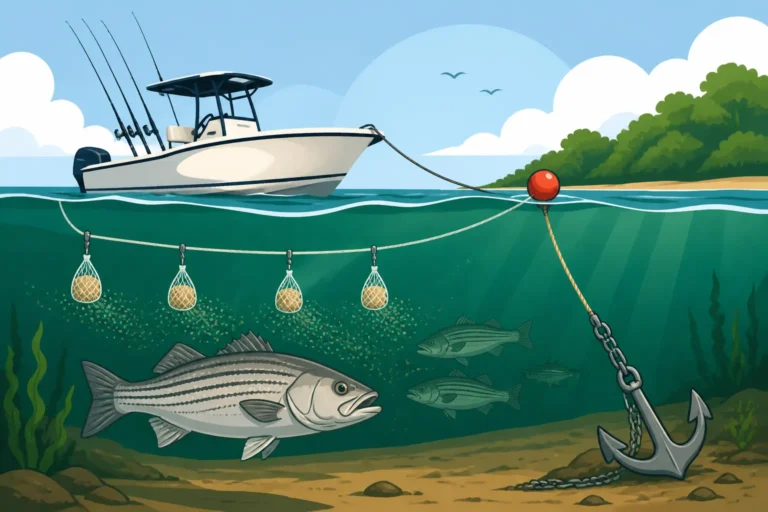
- Chumming: To maximize the effectiveness of live-lining and chunking, many anglers employ a chum slick. Deploying a chum pot full of ground menhaden up-current from your boat will create a scent trail that attracts fish. As fish move into the slick, you present your live or cut bait. Understanding How to Chum for Striped Bass in the Chesapeake Bay is a skill that can significantly increase your success. Whether you anchor or drift will depend on the current and how fish are reacting.
Casting Artificials for Active Schools
When you see those glorious moments of birds diving and stripers crashing the surface, casting artificials is where the excitement truly lies. This is often an adrenaline-pumping, visual game that every angler dreams of.
- Topwater Action (Early Fall): In the early part of the fall run, or during low light conditions, stripers will readily smash topwater plugs. Walk-the-dog style baits or poppers can create irresistible commotion that elicits explosive strikes. Cast them into the commotion and work them back with a varied retrieve.
- Soft Plastics for Breaking Fish: When stripers are actively busting bait on the surface, or just below it, casting soft plastic paddle tails on appropriate jig heads is a go-to. Cast past the school and retrieve through it, varying your depth and speed. This technique is often the quickest way to hook up when fish are actively feeding.
- Spoons for Longer Casts: When the fish are just out of reach, or you need to imitate a smaller, fleeing baitfish, casting spoons can be effective. Their weight allows for long casts, and their flash and wobble can draw strikes.
- Reading Bird Activity: Keep a keen eye on the birds. Diving gulls, terns, and ospreys are often the best indicators of baitfish being pushed to the surface by feeding stripers. Approach these scenes cautiously to avoid spooking the fish.
Strategy and Safety for a Successful Fall Run
Beyond the specific techniques and gear, a truly successful fall run angler understands the overarching strategies involved in reading the water and, perhaps most importantly, staying safe on the often-challenging autumn Bay waters.
Deciphering Tides, Currents, and Conditions
Understanding the nuances of the Chesapeake Bay's dynamic environment is crucial for consistent success during the fall run. Striped bass are highly influenced by tides and currents, which dictate where they position themselves to feed.
- Impact of Currents: Strong currents can be your friend or your foe. Stripers often use currents to their advantage, holding just out of the main flow behind structure (like bridge pilings or channel edges) to ambush baitfish being swept past. Knowing how the current flows can help you predict where the fish will be holding and how to best present your lure or bait. On the other hand, extremely strong currents can make fishing difficult, requiring heavier tackle to reach the bottom or hold your bait in place.
- Best Tidal Phases: While stripers can bite throughout the entire tidal cycle, certain phases tend to be more productive in specific locations. Moving water, whether incoming or outgoing, is generally better than slack tide, as it moves bait and activates fish. However, some areas might fish better on an incoming tide, while others excel on an outgoing. Experience and local knowledge are key here. Consulting a tide chart is non-negotiable for planning your day. Learning How Tides Affect Fishing in Maryland's Chesapeake Bay is one of the most valuable lessons an angler can learn.
Observing Nature's Signals: Birds and Baitfish
The Chesapeake Bay is a living, breathing ecosystem, and learning to read its signals can drastically improve your fishing success.
- Spotting Diving Birds: This is often the most obvious and exciting indicator of feeding stripers. When you see gulls, terns, or gannets actively diving into the water, it almost always means stripers (or other predatory fish) are pushing baitfish to the surface from below. Approach these bird plays cautiously, trying not to run directly into the school, and position your boat upwind or upcurrent so you can drift into the action.
- Using Sonar to Locate Bait Balls and Fish Schools: Your fish finder is an indispensable tool during the fall run. Pay close attention to your sonar screen, looking for large schools of baitfish (often appearing as dense clouds or balls) and the telltale arches or blobs of striped bass lurking beneath or within them. Marking a "meatball" of bait with larger arches below it is a strong indicator of feeding activity, even if there are no birds on the surface. Understanding the contours of the bottom, identifying channel edges, and recognizing submerged structure will also appear clearly on a good sonar unit.
Respecting Regulations and Staying Safe
While the thrill of the fall run is undeniable, it's paramount to fish responsibly and safely.
- Reviewing Regulations: Maryland's fishing regulations, especially for striped bass (rockfish), can change frequently. Before every trip, take a few minutes to review the current Maryland Striped Bass Season and Rockfish Rules and pay close attention to the Maryland Striped Bass Daily Limit Per Angler and any slot limits. Ignorance of the law is no excuse, and DNR officers are diligent in their patrols. Always carry your fishing license and any required endorsements.
- Cold Weather Gear: Fall weather on the Bay can be notoriously unpredictable. A warm, sunny morning can quickly turn into a cold, windy, and wet afternoon. Dress in layers, including waterproof outer shells. Hypothermia is a real danger.
- Personal Flotation Devices (PFDs): Ensure you have enough PFDs for everyone on board, and consider wearing an inflatable PFD, especially if you're fishing alone or in rougher conditions. The Bay can get rough quickly, and cold water immersion is a serious risk.
- Communication Devices: Always carry a fully charged cell phone in a waterproof case, and ideally, a VHF radio. Let someone know your float plan – where you're going and when you expect to return.
- Boating Safety: Check your boat's safety equipment (flares, horn, fire extinguisher) before each trip. Be aware of changing weather forecasts and don't hesitate to turn back if conditions become unsafe. The Bay is a powerful force, and respecting it is key to a safe and enjoyable outing.
By combining these strategic approaches with the right gear and techniques, you'll be well on your way to experiencing the full glory of Maryland's fall striped bass run.
Disclaimer
This article is for general informational purposes only and does not constitute professional advice. Laws, prices and regulations vary by location and change over time. Consult a qualified professional for guidance on your specific situation.