Maryland Fishing License Fines and Penalties
It’s a scenario no angler wants to face: you’re out on a beautiful Maryland waterway, enjoying the peace and the thrill of the catch, when suddenly a Natural Resources Police officer pulls up. They ask for your fishing license, and your heart sinks because you realize you either forgot it, it expired, or you never even bought one. The dread of potential fines and penalties for fishing without a license or violating regulations is a very real concern for many, and this comprehensive guide is here to shed light on exactly what those consequences can entail in Maryland.
The Seriousness of Fishing Without a Valid Maryland License
It might feel like a minor oversight, a simple forgotten piece of paper, but fishing without a proper license in Maryland is taken seriously by the authorities. It’s not just about bureaucracy; it’s about upholding a system designed to protect and enhance the very waters we love to fish.
Why Licenses Matter for Conservation
Think about it this way: every time you purchase a fishing license, you’re directly contributing to the health of Maryland's aquatic ecosystems. The revenue generated from license sales isn't just sitting in a government vault; it's channeled right back into vital conservation efforts. This includes everything from stocking our lakes and rivers with popular species like trout and bass, to restoring crucial habitats for various fish populations, and funding research to understand and manage fish stocks responsibly.
Without these funds, the robust fisheries that draw so many of us to Maryland’s bountiful waters, from the mighty Chesapeake Bay to the serene mountain streams, simply wouldn’t exist as they do. So, when you fish without a license, you're not just skirting a rule; you're not participating in the collective effort to ensure there's healthy fishing for generations to come. It's a critical component of the bigger picture of sustainable angling, and the state views it as such.
Enforcement by the Natural Resources Police
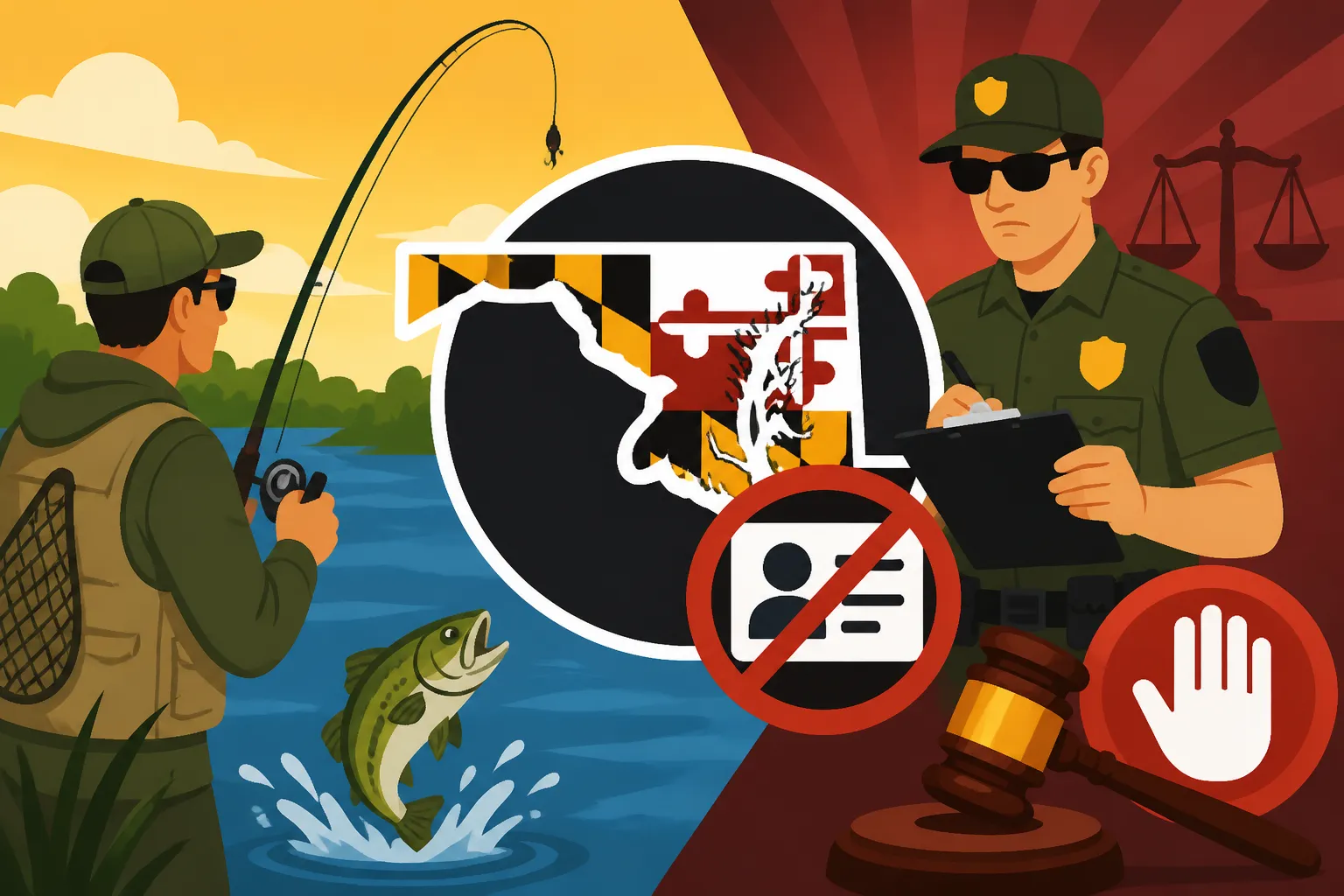
Maryland’s fishing regulations are enforced by the dedicated men and women of the Natural Resources Police (NRP). These officers are not just out there to write tickets; their primary mission is to protect Maryland's natural resources and ensure public safety on the waterways. They have the authority to stop, check licenses, inspect catches, and enforce all fishing laws. It can be a little jarring when an NRP boat pulls up alongside you, or an officer approaches you on a pier, but they are simply doing their job to ensure compliance and protect the resources.
Many anglers express surprise at how diligently the NRP patrols, especially in popular fishing spots or during peak seasons. They are well-trained, often know the local hot spots, and are adept at spotting potential violations. Thinking you can sneak by unnoticed is a gamble that rarely pays off in the long run, and it's simply not worth the risk.
Beyond a Simple Misunderstanding
"I didn't know" or "I forgot" are common refrains heard by law enforcement, but in the eyes of the law, ignorance is rarely a valid excuse. As anglers, we have a personal responsibility to understand and adhere to the regulations that govern our sport. This includes ensuring we have the correct type of license for the waters we are fishing – whether it's a tidal or nontidal license – and that it's current.
Maryland provides a wealth of information regarding its fishing rules, easily accessible through the Department of Natural Resources (DNR) website and their annual fishing guide. To truly stay informed, make sure to consult a resource like Maryland's DNR Fishing and Boating Guide, Explained to get the full picture. Relying on outdated information or hearsay from other anglers can lead to unwitting violations and, unfortunately, penalties that could have been easily avoided. It's on each of us to do our homework before casting a line.
Common Violations That Trigger Penalties
While the most obvious infraction is fishing without any license at all, there are several nuances to Maryland’s licensing requirements that can trip up even experienced anglers, leading to fines and other penalties.
Not Having Any License at All
This is, understandably, the most common reason for a citation. If you’re casting a line in Maryland’s waters and you simply haven’t purchased a valid fishing license, you're in violation. This applies to most adults. There are specific Maryland Fishing License Age Requirements, and you might be surprised to learn that even young anglers need to understand the rules. For instance, while kids under a certain age are often exempt, knowing exactly when that exemption ends is crucial. You can find more details on this in our guide, Do Kids Need a Fishing License in Maryland?. If you're a nonresident, the rules are slightly different, and ensuring you have the correct Maryland Fishing License Guide for 2026 for out-of-state visitors is paramount.
It’s not just about a state license either. Depending on where you’re fishing, like in certain designated trout waters, you might also need additional endorsements. For example, failing to possess a Maryland Trout Stamp Requirements can result in a separate violation, even if you have a general fishing license.
Having the Wrong Type of License
Maryland's diverse waterways mean we have specific licenses for different environments. This is where many anglers, especially those new to the state or trying a new type of fishing, can unintentionally err. The biggest distinction is often between a tidal and nontidal license. If you're fishing in the brackish or saltwater of the Chesapeake Bay or its tributaries, you generally need a Chesapeake Bay Sport Fishing License. If you're hitting freshwater lakes, ponds, or rivers further inland, a Nontidal Fishing License is typically required. Our article, Maryland Nontidal vs Tidal Fishing License, Explained, dives deep into these differences.
Imagine you bought a license for fishing Deep Creek Lake (nontidal) but then decided on a whim to try fishing the Susquehanna River down near Havre de Grace, which is tidal. That nontidal license won't cover you, and you could face a citation. It’s a common pitfall, and it highlights the importance of understanding the specific waters you plan to fish.
Failure to Possess or Display Your License
You bought your license fair and square, but you left it on your kitchen counter. You might think, "Well, I have one, so it should be fine." Unfortunately, it's not. Maryland law requires you to have your license on your person or readily accessible while fishing. This means a physical copy that's clearly displayed (often pinned to a hat or vest), or a digital copy on your phone or other device that you can easily pull up for an NRP officer.
Officers understand that technology makes things easier, so a valid digital copy from the DNR app is generally acceptable. However, make sure your phone is charged, and you know how to quickly access it. Fumbling around or claiming your battery died won't excuse the lack of a readily available license. It's always a good idea to keep it laminated or in a waterproof pouch to protect it from the elements.
More Egregious Violations Beyond Licensing
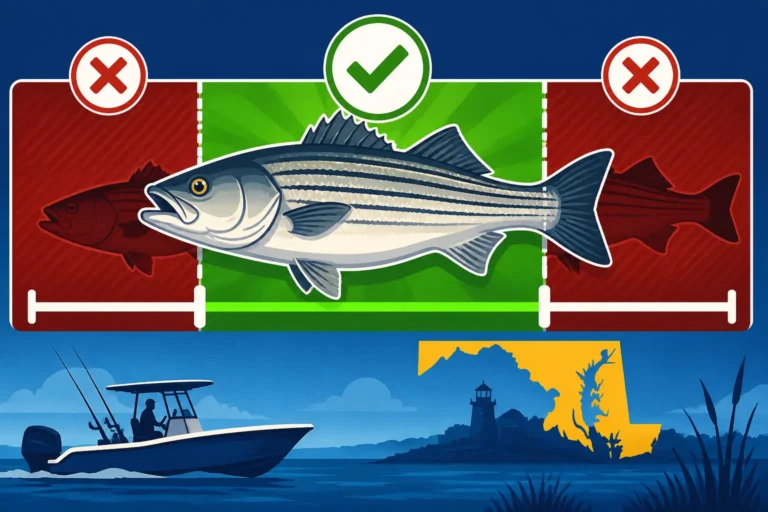
While this guide focuses on license-related infractions, it’s important to understand that the NRP enforces a much broader range of regulations. Violations like exceeding Maryland Fishing Size and Catch Limits by Species, fishing during a Maryland Striped Bass Season and Rockfish Rules closed season, using illegal gear, or catching protected species carry significantly steeper fines and penalties than simply forgetting your license. These types of violations directly impact fish populations and are treated with utmost seriousness. For instance, issues like violating the Maryland Rockfish Slot Limit Explained or fishing in Maryland Spawning River Closures for Striped Bass are strictly monitored and enforced. Be sure you are always up-to-date on all regulations, not just licensing, to avoid much heavier consequences.
The Monetary Cost: Maryland Fishing Fines Explained
Let’s get down to the brass tacks: what kind of financial hit are we talking about if you're caught without a valid fishing license in Maryland? The fines can vary depending on the specific infraction, whether it's a first offense, and the discretion of the enforcing officer or the court.
Standard Fines for License Infractions
In Maryland, fishing without a valid license is typically classified as a misdemeanor. This sounds scary, and it can be. While it's rare for a first-time offense to result in the maximum penalty, the law allows for significant fines. Generally, a first-time offense for fishing without a license can range from a warning (especially if you bought it but forgot it and can prove it quickly) to a fine in the hundreds of dollars. The maximum penalty for a single misdemeanor violation of fishing laws can be up to $1,000.
However, most initial citations for a simple license infraction will fall somewhere in the lower to mid-range of this spectrum, often around $100 to $500, plus court costs. This can still be a significant unexpected expense that could have been easily avoided with a $20-$30 annual license. To give you a clearer picture, here’s a table outlining common fines for various infractions:
| Violation Type | Minimum Fine (Approx.) | Maximum Fine (Approx.) | Other Potential Penalties |
|---|---|---|---|
| Fishing without any valid license | $100 | $1,000 | Court appearance, license issues |
| Fishing with expired license | $75 | $500 | Court appearance, license issues |
| Fishing with wrong type of license | $100 | $750 | Court appearance, license issues |
| Failure to possess/display license | $50 | $250 | Warning, court appearance |
| Failure to have required stamp (e.g., Trout) | $50 | $250 | Court appearance |
| Exceeding bag/size limits | $250 | $1,000+ | License revocation, equipment seizure |
| Fishing during closed season | $250 | $1,000+ | License revocation, equipment seizure |
Note: Fines are approximate and can vary based on specific circumstances, county, and judicial discretion. Court costs are usually additional.
Increased Penalties for Repeat Offenders
The Maryland Department of Natural Resources (DNR) and the court system do not look kindly upon repeat offenders. If you’ve been cited for fishing without a license or for other fishing violations in the past, subsequent infractions will almost certainly result in higher fines and more severe consequences. The leniency often shown for a first-time, minor oversight quickly disappears.
Repeat offenders might face fines at the higher end of the legal spectrum, mandatory court appearances, and a much greater chance of having their fishing privileges suspended or revoked entirely. The system is designed to educate and deter, but if an individual shows a pattern of disregard for the rules, the penalties escalate significantly to reinforce the importance of compliance.
Court Costs and Administrative Fees
The fine itself is often just one part of the financial burden. When you receive a citation that requires a court appearance or when you pay a fine, you'll almost always be subject to additional court costs and administrative fees. These can add anywhere from $25 to $100 or more to your total bill, pushing a seemingly minor infraction into a more substantial financial drain.
These fees cover the processing of your citation, court administration, and other related expenses. It's a hidden cost that many anglers don't anticipate, making that initial fine even more impactful. It just goes to show that trying to save a few dollars by not buying a license can end up costing you exponentially more in the long run.
Broader Consequences Beyond the Dollar Amount
While monetary fines are the most immediate and tangible penalty, the repercussions of fishing license violations in Maryland can extend far beyond a simple payment. These broader consequences can impact your fishing future and even your legal standing.
Potential for License Suspension or Revocation
For serious or repeated violations, the Maryland DNR has the authority to suspend or even permanently revoke your fishing license. Imagine being an avid angler, passionate about casting lines in the Chesapeake, and suddenly being told you can’t fish in Maryland waters for a year, or even longer. This is a very real possibility, especially if you have a history of non-compliance or if your violation involves more serious infractions like exceeding bag limits, fishing in restricted areas during Maryland's 2026 Striped Bass Season Dates, or possessing illegal fish.
A suspension means you are legally prohibited from purchasing a new license or using any existing licenses during that period. A revocation is even more severe, potentially ending your fishing privileges in Maryland indefinitely. This loss of access to a beloved pastime can be far more impactful than any fine, making it a powerful deterrent for those considering bending the rules.
Equipment Seizure and Forfeiture
In more serious cases, particularly those involving commercial poaching, illegal netting, or repeated and blatant disregard for regulations, the Natural Resources Police can seize your fishing equipment. This might include your rods, reels, nets, and even your boat. While this is less common for a simple forgotten license, it's a possibility for egregious violations. Once seized, these items can be forfeited to the state, meaning you lose them permanently.
This isn't just a minor inconvenience; it's a significant financial loss. A good fishing boat, quality rods, and tackle can represent thousands of dollars in investment. The thought of losing all your cherished gear because of a violation can be a sobering reminder of the serious nature of these laws. This kind of consequence truly drives home the importance of adhering to all regulations.
Criminal Record and Legal Implications
Although most minor license infractions are resolved with a fine, remember that fishing without a license is categorized as a misdemeanor in Maryland. While a first-time, minor offense might not result in a significant impact on your permanent criminal record, any conviction for a misdemeanor can be a matter of public record. This could potentially affect future background checks for employment, housing, or even professional licenses.
While jail time for a simple fishing license violation is extremely rare and typically reserved for repeat, severe offenses or those that involve other criminal activity, the possibility underscores the seriousness of these laws. It's not just about a ticket; it's about potentially engaging with the criminal justice system, which can be a stressful and costly experience.
The Social and Ethical Ramifications
Beyond the legal and financial penalties, there are also social and ethical considerations. Being caught fishing illegally can be embarrassing and damaging to one's reputation, especially within the close-knit angling community. No one wants to be "that guy" who doesn't follow the rules. It also speaks to a broader ethical responsibility to respect the natural environment and the shared resources that all anglers rely on. Choosing to fish illegally undermines the efforts of countless conservationists and law-abiding anglers who work hard to protect these precious resources for everyone.
Proactive Steps to Stay on the Right Side of the Law
No one wants to deal with fines, penalties, or the stress of legal trouble. Thankfully, avoiding these issues is straightforward. It all comes down to being prepared, informed, and responsible.
Verifying Your License Status
One of the easiest ways to prevent a problem is to regularly check the status of your fishing license. Don't wait until you're already on the water to realize it expired last month! The Maryland DNR offers online portals where you can easily look up your current license information, see its expiration date, and initiate a renewal. Our guide, How Long a Maryland Fishing License Lasts, can give you detailed information on license durations.
Setting a reminder on your phone or marking your calendar for a month before your license is due to expire can save you a lot of hassle. Many anglers also appreciate the convenience of checking their status and initiating a renewal online, as detailed in our article, How to Renew a Maryland Fishing License Online. A quick check can give you peace of mind and keep you compliant.
Understanding Specific Regulations
Maryland's fishing regulations can be complex, especially with different rules for various species, seasons, and bodies of water. Don't rely solely on what you think you remember or what a buddy told you. The official source for all rules is the Maryland DNR Fishing and Boating Guide. This guide is updated annually and is available both online and in print. Make it a habit to review it before each fishing season or before heading to a new fishing spot.
For those who like physical copies, sometimes you can even find laminated, quick-reference guides or detailed books on Maryland fishing regulations on platforms like Amazon. These can be incredibly useful for on-the-water reference, ensuring you’re always up-to-date on everything from Maryland Flounder Size Limit to specific rules for Maryland Invasive Fish Rules: Blue Catfish and Snakehead. Being well-informed is your best defense against accidental violations.
Where to Purchase and Keep Your License Accessible
Buying a Maryland fishing license is simpler than ever. You can purchase one online through the Maryland DNR’s COMPASS portal, which is incredibly convenient and allows you to print a temporary license immediately. Our guide, Buying a Maryland Fishing License Online, walks you through the steps. Alternatively, you can buy a license in person at various licensed retail agents throughout the state, including bait and tackle shops, sporting goods stores, and some convenience stores. Our post, Where to Buy a Maryland Fishing License in Person, lists common locations.
Once you have your license, the most crucial step is to keep it accessible while you are fishing. Carry a physical copy in a waterproof wallet or lanyard, or have the digital version saved on your phone in the DNR app. Make sure your phone is charged so you can display it if asked. Having it immediately available demonstrates responsibility and can often smooth over an interaction with an NRP officer, even if there’s a minor misunderstanding. Don't forget, having a valid license is only half the battle; being able to prove you have it is just as important.
Disclaimer
The information provided in this guide is for general informational purposes only and does not constitute legal advice. Fishing regulations in Maryland can change, and interpretations may vary. Always consult the most current Maryland Department of Natural Resources (DNR) regulations and, if necessary, seek legal counsel for specific situations. Fishing without a license or violating fishing regulations carries legal consequences.