Best Structure to Target for Chesapeake Bay Striped Bass
The vast, shimmering expanse of the Chesapeake Bay can feel intimidating when you're trying to track down those elusive striped bass, often affectionately called rockfish. It’s easy to feel lost, just casting randomly and hoping for a bite in such a massive body of water. But here's the secret: striped bass are creatures of habit and opportunity, and they use specific underwater features—what we call "structure"—as their highways, homes, and ambush points. This guide will walk you through the most productive structures to target in Maryland's Chesapeake Bay, helping you understand why rockfish hang out there and how to fish them effectively, turning your next outing into a much more productive and enjoyable experience.
Understanding Striped Bass Behavior Around Structure
To consistently catch striped bass, you first need to think like one. These powerful predators are constantly looking for two things: an easy meal and a comfortable place to hang out that offers both shelter and a strategic advantage. Structure provides all of this in spades. It's not just a random bump on the bottom; it's a dynamic part of their ecosystem.
Why Structure Attracts Striped Bass
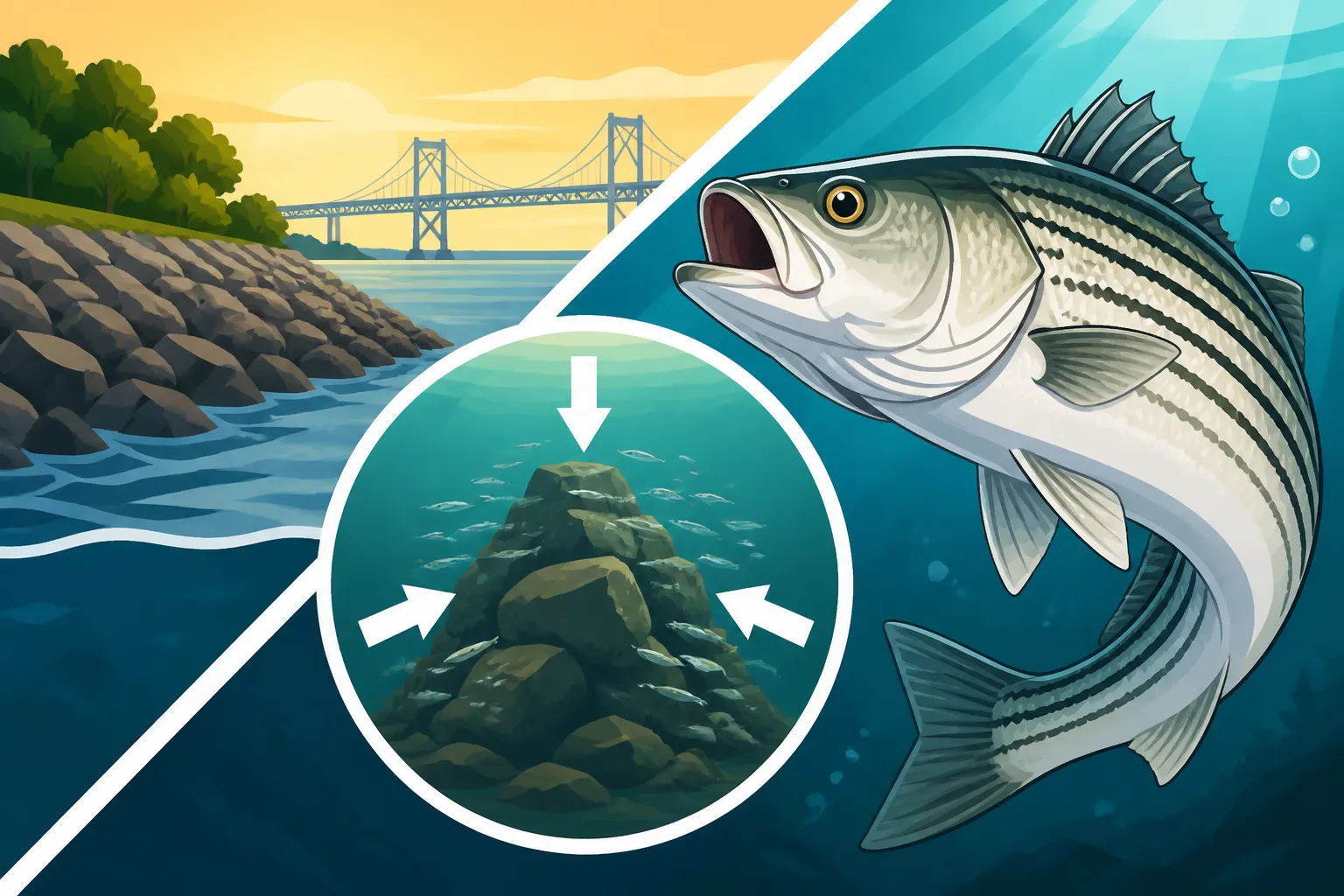
Imagine yourself trying to catch dinner in a wide-open field versus hiding behind a bush or a fence post, waiting for prey to come by. That's essentially what structure does for a striped bass. It breaks up the current, creating eddies and slack water where fish can rest without expending too much energy. This is especially crucial in the strong tidal flows of the Chesapeake Bay. These current breaks also act like a buffet line, concentrating baitfish and other small prey items that get swept along by the tide. The stripers simply hold in position, letting the food come to them, ready to dart out and strike when an opportunity presents itself.
Beyond just food, structure provides crucial shelter. It can protect smaller baitfish from larger predators, which, in turn, draws those larger predators like striped bass. It offers refuge from strong sun in shallow waters or from aerial predators. Submerged trees, rocks, bridge pilings, and even old wrecks create a complex three-dimensional environment that provides countless nooks and crannies for fish to hide, rest, and ambush. Understanding how a striped bass uses a specific piece of structure—whether it's an ambush point or a resting area—is the first step to figuring out how to fish it successfully.
Reading the Water for Structure Clues
Finding structure isn't always about seeing a rocky outcrop above the water. In the Chesapeake, much of the best structure is hidden beneath the surface. Learning to "read" the water and your electronics is paramount. Visible cues can be subtle but vital: slight changes in wave patterns, eddies, or current lines on the surface can indicate submerged obstructions. Sometimes, you might spot birds diving repeatedly in a specific area, indicating baitfish are being pushed to the surface by predatory fish below, often against a submerged ledge or hump.
Modern fishing electronics are truly your best friend here. A good fish finder or sonar unit will show you changes in bottom contours, identify submerged rocks, wrecks, or even dense schools of baitfish holding tight to structure. Many anglers use side-imaging or down-imaging features to get a detailed picture of what's below and around their boat. GPS mapping units often highlight channel edges, drop-offs, and even marked artificial reef sites, giving you a roadmap to potential hotspots. Even if you don't have the fanciest gear, knowing how to interpret the basic readings of your depth finder can make all the difference. You can find excellent resources on identifying structure and interpreting your sonar, even specialized charts, on sites like Amazon.
Key Structures to Target in the Chesapeake Bay
The Chesapeake Bay is a diverse ecosystem with a wide variety of structures, both natural and man-made, that attract striped bass. Knowing what to look for and where to find it is key to a successful fishing trip.
Underwater Ledges and Drop-Offs
These are perhaps the most classic and consistently productive structures in the Chesapeake Bay. Underwater ledges and drop-offs are essentially underwater cliffs or steep changes in depth, where the bottom drops sharply from a shallower flat into deeper water. These areas create perfect current breaks, allowing stripers to sit just out of the main flow, conserving energy while waiting for bait to be swept over the edge. Think of them as the natural highways and hunting grounds for striped bass.
You'll find prominent ledges along the main shipping channels, near major points, and where rivers meet the Bay. For instance, the edges of the main Chesapeake Bay channel, particularly near the mouth of the Patuxent River or off Kent Island, are prime examples. Fish often stack up along these edges, especially during tidal changes when the current is at its strongest. They'll hug the deeper side of the drop-off, looking up into the shallower water for passing baitfish. Successful anglers learn to differentiate between a subtle slope and a sharp, defined ledge—the sharper the change, the more likely it is to hold fish. Fishing Maryland's Channel Edges and Drop-Offs for Striped Bass is a technique many seasoned anglers swear by.
Artificial Reefs and Wreck Sites
Maryland has done a fantastic job establishing and maintaining a network of artificial reefs throughout the Bay, often using materials like old bridge rubble, concrete, and even sunken vessels. These reefs, along with natural wreck sites, become immediate magnets for marine life. Algae grows on them, attracting small invertebrates, which in turn draw in baitfish like perch and menhaden. And where the baitfish go, the striped bass follow.
These reefs and wrecks offer incredible habitat complexity, providing shelter, feeding grounds, and spawning areas for many species, including striped bass. Locations like Russells Reef near Solomons Island, or the various artificial reefs dotted around Tilghman Island, are well-known hotspots. Many of these sites are charted by the Maryland Department of Natural Resources (DNR) and can be found on navigational charts. They're like underwater cities, bustling with activity, making them excellent targets for both active fishing and for setting up an Anchoring and Chum Lines for Chesapeake Bay Rockfish in Maryland operation. Modern fish finders, readily available on Amazon, are incredibly helpful for marking these subtle changes and identifying these complex structures.
Bridge Pilings and Channel Markers
Man-made structures like bridge pilings and channel markers might seem simple, but they are absolutely essential for striped bass. The Chesapeake Bay Bridge, for instance, is not just a crossing; it's a massive underwater apartment complex for fish. Each piling acts as an individual piece of structure, breaking current, accumulating bait, and providing shade. Striped bass will often hold tight to the pilings, especially on the down-current side, waiting to ambush anything that drifts by.
Similarly, channel markers, buoys, and even old dock pilings offer vertical habitat. These structures attract baitfish that seek shelter around them. Larger rockfish will patrol the perimeters or hold directly beneath them, ready to strike. The deeper pilings, especially those exposed to strong currents, tend to hold larger fish. When Fishing Near the Chesapeake Bay Bridge, anglers often focus intensely on these structures. Don't overlook smaller, less obvious markers or defunct pilings either, as these can hold just as many fish, often with less fishing pressure.
Oyster Reefs and Shell Bottoms
While not as dramatic as a sunken ship or a towering bridge piling, natural oyster reefs and areas with extensive shell bottoms are incredibly productive and vital structures in the Chesapeake Bay. Oyster reefs are living, breathing ecosystems that filter water, provide habitat, and attract an incredible amount of marine life. The rough, uneven surface of these reefs creates micro-eddies and current breaks, and the oysters themselves provide a food source for many smaller organisms, which then become bait for stripers.
These areas are often identified by slightly shallower depths on charts, or by the presence of other bottom-dwelling species that feed on the reef. Striped bass will cruise over and around these reefs, particularly during feeding tides, gorging themselves on baitfish and crustaceans that inhabit the shell beds. You can sometimes locate these by observing changes in the clarity of the water or by paying close attention to your depth finder for a "hard bottom" reading. While less visually obvious, these natural structures are fundamental to the Bay's health and its excellent striped bass fishery.
How to Effectively Fish Different Structures for Striped Bass
Targeting structure isn't a one-size-fits-all approach. The technique you use should be tailored to the specific type of structure, the depth, and the prevailing conditions.
Jigging and Live-Lining Around Vertical Structure
When you're dealing with vertical structures like bridge pilings, channel markers, or the sheer faces of underwater ledges, jigging and live-lining are often your most effective strategies. The key here is to present your bait or lure vertically, keeping it in the strike zone for as long as possible.
For jigging, soft plastic baits rigged on heavy jig heads (often 1 to 3 ounces, depending on current and depth) are incredibly productive. Drop your jig to the bottom, then work it back up with a series of sharp snaps and pauses, mimicking a struggling baitfish. The goal is to keep that lure bouncing and fluttering near the structure where stripers are holding. Many anglers will count down after casting to ensure their lure reaches the desired depth before beginning their retrieve. Some of the most effective lures for jigging, like a 1 oz chartreuse jig head paired with a soft plastic body, can be easily stocked up on via Amazon before your next trip. To learn more, check out our guide on Jigging Techniques for Maryland's Chesapeake Bay Striped Bass.
Live-lining is another incredibly potent method, particularly when you can find active baitfish like spot or menhaden. You hook a live baitfish through the nose or back and send it down near the structure. The natural movement of the live bait is often irresistible to stripers, especially larger ones. Many anglers use a fish-finder rig with a heavy sinker to keep the bait near the bottom, or just a simple hook and leader for a more natural presentation. The fish do most of the work for you! Our article on Live-Lining Spot for Maryland's Chesapeake Bay Rockfish provides even more detailed tactics.
Trolling Along Channel Edges and Ledges
Trolling is an excellent method for covering a lot of water and locating schools of striped bass that are moving along expansive structures like channel edges, ledges, and large, irregular bottom contours. It allows you to present multiple lures at varying depths simultaneously, increasing your chances of finding where the fish are holding.
When trolling, you're essentially dragging lures behind your boat at a slow, controlled speed. The type of lure, its size, and the amount of line you let out will dictate its running depth. For fishing channel edges, popular options include umbrella rigs, Mojos, and diving crankbaits like the Mann's Stretch series. These lures are designed to imitate schools of baitfish and can be fished at depths ranging from shallow water to 40 feet or more, depending on the model and how they are deployed. Pay close attention to your fish finder to stay on the edge of the channel or ledge, and adjust your trolling speed and lure depth until you start getting bites. Trolling Bucktails for Maryland Striped Bass is a technique that has consistently proven effective for many years in the Bay. Remember that Maryland Striped Bass Fishing Techniques are varied, and trolling is one of the most popular for covering ground.
Casting and Bottom Fishing Over Reefs
Artificial reefs and natural shell bottoms are often ideal for casting and bottom fishing, especially when you've located a concentration of fish on your electronics. These structures are usually less defined than a sheer drop-off or a single piling, offering a broader area where fish might be spread out.
For casting, bucktail jigs, soft plastic paddle tails, and even topwater plugs (if the fish are feeding on the surface) can be incredibly effective. Cast your lure out, let it sink to the appropriate depth, and retrieve it with varying speeds and actions. The goal is to draw a reaction strike from fish holding within the reef's crevices or cruising just above it. Focus on areas where you see baitfish on your sonar or where birds are actively feeding. You might also want to consult guides on the Best Time of Day to Fish Maryland's Chesapeake Bay for optimal casting windows.
Bottom fishing over reefs and shell bottoms can also be highly productive, especially when stripers are less active or feeding on crustaceans. Use a simple bottom rig with fresh bait like peeler crab, bloodworms, or cut bait (e.g., menhaden). Drop your bait directly onto the reef and let it sit. This is a passive but often deadly effective technique, particularly if you're anchored upcurrent of a promising reef and using a chum slick. Just be prepared for snags, as the rough bottom can be unforgiving on tackle. You can find robust bottom fishing rigs and all sorts of bait delivery systems on Amazon, ready for your next trip.
Seasonal Considerations for Targeting Structure
Striped bass are migratory, and their use of structure changes dramatically with the seasons. What works in spring might not work in summer, and understanding these shifts is critical for consistent success. Moreover, always be aware of the Maryland Striped Bass Season and Rockfish Rules which dictate when and where you can keep fish.
Spring and Fall Runs
These are arguably the most exciting times to target striped bass in the Chesapeake Bay. During the spring, large schools of migratory stripers move into the Bay to spawn, often utilizing major deep-water channels, ledges, and the lower sections of spawning rivers like the Susquehanna, Choptank, and Patuxent. After spawning, they start their migration back towards the ocean, again using these same major structures as travel corridors.
In the fall, the pattern reverses. Striped bass return to the Bay, often following massive schools of baitfish like menhaden. This is when you'll see incredible feeding frenzies. During both runs, look for fish concentrated along prominent channel edges and large underwater humps. These structures provide excellent current breaks and consolidate baitfish. Trolling, particularly with large tandem rigs or Mojos, is incredibly effective for intercepting these migrating schools. Casting jigs or live-lining can also be red-hot once you've located a school holding on a particular piece of structure. Many anglers look forward to Maryland's Fall Striped Bass Run for epic action. Remember, How Tides Affect Fishing in Maryland's Chesapeake Bay is especially crucial during these high-activity periods.
Summer Patterns
As the Bay waters warm up in summer, striped bass tend to seek out deeper, cooler water, often congregating around the most significant underwater structures. This means focusing on the deepest channel edges, prominent wrecks, and artificial reefs where cooler, oxygen-rich water persists. They'll also use these structures to find shade and protection from the intense summer sun.
During summer, the bite can sometimes slow down, especially in the heat of the day. Anglers often find success by targeting fish during the low-light hours of dawn and dusk, or by focusing on structures that offer consistent deep water access. Live-lining spot, eels, or other locally caught baitfish can be particularly effective during this time, as can slow-trolling deep-diving crankbaits or Mojos along major channel ledges. When fishing popular areas like Sandy Point State Park, targeting structure near deeper water will be key. Our guide on Summer Fishing Patterns on Maryland's Chesapeake Bay delves into more strategies for these warmer months.
Winter Fishing Around Structure
While many anglers pack it in for the colder months, dedicated winter anglers know that striped bass can still be caught, albeit with different tactics. During the coldest parts of winter, many striped bass move out of the upper Bay and into the deeper, more saline waters of the lower Bay or even out into the ocean. However, some fish will remain, often holding tight to the deepest, most prominent structures where water temperatures are slightly more stable and baitfish might congregate.
Look for fish schooled up tightly on deep channel ledges, around major bridge pilings (like those of the Chesapeake Bay Bridge, for example), or on significant artificial reefs. The fish will be much less active, so a slow, deliberate presentation is necessary. Vertical jigging with heavy metal jigs or soft plastics, fished extremely slowly, can entice a lethargic bite. Live-lining can also work, again with a very subtle presentation. It requires patience and persistence, but the reward can be a few large, healthy stripers that have hunkered down for the winter.
Common Structures and Fishing Strategies for Striped Bass
To help you visualize and plan your attack, here’s a quick overview of some common structures and the best ways to approach them:
| Structure Type | Why Stripers Like It | Best Fishing Techniques | Ideal Depths (approx.) | Key Gear/Tips |
|---|---|---|---|---|
| Underwater Ledges/Drop-Offs | Current breaks, ambush points, bait congregation | Trolling, Live-lining, Vertical Jigging | 15-40 feet | Use electronics to pinpoint the exact edge; vary lure depth; fish slack water side. |
| Bridge Pilings/Markers | Current breaks, vertical habitat, shade | Live-lining, Jigging, Trolling (around bridge spans) | 10-60 feet | Fish tight to the structure; focus on current-facing and down-current sides; use weighted jigs for strong current. |
| Artificial Reefs/Wrecks | Complex habitat, baitfish magnet, ambush points | Casting Jigs/Soft Plastics, Bottom Fishing, Live-lining | 10-50 feet | Mark exact location with GPS; use heavy leader for abrasion resistance; be prepared for snags. |
| Oyster Reefs/Shell Bottoms | Food source, irregular bottom, current breaks | Bottom Fishing, Casting Jigs/Soft Plastics (lighter jigs) | 5-25 feet | Fish during feeding tides; use smaller, natural baits; check charts for charted oyster beds. |
| Channel Edges (Main) | Major migration routes, deep-water access, current | Trolling (Mojos, umbrella rigs), Live-lining, Deep Jigging | 20-80 feet | Follow contours precisely; adjust speed and depth to match bait; look for bait schools on sonar. |
No matter which structure you're targeting, always pay attention to the tide and current, as these play a massive role in how fish position themselves and how actively they feed. Good luck out there, and tight lines!
Disclaimer
Fishing regulations, seasons, and licensing requirements in Maryland can change frequently. While we strive to provide the most accurate and up-to-date information, it is ultimately your responsibility to consult the latest Maryland Department of Natural Resources (DNR) official publications and regulations before engaging in any fishing activities. This guide is for informational purposes only and should not be considered a substitute for official legal guidance.