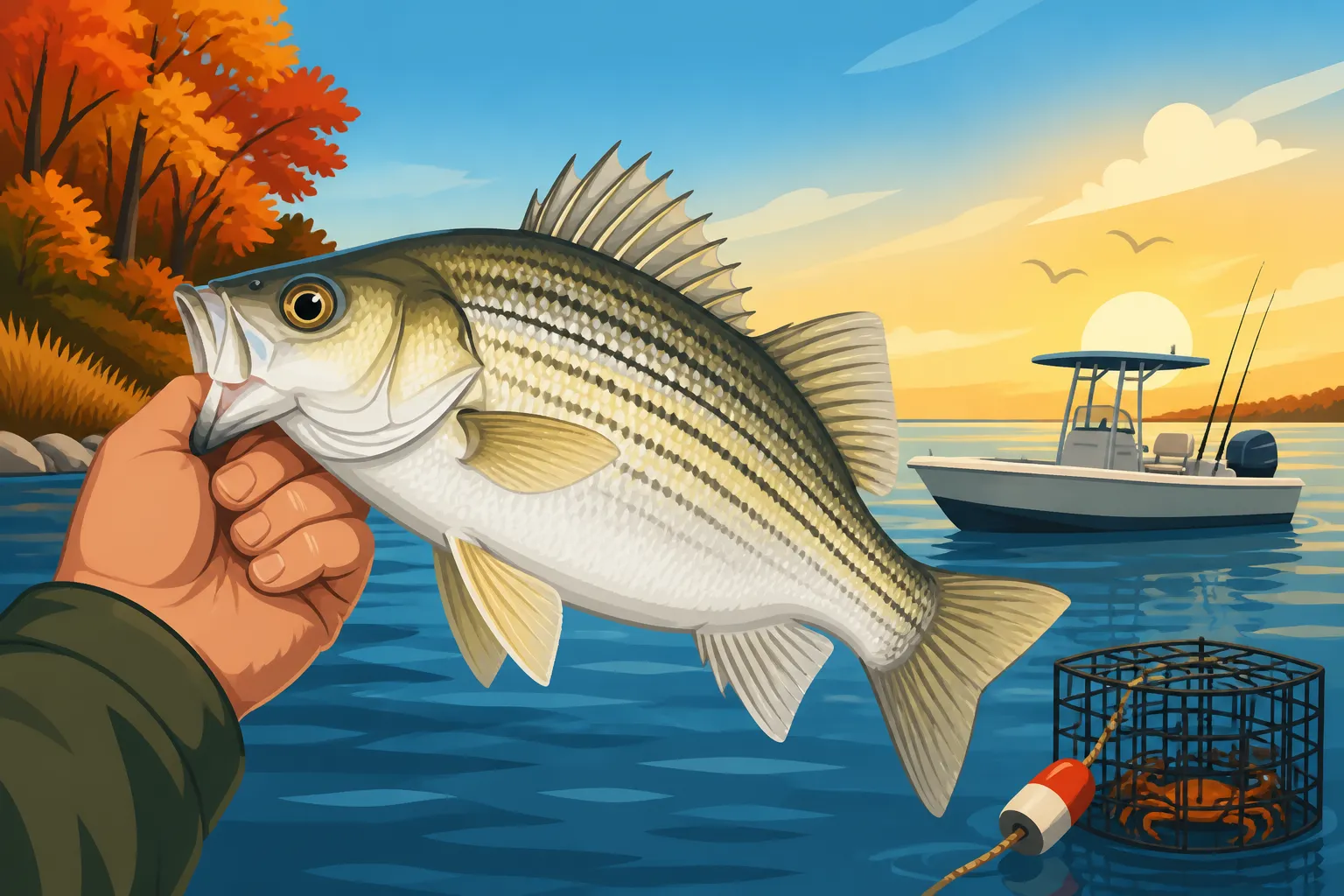
Fall White Perch Fishing in Maryland’s Chesapeake Bay
As the crisp air of autumn sweeps across Maryland, many anglers start thinking about the trophy striped bass or the last push of speckled trout. But for those in the know, fall in the Chesapeake Bay brings some of the most consistent and exciting fishing for one of the Bay's most underrated fighters: the white perch. This guide is all about helping you understand the unique behaviors of white perch in the fall, so you can adapt your approach and fill your cooler with these delicious panfish.
Why Fall Perch Fishing is Unique in the Chesapeake Bay
Fall isn't just a pretty backdrop for fishing; it's a dramatic shift that completely changes how and where white perch behave. Unlike the predictable patterns of summer, autumn forces perch to make critical decisions about feeding and staging, driven almost entirely by the dropping water temperatures. Understanding these shifts is key to consistent success.
Seasonal Behaviors and Migrations
As summer's warmth fades, white perch, like many other Bay species, begin to prepare for winter. This preparation involves a significant increase in feeding, as they try to pack on fat reserves. Initially, they might still be found in some of their summer haunts, particularly in the shallower waters of creeks and rivers if the water hasn't cooled too much. However, as the fall progresses and the days shorten, you’ll notice a distinct migration. White perch will start moving out of these shallower, less stable waters and consolidate into larger schools, heading towards deeper, more stable mainstem Bay channels or the deeper sections of larger tributaries. They're looking for areas where the water temperature will remain more consistent throughout the colder months, allowing them to conserve energy. This movement is less about a long-distance journey and more about aggregating in specific, deeper holding areas. It’s a crucial time because when you find one, you often find hundreds.
Water Temperature's Impact
Water temperature is the absolute driving force behind fall white perch activity. In early fall, say late September and early October, the water might still be in the 60s Fahrenheit. During this period, perch are still relatively active and can be found in a variety of depths, from shallow to moderately deep. They're opportunistic and will chase down bait. However, as the mercury drops into the 50s and even low 40s later in the fall, their metabolism slows down considerably. They become less inclined to chase and prefer to ambush prey. This is when they really start to huddle together in the deepest parts of channels and river bends, often near some kind of structure that offers shelter and a current break. Monitoring water temperature is perhaps the single most important piece of information for locating fall white perch. A good fish finder with a temperature gauge is invaluable here, or even a simple thermometer cast into the water. Understanding how these fish react to cooling waters allows you to predict their movements, helping you decide whether to explore shallow edges or head straight for the deep channels.
Forage Shifts and Baitfish Movements
Just as the white perch are adjusting, so too are their primary food sources. In the early fall, there's often still an abundance of small baitfish like juvenile spot, croaker, and silversides, along with grass shrimp and various larval invertebrates. White perch will gorge on these readily available snacks. However, as the water cools, many of these smaller baitfish either move out of the shallows into deeper water, migrate south, or simply become less active. This forces white perch to adapt their diet. They'll start to rely more heavily on smaller, slower-moving prey that they can ambush with minimal energy expenditure. This can include small crabs, worms, or even the remnants of dying baitfish. Sometimes, you'll find them keying in on very specific organisms. This shift means that the baits and lures that worked wonders in summer might become less effective, and a more subtle, bottom-oriented presentation becomes necessary. Understanding this forage shift helps you select the most appealing bait for these often finicky fall fish.
Essential Gear for Fall White Perch
When you're chasing fall white perch, having the right gear can make all the difference. These aren't the biggest fish in the Bay, but they can put up a surprisingly strong fight, especially when hooked in a deep school. Plus, being prepared for cooler weather and often deeper fishing conditions is paramount.
Rods, Reels, and Line Selection
For white perch, you'll want a sensitive yet sturdy setup. A light to medium-light spinning rod, somewhere between 6 to 7 feet in length, is ideal. Look for a rod with a fast action tip; this sensitivity allows you to detect those subtle fall bites, which can be very light as the fish's metabolism slows. Paired with this, a 1000 to 2500 series spinning reel provides a good balance. You don't need a huge reel, but one with a smooth drag system is always a plus. For line, many anglers swear by a braided mainline, typically 6 to 10 lb test, because of its zero stretch and incredible sensitivity. This allows you to feel even the slightest tap from a perch in 30 or 40 feet of water. However, braid is visible, so always tie on a fluorocarbon leader of 4 to 8 lb test. This leader provides invisibility, abrasion resistance against structure, and a bit of shock absorption. Keep your knots clean and strong, especially where the braid meets the fluorocarbon. If you prefer a simpler setup, a monofilament line in the 6-8 lb range can work, but you'll sacrifice some sensitivity. Many excellent options for these setups can be found on sites like Amazon, offering a wide range of brands and price points to suit any budget.
Lure and Bait Recommendations
Fall white perch are often less aggressive than their summer counterparts, so your bait and lure choices need to reflect that. The classic bottom rig, featuring two small hooks (sizes #4 to #8) and a sinker on the bottom, is a perennial favorite. For natural bait, bloodworms are gold. They have an irresistible scent and action that fall perch can't resist. Small pieces of peeler crab, grass shrimp, or even Fishbites can also be very effective. Sometimes, a tiny piece of clam or squid will do the trick if the perch are particularly picky.
For artificial lures, smaller is usually better. Small jig heads (1/8 to 1/4 ounce) tipped with a soft plastic grub, curly tail, or a Gulp! Alive! peeler crab or shrimp imitation are incredibly productive. Colors like chartreuse, white, pearl, or motor oil are often top performers, but sometimes a natural brown or green can surprise you. Spybaits or very small spoons can also entice a strike, especially if you find a more aggressive school. Remember, fall perch often hug the bottom, so your presentation needs to get down to them.
Terminal Tackle for Success
Beyond your rod and reel, having the right terminal tackle is crucial for fall white perch success. As mentioned, a good supply of small hooks is essential. Aberdeen hooks are popular due to their light wire, which bends out if snagged, potentially saving your entire rig. Swivels are also important to prevent line twist, especially if you're using spinning gear or presenting baits that tend to rotate in the current. A small barrel swivel between your main line and leader, or above your bottom rig, is standard.
Sinkers will vary depending on current and depth. In deeper channels with strong current, you might need 1/2 ounce up to 1 ounce or even heavier to hold bottom. For shallower areas, 1/8 to 1/4 ounce might suffice. Pyramid, bank, or Sputnik sinkers are all good choices for holding bottom. Don't forget a pair of pliers for unhooking fish and cutting line, and a small cooler with ice to keep your catch fresh. A small tackle box with compartments from a brand like Plano can keep all these small items organized. You'll also want some warm gloves and a hat, as fall mornings on the Bay can be quite chilly.
Top Fall White Perch Fishing Techniques
Chasing white perch in the fall isn't just about showing up; it's about understanding their nuanced behavior and adapting your techniques accordingly. The active, chasing schools of summer are often replaced by more lethargic, bottom-hugging aggregations that require a different approach.
Jigging the Deeper Channels
When white perch move into deeper channels and river bends for the fall, jigging becomes an incredibly effective technique. This involves using small jigs, typically 1/8 to 1/2 ounce, depending on depth and current, often tipped with a piece of bait like a bloodworm or a small soft plastic. The key is to get your jig directly to the bottom where the perch are holding. Once on the bottom, a slow, methodical retrieve with subtle lifts and drops is usually best. Think of it as barely moving the jig off the bottom, then letting it flutter back down. Sometimes, simply holding the jig still on the bottom with occasional lifts can be enough to trigger a bite.
It’s often a vertical presentation, meaning you're dropping the jig straight down from the boat, directly over the fish you see on your fish finder. This allows for precise targeting of schools. Look for humps, ledges, and channel edges in 20 to 50 feet of water where baitfish might also be congregating. This technique requires patience and a good feel for your line, as fall perch bites can be incredibly light – sometimes just a slight "mushy" feeling rather than a distinct tap. Many anglers find that a sensitive rod with a fast tip, as discussed previously, really shines here.
Bottom Fishing Structures and Ledges
Bottom fishing is a timeless and highly productive method for fall white perch, especially when they are concentrated near structure or along sharp depth changes. This typically involves using a two-hook bottom rig, often baited with bloodworms or small pieces of peeler crab. The idea is to present your bait right on the bottom, where the perch are cruising for an easy meal. Look for areas with hard bottom, shell beds, oyster reefs, or subtle ledges where the depth changes abruptly. These are natural congregation points for perch seeking cover and food.
Anchoring up-current from a promising piece of structure and letting your baits drift into the target zone is a common tactic. Once your rig is on the bottom, keep just enough tension on your line to feel a bite, but allow the current to work your bait naturally. Remember that white perch often "peck" at the bait before fully committing, so don't set the hook on the first tap. Wait for a solid pull or the steady weight of the fish. This technique is particularly effective in larger tidal rivers like the Choptank River or Patuxent River, where significant depth changes and underwater structures provide ideal fall habitat for white perch.
Casting Shallower Flats on Warmer Days
While fall perch tend to move deep, there are always exceptions, especially during periods of unseasonably warm weather or prolonged sunny spells in early to mid-fall. On these days, warmer water temperatures might draw schools back into shallower flats, particularly those with grass beds or oyster shells. These areas can warm up faster during the day, making them attractive feeding grounds.
In these scenarios, light tackle casting with small spinners, spoons, or jig heads becomes viable. Target depths of 5 to 15 feet, casting towards the edges of grass beds or over shell bottoms. A slow, steady retrieve is usually more effective than a fast one. Sometimes, a quick twitch-twitch-pause retrieve can mimic an injured baitfish and trigger a strike. While these shallower opportunities might be less frequent than deep-water jigging, they can offer some incredibly fun and active fishing, especially if you're looking for a change of pace from traditional bottom fishing. Don't be afraid to experiment with different depths and retrieve speeds until you find what the fish are keying in on.
Finding the Best Fall Perch Hotspots
Locating fall white perch isn't always easy, as their movements are dictated by a combination of cooling water, available forage, and safe wintering grounds. However, knowing where to look significantly increases your chances of finding those packed schools.
Main Bay Tributaries and Creeks
Many of Maryland's major tributaries, such as the Severn, Magothy, Patapsco, and Bush Rivers, become prime locations for fall white perch fishing. In the early fall, perch might still be found higher up in these creeks and rivers, especially in areas with oyster reefs, piers, or bridge pilings that hold heat. However, as the fall progresses, they'll move downstream towards the deeper, wider sections closer to the mainstem Bay. Look for deep holes, channel edges, and drop-offs within these rivers. Areas where a creek empties into a larger river, creating a current seam, can also be productive. Think about spots like the mouth of the Wye River or the deep channels near the Kent Narrows. These spots offer a combination of forage, deeper water, and often some current protection.
Channel Edges and Underwater Structure
This is where your fish finder truly becomes your best friend. Fall white perch love to congregate along pronounced channel edges, especially those that drop quickly from a shallower flat into a deeper trench. These edges act as highways and feeding lanes. Look for any kind of significant underwater structure on or near these edges: old oyster reefs, shell beds, submerged logs, rock piles, or even artificial reefs. These structures provide ambush points and protection from current. The deeper sections of the main Chesapeake Bay shipping channels, or the deeper parts of larger tributaries, often hold large schools. Popular spots include the main Bay channel from the Bay Bridge south, or the deep holes in the Chester River. Scanning with your electronics until you mark dense schools of fish tight to the bottom is the most efficient way to locate them.
Deep Water Piers and Bridges
For shore-bound anglers, or those without a boat, deep water piers and bridges offer excellent access to fall white perch. Structures like the Romancoke Pier on Kent Island, the Matapeake Pier, or even some of the deeper public piers along the Patapsco River can hold significant numbers of perch. The pilings themselves provide structure and attract baitfish, which in turn attract the perch. The deeper water surrounding these structures offers the temperature stability that fall perch seek.
When fishing from a pier or bridge, casting out a bottom rig is typically the most effective method. Let your rig sink straight down near the pilings, or cast it out to the edge of the channel if accessible. Be prepared for snags, as these areas are often heavily structured with oyster growth and debris. Using slightly heavier tackle can sometimes help you muscle a snag free. Remember to check local regulations for fishing from specific piers, as some might have different rules regarding open seasons or catch limits. Fishing from a pier is a fantastic way to experience Fall White Perch Fishing in Maryland's Chesapeake Bay without the need for a boat.
Navigating Weather and Tides for Optimal Fishing
Just like with any fishing in the Chesapeake Bay, understanding how weather patterns and tidal movements influence fish behavior is paramount for consistent success, especially when targeting fall white perch. These elements can determine whether you have an epic day or a slow one.
Understanding Fall Weather Patterns
Fall weather in Maryland can be notoriously fickle, swinging from Indian summer days to bitter cold fronts in a matter of hours. White perch, particularly in deeper water, are generally less affected by sudden barometric pressure changes than some other species, but sustained trends absolutely impact them. Extended periods of stable, mild weather can keep perch more active and spread out. However, a strong cold front that brings plunging air temperatures and strong winds will often push perch even deeper and make them more lethargic.
On bright, sunny days, especially in early fall, perch might move shallower to warm themselves or feed on sun-warmed flats. On overcast days or after a cold front, they tend to stay deeper and closer to the bottom, requiring a more subtle presentation. Paying attention to weather forecasts, including wind direction and speed, is crucial for planning your trip and ensuring safety on the water. Calm, high-pressure days following a cold front can often be surprisingly productive, as the fish settle into their deeper haunts.
Tidal Influences on Perch Movement
Tides play a significant role in where white perch feed and congregate, even in deeper water. While tidal current might not be as visually obvious in deep channels as it is in shallow creeks, it's still moving the water and influencing the fish. White perch, being opportunistic feeders, often position themselves in current breaks or along channel edges where baitfish or food morsels are swept past them.
Generally, moving water, whether it's incoming or outgoing, tends to be better than slack tide. The current stirs up the bottom, dislodges food, and positions baitfish. Many anglers find the last hour of an incoming tide and the first hour or two of an outgoing tide to be particularly productive. However, this can vary greatly depending on the specific location and depth. In some deeper areas, a stronger current might push them tight to structure, while a gentler flow might see them spread out. Experimentation is key to finding the "sweet spot" for each location. For a comprehensive understanding of How Tides Affect Fishing in Maryland's Chesapeake Bay, it's worth diving deeper into specific tidal patterns.
Best Times of Day to Fish
Unlike the summer, when early morning and late evening bites are often superior due to heat, fall white perch fishing can be productive throughout the day. In early fall, dawn and dusk can still be excellent, especially if you're targeting fish in shallower areas that might be active during low light. However, as the fall progresses and water temperatures drop, midday can often be the best time to fish. The sun has had a chance to warm the water slightly, and fish might become more active.
On very cold days, waiting until mid-morning for the water to warm up slightly can be beneficial. Generally, consistent action on deeper schools can happen at any point during moving tides, regardless of the time of day, but the hours around noon often provide a comfortable and productive window. Always be prepared for a long day on the water, and don't limit your fishing to just the typical "prime" hours; fall perch can surprise you. A good rule of thumb is to focus on where the fish are holding and the stage of the tide, rather than exclusively relying on the clock. This often means embracing the idea that Best Time of Day to Fish Maryland's Chesapeake Bay isn't a fixed concept.
Beyond the Catch: Handling and Regulations
Catching white perch in the fall is a blast, but it's equally important to know how to properly handle your catch and adhere to all Maryland fishing regulations. Responsible angling ensures a healthy fishery for years to come.
Proper Catch and Release or Retention
Whether you're planning to keep your catch for a delicious meal or release them to fight another day, proper handling is crucial. White perch are generally hardy fish, but they can still be stressed by improper handling. If releasing, try to keep the fish in the water as much as possible. Use a de-hooker or pliers to quickly remove the hook, especially if it's a small hook that might be difficult to access with your fingers. Avoid squeezing the fish's belly or gills. If the fish is deeply hooked, it's often best to cut the line as close to the hook as possible rather than tearing vital organs trying to remove it.
If you're keeping them, dispatch them quickly and humanely. A swift blow to the head or severing the gills are common methods. Get them on ice immediately in a cooler. This not only preserves the quality of the meat but also stops the fish from thrashing, which can damage their delicate flesh. A properly cared-for white perch is an absolute culinary treat, with firm, flaky white meat perfect for frying or baking.
Fall Perch Regulations Refresher
Maryland's fishing regulations are designed to sustain fish populations, and while white perch are abundant, it's vital to stay informed. For recreational anglers, white perch typically do not have a minimum size limit or a closed season in Maryland. However, there is a daily creel limit. The daily creel limit for white perch in Maryland waters is 25 per person. It's always a good idea to double-check the latest regulations from the Maryland Department of Natural Resources (DNR) before heading out, as rules can change. You can usually find the most up-to-date information in the annual Maryland Guide to Fishing and Crabbing or on the DNR website.
Remember that these regulations apply to both tidal and non-tidal waters, though most fall perch fishing focuses on the tidal Chesapeake Bay and its tributaries. Adhering to these limits is a critical part of being a responsible angler and helps ensure that these delicious fish remain plentiful for generations of Maryland anglers. For more specific information on Maryland Fishing Size and Catch Limits by Species, always consult the official DNR resources.
Conclusion
Fall white perch fishing in Maryland's Chesapeake Bay offers a unique blend of challenge and reward. It's a season that demands adaptability, patience, and a keen understanding of how these feisty panfish react to cooling waters and changing food sources. By focusing on deeper channels, adapting your gear for subtle bites, and paying close attention to weather and tides, you can unlock some of the most consistent and enjoyable fishing the Bay has to offer. So bundle up, grab your sensitive rod, and get ready to experience the thrill of filling your cooler with delicious fall white perch.
Fall White Perch Fishing Checklist
Here's a quick reference table to ensure you're prepared for your fall white perch adventure:
| Category | Essential Item | Notes |
|---|---|---|
| Rods & Reels | Light to Medium-Light Spinning Rod | 6-7 ft, fast action tip for sensitivity |
| 1000-2500 Series Spinning Reel | Smooth drag is a plus | |
| Line & Leaders | 6-10 lb Braided Mainline | Zero stretch, high sensitivity |
| 4-8 lb Fluorocarbon Leader | Invisibility, abrasion resistance | |
| Baits & Lures | Bloodworms, Peeler Crab, Grass Shrimp | Top natural baits for fall perch |
| Small Jig Heads (1/8-1/2 oz) | For soft plastics or bait tips | |
| Small Soft Plastics (grubs, curly tails) | Chartreuse, white, natural colors | |
| Small Spoons or Spinners | For more active fish or casting shallows | |
| Terminal Tackle | #4 to #8 Aberdeen Hooks | Light wire, prevents full snag loss |
| Small Barrel Swivels | Prevents line twist | |
| Pyramid/Bank Sinkers (1/8 oz – 1 oz) | Match to depth & current | |
| Electronics | Fish Finder with Temperature Gauge | Essential for locating deep schools |
| Accessories | Pliers/De-hooker | For quick hook removal |
| Cooler with Ice | Preserves catch quality | |
| Warm Clothing (layers) | Hat, gloves, waterproof outer layer for fall weather | |
| Sunscreen/Sunglasses | Even on cloudy days, UV protection is important | |
| Documentation | Maryland Fishing License | Ensure it's current. You can check requirements like Maryland Fishing License Guide for 2026 |
| Copy of Maryland DNR Regulations | For current catch limits and rules |
Disclaimer
This article is for general informational purposes only and does not constitute professional advice. Laws, prices and regulations vary by location and change over time. Consult a qualified professional for guidance on your specific situation.