Maryland Fishing License for Non-Boat Anglers
Navigating the ins and outs of fishing regulations can feel like trying to untangle a particularly nasty line backlash, especially when you're just looking to cast a line from shore or a local pier. It’s a common frustration for many anglers in Maryland who don't own a boat but still want to enjoy the incredible fishing opportunities our state offers. This guide is here to cut through the confusion, explaining exactly what kind of Maryland fishing license you need if you plan to keep your feet firmly on solid ground or a public dock.
Demystifying Maryland's Fishing License Requirements for Landlubbers
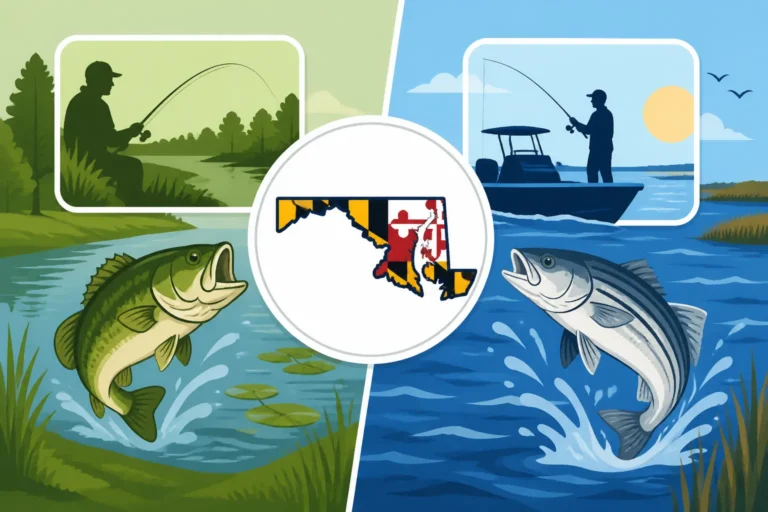
So, you've decided to enjoy a peaceful day by the water, maybe tossing a line into a local pond or trying your luck from a pier in the Chesapeake Bay. You're not on a fancy charter boat, and you don't even own a kayak – just you, your rod, and a tackle box. The big question often becomes: do I still need a license? And if so, which one? Maryland's waters are diverse, ranging from freshwater streams and lakes to the brackish rivers and vast expanses of the Chesapeake Bay and the Atlantic Ocean. Each type of water often comes with its own specific licensing requirements, and it can be a real headache to figure out.
The good news is that the Maryland Department of Natural Resources (DNR) has streamlined many of its licensing categories, but understanding the distinction between tidal and nontidal waters is still paramount for non-boat anglers. Your choice of fishing spot will be the primary driver of the license you need.
Understanding Nontidal Fishing Licenses
When we talk about "nontidal" waters in Maryland, we're generally referring to freshwater environments that aren't influenced by the ebb and flow of the ocean's tides. Think tranquil lakes, bubbling streams, serene reservoirs, and the upper reaches of rivers where the saltwater hasn't crept in. These are often the go-to spots for anglers without boats, as they offer abundant shore access.
If your fishing adventures take you to places like Deep Creek Lake, Loch Raven Reservoir, or any of the countless smaller ponds and streams across the state, you'll need a Maryland Nontidal Fishing License. This license covers you for bass, crappie, trout, catfish, and many other freshwater species. It’s important to remember that even if you're just dipping your toes in a small creek in a state park, if it's considered nontidal, the license requirement applies to anyone over the age of 16. It's an annual license, running for a full year from the date of purchase, not necessarily expiring at the end of the calendar year. For more specific details on costs, you might want to check out the guide on Maryland Resident Nontidal Fishing License Cost.
Understanding Tidal Fishing Licenses
Now, let's talk about "tidal" waters. In Maryland, this primarily means the magnificent Chesapeake Bay, its tributaries up to a certain point (often marked by navigation charts or specific regulations), and the coastal bays and Atlantic Ocean. Even if you're standing on a dock in Ocean City, crabbing from a public pier in Annapolis, or casting into a Bay tributary from the shoreline, these are considered tidal waters.
For these areas, a Chesapeake Bay Sport Fishing License (often just called a Tidal Fishing License) is usually what you're after. This license permits you to fish for species like striped bass (rockfish), white perch, bluefish, flounder, and many others that thrive in our estuarine and marine environments. Many anglers find themselves fishing the tidal portions of rivers like the Patuxent or the Choptank from river banks or public access points, and these spots fall under the tidal license umbrella. It's crucial not to confuse this with a nontidal license; they cover different bodies of water. Even if you're just doing catch and release, if you're targeting fish in tidal waters, a license is generally required unless a specific exemption applies. A comprehensive look at the Maryland Chesapeake Bay Sport Fishing License Explained can offer even more clarity.
Navigating Specific Shoreline Fishing Scenarios
Fishing from shore is a fantastic way to enjoy the outdoors without the expense or hassle of a boat. Maryland offers an incredible array of accessible locations, from bustling public piers to serene riverbanks. However, each type of location can sometimes come with subtle differences in what license you need or if you need one at all. It's not just about tidal versus nontidal; it's also about where you're casting your line.
This section will dive into the most common scenarios for non-boat anglers, helping you feel confident that you've got the right paperwork in hand before your hook hits the water.
Fishing from Piers and Public Shorelines
This is perhaps the most common scenario for anglers without a boat. Maryland boasts numerous public piers, bulkheads, and designated shore fishing areas along its rivers, lakes, and the Chesapeake Bay. For the most part, if you are fishing from any public pier or shoreline, the standard tidal or nontidal license requirements apply based on the water body.
For example, if you're fishing from the fishing pier at Sandy Point State Park, which extends into the Chesapeake Bay, you would need a Chesapeake Bay Sport Fishing License. Conversely, if you're fishing from a pier on Loch Raven Reservoir, a nontidal license is required. The key is the water itself. There's a common misconception that fishing from a pier doesn't require a license, but this is rarely true in Maryland, with very few exceptions. A handful of privately owned piers or specific municipal piers might operate under a blanket license that covers their patrons, but these are exceptions, not the rule, and you should always verify directly with the pier operator.
When preparing for a pier fishing trip, beyond your license, having the right gear is essential. A good pier cart to transport your tackle, bait, and cooler is invaluable. Many anglers find sturdy rod holders that clamp to railings or spike into the ground to be lifesavers. For night fishing on piers, a reliable headlamp or a portable LED lantern, easily found on sites like Amazon, can make a huge difference.
Fishing from Bridges and Bulkheads
Similar to piers, fishing from bridges and bulkheads is a popular option for accessing deeper water or current seams that might be out of reach from a flat shoreline. The same rule applies: if the water beneath the bridge or along the bulkhead is tidal, you need a tidal license. If it's nontidal, a nontidal license is necessary.
A prime example would be fishing from the causeway or public access near the Route 50 bridge over the Choptank River. Since the Choptank River here is considered tidal, you would need your Chesapeake Bay Sport Fishing License. Some bridges, however, may have restrictions on fishing due to safety concerns or private property. Always look for posted signs and respect private property boundaries. Fishing from bridges can be productive, offering unique access to structure and deeper channels, but always prioritize safety and local regulations. Keep an eye out for boat traffic and be mindful of your casting to avoid snagging passing vessels or other anglers.
Fishing in State Parks and Public Lands
Maryland's state parks, national parks, and other public lands often provide excellent fishing access for non-boat anglers. These areas are usually well-maintained and offer convenient amenities. The licensing rules here follow the same tidal/nontidal distinction.
For instance, if you visit Cunningham Falls State Park and plan to fish in Hunting Creek Lake, which is a nontidal body of water, you'll need your Maryland Nontidal Fishing License. However, if your destination is Point Lookout State Park at the very southern tip of Maryland, where the Potomac River meets the Chesapeake Bay, you'll need a Chesapeake Bay Sport Fishing License to fish its tidal waters from shore or its public pier. Many of these parks also have specific rules regarding bait, tackle, or designated fishing areas, so it's always a good idea to check the park's specific regulations before you go. This information is typically available on the Maryland DNR website or posted at the park office.
When fishing in any public area, remember to practice Leave No Trace principles: pack out everything you pack in, and dispose of fishing line properly to protect wildlife.
Exemptions and Special Cases for Shore Anglers
While the general rule is that if you're 16 or older and fishing, you need a license, Maryland does offer a few exceptions and special circumstances. Understanding these can save you some money or clarify situations where a license isn't necessary. These exemptions are particularly relevant for non-boat anglers who might be introducing children to the sport or visiting during special events.
It's always better to know the rules upfront than to get caught off guard, potentially facing a penalty.
Age Exemptions for Young and Senior Anglers
One of the most common exemptions relates to age. In Maryland, children under the age of 16 do not need a fishing license to fish in either tidal or nontidal waters. This is fantastic news for families, making it easy to introduce the younger generation to the joys of fishing without an extra financial burden. It’s important to remember, though, that any accompanying adult who is actively fishing (not just supervising) will need their appropriate license. You can find more details on Do Kids Need a Fishing License in Maryland?.
For senior anglers, Maryland offers a special Consolidated Sport Fishing License for residents aged 65 and older. This license covers both tidal and nontidal fishing, as well as the Chesapeake Bay and Coastal Bays, and even includes the trout stamp endorsement, making it a very convenient and cost-effective option for active seniors. There's a minimal fee, but it's significantly less than purchasing individual licenses. So, if you're a Maryland resident hitting that milestone, be sure to look into the Maryland Senior Consolidated Sport Fishing License.
Maryland's Free Fishing Days
Maryland also offers specific "Free Fishing Days" each year where residents and non-residents alike can fish in both tidal and nontidal waters without needing a license. These days are usually scheduled to coincide with holidays or special events, often in June and July, making them perfect opportunities to try fishing for the first time or to bring friends and family who might not have licenses.
While you don't need a license on these days, all other fishing regulations, such as size and creel limits, remain in effect. It's a great chance to explore some new shoreline spots without the license requirement, but remember to still consult the DNR regulations for the species you're targeting. For details on upcoming dates, you can check out Maryland's Free Fishing Days in June and July. These days can be quite popular, so expect more company at public piers and popular shore spots.
Reciprocal Agreements and Special Waters
Certain bodies of water that border other states have special reciprocal agreements. The most prominent example in Maryland is the Potomac River. Due to an agreement with Virginia, a valid tidal or nontidal Maryland fishing license (depending on where on the Potomac you are) allows you to fish the main stem of the Potomac River from shore or boat up to the Fall Line, even if you are technically casting into Virginia waters.
However, this generally does not apply to the tributaries of the Potomac River that are within Virginia, nor does a Virginia license automatically grant you full rights to fish in Maryland's general waters, or vice-versa. The Potomac River Fisheries Commission (PRFC) also issues a license for the tidal Potomac, but for general non-boat anglers staying within Maryland's jurisdiction, your standard Maryland license should suffice. It's always best to be absolutely sure about these unique areas, especially if you're near a state border. For cross-state fishing questions, Does a Virginia Fishing License Work in Maryland Waters? provides further insights.
Practical Steps for Obtaining Your License
Okay, so you've figured out which license you need based on where you'll be fishing from shore. Now comes the easy part: actually getting it. The Maryland DNR has made the process quite straightforward, offering several convenient ways to purchase your license. No need to trek to a distant government office or fill out reams of paperwork. This section will walk you through the simplest methods.
Having your license in hand and understanding how long it lasts will ensure your fishing trips are smooth and worry-free.
Purchasing Your License Online
The absolute easiest and quickest way to get your Maryland fishing license is online, directly through the Maryland Department of Natural Resources (DNR) Compass portal. You can do this from the comfort of your home, any time of day or night. All you need is internet access, a few pieces of personal information, and a credit card.
Here’s a quick rundown of the online process:
- Visit the Maryland DNR Compass Website: Head to the official DNR licensing portal.
- Create an Account or Log In: If you're a first-time user, you'll need to create an account. Returning users can log in with their existing credentials.
- Select Your License: Choose the appropriate license (e.g., Annual Nontidal, Annual Chesapeake Bay Sport Fishing License, 7-Day Nontidal, etc.). Remember that as a non-boat angler, you'll pick based on the waters you plan to fish from shore.
- Add Any Stamps/Endorsements: If you plan to target trout in designated trout waters, you’ll need to add a Trout Stamp, even if you’re fishing from the bank. For two rods, a Two-Pole Endorsement might be needed in nontidal waters.
- Provide Information and Pay: Fill in your personal details and complete the payment.
- Print or Save: You'll receive a printable license immediately. It's a good idea to print a physical copy and also save a digital version on your phone, so you always have proof.
This method is incredibly efficient, especially if you suddenly decide on a last-minute fishing trip. For more specific guidance, the How to Buy a Maryland Fishing License article is a great resource.
Buying a License In Person
While online is convenient, sometimes you prefer to deal with a real person, or you're already out and about. Maryland DNR licenses can also be purchased in person at hundreds of authorized license agents located across the state. These agents are typically bait and tackle shops, sporting goods stores, some convenience stores, and even some Wal-Mart or K-Mart locations.
When buying in person, you'll need to provide similar personal identification (driver's license or state ID) and payment. The staff at these locations are usually very knowledgeable about the different license types and can help you ensure you're getting exactly what you need for your planned fishing activity. This is also a fantastic opportunity to grab some local bait, get a last-minute tackle item like a new bobber, or even get some hot tips on what’s biting from the folks behind the counter. For example, local fishing stores like Tochterman's in Baltimore or Alltackle in Annapolis are great spots not just for gear but also for obtaining your license and getting expert advice. To find a location near you, the DNR website has a searchable map of all authorized license agents.
What Documents and Information You Will Need
Regardless of whether you purchase online or in person, you'll typically need to provide some basic information to get your license. This usually includes:
- Proof of Residency: A Maryland driver's license or state-issued ID is usually sufficient to prove residency, which determines the cost of your license. Non-residents will pay a higher fee.
- Full Name and Date of Birth: Standard identifying information.
- Physical Address: For mailing purposes and residency verification.
- Social Security Number (SSN): This is generally required for all hunting and fishing licenses in compliance with federal regulations (specifically for child support enforcement purposes).
- Payment: A valid credit card for online purchases, or cash/card for in-person transactions.
It's a pretty straightforward process, designed to get you on the water quickly and legally. Make sure to have these details handy to avoid any delays when purchasing.
Essential Regulations Beyond Just the License
Getting your license is a crucial first step, but it’s just the beginning of being a responsible and successful angler in Maryland. Especially for non-boat anglers who might be exploring various public access points, understanding the broader regulatory landscape is vital. These rules protect our fisheries and ensure that everyone has a fair chance to enjoy them, now and in the future.
Ignorance of the law is no excuse, and violating these rules can lead to fines or loss of fishing privileges.
Understanding Catch and Size Limits
Once you’ve got that license, you’re ready to fish! But before you start reeling in everything that bites, you need to be aware of Maryland’s catch and size limits. These regulations vary significantly by species and water body (tidal vs. nontidal, and sometimes even by specific river or bay area), and they can also change seasonally.
For popular species like striped bass (rockfish), there's often a specific slot limit, meaning fish must fall within a minimum and maximum size to be kept. For example, the Maryland Rockfish Slot Limit Explained details the current regulations, which are crucial for any angler, especially those casting from shore into the Chesapeake Bay. For freshwater species like largemouth bass, trout, or crappie, there will be daily creel limits (how many you can keep) and sometimes minimum size limits.
Always consult the most current Maryland Fishing & Boating Guide, available online through the DNR website, or in print at most license agents. It's your bible for knowing what you can keep, how many, and when. Having a measuring tape or ruler handy (many tackle boxes or coolers include one) is non-negotiable for accurately measuring your catch.
Trout Stamps for Catching Stocked Trout
If your love for fishing from shore extends to the beautiful, cold waters where trout thrive, then you need to be aware of the Maryland Trout Stamp requirement. Even if you hold a valid nontidal fishing license, you must also possess a Trout Stamp if you plan to fish for or possess trout in any designated trout waters. This applies even if you intend to catch and release.
Maryland stocks thousands of trout annually into numerous streams, rivers, and even some lakes, creating fantastic opportunities for shore anglers. These "put-and-take" and "delayed harvest" trout fisheries are very popular. The revenue from Trout Stamps goes directly back into the trout stocking program, supporting these valuable fisheries. You can purchase a Trout Stamp at the same time you buy your nontidal license, either online or in person. For the ins and outs of this, check out Maryland Trout Stamp Requirements. Missing this small but important detail could lead to a fine.
Rules for Invasive Fish Species
Maryland is actively battling invasive fish species, particularly the blue catfish and the northern snakehead. For shore anglers, these species are often accessible from public banks and piers, particularly in rivers like the Potomac, Patuxent, and Susquehanna. The state encourages anglers to harvest these fish and does not impose any possession or size limits on them in most tidal waters, aiming to reduce their populations and protect native species.
In fact, for snakeheads, it's generally illegal to transport a live snakehead, and anglers are encouraged to kill them immediately upon capture. For blue catfish, while there's no limit on how many you can keep, special rules apply to their transport alive in certain waters to prevent further spread. Knowing these rules is critical not only for compliance but also for doing your part to protect Maryland's ecosystems. The guide on Maryland Invasive Fish Rules: Blue Catfish and Snakehead offers a deeper dive into these important regulations. Many anglers enjoy targeting these species not just for the fight but also because they make excellent table fare.
License Options for Shore Anglers
Choosing the right license for shore fishing in Maryland can sometimes feel like a puzzle, but it doesn't have to be. The best option for you will depend on a few key factors: whether you're fishing tidal or nontidal waters, how often you plan to fish, and your residency status. To make this a bit clearer, let's break down the common license types and who they're best suited for.
Understanding these options will help you make an informed decision and ensure you're covered for all your non-boat angling adventures.
Comparing Annual vs. Short-Term Licenses
For non-boat anglers, the primary choice will often be between an annual license or a short-term option, such as a 7-day or 3-day license (for non-residents).
Annual Licenses:
- Maryland Resident Annual Nontidal Fishing License: This is your go-to if you primarily fish freshwater lakes, rivers, and ponds from shore. It’s ideal for frequent anglers who hit the streams or reservoirs multiple times a year.
- Maryland Resident Annual Chesapeake Bay Sport Fishing License: If your shore fishing happens mainly in the Bay, its tidal tributaries, or coastal bays (think Ocean City piers), this is the one you need. Again, perfect for regular tidal water anglers.
- Maryland Resident Consolidated Sport Fishing License: For residents aged 65 and over, this is the ultimate package, covering all tidal and nontidal waters, plus the trout stamp. Highly recommended for active senior anglers.
Short-Term Licenses:
- Maryland 7-Day Fishing License Options: These are available for both tidal and nontidal waters and are perfect for non-residents visiting Maryland for a week-long vacation or for residents who only plan a couple of fishing trips a year. If you're coming to Ocean City for a beach trip and want to fish the pier for a few days, a 7-day tidal license makes perfect sense. Similarly, if you're visiting friends in Western Maryland and want to try the trout streams for a weekend, a 7-day nontidal license will cover you.
- Maryland Nonresident 3-Day Fishing License: This option is specifically for non-residents targeting nontidal waters, ideal for a quick weekend trip.
The choice really comes down to frequency. If you're out more than a few times a year, the annual license usually pays for itself. If you're an occasional angler or a visitor, the short-term options are more economical.
Residency and Nonresident Options
Your residency status plays a significant role in license costs. Maryland residents enjoy lower fees compared to non-residents. This is a common practice across states, as resident fees are often subsidized by state tax revenues.
- Residents: As outlined above, residents have access to annual nontidal and tidal licenses, as well as the senior consolidated license.
- Non-residents: Non-residents will pay a higher fee for annual licenses and also have access to specific short-term options like the Maryland Nonresident 3-Day Fishing License Cost for nontidal waters or a 7-day tidal option for the Bay. If you're an out-of-state college student attending a Maryland university, there are also specific considerations, as you might qualify for resident rates under certain circumstances, as detailed in Maryland Fishing License for Out-of-State College Students.
Always be prepared to provide proof of residency when purchasing your license to ensure you get the correct rate.
Here's a quick comparison of typical non-boat angler license options in Maryland:
| License Type | Water Type | Who Needs It | Best For | Estimated Cost (Resident/Non-Resident) | Key Feature |
|---|---|---|---|---|---|
| Annual Nontidal Fishing License | Freshwater | Anglers 16+ fishing lakes, streams, ponds | Frequent freshwater shore anglers | ~$20 / ~$30 | Covers all nontidal waters for a full year |
| Annual Chesapeake Bay Sport Fishing License | Tidal Saltwater | Anglers 16+ fishing Bay, tributaries, coast | Frequent tidal water shore anglers (piers, bulkheads) | ~$15 / ~$22 | Covers all tidal waters for a full year |
| 7-Day Nontidal Fishing License | Freshwater | Anglers 16+ (often non-residents or occasional) | Short freshwater trips (e.g., weekend trout fishing) | N/A / ~$7 | Short-term flexibility, good for visitors |
| 7-Day Chesapeake Bay Sport Fishing License | Tidal Saltwater | Anglers 16+ (often non-residents or occasional) | Short tidal water trips (e.g., Ocean City vacation) | N/A / ~$12 | Short-term flexibility, good for visitors |
| Senior Consolidated Sport Fishing License | All Waters | MD Residents 65+ | Comprehensive coverage for active senior anglers | ~$5 | All-inclusive (tidal, nontidal, trout stamp) for seniors |
| Trout Stamp Endorsement (add-on) | Designated Trout | Anyone fishing for/possessing trout | Required in addition to a nontidal license in trout waters | ~$5 / ~$10 | Supports trout stocking programs, even for catch & release |
Note: Costs are approximate and subject to change. Always check the official Maryland DNR website for current pricing.
Remember, this table is a general guide. The most important step is always to verify the latest regulations and pricing directly with the Maryland DNR before heading out. Armed with the right license and knowledge, your Maryland shore fishing adventures are sure to be rewarding!
Disclaimer
The information provided in this guide is for general informational purposes only and does not constitute legal advice. Fishing regulations, license requirements, and fees in Maryland can change, and it is the angler's sole responsibility to consult the most current official Maryland Department of Natural Resources (DNR) publications, laws, and regulations before engaging in any fishing activity. Always verify specific rules for your chosen fishing location and species.