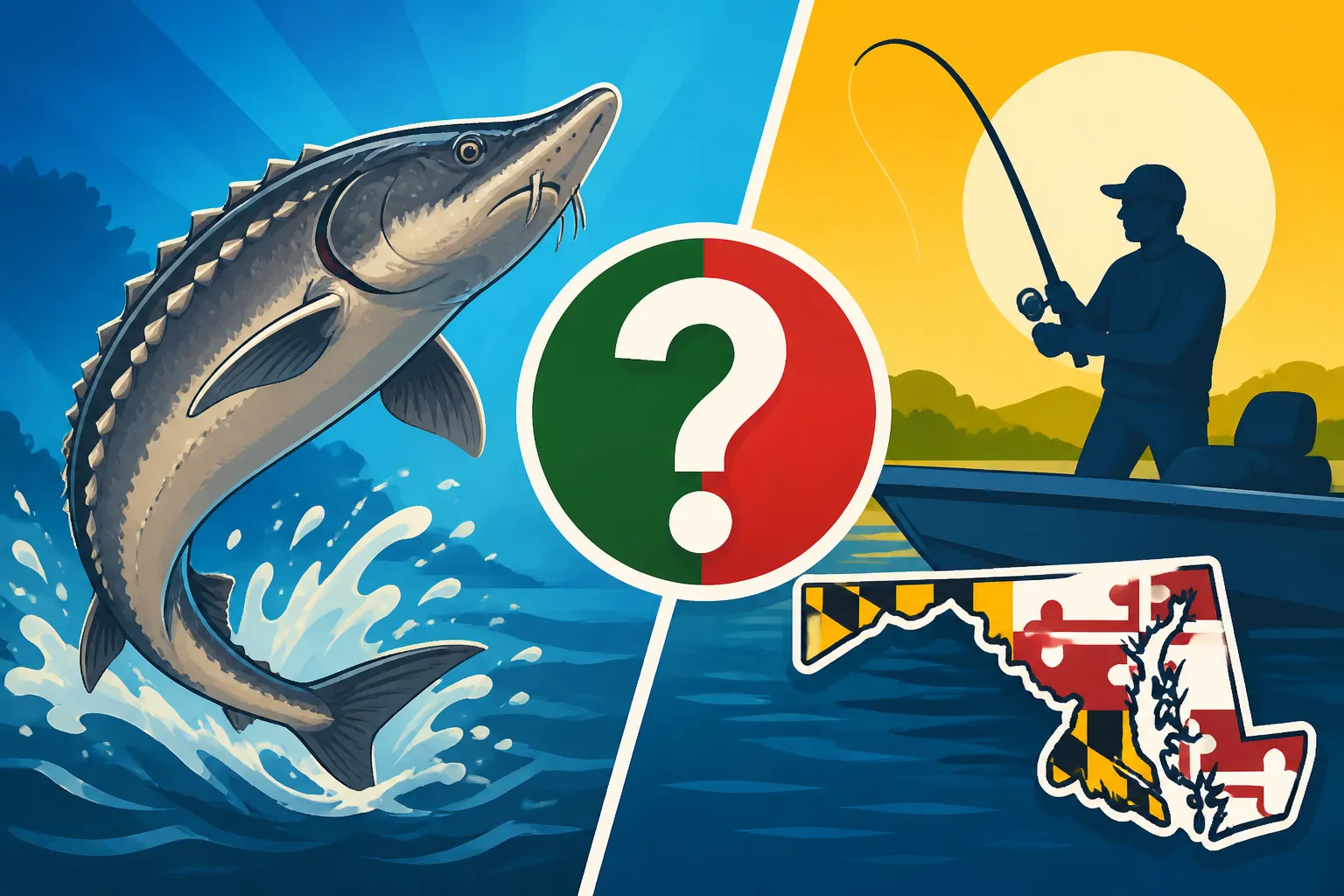
Is It Legal to Catch Atlantic Sturgeon in Maryland?
You're out on the water, maybe casting a line in the Chesapeake Bay or one of Maryland's bigger tidal rivers, when suddenly you feel a strong pull, something different, prehistoric even. As you reel it in, you realize it's not a rockfish, not a catfish, but something truly unique, with bony plates and a long snout. Your mind starts racing: "What is this? Can I keep it? Is it even legal to catch?" This guide is here to clear up that very confusion, specifically about the magnificent and highly protected Atlantic Sturgeon in Maryland waters.
The Atlantic Sturgeon: A Protected Species in Maryland
Encountering an Atlantic Sturgeon is a rare and truly special moment for any angler in Maryland, but it's crucial to understand that these aren't just any fish. They are living fossils, an ancient species that has been swimming in our waters for millions of years. However, their numbers have dwindled dramatically over the last century due to overfishing and habitat loss, particularly the damming of rivers that blocked their spawning migrations. This decline led to them being listed as an endangered species under federal law, which means strict protections are in place to help them recover.
Why the Atlantic Sturgeon is Protected
The decision to protect Atlantic Sturgeon wasn't made lightly; it's a recognition of their precarious situation and their ecological importance. These incredible fish can live for an exceptionally long time, sometimes over 60 years, but they mature very slowly and don't reproduce until they are quite old—often 5 to 20 years for females. This slow life cycle makes them incredibly vulnerable to pressures like fishing and habitat degradation. If you take out even a few mature breeding adults, it can have a devastating impact on an already struggling population, making it incredibly difficult for the species to rebound. Our goal, as responsible anglers and stewards of the environment, is to give them every possible chance to thrive once again in Maryland's waterways and beyond.
Identifying an Atlantic Sturgeon
If you're lucky enough to encounter one, knowing how to identify an Atlantic Sturgeon is paramount. These fish are unmistakable once you know what to look for. They have a distinctive, elongated body covered in five rows of prominent bony plates called scutes, rather than scales. These scutes run along their back, sides, and belly, giving them a rugged, armored appearance that truly harks back to ancient times. Their mouth is located on the underside of their head, designed for bottom feeding, and their snout is pointed or shovel-like. They can grow to be quite large, with adults often exceeding six feet in length and sometimes reaching up to 14 feet! This size, combined with their unique armor, makes them stand out from other bottom-dwelling fish you might catch, like catfish or carp. It's truly a sight to behold, and once you've seen one, you'll likely never forget it. For more general guidance on local fish, you might find Maryland's Most Popular Saltwater Gamefish useful for comparison.
The Rules: Can You Catch an Atlantic Sturgeon?
This is where the rubber meets the road. Given their endangered status and the intensive efforts being made to help them recover, the rules surrounding Atlantic Sturgeon are very clear and very strict. It’s essential for every angler to understand and adhere to these regulations, not just to avoid penalties, but to contribute to the conservation of this magnificent species.
Strict Prohibitions on Catching and Possessing
Let's get straight to it: no, it is not legal to intentionally catch, harvest, or possess an Atlantic Sturgeon in Maryland waters. This isn't just a suggestion; it's a federal and state mandate. If you are targeting any species and an Atlantic Sturgeon happens to bite your line, you are legally required to release it immediately and unharmed. This prohibition extends beyond just recreational fishing; commercial harvest is also completely forbidden. The goal is to minimize any human interaction that could cause harm, stress, or mortality to these vulnerable fish. So, if you feel that unmistakable heavy pull and see those bony plates, know that your job is to get that fish back in the water as quickly and safely as possible. Think of it less as a "catch" and more as an "accidental encounter" that requires immediate, gentle release.
Accidental Catches and Proper Handling
Okay, so what if, despite your best intentions and efforts, you accidentally hook an Atlantic Sturgeon? It happens. These fish are bottom feeders, and sometimes they'll investigate baits meant for other species. The key word here is "accidental." If you find yourself in this situation, do not panic, but act swiftly and responsibly. The moment you realize you've hooked a sturgeon, your primary directive is to release it immediately, causing as little stress and injury as possible. Do not try to bring it aboard your boat, put it in a cooler, or even take an extended photo session. These actions can be incredibly detrimental to the fish's survival and could lead to significant penalties for you.
Proper handling means keeping the fish in the water as much as possible, using the correct tools for hook removal, and avoiding any actions that could remove its protective slime layer or cause physical damage. It’s a moment of surprise, perhaps even a bit of awe, but it's crucial to remember your role as a conservationist first and foremost. This contrasts sharply with managing invasive species like the Blue Catfish or Snakehead, where the rules often encourage removal; for sturgeon, it's the exact opposite. For more on other species, consider reading Maryland Invasive Fish Rules: Blue Catfish and Snakehead.
What Happens If You Catch One Accidentally?
Even if you’re fishing responsibly, the chance of an accidental sturgeon encounter is always there, especially in tidal rivers and parts of the Chesapeake Bay where they are making a comeback. Knowing precisely what to do in that moment can make all the difference for the fish and for your peace of mind.
Prioritizing the Sturgeon's Safety
When you realize you have an Atlantic Sturgeon on your line, the absolute priority is the fish's well-being. This means keeping it in the water if at all possible. Instead of hauling it into your boat, try to bring it alongside. If the hook is visible and easily accessible, use a pair of long-nosed pliers or a dehooking tool to gently remove it while the fish remains submerged. Cutting the line as close to the hook as possible is also a viable option if removal seems too stressful or difficult for the fish. Hooks made of non-stainless steel will eventually corrode and fall out.
Avoid using a net, especially a landing net with small mesh, as this can easily damage the sturgeon's delicate fins, gills, and protective scutes. Never hold a sturgeon by its tail, gills, or by placing your fingers in its eyes; these are sensitive areas. If you must briefly handle it to remove a hook, support its body horizontally with both hands, keeping it as low to the water as possible, and release it immediately once the hook is out. Having a sturdy pair of needle-nose pliers, perhaps something like the ones you might find on Amazon, can be a real lifesaver for quickly and safely removing hooks in these situations.
Reporting a Sighting or Injury
Beyond the immediate release, another critical step for conservation is reporting your sighting. The Maryland Department of Natural Resources (DNR) and other scientific agencies are actively monitoring Atlantic Sturgeon populations, and every piece of data helps. If you accidentally catch one, or even just observe one swimming freely, you should try to report it. Note the date, time, location (GPS coordinates if possible), estimated size, and condition of the fish. If the sturgeon appears injured, entangled, or deceased, reporting it quickly is even more vital so that biologists can respond. You can usually find contact information for reporting protected species sightings on the Maryland DNR's website or in their official fishing guides, which are detailed in resources like Maryland's DNR Fishing and Boating Guide, Explained. Your report contributes directly to our understanding of their movements and population health, making you an active participant in their recovery. It's also worth noting that non-compliance with fishing regulations can lead to penalties, as discussed in Maryland Fishing License Penalties for Violations.
Looking Ahead: The Future of Atlantic Sturgeon in Maryland
The story of the Atlantic Sturgeon in Maryland is one of both challenge and hope. While they face significant hurdles, dedicated efforts are underway to ensure these majestic fish continue to grace our waters for generations to come. Every angler plays a part in this ongoing narrative.
Conservation Efforts and Recovery
Maryland, in conjunction with federal agencies and neighboring states, is actively involved in numerous conservation programs aimed at Atlantic Sturgeon recovery. These efforts include habitat restoration, particularly in historical spawning rivers like the Nanticoke, Choptank, and Susquehanna, by working to remove barriers and improve water quality. Scientists are also conducting extensive research to track sturgeon movements, identify critical habitats, and monitor population numbers. This often involves tagging individual fish, so if you ever see a sturgeon with a tag, reporting that information (without removing the tag) is also incredibly helpful. The long-term vision is to see robust, self-sustaining populations of Atlantic Sturgeon once again migrating freely through Maryland's diverse aquatic environments.
Why Angler Awareness Matters
As recreational anglers, our role in this recovery is far more significant than simply avoiding catching them. By understanding and respecting the rules, we become a crucial line of defense for these endangered fish. Educating ourselves and others about Atlantic Sturgeon—their appearance, their protected status, and the proper handling techniques for accidental catches—helps create a wider net of stewardship. We are often the eyes and ears on the water, and our vigilance can provide invaluable data to scientists and enforcement agencies. This collective awareness and commitment to responsible fishing practices are key ingredients in ensuring that the Atlantic Sturgeon not only survives but eventually thrives in Maryland, an important part of the broader ecological tapestry of the Chesapeake Bay and its tributaries. Even something as basic as having the right Maryland Fishing License Guide for 2026 in hand ensures you're starting on the right foot with all regulations.
Atlantic Sturgeon Handling Guidelines Summary
Here's a quick overview of what to remember if you encounter an Atlantic Sturgeon while fishing in Maryland:
| Action Category | What to DO | What to AVOID Doing | Why It Matters |
|---|---|---|---|
| Hooking & Landing | Keep fish in the water if possible. | Bringing fish into the boat, onto shore. | Minimizes stress, injury, and physical handling impact. |
| Hook Removal | Use long-nosed pliers/dehooking tool. | Yanking hook out roughly, leaving hook if easily removed. | Quick, clean removal prevents prolonged stress and injury. |
| Cut line close to hook if removal is difficult. | Trying to force a deeply set hook. | Non-stainless hooks will corrode; less trauma than extensive removal attempts. | |
| Physical Handling | Support body horizontally if briefly handled. | Holding by gills, tail, eyes; dropping fish. | Protects vital organs, slime coat, and prevents internal damage. |
| Reporting | Note location, size, date, time. | Neglecting to report accidental catches/sightings. | Provides critical data for population monitoring and conservation efforts. |
| Compliance | Release immediately, unharmed. | Harvesting, possessing, or delaying release. | Mandatory legal requirement; protects an endangered species from further harm. |
Disclaimer
This article is for general informational purposes only and does not constitute professional advice. Laws, prices and regulations vary by location and change over time. Consult a qualified professional for guidance on your specific situation.