Techniques for Surf Casting at Assateague
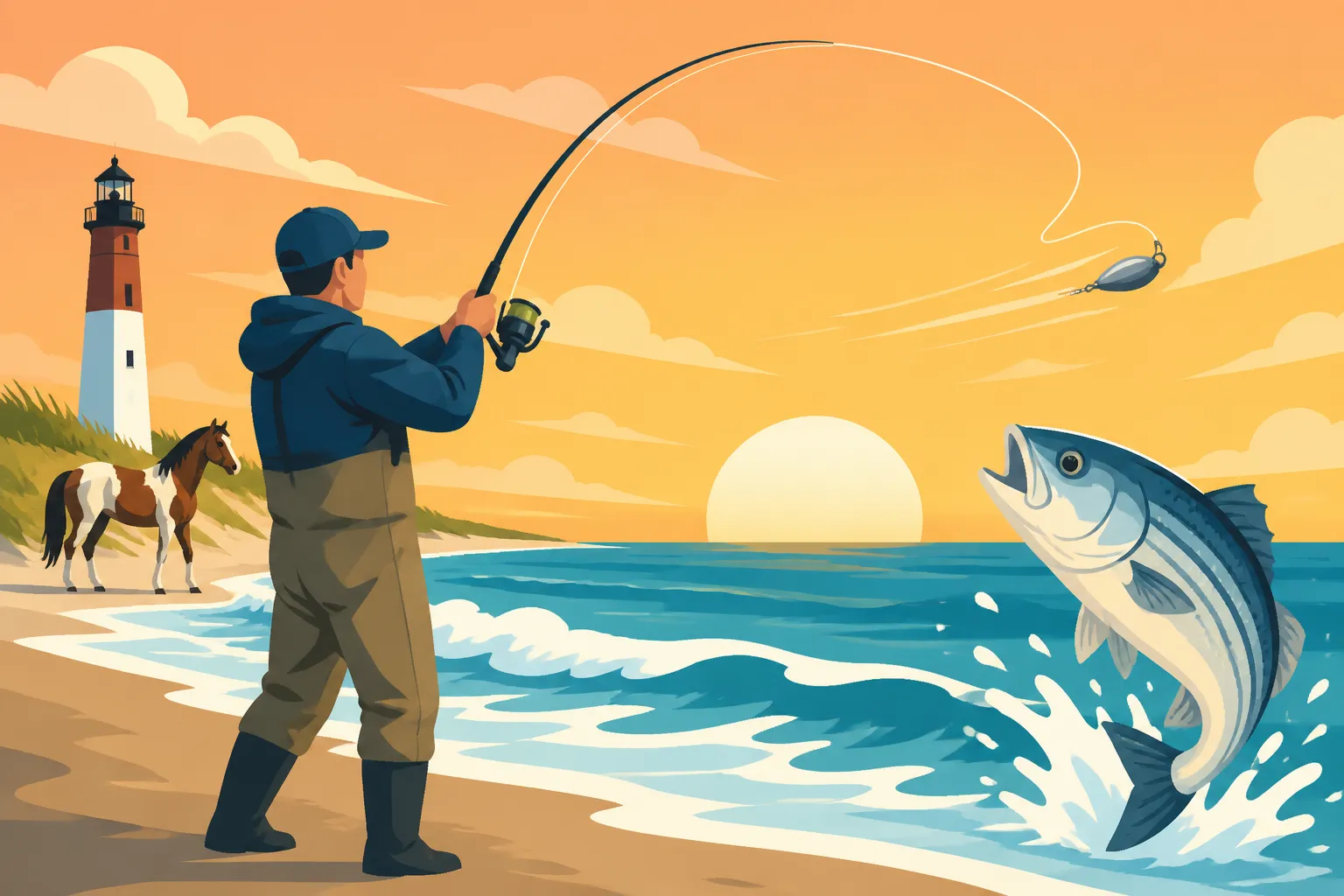
Few things are as exhilarating and, let's be honest, sometimes frustrating, as standing on the edge of the Atlantic Ocean, casting a line into the churning surf at Assateague Island. You've got the vastness of the ocean before you, the salt spray on your face, and the hopeful anticipation of a bent rod. But it's not always as simple as throwing a line out there; the dynamic nature of the ocean requires specific strategies and knowledge. This guide is designed to equip you with the essential techniques for surf casting at Assateague, helping you navigate its unique challenges and significantly increase your chances of a successful catch.
Understanding Assateague's Dynamic Surf Environment
Assateague Island is a truly special place, a wild and untamed barrier island where the ocean's raw power is on full display. This same power creates an incredibly rich ecosystem for fish, but it also presents a unique set of challenges for the surf angler. It's not like fishing a calm pond or even a serene bay; the ocean here is a constantly shifting entity, demanding respect, observation, and adaptability. Many anglers arrive with freshwater or even calmer bay fishing experience, only to find the surf a completely different beast, easily overwhelming if you don't know what you're looking for. The currents pull, the waves crash, and your bait seems to disappear into the vastness – it's enough to make anyone wonder if they're doing it right.
Reading the Beach: Finding the Fish Highway
The secret to successful surf casting at Assateague often lies not in how far you can cast, but in where you cast. The underwater topography of a surf beach is a complex landscape of channels, dips, and bars, which constantly change with storms and tides. These features act like underwater highways and feeding grounds for various fish species, from striped bass to bluefish and even red drum. Learning to "read the beach" is perhaps the most crucial skill you can develop for surf fishing, turning what looks like an endless stretch of sand into a detailed map of fish-holding structure.
One of the most important features to identify are "gutters" or "sloughs." These are deeper channels of water that run parallel to the shore, often just beyond the first sandbar. Fish use these gutters as highways to move up and down the beach, feeding on baitfish, crabs, and other morsels that get washed in or caught by the current. You can often spot a gutter by looking for calmer water between sets of breaking waves, or by observing where the waves break, reform, and then break again closer to shore. The first break indicates the outer edge of a sandbar, and the second, closer break, often signals another sandbar with a gutter in between. If the waves aren't breaking on a particular spot or are breaking further out, that can also indicate a deeper channel.
Another key feature is the "sandbar" itself. These elevated sections of sand create turbulence and wash, dislodging food items and creating prime ambush points for predatory fish. Beyond the immediate shore break, there might be one or more offshore sandbars. Understanding where these lie helps you target your cast. Sometimes, the fish are right in the wash, a few feet from shore, especially species like kingfish or even juvenile striped bass. Taking the time to observe the wave patterns, the color of the water (darker water often means deeper water), and any signs of baitfish activity will dramatically improve your chances. It’s a skill that takes practice, but once you start recognizing these patterns, Assateague transforms from a bewildering expanse into a readable, fishable landscape.
Tides, Currents, and Their Impact on Your Cast
Just as you need to understand the visible and semi-visible features of the beach, you must also respect and understand the invisible forces at play: the tides and currents. At Assateague, these forces dictate fish behavior, feeding patterns, and crucially, how your bait will be presented. Ignoring the tides and currents is like trying to drive without understanding traffic laws; you might get somewhere, but it'll be by accident and probably inefficiently.
Tide charts are your best friend when planning a surf fishing trip to Assateague. While some anglers prefer incoming tides as they often bring baitfish closer to shore and create new feeding opportunities over submerged sandbars, others swear by the outgoing tide for flushing bait out of the back bays and into the deeper channels where bigger fish lurk. The truth is, both can be productive, but understanding the phase of the tide will help you predict where fish might be holding and how your cast will behave. For example, during a strong incoming tide, a lighter sinker might be swept away, while a heavier, more aerodynamic one could hold its ground.
Beyond the general tide, "rip currents" are another critical factor. While often associated with danger for swimmers, rip currents are natural phenomena that can actually concentrate fish. These narrow, fast-moving currents flow seaward through breaks in sandbars, carrying baitfish, crabs, and other food out to deeper water. Predators like striped bass and bluefish will often stage on the edges of these rips, waiting to ambush any unfortunate creatures swept offshore. Learning to identify the subtle signs of a rip current – a channel of churning, discolored water, a gap in the breaking waves, or debris moving quickly offshore – can lead you to a hotspot. However, always exercise extreme caution around strong rips, especially if wading. Use heavier sinkers and be mindful of your footing. The constant push and pull of the ocean means your setup needs to be robust, and your casting needs to account for drift. It’s a constant dance with nature, but a rewarding one when you get it right.
Essential Gear for Assateague Surf Casting
Walking into a tackle shop or browsing online for surf fishing gear can feel overwhelming, can't it? So many rods, reels, lines, and little gadgets, it’s hard to know what’s truly necessary for tackling the Assateague surf. The right gear isn't about having the most expensive items, but about having equipment that's robust, suited for the harsh saltwater environment, and capable of handling the conditions and the fish you're likely to encounter. Don't worry, we'll cut through the noise and focus on what genuinely makes a difference.
Rods, Reels, and Line: Building Your Foundation
Your rod and reel combo is the heart of your surf casting setup. For Assateague, you'll generally want something more substantial than your typical freshwater gear. A good surf rod provides the leverage needed to cast heavy sinkers and baits a considerable distance, and the backbone to fight powerful fish in strong currents.
Look for a surf rod between 10 to 12 feet in length. Some anglers go longer, up to 15 feet, for maximum casting distance, but these can be tiring to cast repeatedly. Medium-heavy to heavy power is ideal, with a moderate to fast action. This combination allows for long casts while maintaining sensitivity to detect subtle bites. Popular options can often be found on platforms like Amazon, which provides a wide range of choices to compare specifications and reviews. For reels, a large spinning reel (sizes 6000-10000) or a conventional (baitcasting) reel built for saltwater is essential. Ensure your reel is sealed or corrosion-resistant, as it will be constantly exposed to salt spray and sand. You'll be thankful for this feature after a few trips!
When it comes to line, braided line has become a favorite for many surf anglers due to its incredible strength-to-diameter ratio and lack of stretch, which enhances sensitivity. A main line in the 30-50 lb test range is a good starting point. However, braid's lack of abrasion resistance means you'll almost always want to tie a monofilament or fluorocarbon leader to your main line, typically 50-80 lb test, for protection against oyster shells, sharp fish teeth, and rough bottom structure. This leader also acts as a shock absorber during the cast and fight. Some anglers still prefer good old monofilament for the main line, particularly for its stretch, which can cushion a hard strike, and its forgiveness when dealing with knots. Whichever you choose, ensure your line capacity is ample; you never know when a trophy fish might make a long run.
Rigs and Terminal Tackle: What to Tie On
Once you have your rod, reel, and line, you need the right terminal tackle to present your bait effectively. This is where the magic happens, and a well-tied rig can make all the difference in connecting with a fish.
The "fish-finder rig" or "slip sinker rig" is an absolute classic for bait fishing in the surf, especially for larger species like striped bass, red drum, and even some larger bluefish. It consists of a leader (usually 18-36 inches of 50-80 lb mono or fluorocarbon) tied to a hook, with a barrel swivel connecting the leader to your main line. A sinker slide is threaded onto the main line above the barrel swivel, allowing your sinker to slide freely. This setup allows the fish to take the bait without feeling the resistance of the sinker, often resulting in more solid hookups. For smaller baits or when targeting smaller species like kingfish, croaker, or spot, a "high-low rig" (sometimes called a "pompano rig") is excellent. This rig typically features two or three hooks spaced along the leader, allowing you to present multiple baits at different depths.
Sinker choice is crucial for holding your bait in place against the surf and current. Pyramid sinkers are a staple, their flat sides and pyramid shape digging into the sand. Sputnik sinkers, with their retractable wire arms, are even better at gripping the bottom in heavy currents, making them a wise choice for Assateague's dynamic conditions. You can find a vast selection of these sinkers, as well as various hooks and swivels, on Amazon, making it easy to stock up on all your terminal tackle needs. For hooks, circle hooks are highly recommended for bait fishing, as they promote lip hooks, reducing gut-hooking and making catch-and-release easier and safer for the fish. Sizes typically range from 3/0 to 8/0, depending on the bait and target species.
Choosing and Presenting Your Bait
Even with the best gear, your success hinges on offering the fish something they want to eat. The right bait, properly presented, is paramount for surf casting at Assateague. Fish are opportunistic, but they also have preferences, and understanding these can significantly boost your chances.
For bottom feeders and many popular surf species, fresh bait is almost always superior. "Bloodworms" are a classic, almost irresistible bait, especially for kingfish, spot, and smaller striped bass. Their scent trail in the water is incredibly effective. "Clams" (surf clams or sea clams) are another fantastic option; they are a natural food source in the surf zone. For larger gamefish like red drum and striped bass, "cut bait" from oily fish like "mullet" or "bunker" (menhaden) is often deadly. Simply fillet the fish and cut it into strips or chunks, ensuring the skin remains attached to help it stay on the hook. "Squid" is a versatile bait that almost everything will eat, either whole or cut into strips.
When presenting your bait, ensure it's securely attached to the hook. Use a bait needle for stringing on longer baits like whole mullet or strips of bunker, which helps with casting distance and keeps the bait intact. For softer baits like clam, using bait thread (elastic thread) to bind it to the hook shank can prevent it from washing off during the cast or in the surf. Consider the size of your bait relative to your target species; a large chunk of bunker might deter smaller fish but could entice a trophy red drum. Tools for preparing bait, such as bait needles and sharp knives for chunking, are readily available on Amazon, ensuring you're well-equipped for presentation. Don't be afraid to experiment with different baits and presentations; sometimes, a subtle change can make all the difference.
Mastering Casting Techniques and Hook Sets
Having the right gear and bait is only half the battle; you still need to get your offering out to where the fish are and then properly react when they bite. Surf casting in particular demands certain casting techniques to achieve distance and accuracy, especially with heavy weights and sometimes bulky baits. And once you've made that perfect cast, recognizing a bite in the turbulent surf and setting the hook effectively is a skill unto itself.
Techniques for Distance and Accuracy
Casting in the surf isn't about brute force; it's about technique. The goal is not just distance, but also accuracy, placing your bait in those gutters, sloughs, or close to a sandbar you've identified. The most common and accessible cast for beginners is the "overhead cast." With your rod tip pointed at the water, reel in your slack until the sinker is hanging about a foot or two from the tip. Bring the rod back over your shoulder, then smoothly and powerfully bring it forward, releasing the line as the rod tip reaches the 10 or 11 o'clock position. The key is a smooth, continuous motion that loads the rod evenly.
For those looking for maximum distance, especially with heavier baits, more advanced techniques like the "pendulum cast" or "Hatteras cast" can be learned. These involve swinging the sinker in an arc to build momentum before the forward thrust. While these take considerable practice, understanding the principle—using the rod's flex to launch the weight—is crucial. Always remember to check your surroundings before casting to avoid hitting other anglers or beachgoers. The wind at Assateague can be a major factor. If you have a strong crosswind, aim slightly upwind of your target to allow the wind to carry your line and bait into the desired zone. Practice makes perfect, and the more you cast, the more comfortable and accurate you'll become.
Understanding the Bite and Setting the Hook
Detecting a bite in the surf can be tricky because the constant motion of the waves and currents makes your rod tip bounce and twitch. It's often a subtle art, requiring patience and observation to distinguish between the natural movement of the surf and the distinct tug of a fish.
When surf fishing, you'll typically place your rod in a sand spike, allowing you to relax and observe the tip. Pay close attention to any unnatural movement. A slight "tap-tap" followed by a steady pull or a sudden, sharp jerk is usually a clear indication of a bite. Sometimes, the rod tip will simply bend over steadily as a fish takes the bait and swims off. This is where the low-stretch of braided line really shines, transmitting those subtle signals clearly. If you're using monofilament, you might need to watch for more pronounced movements.
Once you feel a distinct bite, don't necessarily snatch the rod out of the spike immediately. With a fish-finder rig and circle hooks, it's often best to let the fish take the bait for a moment or two, allowing the circle hook to do its job and rotate into the corner of the fish's mouth. Then, firmly lift the rod, reeling in any slack until you feel the weight of the fish, and apply steady pressure. A hard, dramatic "sweeping" hook set isn't usually necessary with circle hooks; a firm lift is often all it takes to seat the hook. If you miss a bite, don't despair! Re-bait and cast out again. Fish often travel in schools or may return to the same feeding lane. Knowing Best Time of Day to Catch Striped Bass in the Bay or other species can also help you predict when bites might be more aggressive.
Safety, Etiquette, and Assateague Specifics
Surf fishing at Assateague Island is an incredible experience, but it comes with unique responsibilities and considerations. This isn't your backyard pond; it's a dynamic, wild environment where safety, respect for nature, and adherence to regulations are paramount. Ignoring these can lead to dangerous situations, fines, or simply a less enjoyable experience for everyone involved.
Safety First on the Sand
The ocean's power should never be underestimated. Always be aware of your surroundings, especially if you're wading into the surf. "Rogue waves" can appear unexpectedly, knocking you off your feet or pulling you further out. Always fish with a buddy if possible, and let someone know where you're going and when you expect to return. Sun protection is vital; the combination of direct sunlight and reflection off the water can lead to severe sunburn quickly. Wear a wide-brimmed hat, polarized sunglasses, and use plenty of sunscreen. Stay hydrated, especially on hot summer days.
If you plan on driving on the beach at Assateague, which is a fantastic way to access remote fishing spots, you'll need an Over-Sand Vehicle (OSV) permit. Make sure your vehicle is four-wheel drive and that you "air down" your tires to the recommended pressure (usually 15-20 psi) to prevent getting stuck in the soft sand. It's also a good idea to carry recovery gear like a shovel, tow strap, and a board. Be aware of the wild horses that roam the island; they are beautiful but can be unpredictable, so maintain a safe distance. Lastly, while less common, be mindful of marine wildlife. Sharks are present in the ocean, and while attacks are exceedingly rare, it's always wise to avoid swimming or wading near schools of baitfish or where active feeding is occurring. Understanding Do You Need a Permit to Drive on Assateague Island's Beach? is an absolute must before you venture out with your vehicle.
Leave No Trace and Angler Etiquette
Assateague Island is a protected natural area, and it's our collective responsibility as anglers to keep it pristine. The "Leave No Trace" principle should guide all your actions. This means packing out everything you pack in, and then some. Nothing is more frustrating than finding discarded fishing line, bait containers, or food wrappers on such a beautiful beach. Monofilament line, in particular, can be deadly to wildlife, so always dispose of it properly. Many parks have recycling bins specifically for fishing line.
Beyond trash, consider your impact on the environment. If you're cleaning fish on the beach, do so responsibly away from swimming areas and make sure to return carcasses to the water far enough out to be dispersed by currents, not left to wash up on shore. When it comes to other anglers, respect their space. The beach is big, but good fishing spots can be concentrated. Give other anglers plenty of room; a good rule of thumb is at least 50-100 yards between setups, if space allows. Avoid loud noises or excessive commotion that might disturb other anglers or wildlife. Always be aware of and follow all local and state regulations, including Maryland Fishing Size and Catch Limits by Species, Maryland Striped Bass Season and Rockfish Rules, Maryland Red Drum Size Limit, and Maryland Bluefish Daily Limit. These rules are in place to protect the fishery for future generations.
When to Go: Best Times for Assateague Surf Fishing
Timing your trip to Assateague can significantly impact your success. While you can catch fish year-round, certain seasons and conditions are far more productive than others.
Spring (April-May) is fantastic for migratory species. This is often the prime time for "red drum" to show up, with some truly trophy-sized fish possible. "Kingfish" and "spot" also become more active as water temperatures rise. Fall (September-November) is arguably the most exciting time for surf fishing on Assateague. This is when the annual "striped bass" migration is in full swing, and large schools of "bluefish" often blitz the baitfish nearshore. The cooler temperatures make for more comfortable fishing, too. Summer (June-August) can still be productive, especially during dawn and dusk. Species like "flounder" (though you'll likely need to cast further for them), "croaker," and smaller bluefish are common. Midday can be slower due to heat and increased recreational beach use.
Beyond the seasons, the time of day and recent weather patterns play a huge role. Dawn and dusk are almost universally recognized as prime feeding times for most predatory fish in the surf. These low-light conditions offer ambush predators a significant advantage. Furthermore, fishing just before or after a storm can be incredibly productive. The rougher surf can dislodge bait from the bottom, and the reduced barometric pressure can trigger feeding frenzies. However, always prioritize safety and avoid fishing during severe weather or lightning. Researching Best Time to Surf Fish Assateague Island can provide even more detailed insights into specific species and conditions throughout the year. For a broader look at the region, check out our Assateague Island Fishing Guide for Maryland Anglers or even the comprehensive Ocean City Maryland Fishing Guide since Assateague is just a stone's throw away. By combining knowledge of the conditions, your gear, and proper technique, you'll be well on your way to a memorable surf fishing adventure at this iconic Maryland destination.
| Species Commonly Caught Surf Casting at Assateague | Best Baits | Recommended Rigs | Prime Season |
|---|---|---|---|
| Striped Bass (Rockfish) | Cut mullet, bunker, clam, bloodworms | Fish-finder rig, high-low rig | Fall, Spring |
| Bluefish | Cut mullet, bunker, squid, metal lures | Fish-finder rig, heavy leader high-low rig | Fall, Summer (early/late) |
| Red Drum | Cut mullet, bunker, clam, peeler crab | Fish-finder rig, Carolina rig | Spring, Fall |
| Kingfish (Whiting) | Bloodworms, clam, small pieces of squid | High-low rig | Summer, Fall |
| Flounder | Minnows, squid strips, Gulp! | Flounder rig, fish-finder rig with small hook | Summer, Fall |
| Spot | Bloodworms, small pieces of clam | High-low rig (small hooks) | Summer, Fall |
| Croaker | Bloodworms, clam, shrimp | High-low rig | Summer, Fall |
Disclaimer
This article is for general informational purposes only and does not constitute professional advice. Laws, prices and regulations vary by location and change over time. Consult a qualified professional for guidance on your specific situation.