Best Bait for Put-and-Take Trout in Maryland
It’s a common scenario for many Maryland anglers: you hear that the Department of Natural Resources (DNR) has just stocked your favorite local stream or pond with fresh trout, and you’re excited to hit the water. But when you get there, you're faced with a dizzying array of baits and lures, wondering which one will actually get those freshly stocked fish to bite. This guide is designed to cut through the confusion and help you choose the best baits for Maryland’s "put-and-take" trout, ensuring you have a successful and enjoyable day on the water.
Why "Put-and-Take" Trout are Different and What They Eat
Before we dive into specific baits, it's crucial to understand what "put-and-take" trout really means and how these fish behave. Unlike wild trout that have lived their entire lives in a natural stream, these fish are raised in hatcheries. This upbringing significantly influences their feeding habits and how you should approach catching them.
The Stocked Trout Mentality
When trout are released into Maryland's Maryland Put-and-Take Trout Waters, What That Means as part of the spring or fall stocking programs, they are often a bit disoriented. They've spent their lives in a controlled environment, being fed commercial pellets. This means their natural instincts for foraging are usually dulled, and they are initially more opportunistic feeders. They aren't accustomed to hunting live insects or small fish in a natural stream, nor are they shy about bright colors or strange smells. In fact, many times, their first instinct is to grab anything that vaguely resembles the pellets they were raised on, or anything that's simply easy to find. This hatchery conditioning is a key factor in why certain baits work so well. They're often hungry and less wary than their wild counterparts.
Adapting to Their Environment
While newly stocked trout are initially quite naive, they don't stay that way forever. If they survive a few days or weeks in the wild, they start to adapt. They might begin to key into natural food sources like nymphs, worms, and small baitfish, or even insects hatching off the surface. However, the majority of "put-and-take" trout are caught fairly soon after stocking. This means focusing on baits that appeal to their immediate, post-hatchery instincts is usually the most effective strategy. As time progresses, particularly if you're fishing a stream that was stocked weeks ago, you might find that more natural presentations become necessary. Understanding this transition can help you adjust your tactics, but for immediate post-stocking success, think simple and often brightly colored or heavily scented.
The Best Baits for Maryland's Put-and-Take Trout
When it comes to put-and-take trout, the best baits are often those that are either familiar to their hatchery diet or stand out dramatically in the water. Forget subtlety for a moment; these fish are looking for an easy meal, and sometimes, the more outrageous the offering, the better.
The Unbeatable Power of Scented Dough Baits
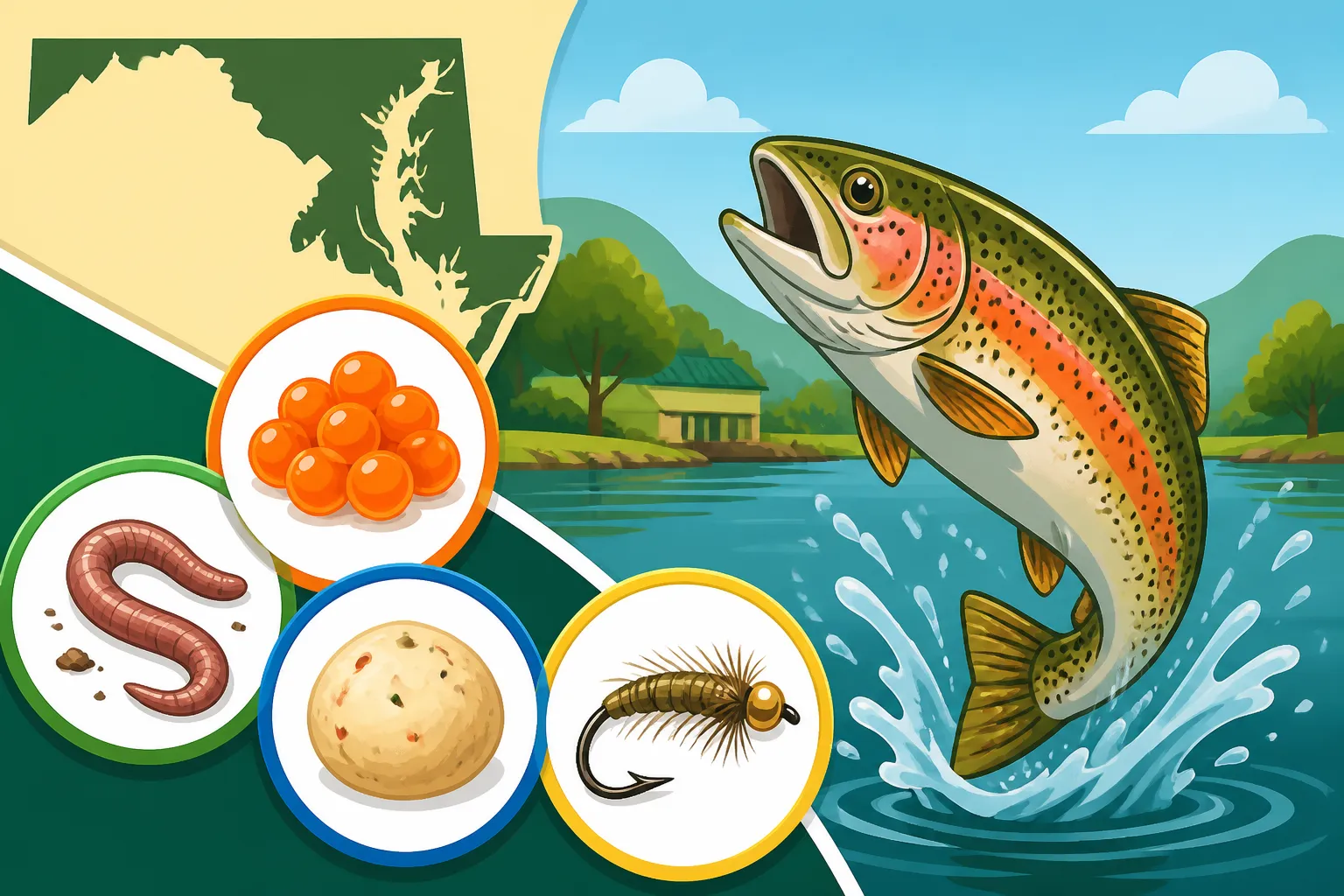
If there's one category of bait that consistently tops the list for put-and-take trout, it's scented dough baits. Brands like PowerBait (often found in a wide variety of colors and scents on Amazon) and Berkley Gulp! have practically revolutionized trout fishing. These baits are designed to float, which is a massive advantage when fishing near the bottom where trout often congregate. They come in an incredible array of colors – chartreuse, rainbow, pink, orange, white, and even glitter varieties.
The key to their success lies in their potent scent, which mimics food sources or simply attracts curious trout, and their texture, which holds well on a hook. When you mold a small ball of PowerBait around your hook, it creates a floating, scented cloud that's hard for a hungry trout to ignore. Different colors can work better on different days, so it's always wise to carry a few options. Pink, yellow, and chartreuse are often go-to choices in Maryland's stocked streams. The small, pellet-like shapes of PowerBait Nuggets can be particularly effective, as they closely resemble the food trout were raised on. You can fish these on a simple Basic Rigs for Bottom and Float Fishing rig, letting them drift naturally or holding them in place with a small sinker.
Classic Live Baits: Worms and Minnows
While dough baits are fantastic, you can never go wrong with nature's own offerings. Live baits have been catching fish for centuries, and put-and-take trout are certainly no exception.
Worms: A simple nightcrawler or a handful of red wigglers can be incredibly effective. The natural scent and wriggling action are irresistible to many fish, including trout. When fishing with worms, you don't need a fancy presentation. A piece of a nightcrawler threaded onto a small hook, perhaps with a split shot or two a few inches above to get it down to the strike zone, is often all it takes. Red wigglers, being smaller and more active, are great for smaller trout or when you want a more subtle presentation. You can find these at most bait shops, and they're also a reliable option for catching other species like perch, much like the effectiveness of different baits for Best Bait for Blue Catfish in Maryland Rivers. The key is freshness and liveliness; trout are drawn to the natural movement.
Minnows: Small live minnows, usually shiners or fatheads, can also be dynamite, especially for larger trout or if the fish have been in the water a bit longer and are starting to feed more aggressively on natural forage. You'll want to use a small treble hook or a single hook through the lip or just behind the dorsal fin, making sure not to impede its swimming action. A bobber or a very light slip sinker can help present the minnow naturally. The flash and erratic movement of a struggling minnow can trigger a strong predatory response. However, always check local regulations, as there might be restrictions on using live baitfish in certain trout waters.
Unexpected Kitchen Staples: Corn, Cheese, and Marshmallows
Sometimes, the best baits are the ones you already have in your pantry! Believe it or not, seemingly unconventional items like canned corn, small cubes of cheese, and even mini marshmallows can be incredibly effective for stocked trout.
Canned Corn: Yes, you read that right. Canned corn has a distinct color, a slight sweetness, and a soft texture that stocked trout often find appealing. It's believed that the yellow color resembles their hatchery pellets, and the small size makes it an easy target. Simply thread a few kernels onto a small hook. It's inexpensive, easy to use, and often yields surprisingly good results. You can fish it on the bottom with a small split shot or under a bobber.
Cheese: Small cubes of Velveeta or similar soft, processed cheese can also be a secret weapon. The strong scent, bright color, and soft texture mimic some of the attributes that make dough baits so successful. Cut the cheese into small, dime-sized cubes and thread one onto a small hook. It dissolves slowly, releasing an attractive scent trail into the water.
Marshmallows: Mini marshmallows, especially the white ones, float naturally and can be effective when trout are suspended just off the bottom or cruising shallow areas. You can combine them with a small piece of worm or corn for added scent and appeal. The buoyancy helps keep your bait visible and off the muddy bottom, making it an easy target. Some anglers even prefer the flavored varieties for an extra edge.
Artificial Lures for Aggressive Stocked Trout
While natural and dough baits are often the go-to for put-and-take trout, don't underestimate the power of artificial lures, especially when the trout are freshly stocked and actively feeding. Their aggressive nature after release makes them susceptible to flashy, moving targets.
Spinners, Spoons, and Small Jigs
For anglers who prefer to cast and retrieve, a good selection of small spinners, spoons, and jigs can be incredibly productive. These lures mimic small baitfish or insects and appeal to the trout's predatory instincts.
Spinners: Classic inline spinners like Mepps Aglia, Panther Martin, or Rooster Tail are perennial favorites. Their flashing blades and vibrating action are irresistible to hungry trout. Sizes from 0 to 2 are usually ideal. Bright colors like gold, silver, or fluorescent orange/chartreuse often work best. Simply cast upstream or across the current and retrieve slowly enough to let the blade spin, but fast enough to prevent snagging. For a wide selection of these effective lures, checking out options on Amazon can be a great way to stock up before your next trip.
Spoons: Small casting spoons such as the Kastmaster or Little Cleo also produce excellent results. Their wobbling action and reflective flash can draw strikes from a distance. Again, silver, gold, and vibrant patterns are often effective. Cast them out and retrieve with a slow, steady motion, perhaps adding an occasional twitch to imitate a struggling baitfish. These are particularly good in wider pools or slower moving sections of streams.
Small Jigs: Tiny jigs, often dressed with marabou, chenille, or small soft plastic bodies, can be deadly when trout are a bit more finicky or holding deeper. Colors like white, black, olive, or even bright pink and chartreuse, in weights from 1/32 to 1/16 ounce, are perfect. You can fish them under a small bobber or jig them slowly along the bottom with a lift-and-drop retrieve. Small grub-style soft plastics on a jig head can also be highly effective, offering subtle action and a tempting profile.
Fly Fishing for Recently Stocked Trout
Even though this article focuses broadly on bait, it's worth noting that fly anglers can also find immense success with put-and-take trout. While wild trout often demand precise "matching the hatch" strategies, stocked trout are often more forgiving.
For freshly stocked fish, attractor patterns often work wonders. Large, flashy nymphs like a San Juan Worm, Squirmy Wormy, or an Egg Pattern can be incredibly effective, as they are not necessarily mimicking natural insects but rather providing a high-visibility, easy-to-grab meal. These patterns tap into that hatchery-fed instinct. Streamers like a Woolly Bugger (in black, olive, or white) can also be very productive, especially when stripped actively to imitate a small baitfish or leech. As the trout acclimate, more traditional nymph patterns like Pheasant Tails or Hare's Ears, and even dry flies during actual hatches, will become more effective. Remember, a Maryland Trout Stamp Cost for Residents is typically required for these waters, regardless of your fishing method.
Essential Rigging and Presentation Tips for Success
Having the right bait is only half the battle; knowing how to present it effectively is just as important. For put-and-take trout in Maryland, simplicity and getting your bait into the right strike zone are often the keys to success.
Basic Rigs for Bottom and Float Fishing
Most of your put-and-take trout fishing will involve either presenting your bait on or near the bottom, or suspending it at a specific depth.
Bottom Rigging (Slip Sinker Rig): This is arguably the most common and effective rig for fishing scented dough baits or worms on the bottom. You’ll need a small egg sinker (1/8 to 1/4 ounce is usually sufficient), a small swivel, a leader of about 18-24 inches of fluorocarbon or monofilament line, and a small hook (size 8-12 is good for trout).
- Thread the egg sinker onto your main line.
- Tie the main line to one end of the swivel.
- Tie your leader to the other end of the swivel.
- Tie your hook to the end of the leader.
This rig allows the trout to pick up the bait and move off without immediately feeling the weight of the sinker, which is crucial for getting a solid hookset. The sinker holds your bait in the feeding zone, while the floating dough bait or a lively worm sits just above any bottom debris.
Float Fishing (Bobber Rig): When trout are suspended in the water column, perhaps in a deep pool or slower current, a bobber rig is invaluable. You can use a fixed bobber or a slip bobber. A fixed bobber is great for shallower water where the depth doesn't change much. A slip bobber, which slides freely on your line, is better for deeper water or when you need to adjust your depth frequently without having too much line hanging below.
- Attach your bobber to your main line.
- About 12-24 inches below the bobber, attach one or two small split shot sinkers (just enough to cock the bobber but not submerge it).
- Tie your hook (again, a small size 8-12 is common) directly to the end of the line below the split shot.
This rig allows your bait (worms, corn, or small jigs) to drift naturally with the current at a consistent depth, often mimicking natural food drifting downstream. This is a very effective technique, particularly during Fishing Maryland's Spring Trout Stocking Season.
Matching Your Presentation to Trout Behavior
While put-and-take trout can be less picky, adjusting your presentation can still make a big difference.
- Observe the Water: Pay attention to where other anglers are catching fish. Are they near the bottom? In the middle of the water column? Close to structure like fallen logs or rocks? Trout often school up after stocking, so if you find one, there are likely more.
- Current Matters: In streams, trout will often face upstream, waiting for food to drift down to them. Cast upstream and let your bait drift naturally down into holding areas. In lakes or ponds, experiment with different cast distances and retrieve speeds.
- Experiment with Depth: If you're not getting bites, try adjusting the depth of your bait. With a slip bobber, this is easy. If bottom fishing, try moving your split shot closer or further from the bait to change how it moves in the current.
- Light Line is Key: Trout have surprisingly good eyesight, even stocked ones. Using a light monofilament or fluorocarbon line (4-6 lb test is standard) for your leader will make your bait appear more natural and increase your chances of a bite.
- Know the Regulations: Always be aware of the specific Maryland Trout Daily Creel Limit for the water you're fishing. Some areas might have special regulations or be designated as Maryland Delayed Harvest Trout Waters Explained or Do You Need a Trout Stamp to Catch and Release in Maryland.
By understanding the nature of put-and-take trout and employing these proven baits and presentation techniques, you'll significantly increase your chances of a successful day on Maryland's trout waters. Remember, variety is your friend, and don't be afraid to try something new if what you're doing isn't working.
Here's a quick comparison of popular put-and-take trout baits:
| Bait Type | Pros | Cons | Best for |
|---|---|---|---|
| Scented Dough Bait (PowerBait) | Highly attractive scent, floats, easy to use, many colors | Can be messy, sometimes falls off hook | Newly stocked trout, still water, bottom fishing |
| Live Worms (Nightcrawlers, Red Wigglers) | Natural appeal, irresistible action, always effective | Can be messy, need to keep alive, can attract smaller fish | All trout, especially when slightly acclimated, all water types |
| Canned Corn | Inexpensive, easy to use, familiar to hatchery trout | Less durable, less scent than dough baits | Newly stocked trout, budget-friendly, still water |
| Cheese Cubes | Strong scent, floats, easy to rig | Can be soft and fall off hook, less durable | Newly stocked trout, bottom fishing, slower currents |
| Mini Marshmallows | Floats, inexpensive, visually appealing | No scent, less durable, can be too light | When trout are suspended, combined with other baits |
| Spinners/Spoons | High visibility, covers water quickly, good for active fish | Requires active retrieval, can snag, less effective on lethargic fish | Aggressive trout, covering large areas, flowing water |
| Small Jigs / Soft Plastics | Versatile, subtle action, good for deeper fish | Requires specific retrieve, can be light | Finicky trout, deeper pools, slower retrieval |
Disclaimer
This article is for general informational purposes only and does not constitute professional advice. Laws, prices and regulations vary by location and change over time. Consult a qualified professional for guidance on your specific situation.