Best Time of Day to Catch Striped Bass in the Bay
There’s nothing quite as frustrating as heading out onto the Chesapeake Bay, full of hope, only to spend hours casting without so much as a nibble from a striped bass. We’ve all been there, staring at an empty cooler, wondering what we did wrong. The truth is, catching those elusive rockfish consistently often comes down to timing. This guide is going to dig deep into the best times of day to target striped bass in the Bay, helping you understand their patterns so you can plan your trips for maximum success.
The Dawn and Dusk Advantage: Why Low Light is Prime Time
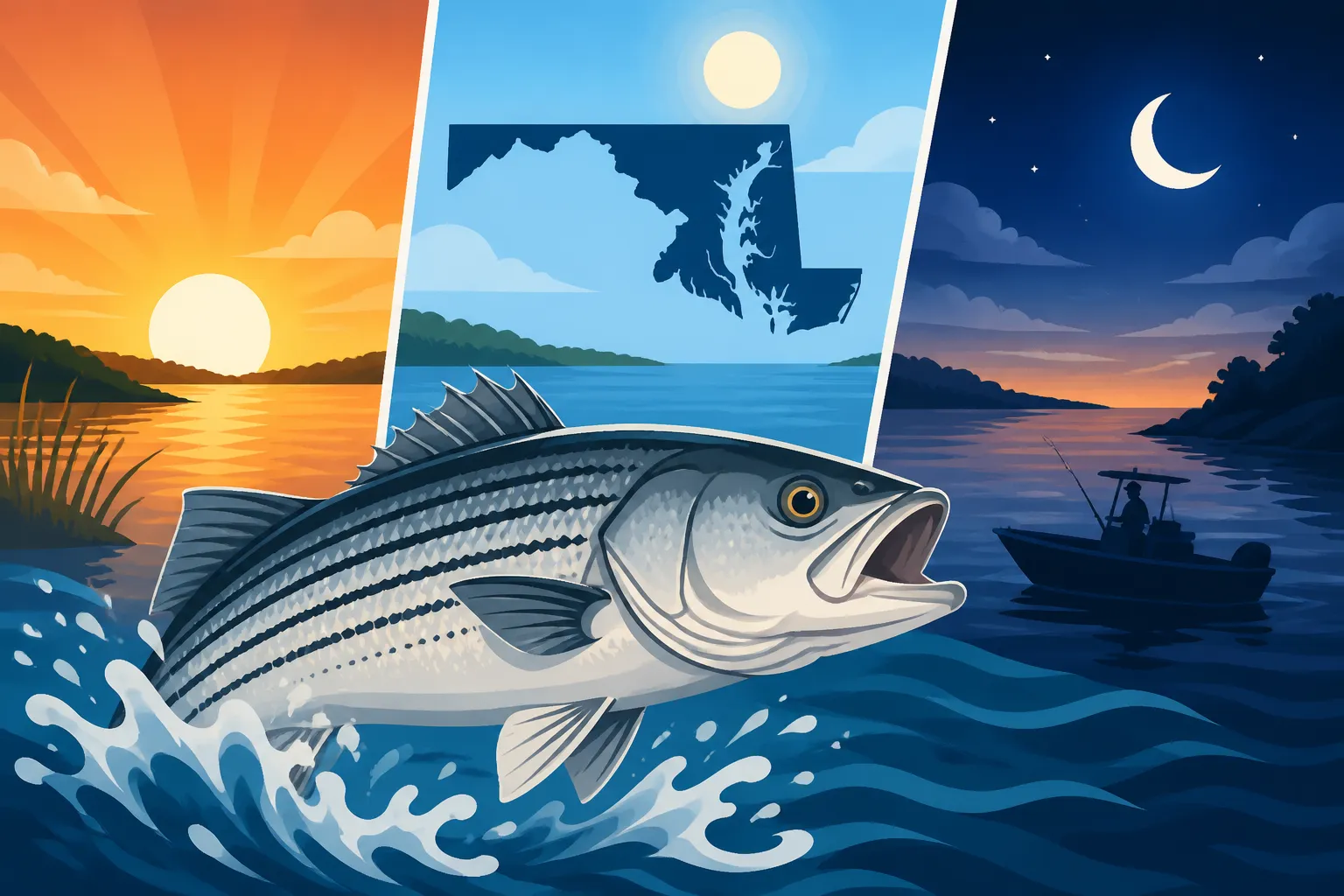
When you talk to any seasoned Chesapeake Bay angler about the best time to catch striped bass, "first light" and "last light" are almost certainly going to come up. It's not just folklore; there's some serious biological science behind why these low-light periods are often your best bet for a productive outing.
The Biological Imperative: Striped Bass Feeding Habits
Striped bass, often affectionately called rockfish here in Maryland, are opportunistic predators. They rely heavily on their vision, but not in the way you might think. Unlike us, they thrive in lower light conditions, giving them a distinct advantage over many of their prey species. Think about it: a baitfish silhouetted against a dim sky or the fading light of evening becomes an easy target. Their eyes are specially adapted to pick up these subtle contrasts, making them incredibly efficient hunters when the sun isn't directly overhead.
During these twilight hours, schools of baitfish, like menhaden or silversides, often move into shallower waters or closer to structure, feeling safer under the cloak of reduced visibility. This is a perfect storm for hungry stripers. They'll patrol channel edges, oyster reefs, and points where they can ambush unsuspecting prey. The relative calm of the water at dawn and dusk, often before boat traffic picks up, also makes it easier for stripers to detect disturbances and for you to present your lures or baits naturally. It's a prime example of nature's rhythm playing directly into our fishing hands.
Capitalizing on the Low Light Bite
So, how do you make the most of these prime low-light windows? It's all about presentation and location. Many anglers swear by topwater lures during these times. A popper or a walk-the-dog style bait creating commotion on the surface can be irresistible to a striped bass looking for an easy meal, especially if they’re feeding aggressively in shallow water. The silhouette against the sky, coupled with the noise, acts as a beacon. You can find a wide variety of these lures on Amazon if you're looking to stock up before your next trip.
If topwater isn't producing, or if the fish are holding a bit deeper, shallow water jigging with soft plastics or bucktails is incredibly effective. Again, focus on lure colors that create a strong silhouette—darker colors like black, purple, or dark green can be surprisingly potent. Consider live-lining spot or other popular baitfish if you have them, as their natural movement in the low light can be enough to trigger a strike. Remember, the fish are often more active and less spooky, allowing for a more aggressive approach.
Picture this: you're out on the Bay before the sun even breaches the horizon, the air is crisp, and the water is glass. You make a cast with a popper near a submerged oyster reef, let it sit for a second, and then BAM! A powerful strike sends spray everywhere, and your rod bends in a beautiful arc. Those are the moments that keep us coming back, and they happen most frequently during those magical dawn and dusk hours.
Decoding the Tides: How Water Movement Dictates Opportunity
While the time of day is crucial, it's only half the equation when it comes to consistently finding striped bass in the Chesapeake Bay. The Bay is a tidal estuary, and understanding how those tides influence fish behavior is paramount. Ignoring the tides is like trying to navigate a dark room without turning on the lights – you might bump into something, but it’s mostly by accident.
Understanding Tidal Influence on Striped Bass
Striped bass are fundamentally current-loving fish. Moving water, whether incoming or outgoing, is their grocery delivery service. It carries baitfish, crabs, and other food items past their ambush points. Without current, baitfish tend to scatter, and stripers become less active, conserving energy rather than expending it chasing down individual meals.
Think of it like a conveyor belt. When the belt is moving, food is constantly being delivered. Stripers will position themselves strategically along structures like bridge pilings, channel edges, and submerged points, facing into the current. This allows them to let the current do the work, bringing food right to them, where they can dart out and snatch it. During slack tide, when the water is still, this "conveyor belt" stops, and the fish often become lethargic and spread out, making them much harder to locate and entice. This concept is explored in more detail in our article on How Tides Affect Fishing in Maryland's Chesapeake Bay.
Best Tidal Stages for Striped Bass
So, when exactly is the "best" tide? Generally, the periods of strongest current during both the incoming and outgoing tides are the most productive. This usually means the two hours leading up to the peak of the tide (high or low) and the two hours immediately following it. The slack period, when the water is relatively still, is typically the slowest.
Fishermen often refer to "slack high" and "slack low" as times to take a break, grab a snack, or move to a different location. The real magic happens when the water starts to move again, building momentum. As the current picks up, so does the activity of the baitfish, and consequently, the predatory instincts of the striped bass.
You'll want to check local tidal charts meticulously before heading out. There are many great apps and websites that provide real-time tidal predictions for specific locations within the Bay, like Annapolis, Point Lookout, or the mouth of the Patuxent River. Knowing whether you're fishing an incoming or outgoing tide can also inform your strategy. For example, during an outgoing tide, baitfish might be flushed out of shallow creeks and into deeper channels, creating an easy target for waiting stripers. Conversely, an incoming tide might push bait into those same creeks.
| Tidal Stage | Striped Bass Activity | Best Strategy | Target Zones |
|---|---|---|---|
| Incoming Tide (Strong) | High, actively feeding | Jigging, trolling, live-lining, chumming | Channel edges, points, bridge pilings, reefs |
| Incoming Tide (Slack) | Low, scattered | Deep structure, bottom fishing | Deeper channels, ledges |
| Outgoing Tide (Strong) | High, actively feeding | Jigging, trolling, live-lining, chumming | Mouths of creeks, channel edges, current seams |
| Outgoing Tide (Slack) | Low, scattered | Deep structure, bottom fishing | Deeper holes, sheltered areas |
Mid-Day and Night Fishing: Adapting Your Strategy
While dawn and dusk, paired with strong tidal movement, are often cited as the prime windows, that doesn't mean you can't catch striped bass at other times. You just need to be willing to adapt your techniques and expectations. These periods often require a different approach and a deeper understanding of striper behavior when conditions aren't "ideal."
Overcoming the Mid-Day Lull
When the sun climbs high and glares brightly overhead, striped bass often move deeper, seeking cooler water and the cover of structure. This isn't because they're not hungry, but rather because they're less comfortable exposing themselves to predators (like ospreys or eagles) and the intense light. The water column is also usually warmest on the surface during mid-day, pushing them to thermoclines or deep holes.
To succeed during the mid-day lull, you need to think vertically. Deep jigging becomes a powerful tool. Heavy jigs, bucktails, or soft plastics with lead heads dropped straight down to known structure or suspended fish can be incredibly effective. Look for channel edges, submerged rock piles, artificial reefs, and the deeper pilings of the Bay Bridge Pilings for Striped Bass. Your electronics, like a good fish finder, become invaluable here, allowing you to pinpoint schools of bait or rockfish holding tight to the bottom. Many anglers use heavy metal jigs or large soft plastic paddletails, often found on Amazon, to get down to where the fish are hiding.
Trolling with umbrella rigs, Mojos, or deep-diving crankbaits can also cover a lot of water and present lures at various depths until you find where the fish are holding. This is a common strategy for Trolling Bucktails for Maryland Striped Bass during the warmer months. Don't be afraid to experiment with different depths and speeds until you get a strike. It might take a bit more persistence, but the rewards can be well worth it.
The Mystique of Night Fishing for Striped Bass
Night fishing for striped bass in the Bay has a certain mystique, and for good reason—it can be incredibly productive, especially during the hot summer months. When the sun goes down, the water temperature cools, and the stripers, feeling more secure under the cover of darkness, often move into shallower water or become much more aggressive.
One of the most popular night fishing tactics involves fishing around lighted areas, like bridge pilings, piers, or major dock lights. The lights attract baitfish, which in turn attract hungry stripers. Casting large soft plastics, bucktails, or even live spot into the edges of the light line, allowing them to drift into the darkness, can trigger violent strikes. You're essentially creating your own ambush point.
Another effective strategy for night fishing, particularly during the summer, is anchoring and setting up a chum slick. Anchoring and Chum Lines for Chesapeake Bay Rockfish in Maryland can draw in stripers from a wide area, leading to incredible action. Be sure to use lights on your boat (and perhaps some glow-in-the-dark lures) to make rigging and landing fish easier, but avoid shining them directly into the water where you're fishing, as it can spook the fish. Safety is paramount when fishing at night, so ensure all your navigation lights are working, and you have all necessary safety gear on board.
Seasonal Shifts and Other Factors Affecting Timing
While the time of day and tidal cycles are fundamental, the best time to catch striped bass isn't a static concept throughout the year. The seasons in Maryland bring significant changes in water temperature, bait availability, and striped bass behavior, all of which influence when and where you should be fishing.
Seasonal Variations in Best Times
-
Spring (March-May): This is a dynamic time, especially with the Maryland Striped Bass Spawning River Closures in effect. Before and after the spawn, stripers are incredibly hungry and often aggressive. In early spring, as water temperatures rise, fish might feed throughout the day as they try to bulk up for the spawn. During the trophy season, the early morning bite is often phenomenal for big fish as they move in from the ocean. After the spawn, they'll often be in recovery, and feeding can be more opportunistic. You'll find a lot of anglers targeting them during dawn and dusk, but strong tides can provide action all day. Our How to Fish Maryland's Chesapeake Bay by Season guide offers a deeper dive into this.
-
Summer (June-August): As Bay waters heat up, especially during July and August, the mid-day fishing can slow considerably. Stripers seek refuge in deeper, cooler waters, often holding close to the bottom or near significant structure like the Bay Bridge or deep channel edges. This is when the early morning, late evening, and especially night fishing truly shine. They'll venture into shallower waters to feed under the cover of darkness or low light, making those twilight hours or overnight trips the most productive. Remember, there's also an Maryland's 2026 Striped Bass Season Dates closure in August in certain areas, so always check the regulations.
-
Fall (September-December): This is arguably the most exciting time to fish for striped bass in Maryland. The "fall run" brings hordes of baitfish and aggressive stripers ready to gorge themselves before winter. While morning and evening remain fantastic, the feeding can be so intense that you might experience "blitzes" throughout the day, especially on overcast days or when baitfish are schooling on the surface. These are those epic days when the birds are diving, and the water is churning with feeding fish. Keep an eye on weather patterns; a warming trend after a cold snap can really turn the bite on. For more on this, check out Best Time of Year to Fish in Maryland.
Weather, Water Temperature, and Barometric Pressure
Beyond the time of day and tide, other environmental factors play a huge role.
- Cloudy Days: Overcast conditions effectively extend those prime low-light hours throughout the day. This can mean a hot mid-day bite that you wouldn't typically expect on a sunny day.
- Water Temperature: Striped bass are cold-blooded, so their metabolism and activity levels are directly tied to water temperature. They are most comfortable and active within a certain range (typically 55-68°F). Too cold, and they're sluggish; too warm, and they seek deeper, cooler water. Knowing the ambient water temperature can help you predict their behavior and preferred depths.
- Barometric Pressure: A stable or slowly falling barometer often indicates good fishing conditions, as fish tend to be more active. A rapidly falling barometer, associated with approaching storms, can sometimes trigger a pre-front feeding frenzy, but a rapidly rising barometer after a front often leads to slower fishing as the fish recover from the weather change and adjust to the new pressure.
Adaptability is key. While dawn and dusk with moving tides are your best bet, being informed about seasonal shifts and current conditions allows you to make the most of every trip, no matter the time of day.
Disclaimer
Always consult the latest Maryland Department of Natural Resources (DNR) fishing regulations before heading out. Fishing rules, seasons, and catch limits can change, and it is your responsibility to be aware of and comply with all current laws.