Kayak Fishing Techniques for Maryland Waters
There’s nothing quite like the feeling of being out on Maryland's diverse waters, paddling silently, getting closer to the fish, and experiencing the environment in a way a bigger boat simply can't offer. But if you’re new to it, or even if you’ve been at it a while, kayak fishing in Maryland presents its own unique set of challenges and triumphs, from navigating strong Bay currents to finding stealthy bass in a shallow creek. This comprehensive guide will equip you with the techniques, gear knowledge, and local insights to make your kayak fishing adventures in Maryland successful and, most importantly, safe and enjoyable.
The Allure of Kayak Fishing in Maryland
Kayak fishing has exploded in popularity, and for good reason. It offers a unique blend of sport, tranquility, and accessibility that traditional boating often misses, especially in a state as rich in waterways as Maryland. From the vastness of the Chesapeake Bay to the quiet intimacy of its freshwater lakes and rivers, a kayak can be your ultimate fishing platform.
Why Choose a Kayak for Maryland's Diverse Fisheries?
One of the biggest draws of kayak fishing is the incredible access it provides. Think about those skinny water creeks where your powerboat can't even dream of going, or the serene coves in a reservoir that are too far to cast from shore but perfectly reachable by paddle. Kayaks can get you into these untouched pockets, giving you a distinct advantage over other anglers. This unparalleled access means you can target shy fish in their natural, less pressured habitats. It's not just about reaching new spots; it's about doing so with stealth. A kayak, especially a pedal-drive model, allows for near-silent navigation, letting you sneak up on fish that would be spooked by a noisy outboard engine. This stealth factor is a game-changer when targeting wary species like striped bass in shallow water or largemouth bass tucked under lily pads.
Beyond access and stealth, there's a strong connection to nature that comes with kayak fishing. You're closer to the water, feeling the gentle chop, hearing the wildlife, and truly becoming part of the environment. It's a much more immersive experience than fishing from a large vessel. Plus, the cost of entry is significantly lower than that of a powerboat. You don't have the same fuel expenses, maintenance headaches, or slip fees, making it a budget-friendly way to get on the water regularly. Many anglers find the physical exercise of paddling or pedaling to be an added bonus, combining their love for fishing with a healthy outdoor activity. The portability of kayaks also means you can easily transport them to various launch points, from public boat ramps to quiet shorelines, maximizing your fishing opportunities across the state.
Understanding Maryland's Kayak Fishing Landscape
Maryland truly is a kayak angler's paradise, offering an incredibly diverse range of fishing environments. The Chesapeake Bay, our crown jewel, provides vast tidal waters with a mix of open areas, intricate marsh systems, and numerous tributaries like the Choptank, Patuxent, and Severn rivers. These areas are prime for targeting saltwater species, especially the beloved striped bass, locally known as rockfish, and plentiful white perch. However, the Bay can be a formidable beast, with strong currents, unpredictable weather, and significant boat traffic, demanding respect and careful planning from kayak anglers. If you're looking to explore the Bay, our guide on Fishing Maryland's Chesapeake Bay, A Complete Guide can provide even more detailed insights.
Moving westward, Maryland offers an array of beautiful nontidal waters. From the tranquil waters of Deep Creek Lake in Garrett County, known for its smallmouth bass and walleye, to the sprawling reservoirs like Loch Raven and Liberty, brimming with largemouth bass and crappie, freshwater kayak opportunities are abundant. Rivers like the Potomac and Susquehanna offer exciting challenges, with their mix of strong currents and quiet pools, perfect for smallmouth bass and even invasive species like blue catfish and snakeheads. Understanding the difference between Maryland's tidal and nontidal fishing zones is crucial, as regulations and target species can vary significantly. Our article on Maryland Nontidal vs Tidal Fishing License, Explained delves into these distinctions. Each body of water presents unique challenges and rewards, from strong tidal flows requiring specific anchoring techniques to negotiating rapids in a river. Being aware of the local conditions, common species, and applicable regulations for each specific waterway you plan to visit is paramount for a successful and safe trip.
Essential Gear for Maryland Kayak Anglers
Getting started with kayak fishing can feel a little overwhelming with all the specialized gear out there. But remember, the core idea is simplicity and efficiency. While you can certainly go all-out with electronics and custom rigging, a solid foundation of essential gear will get you on the water safely and effectively.
Kayak Selection and Rigging
Choosing the right kayak is the first and arguably most important step. There are two primary types: sit-on-top and sit-in. For fishing, sit-on-top kayaks are overwhelmingly popular due to their stability, ease of entry and exit, and ample deck space for gear. Within sit-on-tops, you'll choose between paddle-driven and pedal-driven models. Paddle kayaks are generally lighter, less expensive, and require more upper body strength for propulsion. They are excellent for tighter spaces, calmer waters, and those who prioritize simplicity. Pedal kayaks, like those from Hobie or Old Town, use a fin or propeller system, allowing you to move hands-free, which is a huge advantage for continuous casting and fighting fish. However, they are heavier, more expensive, and may have limitations in very shallow or weedy areas due to the drive system.
Stability is paramount. Look for wider kayaks, typically 30 inches or more, which provide a more stable platform for casting, standing (if you're comfortable), and handling fish. Storage is also key – ample tank wells, hatches, and accessory tracks are invaluable for organizing your tackle, safety gear, and catch. Rod holders are a must-have; flush-mount holders are great for storage, while adjustable swivel rod holders allow you to position rods for trolling or quickly grab them when a fish strikes. Many anglers also opt for accessory tracks, often found on brands like Wilderness Systems or Perception, which allow for easy mounting and repositioning of fish finders, camera mounts, and other accessories without drilling into your hull. Think about how you’ll transport it too – will it fit on your roof rack, or do you need a small trailer? For many, the ability to effortlessly carry their kayak is a significant factor in their model choice.
Safety Equipment and Navigation
Safety should always be your top priority when kayak fishing, especially in Maryland’s potentially challenging waters. A properly fitted Personal Flotation Device (PFD) is non-negotiable and legally required to be worn or readily accessible. Look for a fishing-specific PFD with pockets and attachment points for small tools. Beyond the PFD, a whistle or other sound-signaling device is crucial for alerting other boats to your presence. For visibility, especially at dawn, dusk, or in foggy conditions, a 360-degree white light is a must, particularly if you're out on the Chesapeake Bay where larger vessels may not easily spot a kayak.
An anchor system is incredibly useful for holding your position in current or wind. A small grappling anchor, often available on Amazon, is versatile for various bottom types, and a trolley system allows you to easily move the anchor point from the bow to the stern of your kayak, optimizing your drift or holding position. Other essential safety items include a first-aid kit, a bilge pump or sponge for bailing water, and a communication device like a waterproof VHF radio or a fully charged cell phone in a dry bag. For navigation, especially on larger bodies of water, a reliable GPS (either a dedicated unit or a phone app) is invaluable. Always carry a physical map or chart as a backup. Before heading out, always check the marine forecast for wind, waves, and storms, especially if you’re venturing onto larger tributaries or the main Bay, where conditions can change rapidly. Our Kayak Fishing Safety Tips for Maryland's Chesapeake Bay article goes into even more depth on staying safe on open waters.
Rods, Reels, and Tackle for Kayak Fishing
When it comes to rods and reels for kayak fishing, compact and durable are the keywords. Space is limited, and you want gear that can withstand the rigors of being splashed, knocked around, and exposed to the elements. For general-purpose fishing in Maryland, medium-action spinning rods between 6’6” and 7’6” are versatile choices, pairing well with 2500-4000 series spinning reels. These handle everything from panfish to smaller striped bass. For targeting larger fish like trophy striped bass, blue catfish, or snakeheads, you might opt for a slightly heavier rod and reel combo, perhaps a medium-heavy baitcasting setup for more power.
Line management is critical in a kayak. You don't want tangles or snags from loose line. Consider using braided line for its strength and sensitivity, paired with a fluorocarbon leader. Keep your tackle organized in small, waterproof tackle boxes or bags that fit neatly into your hatches or tank well. Brands like Plano or Flambeau offer excellent kayak-specific storage solutions. A good pair of pliers, line cutters, and a measuring board are also indispensable. Don't forget a landing net – a long-handled, rubber-coated net is ideal for safely landing fish in a kayak, protecting both you and the fish from hooks and thrashing. For toothy species like snakeheads or bluefish, a lip gripper can save your fingers. Remember, everything you bring should have a purpose and ideally be secured to prevent loss overboard. Losing a critical piece of gear in the middle of a hot bite can be frustrating, so leashes or bungee cords are a small investment that pays off big.
Mastering Basic Kayak Fishing Techniques
Kayak fishing isn't just about paddling out and casting a line; it involves a set of refined techniques that make the experience more productive and enjoyable. From silent approaches to effective boat control, mastering these basics will significantly elevate your game on Maryland's waters.
Efficient Paddling and Positioning
One of the greatest advantages of kayak fishing is the ability to maintain a stealthy approach. This means learning to paddle quietly and efficiently, minimizing noise and disturbance as you approach a fishing spot. Short, controlled paddle strokes that keep the paddle blade mostly in the water will reduce splash and drag. Many kayak anglers also use a "low brace" stroke for stability in choppy water or when fighting a fish. When you spot a promising area, try to position your kayak so the wind or current works in your favor, allowing you to drift naturally over the target zone while maintaining casting distance.
Holding your position is equally important. In current or wind, this can be a constant battle. This is where a pedal drive kayak shines, as you can use your feet to maintain position while your hands are free to cast. For paddle kayaks, a good anchor system or a drift sock is invaluable. A drift sock deploys like a parachute in the water, slowing your drift and helping you maintain a more consistent course. For precision casting around structure, learning to make subtle adjustments with your paddle or rudder (if equipped) is key. The goal is to move deliberately and quietly, blending into the environment rather than announcing your presence to every fish in the vicinity. Practice makes perfect, and the more time you spend maneuvering your kayak, the more intuitive it will become.
Anchor Systems and Shallow Water Poles
Maintaining position in a kayak, especially in tidal waters or windy conditions, is crucial for effective fishing. A well-designed anchor system is not just about stopping; it's about precise boat control. The simplest anchor setup involves a small grappling anchor (typically 1.5 to 3 lbs) with about 50 feet of anchor line. However, the real game-changer for kayak anglers is an anchor trolley system. This ingenious setup uses a rope and pulley system along the side of your kayak, allowing you to deploy your anchor from either the bow or the stern. Why is this important? Because anchoring from the bow generally keeps your kayak facing into the current or waves, providing a more stable and comfortable fishing platform. Anchoring from the stern can be useful for specific presentations but can also be less stable in rougher conditions.
For shallow water fishing, especially in marshy areas, rivers, or back bays, a stakeout pole (or shallow water anchor) is a fantastic alternative. These are rigid poles, often made of fiberglass or aluminum, that you can simply push into the soft bottom to secure your kayak. They are much quieter to deploy than a traditional anchor and allow for quick, silent adjustments as you work an area. Brands like Power-Pole Micro offer motorized versions for ultimate convenience, but a simple manual stakeout pole is highly effective. Some anglers even make their own out of PVC pipe. The beauty of these systems is the ability to stop on a dime, cast to a fish you just spotted, and then quickly move on without the hassle of pulling up a muddy anchor. For fishing in areas like the Susquehanna Flats or the numerous shallow creeks of the Eastern Shore, a stakeout pole is a must-have.
Managing Your Catch and Gear on the Water
Effective gear and catch management are vital for a productive and enjoyable kayak fishing trip. Space is a premium on a kayak, so organization is key to preventing frustration and ensuring everything you need is within easy reach. Many kayak anglers utilize waterproof tackle crates or bags that fit snugly in their stern tank well. These can be customized with rod holders, cutting boards, and tool holders. Securing these items with bungee cords or straps is critical to prevent them from going overboard in choppy conditions or if you happen to capsize. Always secure loose items. A leashed pair of pliers, a knife, and a measuring tape should be within arm's reach.
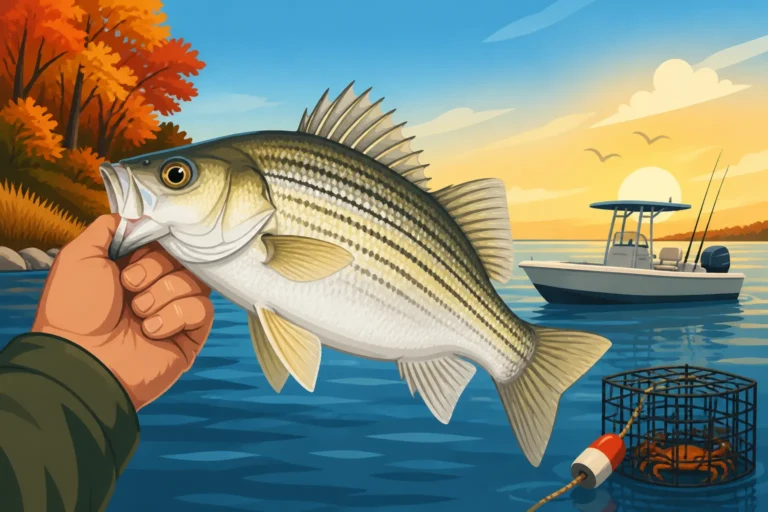
When it comes to managing your catch, especially if you plan to keep fish, having a dedicated system is important. For smaller fish like white perch or crappie, a fish stringer secured to the side of your kayak can work, keeping them fresh in the water. However, for larger species or for prolonged trips, a small cooler is highly recommended. Many kayak anglers use soft-sided coolers or insulated fish bags that conform to the shape of their kayak and can be easily stored in the tank well or even in a large bow hatch. Brands like Engel or Yeti offer rotomolded coolers that are rugged and keep ice for days. Ensure your cooler is secured and easily accessible for quick storage of your prized catch. Remember to be mindful of Maryland Fishing Size and Catch Limits by Species and only keep fish that comply with regulations. After a successful day, getting your kayak cleaned and stored properly is important; a thorough rinse with fresh water, especially after saltwater excursions, will extend the life of your gear.
Targeting Key Species from a Kayak in Maryland
Maryland's waters teem with diverse fish species, and kayak fishing offers a unique advantage in targeting many of them. The stealth, access, and low profile of a kayak can put you right in the thick of the action.
Kayak Strategies for Striped Bass
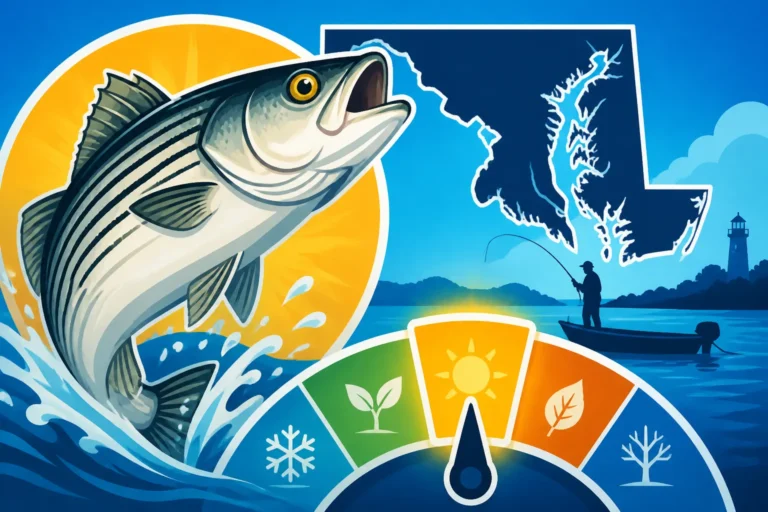
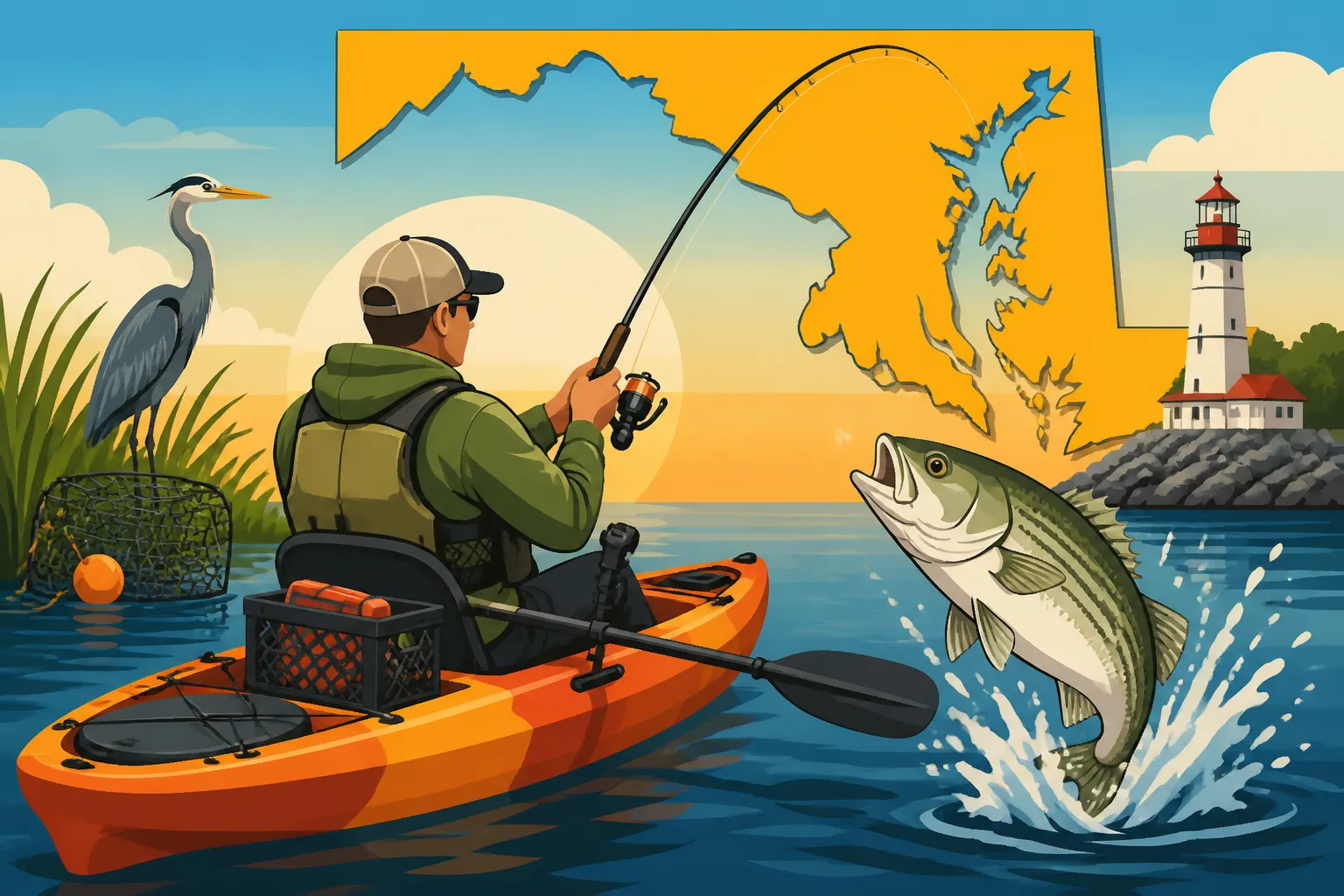
Striped bass, or rockfish, are the undisputed kings of the Chesapeake Bay, and they are a fantastic target for kayak anglers. Their seasonal movements and preference for structure make them well-suited to kayak tactics. In the spring and fall, when rockfish are actively feeding in shallower waters, jigging with soft plastics or bucktails is incredibly effective. Look for drop-offs, oyster bars, and points in Bay tributaries. Your kayak allows you to silently approach these areas and position yourself perfectly to cast to breaking fish or known holding spots. Try a 1/2 to 1 oz jig head with a 5-7 inch paddle tail in chartreuse or white, working it vertically or with a cast-and-retrieve motion.
Trolling is another excellent strategy from a kayak, especially for covering ground. Use light trolling rods and attach a single soft plastic lure, bucktail, or even a small crankbait behind you. Pedal-drive kayaks are particularly adept at trolling because they allow for consistent speed while keeping your hands free. Troll along channel edges, submerged structure, or grass beds. Live-lining spot or small menhaden is also a deadly technique, particularly during the summer months when larger stripers can be found holding deeper. Position your kayak up-current from a structure, deploy your live bait on a simple circle hook rig, and let it drift naturally into the strike zone. Remember, Maryland Striped Bass Fishing Techniques vary by season and location, so staying informed is key. The quiet approach of a kayak can be the difference between a productive day and a frustrating one, especially when stripers are wary in clear, shallow water.
Chasing Snakeheads and Blue Catfish
Maryland is home to two prominent invasive species that offer exciting kayak fishing opportunities: northern snakeheads and blue catfish. Both provide hard fights and are encouraged to be harvested due to their ecological impact. Targeting snakeheads from a kayak is particularly rewarding because they often inhabit shallow, weed-choked waters that are difficult for larger boats to access. Rivers like the Potomac and its tributaries, as well as several Eastern Shore creeks, are prime snakehead territory. Look for dense lily pads, submerged grass, and woody cover.
Topwater lures, especially frog imitations, are incredibly effective for snakeheads. The stealth of a kayak allows you to cast precisely into small pockets within the vegetation without spooking the fish. Try to work the frog slowly across the mats, pausing often. When a snakehead explodes on it, resist the urge to set the hook immediately; wait a beat for the fish to fully engulf the lure. Heavy braided line (30-50 lb test) is essential for pulling these powerful fish out of thick cover. For blue catfish, which are abundant in the Potomac River and other Bay tributaries, bottom fishing from a kayak is the way to go. Anchor your kayak near deep holes, channel edges, or current breaks, and present cut bait (like shad, herring, or even chicken liver) on a sturdy bottom rig. The ability to silently position your kayak in precise locations, away from the traffic of larger boats, gives you a distinct advantage. Our guide on Techniques for Catching Snakehead in Maryland can offer more specific tips for these exciting invasive species. Remember, Maryland's DNR encourages the harvest of these invasives, so bring a cooler!
Freshwater Kayak Fishing for Bass and Panfish
Maryland's numerous freshwater lakes, ponds, and rivers offer incredible opportunities for kayak anglers targeting largemouth bass, smallmouth bass, and a variety of panfish like crappie and bluegill. Reservoirs such as Loch Raven, Liberty, and Prettyboy, as well as smaller community ponds, are perfect for exploring by kayak. For largemouth bass, focus on structure: submerged timber, weed lines, lily pad fields, and docks. The kayak's stealth allows you to get right up to these spots without disturbing the fish. Cast soft plastics, jigs, and crankbaits to probe different depths. Topwater lures are especially fun from a kayak when bass are actively feeding near the surface in low light conditions.
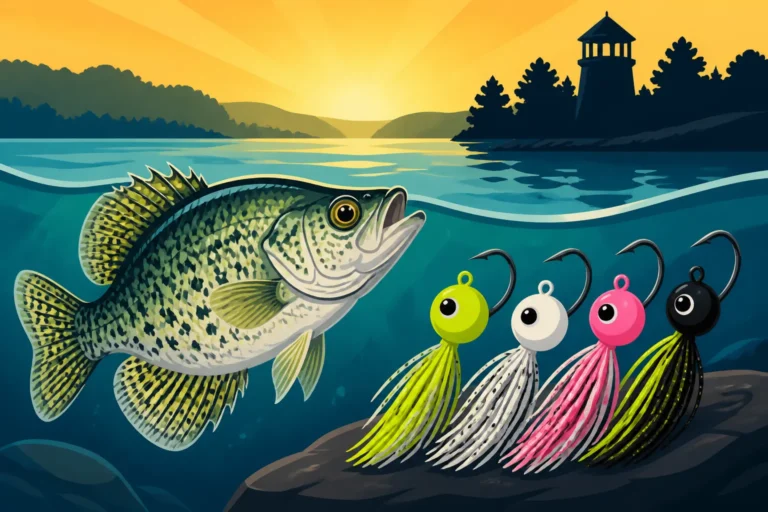
Smallmouth bass thrive in Maryland's cooler, rocky rivers like the nontidal Potomac and sections of the Susquehanna. Here, the maneuverability of a kayak is a huge asset for navigating currents, eddies, and riffles. Drift fishing with small crankbaits, tubes, or finesse worms is very effective. You can also anchor in productive eddies and cast to current seams. For panfish, which are often found in large schools, a kayak lets you quickly find and stay on them. Crappie will hold around submerged brush piles and standing timber, while bluegill are typically found near vegetation in shallower water. Light tackle, small jigs, and live bait (like minnows or worms) are usually all you need for a fantastic day of panfish action. The quiet approach of a kayak ensures that you won't spook these schooling fish, allowing for extended catching periods.
Navigating Maryland's Varied Kayak Fishing Environments
Maryland's geographical diversity presents kayak anglers with a fascinating array of fishing environments, each demanding different approaches and considerations. Understanding these nuances is crucial for both safety and success.
Tidal Waters: Bay Tributaries and Coastal Backwaters
Fishing Maryland's tidal waters, particularly the Chesapeake Bay tributaries and coastal backwaters, from a kayak is an experience unlike any other, but it requires respect for the power of the tides and currents. The ebb and flow of the tide dictate fish behavior, feeding patterns, and where they position themselves. Learning to read the tides – when the current is running strong, when it slacks, and which direction it’s moving – is paramount. Fish often feed most actively during moving tides, as baitfish are swept along. You'll want to position your kayak to cast into or along current seams, points, and channel edges. Our guide on How Tides Affect Fishing in Maryland's Chesapeake Bay can give you an edge in understanding these complex dynamics.
Coastal backwaters, such as those behind Ocean City and Assateague Island, offer shallower, protected waters perfect for flounder, red drum, and speckled trout. These areas often feature extensive marsh grasses, oyster beds, and sand flats. Kayaks excel here, allowing you to silently paddle through skinny water and access areas that larger boats can't reach. Look for potholes in the grass, ambush points along marsh edges, and drop-offs. Always be mindful of wind combined with strong tides, which can create challenging conditions. A powerful headwind against a strong tide can quickly make paddling arduous and potentially dangerous. Carrying a marine radio or having a reliable weather app on your phone for real-time updates is highly recommended when venturing into these open, tidal environments.
Nontidal Rivers and Lakes
Maryland's nontidal rivers and lakes offer a different, yet equally rewarding, kayak fishing experience. The absence of tidal influence means currents are primarily driven by rainfall and dam releases, if applicable. Rivers like the upper Potomac and Susquehanna are renowned for their smallmouth bass fishing. Here, kayak anglers can effectively drift downriver, casting to eddies, riffles, rock piles, and submerged timber. Understanding river current is key: fish will often hold in slack water just out of the main current, waiting for food to be swept by. The maneuverability of a kayak allows you to eddy out behind obstacles, fish a section thoroughly, and then re-enter the main current to continue your drift.
Lakes and reservoirs, such as Deep Creek Lake, Loch Raven, and Liberty Reservoir, provide calmer, often clearer, waters. Here, focus shifts to finding features like submerged humps, points, creek channels, and extensive weed lines. Kayaks are perfect for silently cruising shorelines, probing depths with a fish finder, and making precise casts to cover. You can thoroughly work a cove or a section of shoreline, covering water much more effectively than shore anglers and with far less disturbance than a powerboat. For Deep Creek Lake, specifically, a guide to Deep Creek Lake Fishing Guide for Maryland can offer more specific advice on navigating its unique structures and target species like walleye and trout. Wind can still be a factor on larger lakes, creating chop and making boat control difficult, so paying attention to weather forecasts is just as important in nontidal environments.
Open Bay and Nearshore Ocean Kayak Fishing
Venturing into the open Chesapeake Bay or the nearshore ocean off Maryland's coast in a kayak is an advanced undertaking that demands extensive experience, specialized gear, and a deep respect for the elements. These are not environments for beginners. The main Bay can have large waves, strong currents, and heavy boat traffic from commercial vessels and large recreational boats. Nearshore ocean fishing requires navigating surf launches and dealing with ocean swells. Safety is paramount here; a fishing buddy, a reliable VHF radio, GPS, and a signaling device are absolutely critical.
For open Bay fishing, kayak anglers often target larger striped bass, especially during the spring and fall trophy seasons. Trolling with large swimbaits or umbrella rigs (where legal) can be effective, as can live-lining large bunker or spot. Kayaks designed for open water, with ample storage, high freeboard, and exceptional stability, are essential. Consider a pedal-drive kayak for the sheer power and hands-free operation needed to cover distances and fight big fish in challenging conditions. Off Ocean City, nearshore kayak fishing allows access to species like black sea bass, tautog, and flounder near wrecks, reefs, and jetty structures. Launching through the surf can be exhilarating but dangerous, so practice is a must. Always check the forecast meticulously, and if there's any doubt, stay ashore. Being prepared for emergencies, including self-rescue techniques, is not just advisable, it's mandatory for these more extreme kayak fishing scenarios.
Advanced Tips and Seasonal Considerations
Once you've got the basics down, you can start to fine-tune your kayak fishing techniques to truly maximize your time on Maryland's waters. This often involves thinking seasonally, utilizing technology, and taking excellent care of your specialized gear.
Kayak Fishing Through Maryland's Seasons
Maryland's distinct four seasons offer diverse kayak fishing opportunities, each with its own set of challenges and rewards.
Spring: This is prime time for many species. White perch make their spawning runs up Bay tributaries, offering fast and furious action for kayak anglers who can get into shallow creeks. Striped bass begin to move out of their wintering grounds and start feeding aggressively. Look for them in shallower Bay waters and tributaries as water temperatures rise. Spring trout stocking also makes many nontidal streams and ponds excellent for kayak access, though you'll need a Maryland Trout Stamp Requirements to legally keep trout.
Summer: As waters warm, fishing can get tougher midday due to heat, but early mornings and late evenings offer fantastic topwater action for bass and snakeheads in freshwater. In the Bay, stripers will move to deeper, cooler waters around structure, making live-lining or jigging over oyster bars and ledges productive. Flounder become active in the back bays and coastal areas. This is also a great time to target blue catfish in rivers, which seem to bite aggressively in the heat. Be mindful of dehydration and sun protection during this season.
Fall: Many consider fall the best time to fish in Maryland. Striped bass engage in their "fall run," chasing baitfish aggressively throughout the Bay. Kayak anglers can experience incredible light tackle action on these feeding frenzies. White perch also feed heavily before winter, and freshwater bass fishing picks up as water temperatures cool. This is a time of incredible action and beautiful scenery, but weather can be unpredictable, so dress in layers and always keep an eye on the forecast.
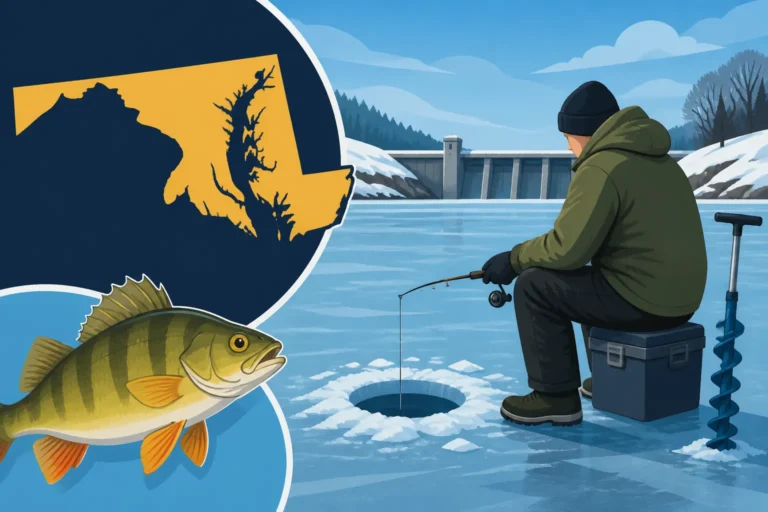
Winter: While challenging, winter kayak fishing can be incredibly rewarding for hardy anglers. Crappie can be found schooling in deep holes in reservoirs, and yellow perch fishing in the upper Bay can be excellent when conditions allow. For some, Ice Fishing in Maryland is an option on frozen lakes like Deep Creek, but this is a very different discipline entirely. Always prioritize safety in cold weather, wearing appropriate dry gear and being extra cautious about capsizing.
Using Electronics and Apps for Kayak Angling
Modern electronics have revolutionized kayak fishing, making anglers more efficient and successful. A good fish finder (sonar) is arguably the most valuable piece of tech. Even small, portable units can display water depth, temperature, bottom contour, and fish arches, helping you pinpoint structure and schools of fish. Brands like Garmin, Humminbird, and Lowrance offer compact, kayak-friendly models, many of which are available on Amazon. Mounting options vary, from permanent installations to clamp-on transducers, so choose what works best for your kayak and fishing style. Many modern fish finders also include GPS capabilities, allowing you to mark waypoints, track your drifts, and navigate back to productive spots.
Beyond dedicated units, your smartphone can be a powerful tool. Download marine charting apps (like Navionics or C-MAP) for detailed maps of tidal waters, showing depths, navigation markers, and submerged structure. Tide apps provide real-time tide charts and current predictions, essential for planning trips in the Chesapeake Bay. Weather apps with radar and wind forecasts are critical for safety, especially on open water. There are also specialized fishing apps that track catch data, lunar phases, and even connect you with local fishing reports. Just remember to keep your phone in a waterproof case or dry bag, and perhaps consider a portable power bank to extend battery life on longer trips. These tools, when used wisely, significantly reduce the guesswork and increase your chances of finding fish.
Kayak Care, Maintenance, and Transportation
Proper care and maintenance will ensure your kayak and gear last for many seasons. After every outing, especially in saltwater, give your kayak a thorough rinse with fresh water to remove salt, sand, and grime. Pay special attention to pedal drives, rudders, and any moving parts. Inspect your hull for dings or gouges, which can be repaired with specific kayak repair kits. Store your kayak out of direct sunlight to prevent UV degradation, ideally on racks or stands that support its hull evenly to prevent warping.
For transportation, there are several options. Roof racks are common for solo kayaks, but ensure your vehicle's roof weight capacity can handle the kayak and rack system. Always secure your kayak tightly with cam straps, checking them periodically on long drives. For heavier pedal-drive kayaks or multiple boats, a dedicated kayak trailer is a worthwhile investment. These make loading and unloading much easier, especially if you're frequently fishing. Maintaining your rods and reels is equally important: rinse them with fresh water, especially after saltwater use, and periodically apply reel grease or oil to keep them running smoothly. By taking the time to properly care for your equipment, you’ll not only extend its life but also ensure it performs optimally when you’re out on the water.
Environmental Responsibility and Regulations
As kayak anglers, we have a unique and intimate connection with Maryland's waterways. This connection comes with a responsibility to protect these resources for future generations, which means understanding and adhering to regulations and adopting ethical practices.
Leave No Trace Principles for Kayak Anglers
The core philosophy of "Leave No Trace" is particularly relevant for kayak anglers, given our ability to access remote and often pristine areas. The principle is simple: leave the environment as you found it, or better. This means never leaving trash behind. Even small pieces of fishing line, bait containers, or food wrappers can have devastating effects on wildlife. Always pack out everything you pack in, and if you see litter, consider picking it up. Many kayak anglers keep a small mesh bag or trash container on their boat specifically for this purpose.
Beyond visible trash, minimizing your disturbance to the environment is crucial. Avoid needlessly trampling vegetation on shorelines, disturbing nesting birds or spawning fish, and using excessive noise. The stealth of a kayak is a benefit to your fishing, but it's also a benefit to the ecosystem you're visiting. Be mindful of your anchor or stakeout pole; avoid dragging them unnecessarily across sensitive habitats like oyster beds or submerged grass beds. These small actions collectively make a huge difference in preserving the natural beauty and ecological health of Maryland's diverse fishing grounds. Our collective responsibility ensures that these beautiful spots remain vibrant for everyone to enjoy.
Understanding Maryland's Fishing Regulations
Navigating Maryland's fishing regulations can sometimes feel like a puzzle, but it’s absolutely essential for responsible angling. The Maryland Department of Natural Resources (DNR) sets specific rules for different species, waters, and seasons, all designed to manage fish populations sustainably. First and foremost, almost every angler needs a valid Maryland Fishing License Guide for 2026. There are different licenses for tidal versus nontidal waters, and special stamps might be required for certain species, like the trout stamp. Exemptions exist for children, certain pier fishing, and during Maryland's Free Fishing Days, but it’s always best to verify.
Beyond licenses, you need to be acutely aware of size and catch limits. These vary dramatically by species and sometimes even by specific body of water or time of year. For instance, striped bass have complex slot limits and seasonal closures that anglers must follow precisely. Our article on Maryland Striped Bass Season and Rockfish Rules goes into great detail. For invasive species like blue catfish and snakeheads, there are often no possession limits, and anglers are strongly encouraged to harvest them. Knowing what you're allowed to keep, and the minimum or maximum size, prevents violations and contributes to healthy fish stocks. Always carry a copy of the current Maryland Fishing & Boating Guide or have a reliable app on your phone with the regulations, as rules can change. Ignorance of the law is not an excuse, and penalties can range from fines to loss of fishing privileges.
Kayak-Specific Rules and Best Practices
While Maryland's general fishing regulations apply to kayak anglers, there are also specific boating safety rules and best practices tailored for these smaller vessels that every paddler should know. Just like any other boat, kayaks are considered vessels and must adhere to navigation rules. This means understanding right-of-way, displaying proper navigation lights if operating between sunset and sunrise, and having a sound-producing device (like a whistle) on board. Wearing a U.S. Coast Guard-approved Personal Flotation Device (PFD) is not just a good idea; it's legally required for anyone on a kayak at certain times of the year or for those under 13 years old. Even when not legally required to wear it, having it on is the safest practice.
Visibility is a major concern for kayaks, especially on larger bodies of water with powerboat traffic. Consider flying a bright flag on a tall pole, particularly during hunting seasons or in areas with heavy boat traffic. Many kayak anglers also use reflective tape on their paddles and kayaks to increase their visibility. For fishing, especially near bridges or popular structures, try to position your kayak in a predictable manner, avoiding sudden movements that might surprise passing boats. If fishing in areas with strong currents or heavy boat wakes, understand how to brace your kayak to maintain stability and prevent capsizing. Always tell someone where you're going and when you expect to return. These small considerations for kayak-specific safety and best practices can make the difference between a memorable fishing trip and a dangerous situation.
Disclaimer
Please note that fishing regulations, license requirements, and seasonal rules are subject to change by the Maryland Department of Natural Resources (DNR). While we strive to provide the most current information, it is the angler's responsibility to verify all regulations before heading out on the water. Always consult the official Maryland DNR website or the current Maryland Guide to Fishing and Crabbing for the latest and most accurate information. This guide is for informational purposes only and does not constitute legal advice.