Bayside vs Oceanside Fishing at Assateague
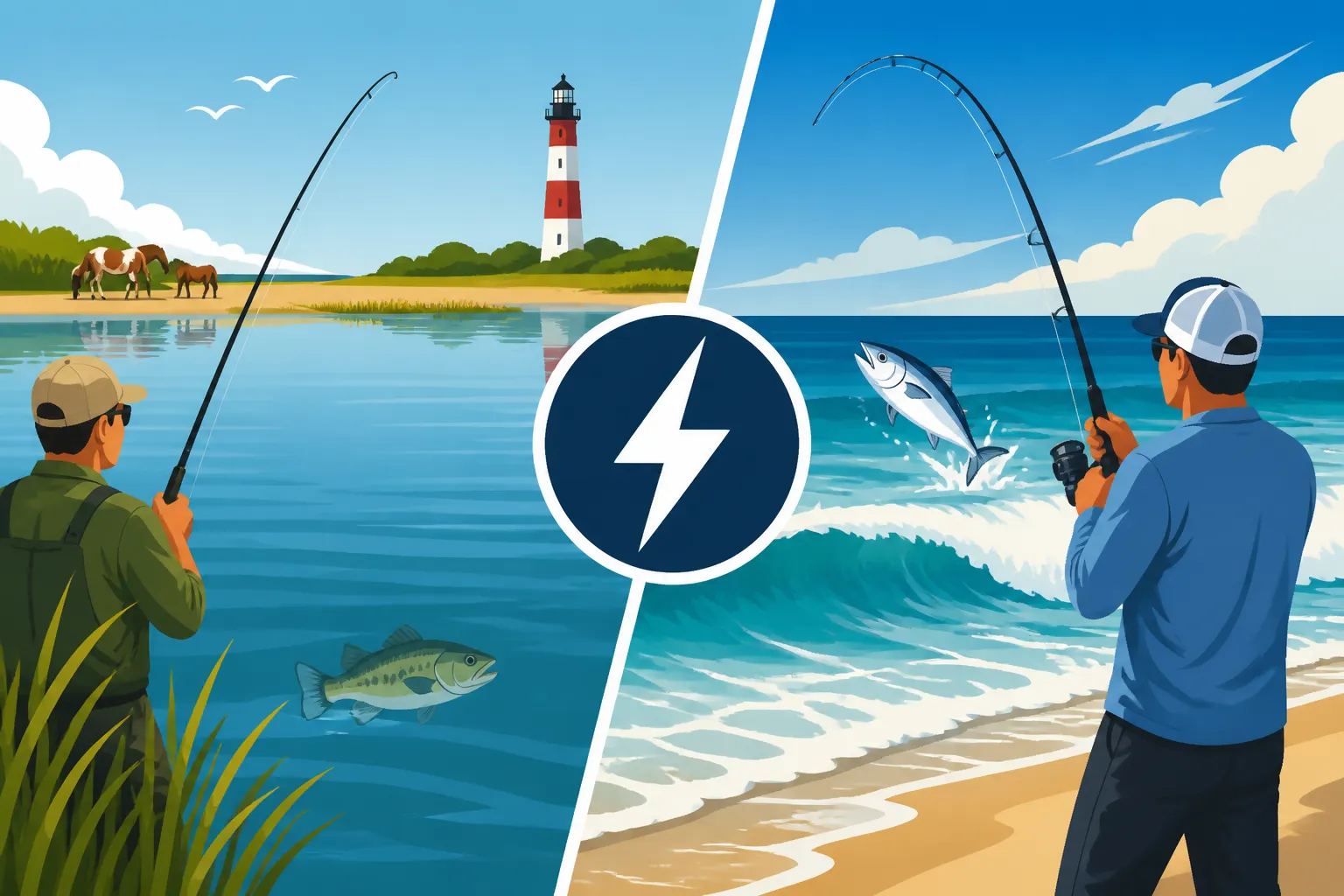
Oh, Assateague Island! It's one of Maryland's true gems, a wild stretch of barrier island where ponies roam free and the fishing can be absolutely phenomenal. But if you're planning a trip, one of the first questions that pops up is always: should I hit the ocean side for some epic surf casting, or sneak around to the calmer bayside for a more relaxed bite? It's a classic dilemma for anglers visiting this beautiful locale, and honestly, the answer depends entirely on what kind of adventure you're craving. This guide is going to walk you through the distinct characteristics of both bayside and oceanside fishing at Assateague, helping you decide which watery playground is calling your name.
Understanding Assateague Island's Unique Fishing Landscape
Assateague Island is a beautiful, untamed barrier island shared by Maryland and Virginia. Its unique geography, with the vast Atlantic Ocean on one side and the calmer, shallower Sinepuxent Bay on the other, creates two entirely different fishing experiences. Each side has its own ecosystem, target species, and even a distinct set of challenges and rewards. It's not just about saltwater versus saltwater; it's about the clash of powerful ocean currents versus the sheltered bay, each offering something special to the dedicated angler.
The Dynamic Environment of Assateague's Bayside
The bayside of Assateague Island, specifically Sinepuxent Bay in Maryland, is a sprawling estuary characterized by shallow, often muddy bottoms, seagrass beds, and numerous channels and creeks. It's a nursery ground for many species, a sanctuary from the relentless ocean surf, and a haven for kayakers and small boat anglers. The water here is typically calmer, though it can still get choppy with strong winds, especially in open areas. The tidal fluctuations are less dramatic than in the open ocean, but still play a crucial role in fish activity, influencing where bait congregates and fish feed. This side offers a completely different kind of peace and quiet compared to the roaring ocean.
The Power and Allure of Assateague's Oceanside
Now, shift your focus to the oceanside. This is the realm of the Atlantic Ocean, where powerful waves constantly reshape the sandy bottom, creating an ever-changing landscape of sandbars, troughs, and cuts. Surf fishing here is a sport that demands respect for the elements, a sturdy backbone, and often, specialized gear. The sheer power of the ocean, the vastness of the horizon, and the potential for catching large, hard-fighting fish make it an exhilarating, sometimes challenging, but always rewarding experience. The tides are much more pronounced, dictating the best times to cast, and weather patterns, even distant ones, can significantly impact wave height and current. For many, the roar of the surf and the feel of the ocean breeze are as much a part of the experience as the fish themselves.
Diving Deep into Bayside Fishing at Assateague
When you're looking for a more sheltered, often family-friendly fishing experience at Assateague, the bayside is your go-to. It offers a different rhythm, one that's a bit slower, more methodical, and often incredibly productive, especially if you know where to look and what to use. This side is fantastic for those just starting out, or for anglers who prefer light tackle and a more relaxed pace.
Target Species and Prime Seasons for the Bay Side
The bayside ecosystem supports a fantastic array of fish, making it a diverse fishery throughout the warmer months. You'll find different species peaking at various times, offering year-round opportunities if you adjust your tactics.
- Flounder: These delicious flatfish are a prime target in the bay from late spring through early fall. They love to ambush baitfish from the sandy bottom, especially around channels, grass beds, and structure like piers or docks. Early summer is often fantastic, as they move into the shallower bay waters. To learn more about specific regulations, check out Flounder Fishing in Maryland.
- White Perch: A staple of Chesapeake Bay fishing, white perch are abundant in Sinepuxent Bay, especially in spring and fall. They're often found around oyster beds, bridge pilings, and creek mouths. They're eager biters and fantastic table fare, making them a favorite for many.
- Bluefish: While the really big choppers are often out in the ocean, smaller "snapper" bluefish frequent the bay, especially in summer. They're aggressive, fun to catch on light tackle, and put up a surprisingly strong fight for their size.
- Speckled Trout: If you're lucky, and the conditions are right, you might even encounter speckled trout, particularly in the clearer, healthier grass beds of the bay. They're a prized catch for their beauty and fighting prowess. You can read up on their presence in Speckled Trout in Maryland's Tangier Sound for related information on these elusive fish.
- Croaker and Spot: These smaller panfish are prevalent in the bay during summer and early fall. They're perfect for kids or for anyone looking for consistent action. They tend to school up in sandy or muddy bottom areas.
Essential Gear and Techniques for Bayside Success
Bayside fishing typically calls for lighter tackle than what you'd use in the surf. A medium-light to medium action spinning rod, around 6-7 feet long, paired with a 2000-3000 size reel spooled with 10-15 lb braided line, is a versatile setup.
- Bottom Fishing Rigs: Simple bottom rigs with a 1-2 oz sinker (pyramid or bank sinker) and a couple of snelled hooks (size #4 to 1/0, depending on target) are highly effective for flounder, croaker, and spot. Baits like bloodworms, squid strips, and peeler crab are deadly. Gulp! artificial baits, especially the shrimp or mullet patterns, are also incredibly popular and effective, offering a scent trail without the mess of live bait.
- Jigging and Drifting: For flounder, jigging bucktails tipped with a strip of Gulp! or natural bait can be very productive, especially when drifting over channels or grass beds. A 1/2 oz to 1 oz bucktail or leadhead jig is usually sufficient. Drifting with live minnows or small spot can also yield great results for bigger flounder.
- Casting Lures: For bluefish and white perch, small spoons, jigs, and even topwater lures can provide exciting action. Think Kastmasters, small Got-Cha plugs, or soft plastic swimbaits on light jig heads. Targeting these species is often about finding the schools, which can move quickly.
Many anglers find that having a kayak or a small jon boat greatly expands their access to the prime bayside fishing grounds. If you're considering a guided trip, sites like FishingBooker can help you find local captains who specialize in light tackle bayside charters, perfect for a relaxed family outing or targeting specific species like flounder.
Best Bayside Access Points and Considerations
Access to the bayside is generally easier than the oceanside for non-surf anglers.
- Public Piers and Bulkheads: There are several public piers and bulkheads along the mainland side of the bay (West Ocean City, Ocean City) that offer good access to bayside fishing, though these can get crowded. Near Assateague, areas like the Ocean City Inlet offer direct access to tidal flow.
- Boat Ramps: Numerous boat ramps in the Ocean City/Berlin area provide access for kayaks, canoes, and small motorboats. This opens up vast areas of the bay, including quieter creeks and marsh edges that hold plenty of fish.
- Shoreline Access: While Assateague Island's bayside can be accessed from certain points, extensive wading might be necessary to reach productive areas, especially from the National Seashore or State Park. Always be mindful of soft bottom areas and stingrays in the shallows.
- Assateague State Park & National Seashore: Within the Maryland portion of Assateague Island, some designated areas in both the State Park and National Seashore offer access to the bay side. These spots are great for wading or launching kayaks. Be sure to check specific park regulations for fishing and launch points. For more detailed information on fishing this side, you can check out the guide on Bay Side Fishing at Assateague Island. Remember that a Maryland fishing license is required for most fishing activities in these waters; you can find more details in the Maryland Fishing License Guide for 2026.
Mastering Oceanside Fishing at Assateague
For many, the real draw of Assateague is the opportunity to battle a powerful fish in the surf, with the endless horizon as your backdrop. Surf fishing is a commitment, requiring heavier gear, patience, and an understanding of the ocean's moods, but the rewards can be truly spectacular.
Popular Species and Ideal Conditions for Surf Fishing
The oceanside of Assateague is home to larger, more powerful fish that thrive in the churning surf and deeper ocean waters.
- Striped Bass (Rockfish): These are the kings of the surf for many anglers. While they can be caught year-round, the spring and fall migrations offer the best chances for trophy-sized fish. Look for them feeding in the troughs and sloughs close to shore. Learn more about how to catch them in Maryland Striped Bass Fishing Techniques.
- Red Drum: Especially in late summer and fall, large red drum (or channel bass) become a target for surf anglers. These powerful fish offer an incredible fight and are a bucket-list catch for many. You can explore more about these fish in Red Drum Along Maryland's Coast.
- Kingfish (Whiting): A smaller, but very consistent catch, kingfish are prevalent in the surf during the warmer months. They're excellent eating and are often caught in the shallowest troughs.
- Bluefish: The "choppers" of the ocean, larger bluefish patrol the surf zone, especially in summer and fall. They're aggressive, hit hard, and are fantastic fighters. They can often be caught on bait or metal lures cast into feeding frenzies.
- Flounder: While abundant in the bay, flounder are also caught in the surf, particularly in the calmer periods and around inlets or cuts through sandbars.
- Sharks: For the adventurous, Assateague's surf can yield various shark species, especially at night. Often targeted with heavy gear and large chunks of bait, these require specialized handling and ethical release practices.
Ideal conditions often involve a moderate surf with a defined "cut" or "trough" close to shore. Overly calm water can be slow, while extremely rough conditions can make fishing impossible and unsafe. Rising and falling tides are generally productive, with many anglers finding the last hour of an incoming tide and the first hour of an outgoing tide to be particularly fruitful as water moves baitfish. For more advice, check out Best Time to Surf Fish Assateague Island.
Recommended Surf Fishing Gear and Rigging
Surf fishing demands robust gear to handle heavy weights, strong currents, and hard-fighting fish.
- Heavy Action Surf Rod: A 10-12 foot heavy-action surf rod is standard, allowing you to cast heavy weights (3-8 oz) and large baits a significant distance. Pair this with a large conventional or spinning reel (6000-8000 size) spooled with 20-30 lb mono or 40-60 lb braided line.
- Pyramid Sinkers: Pyramid sinkers are essential for holding your bait in place against the waves and current. Carry a range of sizes from 3-8 oz.
- Fish Finder Rigs: These are incredibly popular for surf fishing. They allow the fish to take the bait without feeling the weight of the sinker immediately. A fish finder rig consists of a plastic slider on your main line, followed by a swivel, a leader (2-3 feet of 30-50 lb fluorocarbon or monofilament), and a large circle or J-hook (4/0 to 8/0).
- Pompano Rigs/High-Low Rigs: For smaller species like kingfish, spot, and croaker, a pre-tied pompano rig with two small hooks and a pyramid sinker is very effective.
- Baits: Fresh bait is key. Popular choices include:
- Cut Baits: Fresh bunker (menhaden), mullet, or spot are excellent for striped bass, bluefish, and drum. You can often buy fresh bunker at local tackle shops or catch it with a cast net.
- Clams and Worms: Clam snouts (surf clams) are fantastic for striped bass and drum. Bloodworms and seasoned fish bites (like Fishbites brand) work wonders for kingfish, croaker, and spot. Best Bait for Surf Fishing at Assateague Island provides more specific recommendations.
- Peeler Crab: A highly effective, though sometimes hard to acquire, bait for striped bass, drum, and tautog.
Don't forget accessories like a sand spike to hold your rod, a bait cooler, a surf cart to transport gear, and a pair of pliers for hook removal. You'll also want to know How to Read a Sandbar for Surf Fishing to maximize your chances.
Navigating the Oceanfront: Access and Safety
Assateague's oceanside fishing is primarily done via surf fishing from the beach.
- Assateague Island National Seashore (Maryland): The primary access point for surf fishing. You can walk onto the beach, but for vehicle access, you'll need an Over Sand Vehicle (OSV) permit. This permit allows you to drive directly onto designated portions of the beach, which is a huge convenience for carrying heavy gear. You can read up on the requirements for this permit in Do You Need a Permit to Drive on Assateague Island's Beach?. Be aware that the OSV zone is often closed in sections due to nesting birds or other environmental factors, so always check the National Seashore's current conditions and regulations.
- Assateague State Park: The state park section also offers surf fishing, though vehicle access directly onto the beach is generally not permitted here. You'll have to walk your gear in.
- Safety First: The ocean can be unpredictable. Always fish with a buddy, be aware of rip currents, and never turn your back on the waves. High tides can sneak up on you if you're too close to the water's edge. Wearing appropriate footwear and being mindful of marine life (jellyfish, stingrays) is also crucial. For a comprehensive overview, consider the Surf Fishing Techniques for the Maryland Coast guide.
FishingBooker can also be a good resource if you're looking to connect with guides who offer surf fishing instruction or guided trips, especially if you're new to the sport and want to learn the ropes safely and effectively.
Key Differences and Making Your Choice
Deciding between bayside and oceanside fishing at Assateague often comes down to your personal preferences, skill level, and what you hope to get out of your trip. There are distinct advantages and disadvantages to each, shaping the entire experience.
Accessibility, Effort, and Experience Level Comparison
The contrast in accessibility and effort is perhaps the most significant differentiator between the two fishing styles at Assateague.
Bayside Fishing:
- Accessibility: Generally easier to access, especially from public piers or by launching smaller boats. Wading is often an option. If you prefer shore access, the bayside offers more sheltered spots that don't require specialized vehicles or extensive walking with heavy gear.
- Effort: Requires less physical exertion. Casting lighter tackle is easier, and you're not constantly battling waves or strong currents. It's often a more relaxed, stationary affair.
- Experience Level: Highly suitable for beginners, families with children, or those new to saltwater fishing. The learning curve is gentler, and consistent bites are often more common, building confidence.
Oceanside Fishing:
- Accessibility: Can be more challenging. While pedestrian access is available, driving onto the beach with an OSV permit is highly recommended for convenience, which requires a specific vehicle and permit. Hauling heavy gear through soft sand can be physically demanding.
- Effort: Much more physically demanding. Casting heavy rigs repeatedly, battling powerful waves, and walking long stretches of beach with gear requires stamina. Fighting large fish in the surf is an intense workout.
- Experience Level: Better suited for intermediate to experienced anglers. Understanding how to read the beach, interpret ocean conditions, and handle heavier tackle in challenging environments takes practice. However, the thrill of landing a big striped bass or drum from the sand is unparalleled. For a broader guide to fishing Assateague, check out Assateague Island Fishing Guide for Maryland Anglers.
Weather Impact and When to Choose Each Side
Weather plays a critical role in any fishing trip, but its impact differs significantly between the bay and the ocean.
Bayside:
- Weather Impact: While strong winds can make the bay choppy and unpleasant, it's generally more protected from large swells and ocean storms. Heavy rain can muddy the water, but fish often remain active. Thunderstorms are a concern, as open water exposure can be dangerous.
- When to Choose: The bayside is a fantastic option on days when the ocean is too rough, or when winds are lighter. It's often the fallback plan when surf fishing isn't viable. It's also ideal for hot summer days, as the shallower water can warm up quickly, encouraging baitfish and predators. You can find many Fishing Charters Near Assateague Island that focus on the bayside when ocean conditions are unfavorable.
Oceanside:
- Weather Impact: Extremely sensitive to ocean conditions. High winds can create massive, unfishable waves. Storms (even distant ones) can generate dangerous rip currents and make the surf zone treacherous. Water clarity can be greatly reduced after rough weather.
- When to Choose: The oceanside shines on days with moderate surf, light to moderate winds, and clear water. These are the days when the troughs and sandbars are well-defined, and fish are actively feeding. Often, the best surf fishing follows a period of stable weather. If you're specifically interested in Surf Fishing at Assateague Island National Seashore, paying close attention to marine forecasts is paramount.
Combining Both Worlds: A Comprehensive Assateague Trip
Why limit yourself to just one? For the ultimate Assateague fishing adventure, consider embracing both the bayside and oceanside during your trip. Many anglers plan their days to maximize their chances. You might spend a calm morning on the bayside, targeting flounder or white perch with light tackle, enjoying the serene marsh views. Then, as the afternoon approaches and ocean conditions settle, you could shift to the surf, setting up your heavier gear to cast for striped bass or drum.
This dual approach allows you to adapt to changing weather conditions and target a wider variety of species. Imagine starting your day by catching a mess of white perch for dinner in the bay, then ending it with the thrill of a big bluefish ripping line off your reel in the surf. Utilizing resources like FishingBooker can help you find charter captains who offer combined bay and ocean trips, providing an all-encompassing experience without the need to own specialized gear for both environments. It's about getting the most out of every minute on this incredible island, experiencing the full spectrum of its diverse fishery.
| Feature | Bayside Fishing (Sinepuxent Bay) | Oceanside Fishing (Atlantic Ocean) |
|---|---|---|
| Typical Conditions | Calm to moderately choppy, shallower water | Dynamic, powerful waves, strong currents, deeper water |
| Primary Targets | Flounder, White Perch, Croaker, Spot, Small Bluefish, Speckled Trout | Striped Bass, Red Drum, Kingfish, Larger Bluefish, Sharks, Flounder |
| Required Gear | Medium-light to medium spinning, 1-3 oz sinkers, smaller hooks | Heavy-action surf rods, 3-8 oz pyramid sinkers, large hooks |
| Best Baits | Bloodworms, Squid, Peeler Crab, Minnows, Gulp! artificials | Cut Bait (Bunker, Mullet), Clams, Fish Bites, Peeler Crab |
| Effort/Skill | Lower effort, good for beginners/families | Higher effort, best for intermediate/experienced anglers |
| Access | Piers, boat ramps, wading, kayak/small boat | Beach driving (OSV permit recommended), walking onto beach |
| Safety Concerns | Shallow water (stingrays), boat traffic, thunderstorms | Rip currents, large waves, strong undertows, sun exposure |
Disclaimer
Please remember that fishing regulations, including size and catch limits, seasons, and licensing requirements, are subject to change. Always consult the latest Maryland Department of Natural Resources (DNR) rules and regulations before heading out on the water. This guide is for informational purposes only and does not constitute legal or professional advice.