Which Maryland Streams Are Catch and Release Only?
Navigating Maryland's fishing regulations can sometimes feel like trying to untangle a particularly stubborn knot in your fishing line. It's especially confusing when you're passionate about conservation and want to ensure you're following the rules, particularly concerning catch and release. Many anglers wonder exactly which streams in our beautiful state are designated as "catch and release only" and what that truly entails. This comprehensive guide will untangle those knots for you, providing clear insights into these special fishing zones and how to enjoy them responsibly.
Understanding Catch and Release Only Regulations in Maryland
Maryland is a state rich in diverse aquatic ecosystems, from the cold mountain streams of Western Maryland to the expansive Chesapeake Bay. To protect these valuable resources and ensure sustainable fishing opportunities for generations to come, the Maryland Department of Natural Resources (DNR) implements a variety of regulations. Among these are specific "catch and release only" designations for certain waterways, which are distinct from other special management areas.
Why Some Streams Are Designated C&R Only
The primary reason certain streams are designated as catch and release only is conservation. These areas are often home to particularly sensitive fish populations, such as wild trout that reproduce naturally and are not regularly stocked. By implementing C&R rules, the DNR aims to protect these delicate ecosystems and allow fish populations to thrive without the added pressure of harvest. It's about preserving genetic diversity and ensuring a healthy, self-sustaining fishery.
Think about the pristine headwaters of some of our mountain streams. These aren't just places where fish live; they're vital nurseries and sanctuaries. If every angler kept their catch from these areas, the natural reproductive cycle could be severely disrupted, leading to a decline in fish numbers and overall stream health. The catch and release mandate acts as a crucial safeguard, turning these spots into living laboratories and safe havens for aquatic life, ensuring a robust population for future recreational enjoyment. It’s a testament to the DNR’s commitment to balancing angler opportunity with ecological responsibility, understanding that sometimes, the best catch is the one you release. This practice also supports the overall health of the broader watershed, as healthy populations in these protected headwaters can help to replenish downstream areas.
Identifying "Catch and Release Only" vs. "Delayed Harvest"
This is where a lot of anglers get tripped up, and it's a completely understandable point of confusion. Maryland has both "Catch and Release Only" areas and "Delayed Harvest" streams, and while they both involve catch and release, their regulations and seasonal applications are quite different.
Catch and Release Only streams, as the name suggests, require anglers to release all fish immediately and unharmed, year-round. There is no open season for harvest in these specific stretches of water. These zones are typically managed for wild or very sensitive populations, where even occasional harvesting could be detrimental. You'll often find these rules in place for wild trout populations in streams that have the ideal cold, clean water conditions for natural reproduction. These areas are designed for the enjoyment of the angling experience itself, focusing on the challenge and satisfaction of hooking and safely releasing a fish. When you see signs for "Catch and Release Only," know that this rule is absolute, regardless of the time of year.
Delayed Harvest streams, on the other hand, operate on a seasonal basis. These waters are stocked with trout, often in the spring and fall, and are designated as catch and release only for a specific period, typically from October 1st through June 15th. During this C&R period, anglers must release all trout caught. However, from June 16th through September 30th, these same streams transition to a "put-and-take" fishery, meaning anglers are permitted to harvest a certain number of trout per day. The idea behind Delayed Harvest is to provide a long season of catch and release fishing with abundant, recently stocked fish, while also allowing for a summer harvest opportunity once water temperatures might become less hospitable for trout survival. This management strategy offers a different kind of angling experience, blending conservation with opportunities for a fresh trout dinner. It’s vital to consult the official Maryland's DNR Fishing and Boating Guide, Explained or signage at the stream to know which rules apply at any given time.
| Regulation Type | Harvest Allowed | Seasonality | Primary Purpose |
|---|---|---|---|
| Catch and Release Only | No | Year-round | Protect wild, sensitive, or self-sustaining populations |
| Delayed Harvest | Yes | C&R Oct 1 – Jun 15; Harvest Jun 16 – Sep 30 | Extended C&R fishing, seasonal harvest opportunity |
| Put-and-Take | Yes | Open to harvest, often after stocking | Provide immediate harvest opportunities with stocked fish |
| General Regulations | Yes | Varies by species, size, and creel limits | Sustainable recreational fishing with harvest |
Knowing the distinction is crucial for staying within the law and respecting the conservation goals of these specific fisheries. Always double-check the regulations for the specific body of water you plan to fish, as these rules can change annually or for localized reasons.
Navigating Maryland's Premier Catch and Release Only Streams
Maryland offers some truly exceptional opportunities for dedicated catch and release anglers, particularly those who cherish the pursuit of trout in pristine, wild settings. While the list isn't exhaustive and regulations are always subject to change, some streams are consistently managed as C&R only or have specific C&R sections that are celebrated by the angling community.
Western Maryland's Renowned Trout Waters
When we talk about premier catch and release waters in Maryland, the conversation almost always turns to the colder, faster-flowing streams of Western Maryland. These are the crown jewels for trout anglers, where the pursuit isn't just about catching a fish, but about experiencing a wild, natural environment.
One of the most famous and highly regarded is a specific section of the Gunpowder River in Baltimore County, particularly the "Catch and Release Only Artificial Lures and Flies Only" section. This stretch, starting below the Prettyboy Dam, is a true gem. It's known for its abundant population of wild brown trout, which are incredibly wary and challenging to catch. Anglers here use light tackle, precise casting, and often spend hours perfecting their drift with tiny flies or small artificials. This section is a testament to what dedicated conservation can achieve, offering a world-class trout fishing experience within a relatively short drive from major metropolitan areas. If you're looking to dive deep into trout fishing, exploring Fishing the Gunpowder River for Trout is an absolute must, and understanding the Barbless Hook Rules on Maryland Trout Streams is paramount here. The cold tailwater release from Prettyboy Dam creates ideal conditions for these wild fish to thrive year-round, making it a fantastic destination even in the heat of summer.
Another incredibly special place is a section of the Savage River in Garrett County. This stream, particularly its "Trophy Trout Fishing Area" upstream of the Savage River Reservoir, is strictly regulated as "Catch and Release Only Artificial Lures and Flies Only." The Savage is renowned for its wild brook trout and brown trout, which inhabit a truly rugged and breathtaking mountain landscape. Fishing the Savage often involves hiking through dense forest to reach secluded pools, making the experience as much about wilderness exploration as it is about angling. The remoteness and challenging terrain contribute to its pristine nature, and the strict C&R rules ensure that these native and wild populations remain undisturbed. For those who seek solitude and a true wilderness fishing experience, the Savage River is unparalleled, offering a chance to connect with Maryland’s natural heritage. Don't forget to check the Maryland Trout Stamp Requirements if you plan to fish these waters, even if you intend to release your catch.
Less Common C&R Zones and Their Unique Rules
While the Gunpowder and Savage often steal the spotlight, other waters in Maryland also feature specific catch and release stipulations, sometimes for particular species or within smaller, less publicized stretches. These can be trickier to pinpoint without consulting the official regulations, which is why a thorough review of the Maryland's DNR Fishing and Boating Guide, Explained is always recommended.
For example, certain smaller tributaries or spring-fed creeks that feed into larger rivers might have localized C&R rules designed to protect spawning fish or sensitive juvenile populations. These are often discovered through local word-of-mouth or detailed maps provided by the DNR. It's not just trout that benefit from C&R management; some areas might have temporary or permanent C&R rules for other species like smallmouth bass or even specific panfish, depending on local ecological needs. These might not be "C&R Only" year-round for all species, but rather have specific periods where catch and release is mandated. For instance, during sensitive spawning periods, some areas might have temporary closures or C&R rules for species like striped bass in certain spawning rivers, which is different from a permanent C&R trout stream but serves a similar conservation purpose. Knowing these nuances is key, and it truly pays to be informed before you cast a line.
It's important to remember that C&R is not just about avoiding a fine; it's about being a responsible steward of our natural resources. Even if a stream isn't strictly C&R only, practicing good catch and release techniques for vulnerable species or during delicate times of year is always encouraged. This goes hand-in-hand with understanding the Maryland Fishing License Guide for 2026 and supporting the efforts that go into managing these valuable fisheries.
Essential Gear and Techniques for C&R Angling
Catch and release fishing is an art form, especially when you're targeting fish in sensitive C&R only zones. It’s not just about getting the fish to bite, but about ensuring its survival once it’s back in the water. This requires a thoughtful approach to both your gear choices and your handling techniques.
The Right Tackle for Minimizing Fish Stress
Choosing the right tackle for catch and release fishing is paramount to the fish's well-being. The goal is to land the fish quickly, efficiently, and with minimal harm.
Firstly, barbless hooks are a non-negotiable for C&R only waters, and in many Maryland trout streams, they are legally required. Barbless hooks greatly reduce the damage to a fish’s mouth, making removal quick and easy. If your favorite hooks aren't barbless, you can often crimp down the barb with a pair of pliers. You can find excellent selections of barbless hooks for trout fishing from brands like Gamakatsu or Mustad on platforms like Amazon, ensuring you're compliant with regulations and practicing ethical angling. Remember that adhering to the Barbless Hook Rules on Maryland Trout Streams is not just a suggestion; it's a critical component of conservation in these sensitive areas.
Secondly, selecting an appropriately sized rod and reel is crucial. While it might be tempting to use ultralight gear for the "fight," it can prolong the battle, exhausting the fish and reducing its chances of survival post-release. A rod with enough backbone to land the fish relatively quickly, but still offering a sporting challenge, is ideal. For trout, a 4 to 6-weight fly rod or a light-action spinning rod with 4-6 pound test line is often a good compromise. Stronger line also helps prevent break-offs, which can leave a fish trailing line and tackle.
Lastly, consider your net. While not always legally required, a rubber or "ghost" net is far superior to a knotted nylon net for C&R. These nets are gentler on a fish's delicate slime coat, fins, and scales, preventing abrasions and the removal of the protective mucus layer. A good quality rubber net can be a worthwhile investment, and you can often find a variety of sizes and styles on Amazon to suit your specific needs, whether you're targeting small stream trout or larger river species.
Mastering Proper Handling and Release Techniques
Even with the best gear, improper handling can negate all your efforts. Mastering proper handling techniques is the cornerstone of successful catch and release.
- Minimize Fight Time: As mentioned, use appropriate tackle to bring the fish in as quickly as possible. Prolonged fights lead to lactic acid buildup, which can be fatal.
- Keep the Fish in the Water: This is perhaps the most critical rule. A fish needs water to breathe. Try to unhook it while it's still submerged. If you must remove it, do so only for a quick photo (less than 5-10 seconds) and ensure your hands are wet. Dry hands can remove the fish's protective slime coat, leaving it vulnerable to infection.
- Use Wet Hands: Always wet your hands thoroughly before touching a fish. This preserves their slime coat, which acts as a barrier against disease.
- Handle Gently and Support Properly: Avoid squeezing the fish, especially around its belly or gills. Support its weight horizontally, often with one hand under its belly and the other gently gripping its tail. Never hold a fish vertically by its jaw or gills unless it’s a species like a largemouth bass, which can tolerate a lip grip. Even then, avoid vertical hangs for larger fish that put strain on their internal organs.
- Quick Hook Removal: With barbless hooks, removal should be simple. Use forceps or needle-nose pliers to gently back out the hook. If the fish is deeply hooked and removal would cause excessive damage, it's sometimes better to cut the line as close to the hook as possible. The hook will often rust out or dislodge naturally.
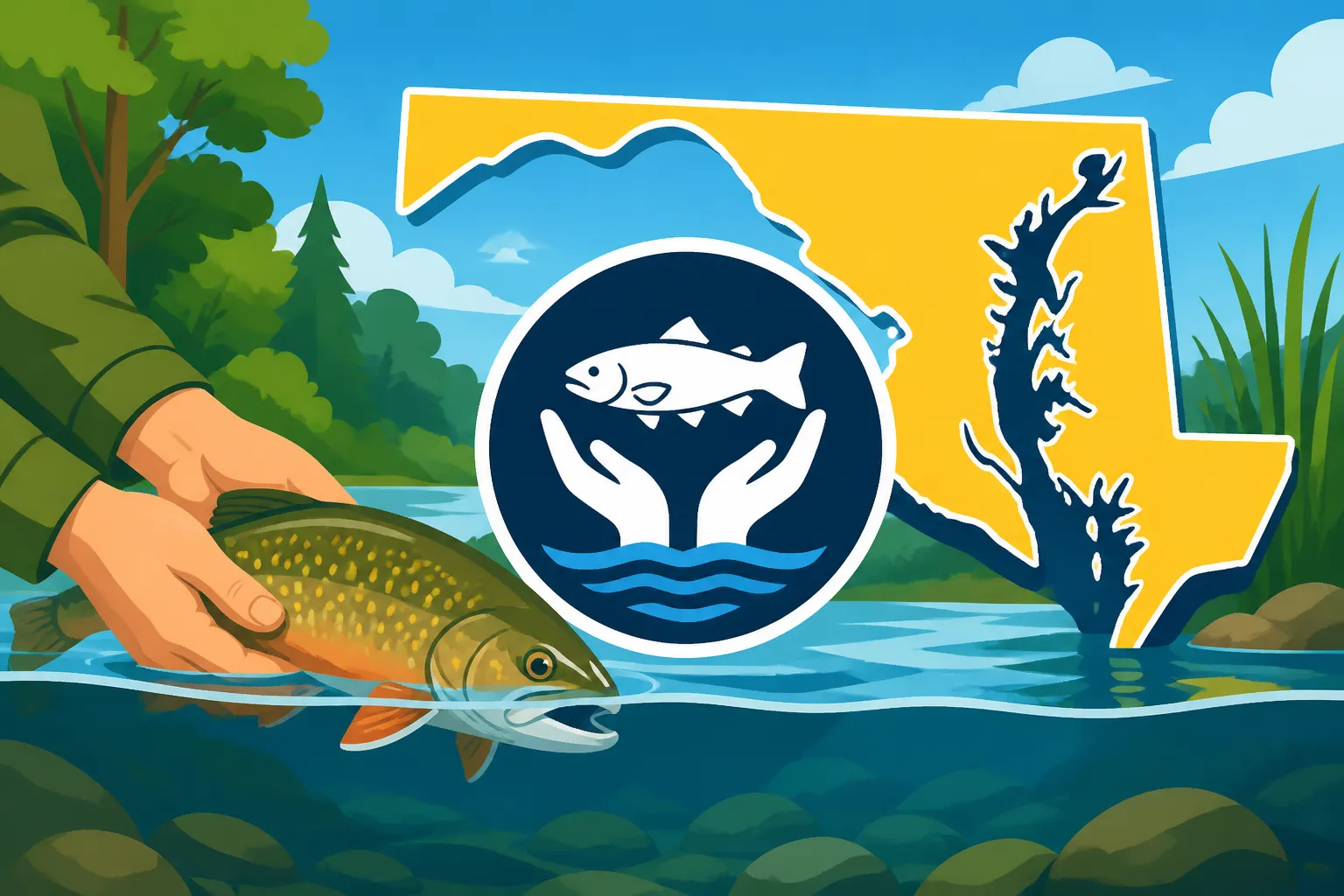
- Revive if Necessary: After unhooking, gently hold the fish in the water, facing upstream, allowing water to flow over its gills. If it's lethargic, slowly move it back and forth to help oxygenate its gills until it regains strength and swims away on its own. Don't just toss it back; ensure it's ready to go.
Practicing these techniques makes you not just an angler, but a true conservationist. It’s a rewarding feeling to watch a healthy fish swim off to fight another day, knowing you’ve contributed to the vitality of Maryland’s fisheries. If you're looking to explore deeper into fly fishing or other specific techniques that align with C&R, topics like Fly Fishing in Maryland can offer more specialized guidance.
Here's a quick overview of some of Maryland's prominent Catch & Release opportunities:
| Waterway/Section | Primary Location | Target Species | Special Regulations | Notes |
|---|---|---|---|---|
| Gunpowder River (C&R Section) | Baltimore County | Wild Brown Trout | Artificial Lures & Flies Only, Catch & Release Year-Round | Premier destination for wild trout, cold tailwater fishery. |
| Savage River (Trophy Area) | Garrett County | Wild Brook & Brown Trout | Artificial Lures & Flies Only, Catch & Release Year-Round | Rugged mountain stream, remote, true wilderness experience. |
| Big Hunting Creek (C&R Section) | Frederick County | Wild Brook & Brown Trout | Artificial Lures & Flies Only, Catch & Release Year-Round | Classic mountain trout stream, popular for fly fishing. |
| Beaver Creek (C&R Section) | Washington County | Wild Brown Trout | Artificial Lures & Flies Only, Catch & Release Year-Round | Limestone spring creek, clear water, challenging fish. |
| Little Patuxent River (C&R Section) | Howard/Montgomery Counties | Wild Brown Trout | Artificial Lures & Flies Only, Catch & Release Year-Round | Urban wild trout fishery, remarkable given its proximity to cities. |
These are just a few of the dedicated C&R zones. Always consult the latest Maryland DNR fishing regulations for the most current and detailed information before heading out on your trip. Regulations on Maryland Fishing Size and Catch Limits by Species can vary dramatically across different waters, so staying informed is crucial to avoiding any Maryland Fishing License Penalties for Violations.
Disclaimer
The information provided in this guide is for general informational purposes only and is subject to change. Fishing regulations in Maryland are updated periodically by the Department of Natural Resources (DNR). While we strive to provide accurate and up-to-date information, it is the angler's responsibility to consult the most current official Maryland DNR fishing regulations prior to engaging in any fishing activity. Failure to do so may result in fines or penalties.