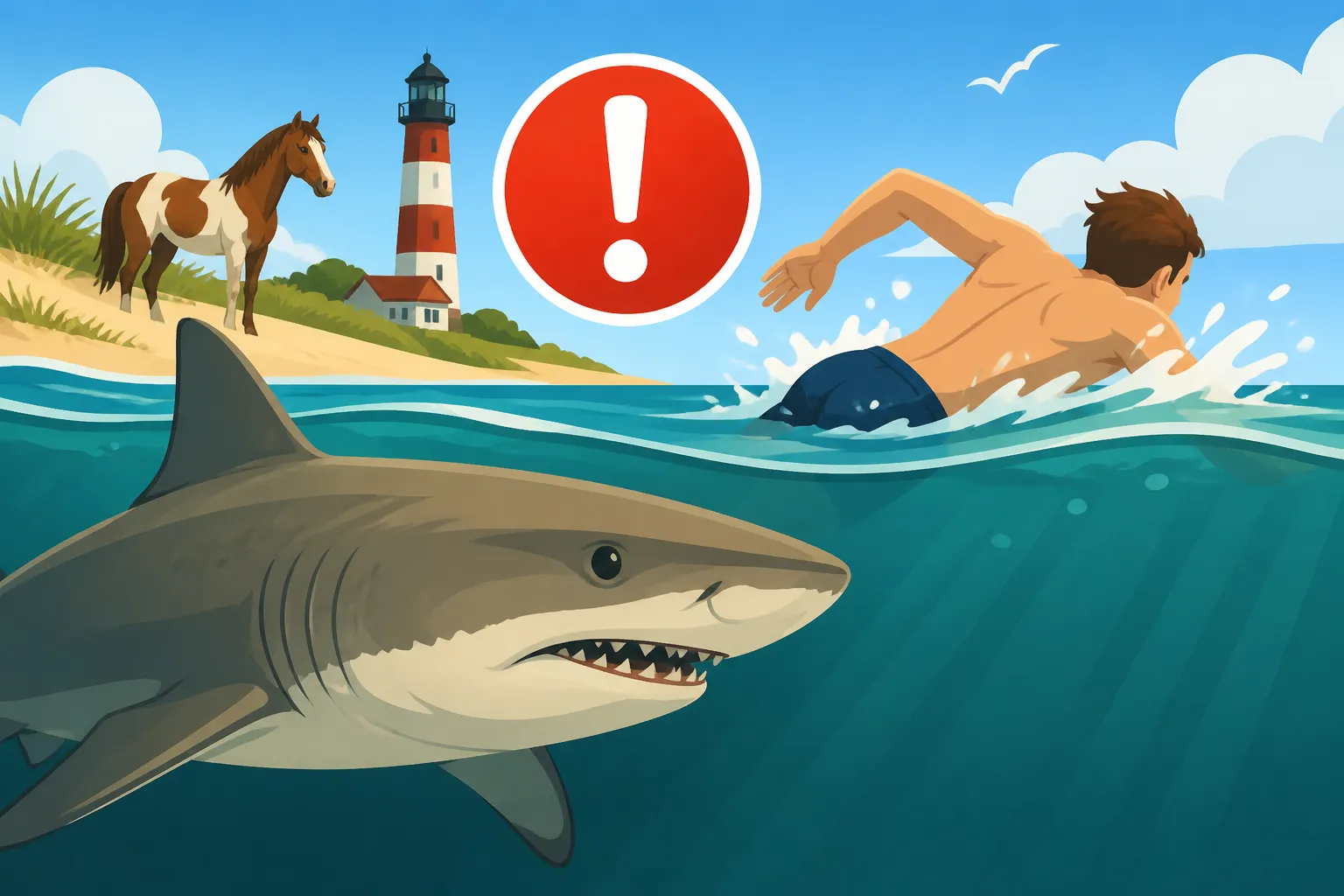
Are Sand Sharks Dangerous to Swimmers at Assateague?
One of the most common worries for anyone planning a relaxing day at the beach, especially somewhere as beautiful and wild as Assateague Island, is what might be lurking beneath the waves. The thought of encountering a shark can send shivers down anyone's spine, and for many, "sand sharks" are a vague, fear-inducing term. This guide will dive deep into understanding the sand sharks commonly found in Maryland's coastal waters, particularly around Assateague, and offer a realistic perspective on their potential danger to swimmers, helping you feel more informed and at ease on your next beach trip.
Understanding Sand Sharks: The Locals of Assateague's Waters
When people talk about "sand sharks" in the Mid-Atlantic, they are usually referring to the Sand Tiger Shark (scientific name: Carcharias taurus). These are the most common large sharks found close to shore in our region, including the waters off Assateague Island. They are a fascinating species, but their appearance can often lead to unnecessary alarm.
Identifying the Sand Tiger Shark
Imagine a shark with a rather menacing look, complete with rows of needle-sharp, prominent teeth that often protrude from its mouth even when closed. That's a sand tiger shark. Unlike some other shark species with triangular, blade-like teeth designed for cutting larger prey, the sand tiger's teeth are perfect for grasping slippery fish. They have a stout body, two dorsal fins of nearly equal size, and a distinct, pointed snout. Their coloration tends to be brownish-grey on top, fading to a lighter underside, allowing them to blend in with the sandy seafloor.
They can grow quite large, with adults typically reaching lengths of 8 to 10 feet, and sometimes even longer. Witnessing a shark of this size in the water, especially one with such formidable dental work, can understandably be startling for an unprepared swimmer or kayaker. However, their appearance is far more intimidating than their actual behavior towards humans. They are built for hunting small to medium-sized fish and crustaceans, not for taking down large mammals. You might even spot them cruising just beyond the surf break, their silhouettes occasionally visible as they patrol for schooling fish. If you're out surf fishing, it's not uncommon to reel in smaller species that have distinct bite marks from a sand tiger shark's dinner attempt.
Habitat and Typical Behavior at Assateague
Sand tiger sharks are true coastal dwellers. They prefer shallow waters, typically ranging from the surf zone out to about 600 feet deep, making them quite common visitors to areas like Assateague. You'll find them lingering around sandy bottoms, shallow bays, and even near rocky reefs and wrecks. The waters around Assateague, with its expansive sandy beaches and nearby shoals, provide an ideal habitat for them, brimming with the smaller fish they love to eat.
They are known for their sluggish, almost docile swimming style, often observed slowly cruising just above the seabed. Unlike some of the more active, open-ocean predators, sand tigers are not built for high-speed chases. They are primarily nocturnal hunters, becoming more active at dusk and dawn, which is a good thing for daytime beachgoers. During the day, they often gather in aggregations in particular areas, sometimes resting near the bottom. This behavior explains why divers might encounter them relatively close to shore or in calm bays, and why they occasionally make an appearance in fishing reports from our local Maryland Chesapeake Bay Fishing Charters, What to Expect. They're simply going about their business in their natural environment.
Dispelling Myths: Differentiating Sand Sharks from More Aggressive Species
When someone yells "shark!" at the beach, panic can easily set in. But it's crucial to understand that not all sharks are created equal, especially when it comes to their disposition towards humans. The common "sand shark" in our Maryland waters, the Sand Tiger, is vastly different in behavior from species known to be more dangerous.
Not Every Shark Is a Great White
Let's face it, Hollywood has done a number on our collective perception of sharks. The image of a massive Great White Shark, like something out of a blockbuster movie, often springs to mind whenever a fin is spotted. However, Great Whites (Carcharodon carcharias) are primarily found in colder waters and generally prefer deeper, open ocean environments, though they can make appearances along our coast. The Sand Tiger Shark, on the other hand, is a common sight in the warmer, shallower waters of the Atlantic coast, including Assateague.
The key distinction lies in their feeding habits and body language. Great Whites are apex predators with powerful jaws and serrated teeth designed for tearing large prey. They exhibit curiosity and investigatory bites, sometimes mistaking humans for seals or other prey. Sand Tigers, conversely, have those skinny, pointy teeth optimized for snatching small fish. They are not ambush predators of large prey. Their behavior is generally non-aggressive, and they are not known for investigative biting of humans. While it's always wise to exercise caution, seeing a sand tiger shark is not the same as encountering a shark that views you as a food source. Understanding Sharks Found Near Assateague Island, Maryland can help distinguish between the species you might actually encounter.
The True Nature of Sand Tiger Sharks
Despite their intimidating appearance, Sand Tiger Sharks are surprisingly docile. They are often described as placid or even shy. Their teeth, while numerous and sharp, are not designed for the kind of shearing bite that would be catastrophic to a human. Instead, they are excellent for piercing and holding small, slippery prey. This makes them highly effective at catching things like menhaden, mackerel, and croaker, but not equipped for a large, struggling mammal.
In fact, most documented "attacks" by sand tiger sharks are often provoked, such as when they are caught on fishing lines or harassed by divers. Even then, bites are rare and usually defensive. They generally want nothing to do with people and will actively avoid confrontations. Think of them as the gentle giants of the shallow shark world, more interested in minding their own business and finding dinner than engaging with beachgoers. You're far more likely to see them cruising lazily along the bottom than charging towards a swimmer. If you were diving or snorkeling, a Sand Tiger might swim past you, but it would typically maintain a respectful distance, focusing on its environment rather than you. You could even look up an identification guide on Amazon to help you differentiate these species if you're really curious.
The Actual Risk to Swimmers: A Realistic Perspective
Now, for the million-dollar question: are sand sharks dangerous to swimmers at Assateague? The straightforward answer is: extremely rarely. While any wild animal, especially a large predator, commands respect and caution, the actual threat posed by sand tiger sharks to recreational swimmers is infinitesimally small.
Documented Encounters and Their Context
Globally, there have been very few unprovoked incidents involving Sand Tiger Sharks. The majority of shark encounters that lead to injury involve other species, often in conditions that make identification difficult or where human behavior might have been a contributing factor (e.g., swimming near fishing activity, during low light, or in areas with baitfish schools). When a sand tiger bite does occur, it's typically a minor injury, often described as a "test bite" or a case of mistaken identity, rather than a predatory attack. These sharks aren't interested in consuming humans.
Consider the sheer number of people who swim, surf, and enjoy the waters off Assateague every year versus the near-zero reported incidents involving sand tigers. The statistics speak for themselves. You are far more likely to be stung by a jellyfish, trip on a shell, or get a sunburn than you are to be bitten by a sand shark. It's a risk, yes, but it’s an exceptionally low one. The occasional fin sighting should be viewed more as a glimpse into nature's majesty than an immediate threat to life and limb. Many local anglers participate in Surf Fishing at Assateague Island National Seashore, spending hours in the water and never encountering issues with these sharks, further illustrating their non-aggressive nature.
Why Mistaken Identity is Key
One of the primary theories behind any rare, unprovoked shark bite, especially from a species not typically aggressive, is mistaken identity. Imagine a swimmer splashing on the surface, or someone wading into murky water where visibility is low. To a shark, these movements might, in very rare circumstances, resemble the erratic movements of a struggling fish or seal – their natural prey. Their vision isn't necessarily optimized for distinguishing between a human limb and a fish tail in low light or turbulent conditions.
However, once a shark realizes its mistake, it typically lets go and swims away. This is because humans don't offer the blubber and high-fat content that many large predatory sharks seek. For a Sand Tiger Shark, whose diet consists of relatively small, bony fish, a human is simply not an appealing meal. They are not built to consume or digest something of our size and composition. So, while caution is always warranted, understand that if a sand shark were to accidentally nip you, it's not because it's targeting you as prey. It's an unfortunate error on its part, and a very rare one at that.
Minimizing Encounter Risk: Safe Practices for Assateague Swimmers
While the risk is low, being informed and practicing smart beach etiquette can further reduce any potential for a shark encounter. These tips are good general guidelines for enjoying any coastal waters, not just those around Assateague.
General Water Safety Advice
Here are some tried-and-true tips for sharing the ocean with its inhabitants:
- Swim in groups: There's safety in numbers. Sharks are less likely to approach a group of people than a lone individual.
- Avoid swimming at dawn or dusk: As nocturnal hunters, sand tiger sharks (and many other shark species) are most active during these low-light periods. Stick to midday swimming when visibility is better for both you and any marine life.
- Stay out of murky water: After heavy rains, or in areas with strong currents, water clarity can decrease significantly. This makes it harder for you to see what's around, and harder for a shark to identify what it's seeing, increasing the chance of mistaken identity.
- Don't wear shiny jewelry: Flashing objects can resemble fish scales, potentially attracting the attention of predatory fish, including sharks. It's best to leave your bling on shore.
- Avoid excessive splashing: Erratic splashing can mimic the distress of an injured fish, which could attract a curious shark. Swim smoothly and calmly.
- Steer clear of known fishing areas: Areas where people are actively fishing, especially with bait, can attract sharks. If you see signs of heavy fishing, consider swimming elsewhere. Similarly, if you plan on Fishing the Ocean City Inlet From Shore, be mindful of what you might attract.
- Heed local warnings: Always pay attention to lifeguards and posted signs. They are there to keep you safe and have the most up-to-date information on local conditions.
What to Do If You See a Shark
If, against the odds, you spot a shark while swimming or wading at Assateague, here's how to react:
- Stay calm: Panicked splashing can actually attract attention.
- Slowly and smoothly swim away: Don't make sudden, erratic movements. Keep your eyes on the shark if possible.
- Maintain eye contact: If the shark seems to be approaching you, keeping eye contact can sometimes deter it.
- Move towards shore: Exit the water as calmly and quickly as you can.
- Alert others: Once you are safely out of the water, inform lifeguards or other beach officials immediately so they can assess the situation and issue warnings if necessary.
Remember, seeing a shark doesn't automatically mean danger. It often means you've just witnessed a magnificent creature in its natural habitat. Many people actively seek out opportunities for Best Charters for Photography and Sightseeing Plus Fishing precisely to catch a glimpse of these incredible animals. For additional peace of mind, consider purchasing a waterproof pouch for your phone from Amazon so you can quickly look up pictures of common sharks if you're ever unsure about a sighting.
Sand Tiger Sharks and Fishing: A Common Interaction
It's worth noting that anglers frequently encounter sand tiger sharks, often unintentionally, when fishing off the coast of Maryland. These sharks are a strong bycatch when targeting other species, particularly during Best Time of Year to Fish in Maryland when their migratory patterns bring them closer to our shores.
Anglers and Sand Tiger Sharks
Fishermen, especially those engaged in surf fishing or bottom fishing from boats, are much more likely to interact with sand tiger sharks than swimmers. These sharks are attracted to the same baitfish that many recreational anglers target. It's not uncommon for a surf caster to reel in a large sand tiger that has taken their bait intended for a drum or striper.
| Feature | Sand Tiger Shark (Carcharias taurus) | Great White Shark (Carcharodon carcharias) |
|---|---|---|
| Appearance | Long, needle-like teeth often protruding, stout body, two equally sized dorsal fins | Triangular, serrated teeth, robust spindle-shaped body, large first dorsal fin |
| Habitat | Coastal, shallow waters, sandy bottoms, bays, wrecks | Cooler, deeper, open ocean, though found in coastal areas at times |
| Diet | Small to medium-sized fish (menhaden, mackerel, croaker), crustaceans | Seals, sea lions, fish, cetaceans |
| Aggression | Generally docile, shy, non-aggressive towards humans (unless provoked) | Apex predator, known for investigative bites and predatory attacks |
| Human Risk | Extremely low; rare, minor bites (mistaken identity or provoked) | Low but higher than Sand Tiger; potential for serious injury/fatality |
| Size | Typically 8-10 feet, up to 14 feet | Typically 11-16 feet, up to 20 feet or more |
If you're fishing, particularly in areas like Assateague Island, being aware of the presence of sand tigers is important. While generally harmless, a large shark on the end of a line can be a formidable challenge. It’s always best to practice responsible catch-and-release, especially with species like the Sand Tiger that are a species of concern, and to handle them with care to ensure safety for both the shark and the angler. Many anglers use specialized de-hooking tools, readily available on Amazon, to ensure a quick and safe release without bringing the shark completely out of the water.
Regulations and Conservation
Maryland, like other states, has regulations concerning shark fishing. While sand tiger sharks are often caught incidentally, they are a federally protected species and must be released unharmed immediately. It's illegal to harvest them. This protection is due to their slow reproductive rate, which makes them vulnerable to overfishing. So, if you hook one, admire its prehistoric beauty, and release it gently back into the water. This commitment to conservation helps ensure these magnificent creatures continue to play their vital role in our marine ecosystem. If you're planning a fishing trip, it's always wise to review the Maryland Fishing Size and Catch Limits by Species to ensure you're compliant with all local regulations.
Conclusion
The idea of a "sand shark" swimming near Assateague Island can conjure up images of danger, but the reality is far less alarming. The Sand Tiger Shark, the most common species referred to as such in Maryland, is an impressive but generally docile creature with no predatory interest in humans. While any large wild animal deserves respect and caution, the risk they pose to swimmers is exceedingly low, far outweighed by other common beach hazards. By understanding their nature, recognizing their appearance, and following basic water safety guidelines, you can confidently enjoy the beautiful waters of Assateague, appreciating the rich marine life that calls it home.
Disclaimer
This article is for general informational purposes only and does not constitute professional advice. Laws, prices and regulations vary by location and change over time. Consult a qualified professional for guidance on your specific situation.