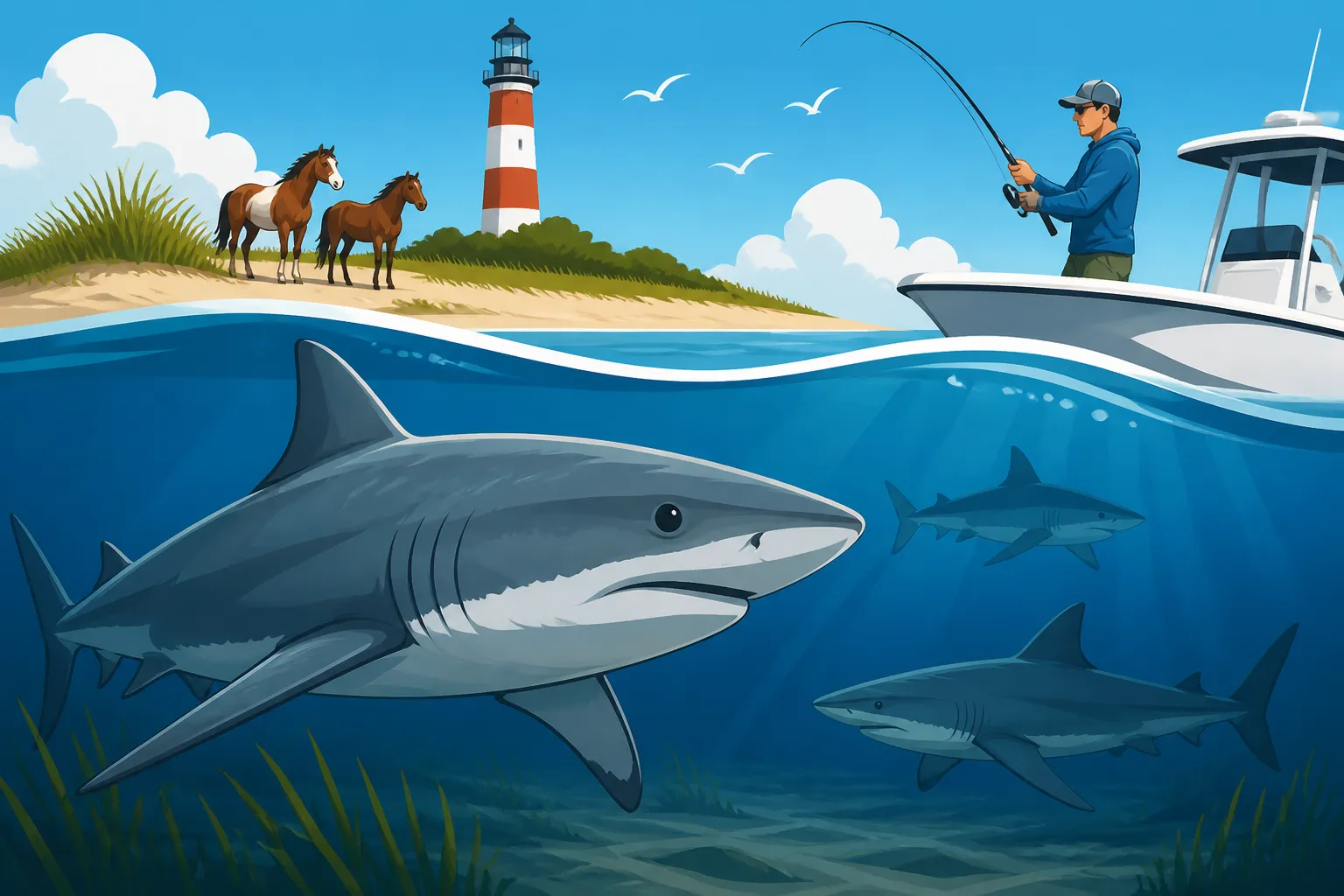
What Sharks Are Found Near Assateague Island?
It’s perfectly natural to wonder what lurks beneath the waves when you’re planning a trip to the beautiful, wild beaches of Assateague Island. The ocean is a vast place, and while Maryland’s coast is far more about sun-kissed sand and excellent fishing, the question of "what sharks are out there?" often crosses our minds. This guide is here to shed light on the finned residents of Assateague's waters, offering a realistic look at the species you might encounter and how to enjoy your time safely and responsibly.
Maryland's Ocean Playground: Sharks Near Assateague Island
Assateague Island, with its windswept dunes and rich marine life, is a jewel on Maryland's coast. It’s a dynamic ecosystem where ocean currents meet the shallow bays, providing a home or migratory path for countless fish, crabs, and, yes, sharks. When we talk about sharks near Assateague, it’s important to understand that these aren't the Hollywood-style monsters lurking around every corner. Most shark species are simply part of the natural food chain, often much more interested in the abundant baitfish than in beachgoers or anglers.
The concerns are valid, of course. Seeing a fin can be startling, especially if you're not used to it. But knowing which species are common, where they tend to hang out, and what their typical behavior is can really help put your mind at ease. We'll dive into the specifics, separating fact from fiction and ensuring you're well-informed for your next visit to this incredible stretch of coastline.
The Usual Suspects: Common Shark Species You Might Encounter
While the thought of sharks can sometimes spark a little apprehension, the vast majority of sharks found off Assateague Island are not a threat to humans. In fact, many are quite small or prefer deeper waters. Here’s a rundown of the species you're most likely to find yourself sharing the Atlantic waters with, whether you're swimming, surfing, or Surf Fishing at Assateague Island National Seashore.
Sand Tiger Sharks
These are probably one of the most commonly seen large sharks in the nearshore waters of Assateague and the entire Mid-Atlantic coast. Don’t let their formidable, jagged teeth, which often protrude even when their mouth is closed, fool you. Sand tiger sharks are generally quite docile and slow-moving. They feed primarily on small fish, squid, and crustaceans.
You'll often find them lurking near the bottom in relatively shallow waters, making them a common sight for divers and anglers. They tend to be solitary, or found in small groups, and are not considered aggressive towards humans unless provoked. If you see one, appreciate its beauty from a respectful distance. Their average size can range from 6 to 10 feet, making them a significant presence, but again, their calm demeanor means they pose very little risk.
Sandbar Sharks
Another frequent visitor to Assateague's shores, the sandbar shark is a migratory species that follows warmer waters. They are often found in coastal waters, including estuaries and bays, where they feed on bottom-dwelling fish, crabs, and shrimp. These sharks are characterized by a tall, triangular dorsal fin and a sturdy body.
Sandbar sharks are quite common in the commercial and recreational fisheries of the region, and catch-and-release is standard practice for anglers who hook them. They are generally shy and will avoid human contact. Adults typically range from 5 to 8 feet in length. You’re more likely to see these from a boat or pier, or perhaps caught by a surf angler, rather than swimming right up to the beach.
Dogfish Species: Spiny and Smooth Dogfish
"Dogfish" often causes a chuckle among experienced anglers because while they are indeed sharks, they are much smaller and less intimidating than their larger cousins. Both spiny dogfish and smooth dogfish are incredibly abundant in Maryland's waters.
- Spiny Dogfish: These are small, slender sharks, usually no more than 3-4 feet long. They have distinctive spines in front of their two dorsal fins, which can deliver a mild venom if they prick you (though it's rarely serious). They are often caught by anglers targeting other species and are frequently considered a nuisance due to their sheer numbers. They eat small fish and invertebrates.
- Smooth Dogfish: Lacking the dorsal spines of their spiny relatives, smooth dogfish are also small, typically 3-4 feet. They have blunt, pavement-like teeth adapted for crushing shellfish like crabs and lobsters, though they'll eat fish too. They are very common in the bays and nearshore ocean.
Both dogfish species are harmless to humans and are far more interested in scavenging than interacting with you. If you're Fishing Maryland's Chesapeake Bay, A Complete Guide or fishing from a pier, you’ll likely encounter them.
Hammerhead Sharks (Primarily Juveniles)
While large hammerheads are more often offshore, juvenile scalloped hammerheads are occasionally spotted closer to shore, particularly during warmer months. They are easily identifiable by their distinctive flattened, hammer-shaped heads. These youngsters are usually only a few feet long and pose no threat.
Adult hammerheads are powerful predators, but they tend to feed on rays, other sharks, and bony fish in deeper waters. Any sightings near Assateague are likely of smaller, transient individuals following bait schools.
Spinner and Blacktip Sharks
These sharks are known for their acrobatic feeding habits, often leaping and spinning out of the water while attacking schools of baitfish. They are sleek, fast, and can be quite thrilling to watch from a distance if you’re lucky enough to witness a feeding frenzy. Both species are typically 5-7 feet long.
While they can be found in nearshore waters, particularly when baitfish like menhaden are abundant, they are generally not aggressive towards humans. Their "spinning" behavior is purely a feeding technique. Encounters are rare, but if you're on the water during a strong baitfish run, it's possible you might catch a glimpse of this spectacular display.
Other Less Common or Offshore Species
It's important to remember that the ocean is vast, and many species simply pass through or reside much further offshore.
- Mako and Thresher Sharks: These are pelagic sharks, meaning they live in the open ocean far from shore. Anglers targeting larger gamefish offshore from Ocean City might encounter them, but they are not typically found near Assateague's beaches.
- Great White Sharks: The most famous (and often feared) shark, great whites are present in the Atlantic, but sightings near the shore in Maryland are exceedingly rare. They prefer colder, deeper waters and are primarily interested in large marine mammals like seals. While certainly possible for one to pass through, the likelihood of an encounter near Assateague’s swimming beaches is astronomically low. Most of what you hear about white shark sightings in the Mid-Atlantic involves tagging research far offshore.
| Shark Species | Typical Size (Feet) | Primary Habitat | General Behavior Towards Humans | Likelihood Near Assateague Beach |
|---|---|---|---|---|
| Sand Tiger Shark | 6-10 | Nearshore bottom, bays | Docile, non-aggressive unless provoked. | Common |
| Sandbar Shark | 5-8 | Coastal waters, estuaries | Shy, avoids human contact. | Common |
| Spiny Dogfish | 3-4 | Abundant, nearshore to offshore | Harmless, often considered a nuisance by anglers. | Very Common |
| Smooth Dogfish | 3-4 | Bays, nearshore, bottom | Harmless, feeds on shellfish. | Very Common |
| Hammerhead (Juvenile) | 2-5 | Nearshore, bays, especially warm months | Non-aggressive, generally avoids humans. | Occasional |
| Spinner/Blacktip | 5-7 | Nearshore, following bait schools | Fast, acrobatic feeders, generally not aggressive to humans. | Rare to Occasional |
| Mako/Thresher | 8-13+ | Offshore, open ocean | Powerful predators, offshore anglers might encounter. | Extremely Rare Near Shore |
| Great White Shark | 10-20+ | Offshore, colder waters | Apex predator, extremely rare near Maryland's recreational beaches. | Highly Unlikely Near Shore |
Beyond the Jaws: Understanding Shark Behavior and Safety at Assateague
Knowing which sharks are out there is one thing, but understanding why they are there and how to behave respectfully and safely in their environment is just as important. Sharks are not mindless killers; they are integral parts of a healthy marine ecosystem, typically following food sources and migrating based on water temperature and breeding cycles.
Why Sharks Are Near Assateague
Assateague Island offers a smorgasbord for marine life. The ocean side provides ample schooling baitfish like menhaden, mullet, and spot, which are prime targets for many shark species. The interface between the ocean and the bay also creates rich feeding grounds. Warm summer waters, particularly from June to September, bring many species closer to shore as they follow these baitfish schools or move into shallower nursery grounds. This is a natural cycle, and their presence indicates a healthy, thriving ecosystem.
The bayside of Assateague, while generally shallower, also holds sharks like smooth dogfish and juvenile sandbar sharks, attracted by crabs, shrimp, and smaller fish. When fishing the Bayside vs Oceanside Fishing at Assateague, you'll experience different species compositions.
Minimizing Risks: Smart Choices for Beachgoers
While shark attacks are incredibly rare in Maryland waters, it's always wise to practice basic ocean safety. These tips aren’t meant to scare you, but rather to empower you to make smart decisions when enjoying the beautiful waters of Assateague.
- Swim in groups: There’s safety in numbers, and it makes you less of an isolated target.
- Avoid swimming at dawn and dusk: These are prime feeding times for many shark species when they are most active.
- Stay out of the water if bleeding: Sharks have an incredibly keen sense of smell.
- Don't wear shiny jewelry: Flashing objects can resemble fish scales, attracting unwanted attention.
- Avoid areas with schooling fish or where people are actively fishing: If baitfish are jumping or birds are diving, it's a sign that predators (including sharks) might be feeding. Likewise, if anglers are catching fish, those fish might attract sharks.
- Heed warnings: Always pay attention to lifeguard instructions and any posted signs from the National Seashore or Maryland State Parks. They are there to keep you safe.
- Clear, calm waters are best: Murky water can make it harder for you to see a shark, and for a shark to identify you, leading to potential investigatory bites. After a big storm, the water might be churned up.
- Don't harass marine life: Never attempt to touch, feed, or provoke a shark or any other marine animal. Give them space.
Fishing for Sharks and Coexistence: An Angler's Perspective
For many anglers visiting Assateague, sharks aren't a concern but a target species, or at least a common bycatch. If you're planning a fishing trip, it's helpful to understand the rules and how to handle a shark encounter ethically. The Assateague Island Fishing Guide for Maryland Anglers offers great insights into targeting various species.
Shark Fishing Regulations in Maryland
Maryland has specific regulations for shark fishing, aimed at conservation and responsible angling. These rules dictate size limits, bag limits, and often require specific tackle (like circle hooks) to minimize harm to released sharks.
It's absolutely critical to be aware of the most current regulations from the Maryland Department of Natural Resources (DNR) before you head out. Some species are protected and cannot be harvested at all, while others have strict catch limits. For instance, species like Sand Tiger and Sandbar sharks often have strict regulations due to conservation efforts. Always check the DNR website or the Maryland's DNR Fishing and Boating Guide, Explained for the latest information.
Catch and Release Best Practices
If you're targeting sharks or catch one as bycatch, proper catch and release techniques are vital for the shark's survival.
- Use circle hooks: These hooks are designed to hook in the corner of the shark's mouth, reducing gut hooking and making release easier. Many shark regulations require the use of non-offset circle hooks. You can find a good selection of these on Amazon or at local tackle shops.
- Minimize fight time: Bring the shark to the boat or shore as quickly and safely as possible to reduce stress.
- Leave the shark in the water: If possible, do not remove the shark from the water, especially larger specimens. This reduces stress and physical injury to the shark. If you must bring it aboard for a quick photo, be quick and support its body weight.
- Cut the line close: If the hook is deeply ingested, cut the line as close to the hook as possible rather than attempting to remove it. Hooks will often rust out over time.
- Revive the shark: If the shark seems sluggish, hold it gently by the tail and jaw and move it back and forth to force water over its gills until it regains strength and swims off on its own.
- Safety for yourself: Sharks, even smaller ones, can be dangerous when agitated. Keep your hands away from their mouths and use proper tools like dehookers and long-nosed pliers for release. A pair of heavy-duty fishing gloves from Amazon can be a smart purchase.
Coexisting with Sharks: Respecting the Ecosystem
Ultimately, our role as visitors to Assateague is to enjoy its beauty while respecting its wild inhabitants. Sharks are a natural and necessary part of this coastal environment. Understanding them, following safety guidelines, and adhering to fishing regulations ensures that both humans and sharks can continue to thrive in these precious waters. If you're observing wildlife, consider bringing a good pair of binoculars – also readily available on Amazon – to appreciate them from a safe distance.
Whether you're visiting for a relaxing beach day, a surf fishing adventure, or just enjoying the tranquility, knowing about the sharks near Assateague adds another layer to the richness of the experience. The more informed we are, the better we can appreciate this incredible natural habitat.
Disclaimer
This article is for general informational purposes only and does not constitute professional advice. Laws, prices and regulations vary by location and change over time. Consult a qualified professional for guidance on your specific situation.