How to Fish a Chesapeake Bay Bluefish Blitz
There’s nothing quite as exhilarating, or sometimes as frustrating, as stumbling upon a full-blown bluefish blitz in the Chesapeake Bay. You see the chaos, the birds diving, the water churning, and your heart races, but knowing how to approach that maelstrom of feeding fish to actually hook up can make all the difference between an unforgettable day and a missed opportunity. This guide is all about equipping you with the knowledge and tactics to successfully fish a Chesapeake Bay bluefish blitz, ensuring you're ready when those aggressive choppers decide to put on a show.
Understanding the Bluefish Blitz Phenomenon
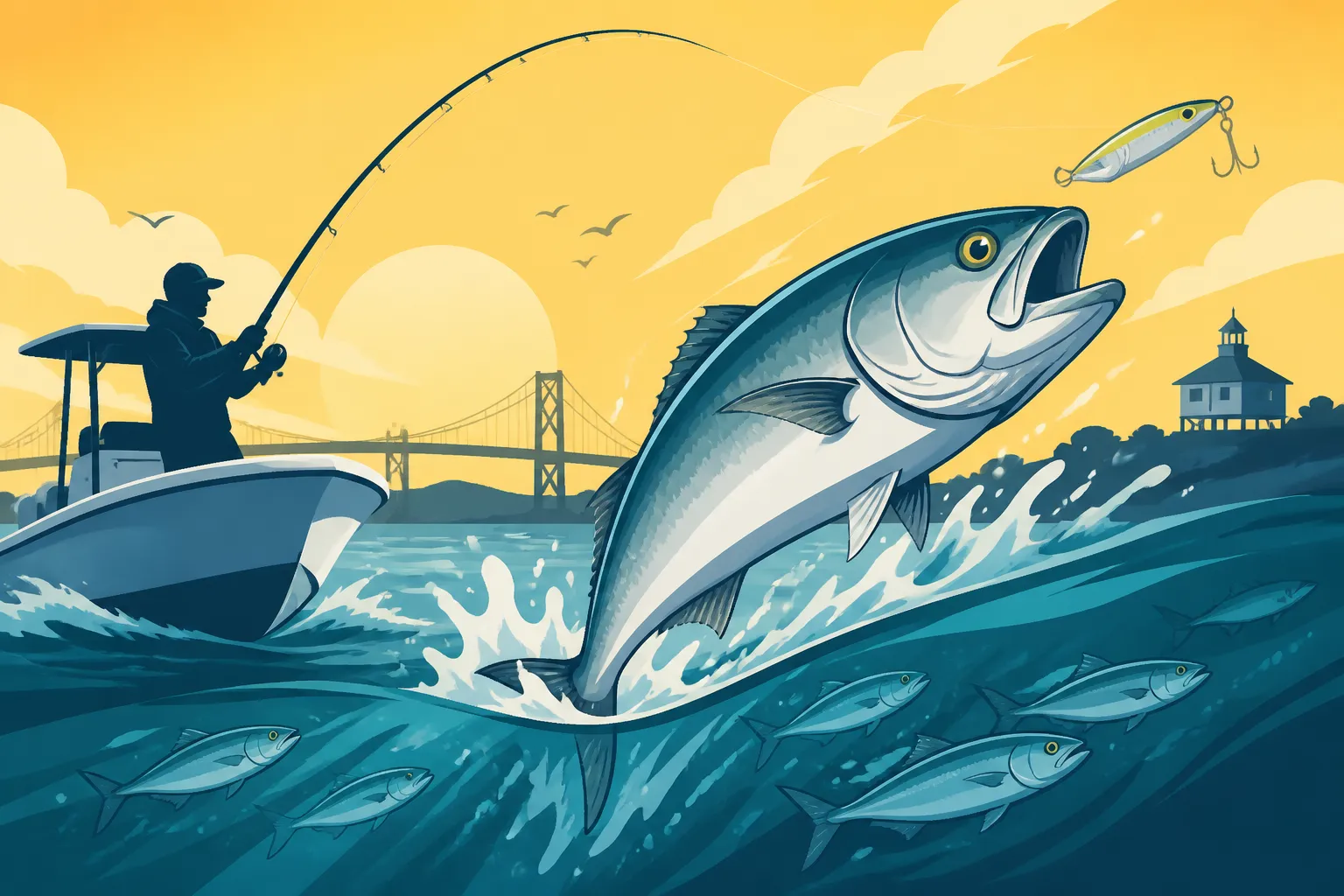
When you hear "bluefish blitz," it’s not just angler hyperbole. It's a genuine, adrenaline-fueled event that defines a certain type of fishing experience in the Chesapeake Bay. Imagine hundreds, even thousands, of bluefish aggressively herding and attacking schools of baitfish right on the surface. It's truly a sight to behold and an incredible opportunity for anglers, but it requires quick thinking and the right approach.
What Exactly is a Bluefish Blitz?
A bluefish blitz is, quite simply, a feeding frenzy of epic proportions. Bluefish are voracious predators, known for their sharp teeth and insatiable appetites. When they locate a dense school of baitfish – think peanut bunker, bay anchovies, or silversides – they work together (or sometimes seemingly independently in a collective frenzy) to push that bait to the surface. Once trapped, the bluefish go into a full-on attack mode, slashing through the bait, often leaping clear out of the water in their pursuit.
From an angler's perspective, this means a visible commotion: water exploding, baitfish scattering in desperation, and often, a flurry of seagulls, pelicans, or other seabirds dive-bombing into the fray to snatch up easy meals. It's a highly visual event, usually happening on the surface or just below it, creating a palpable sense of urgency and excitement. If you've ever been on the water when one of these erupts, you know that sound and sight instantly get your blood pumping. It’s a race against time, as these blitzes can move quickly or dissipate as suddenly as they began.
Why Do Bluefish Blitz in the Chesapeake Bay?
The Chesapeake Bay provides the perfect stage for bluefish blitzes, primarily due to the abundance of baitfish and the migratory patterns of bluefish. As the seasons change, particularly in late spring, summer, and fall, immense schools of baitfish like bunker, anchovies, and silversides congregate in the Bay's warmer waters. These schools provide an irresistible target for transient predators like bluefish. Bluefish Runs in Maryland's Chesapeake Bay are a well-documented seasonal event, and blitzes are a key part of that.
Bluefish are built for speed and aggression. They are not ambush predators in the same way a rockfish might be. Instead, they actively chase, herd, and tear through bait. The Bay's vast open waters and numerous channel edges, points, and humps create natural ambush points or bottlenecks where baitfish can be cornered. When conditions are right – strong currents pushing bait, clear water allowing for better visibility, or even just a sheer overwhelming number of predators – the bluefish exploit these situations to maximum effect, leading to a "blitz." It's less about a coordinated strategy and more about an opportunistic feeding spree where every bluefish is trying to get its fill before the bait scatters or another predator arrives.
Reading the Signs: How to Spot an Impending Blitz
Spotting a bluefish blitz isn't always about being in the right place at the exact moment it erupts. Often, you can read the signs, much like predicting weather. The most obvious indicator, as mentioned, is the birds. Look for large congregations of gulls, terns, or pelicans actively circling, diving, and especially sitting on the water in specific areas. If they're all facing into the wind, that's often a sign they're waiting for bait to be pushed up. If they're actively diving and smashing the water, congratulations, you've found a blitz!
Beyond the birds, keep an eye on the water's surface itself. You might see subtle "nervous water" – small ripples or flickers that don't match the general chop, indicating baitfish just below the surface trying to escape. Sometimes you'll even see the dark mass of a bait school on your sonar, especially near channel edges or underwater structure. If you notice isolated splashes or a single bluefish jump, that could be the precursor to a much larger event. Paying attention to these subtle cues, even before the full-blown explosion of a blitz, can give you a crucial head start. And remember, bluefish are often in company with other predators, like striped bass, so sometimes what you think is a bluefish blitz might also hold some rockfish underneath the surface chaos.
Essential Gear and Tackle for a Bluefish Blitz
Approaching a bluefish blitz without the right gear is like bringing a butter knife to a sword fight. These fish are aggressive, strong, and have a mouthful of razor-sharp teeth that can make short work of improper tackle. Being prepared with the right rod, reel, line, and terminal tackle is absolutely crucial for success and for keeping your gear intact.
Rods, Reels, and Line: Built for Battle
For tackling bluefish in a blitz, you need a setup that can handle powerful strikes and the sheer energy of these fish. A medium-heavy to heavy spinning rod, typically in the 7 to 8-foot range, is ideal. This length gives you excellent casting distance to reach the perimeter of a blitz, while the medium-heavy action provides the backbone to fight a strong bluefish without being overly stiff. Pair this with a sturdy spinning reel in the 4000 to 6000 size class. You'll want a reel with a smooth, reliable drag system, as bluefish can make surprisingly fast runs.
For line, braided line is almost universally preferred for bluefish blitzes. It offers superior casting distance, incredible sensitivity, and most importantly, much higher breaking strength for its diameter compared to monofilament. I usually run 30-to 50-pound test braided line. The strength means you can lean into those fish, and the minimal stretch gives you direct control. You'll find a wide array of high-quality braided lines available online, for instance, on Amazon, to suit your preference and budget. Don't skimp on your line; it's your direct connection to the fish!
Lures and Baits That Bluefish Can't Resist
Bluefish are not particularly picky eaters when they're in a feeding frenzy, but certain lures and baits are far more effective at triggering strikes and holding up to their sharp teeth. Metal spoons and jigs are absolute go-to options. Think about Kastmasters, Crippled Herrings, or similar flashy, weighty lures that mimic fleeing baitfish. These can be cast a mile and retrieved quickly, often eliciting an immediate, violent strike. Topwater poppers and walk-the-dog lures are also incredibly effective and, frankly, thrilling to use during a blitz. Nothing beats watching a bluefish explode on a surface lure.
Soft plastics, especially those rigged on heavy jig heads, can work well, but be prepared to go through a lot of them. Those sharp teeth will tear up soft plastic baits quickly. For natural bait, chunks of fresh bunker or mullet are always a winner, especially if you're targeting bigger blues that might be sitting just below the main surface commotion. Best Lures for Bluefish Blitzes in the Bay can vary slightly depending on the size of the baitfish the bluefish are feeding on, so having a few different sizes and colors in your tackle box is a smart move. When you're stocking up, remember that reliable online retailers like Amazon offer an enormous selection of these essential bluefish lures and baits.
Leader Material and Terminal Tackle
This is where many anglers make a crucial mistake, and it can cost you dearly in lost lures and fish. Bluefish have incredibly sharp teeth, and they will chew through standard monofilament or fluorocarbon leaders in a matter of seconds. To combat this, you need a heavy-duty leader. My personal preference is a 50-to 80-pound test fluorocarbon leader, at least 18-24 inches long. While not entirely chew-proof, it's much more abrasion-resistant than lighter stuff and often suffices.
However, if you're consistently losing lures or targeting larger bluefish, a short section of wire leader is the only true guarantee. Use a 6- to 12-inch section of single-strand wire (around 40-pound test) or a multi-strand braided wire leader. Connect this to your main leader with a swivel. For terminal tackle, stick to strong, high-quality swivels and snaps. Barrel swivels help prevent line twist, especially when casting and retrieving fast. A sturdy snap-swivel makes changing lures quick and easy, which is vital when a blitz is moving fast and you need to adapt your presentation. I always recommend having a good pair of pliers and a de-hooker, which you can easily find on Amazon, to safely manage these toothy critters.
Proven Techniques for Fishing a Bluefish Blitz
Once you've spotted the blitz and you've got your gear ready, the next step is getting your lure into the thick of it and successfully hooking up. This isn't always as simple as it sounds; there's an art to navigating the chaos and presenting your offering effectively. Techniques for Catching Bluefish in Maryland often revolve around speed and aggression, mirroring the fish themselves.
Casting and Retrieving for Maximum Strikes
When a bluefish blitz is happening, casting accuracy and retrieve speed are paramount. Aim your cast just beyond the visible commotion, allowing your lure to sink for a moment, then retrieve it quickly through the feeding zone. Bluefish are attracted to fast-moving targets that resemble fleeing baitfish. Vary your retrieve speed and incorporate erratic twitches or pauses. Sometimes a steady, burning retrieve is all it takes; other times, a stop-and-go retrieve can trigger a strike from a bluefish that's momentarily paused.
It's also important to be mindful of your cast. While it's tempting to cast right into the middle of the feeding melee, sometimes the biggest bluefish, or even the lurking striped bass, will be on the edges or just below the most intense surface action. Casting past the frenzy and reeling through it can often draw strikes from those slightly larger, more cautious fish. Keep your rod tip up during the retrieve to maintain better control and feel for those aggressive strikes. If you're using a topwater lure, focus on creating as much splash and commotion as possible. The more noise and disturbance, the more attention you'll draw from the ravenous bluefish.
Trolling Through the Chaos
While casting is often the most exciting way to engage a bluefish blitz, trolling can be incredibly effective, especially if the blitz is spread out over a wider area or if you're trying to locate a school that's moving quickly. Trolling allows you to cover more water and present multiple lures at different depths and speeds simultaneously. Heavy spoons, diving plugs, and even umbrella rigs can be trolled through or around the periphery of a blitz.
When trolling, pay close attention to your boat speed. Bluefish typically prefer lures trolled at a relatively fast pace, often between 4 and 7 knots, depending on the lure. If you're marking baitfish or seeing bird activity, try making wide circles or S-turns through the area. These maneuvers can change the depth and speed of your lures, mimicking injured baitfish and triggering strikes. Trolling can also be a great strategy to employ if the surface action of a blitz has temporarily subsided, as the bluefish might still be actively feeding just below the surface. Just be cautious of other boats and anglers if the area is crowded.
Safety First: Navigating a Blitz Zone
Bluefish blitzes are exciting, but they can also be chaotic and present several safety hazards, particularly if you're on a boat. First and foremost, exercise proper boating etiquette. A blitz will often attract multiple boats, and it's essential to maintain safe distances, avoid cutting off other anglers, and communicate your intentions. Bluefish can move rapidly, and boats often follow, so situational awareness is key.
Once you've hooked a bluefish, remember those sharp teeth. Always use a de-hooker or long-nosed pliers to remove hooks. Never put your fingers near a bluefish's mouth, even if it appears subdued. A sudden head shake can result in a serious bite. Keep any thrashing fish away from your legs and body. It's also a good idea to have a cutting board and a cooler with ice ready if you plan to keep your catch. A bluefish flopping around on the deck can be a hazard. What to Bring on a Maryland Fishing Charter often includes safety gear like first-aid kits, which are always a good idea when dealing with toothy fish. Lastly, be aware of any Maryland Fishing Size and Catch Limits by Species for bluefish, as well as any specific regulations that might be in effect.
Beyond the Blitz: What to Do With Your Catch
So, you've battled the choppers, landed some fish, and the adrenaline is starting to wear off. Now what? Bluefish have a reputation for being an "oily" fish, and some anglers shy away from eating them. However, with proper handling and preparation, bluefish can be absolutely delicious! The key lies in what you do immediately after the catch.
Proper Handling for Best Flavor
This cannot be stressed enough: immediate and proper handling is crucial for good-eating bluefish. As soon as you land a bluefish you intend to keep, it's vital to bleed it. Bluefish have a strong bloodline that contributes to their "fishy" flavor. To bleed them, simply cut the gills or sever the artery just behind the pectoral fins. Let the fish bleed out into a bucket of saltwater or over the side of the boat (away from swimmers, of course).
After bleeding, get the fish on ice as quickly as possible. A cooler packed with a good ice-and-water slurry will rapidly chill the fish, stopping bacterial growth and preserving the firm texture and fresh flavor of the meat. Don't just toss them on dry ice; the ice-water mixture provides faster, more even chilling. The sooner you get them from the water to the ice, the better your bluefish will taste. This quick chilling process makes a world of difference.
Cleaning and Filleting Bluefish
Bluefish have tough, scaly skin, but they fillet quite easily once you get the hang of it. Start by laying the fish on its side and making a cut behind the pectoral fin, down to the backbone. Then, run your knife along the backbone, from head to tail. Once you have the fillet off, you'll notice a prominent dark red bloodline running down the center. This is the part that gives bluefish its strong flavor, and removing it is key to a milder taste.
Lay the fillet skin-side down and carefully cut out that dark bloodline, creating two cleaner sections of meat from each fillet. You can also skin the fillet or leave the skin on, depending on your cooking method and personal preference. Some people find the skin adds too much oil, while others enjoy it crisped up. For detailed instructions, there are plenty of online videos that demonstrate bluefish filleting techniques. It’s a bit more involved than filleting a perch, but well worth the effort.
Delicious Ways to Prepare Your Bluefish
With proper handling and cleaning, bluefish can be a fantastic meal. The firm, flavorful meat stands up well to strong seasonings and various cooking methods. Here are a few popular ways to prepare them:
- Grilling: This is probably the most popular method. Marinate your bluefish fillets in lemon juice, olive oil, garlic, and herbs for at least 30 minutes. Grill them over medium-high heat until flaky, about 4-6 minutes per side, depending on thickness. The high heat helps to crisp the skin and seal in moisture.
- Smoking: Bluefish takes incredibly well to smoking. The smoky flavor complements the richness of the fish. Brine your fillets overnight, then smoke them at a low temperature (around 180-200°F) for several hours until cooked through and smoky. Smoked bluefish is fantastic on crackers or in dips.
- Baking or Broiling: For a quick and easy meal, bake or broil bluefish fillets with a topping of breadcrumbs, herbs, and Parmesan cheese. A little white wine or chicken broth in the bottom of the pan can help keep it moist.
- Pan-Searing: For a crispy exterior, pan-sear skin-on fillets in a hot skillet with a little oil. Cook skin-side down first to crisp it up, then flip. Serve with a squeeze of lemon and fresh parsley.
Don't be afraid to experiment with bold flavors like capers, dill, hot sauce, or even a spicy rub. Because of its richer flavor, bluefish can handle more robust seasonings than some other milder white fish. Enjoy the fruits of your blitz!
| Lure Type | Best Conditions / Retrieve | Why it Works for Bluefish | Pros | Cons |
|---|---|---|---|---|
| Metal Spoons | Fast retrieve, erratic jerks; casting into thick of blitz | Mimics fleeing baitfish, creates flash and vibration | Casts far, durable, highly effective | Can be heavy for lighter tackle, single-hook |
| Topwater Poppers | Fast, splashy retrieve; over bait on surface | Creates loud "chugging" sound and splash; provokes aggressive strikes | Incredibly exciting strikes, highly visible | Less effective if bluefish are deeper |
| Soft Plastics | Jigging retrieve, steady retrieve | Mimics baitfish profile, versatile | Realistic action, various sizes/colors | Easily torn by bluefish teeth, less durable |
| Diving Plugs | Moderate to fast retrieve; trolling or casting | Get below surface, mimics larger baitfish | Good for spread-out blitzes, durable | Can be bulky to cast, may require heavier tackle |
Disclaimer
This article is for general informational purposes only and does not constitute professional advice. Laws, prices and regulations vary by location and change over time. Consult a qualified professional for guidance on your specific situation.