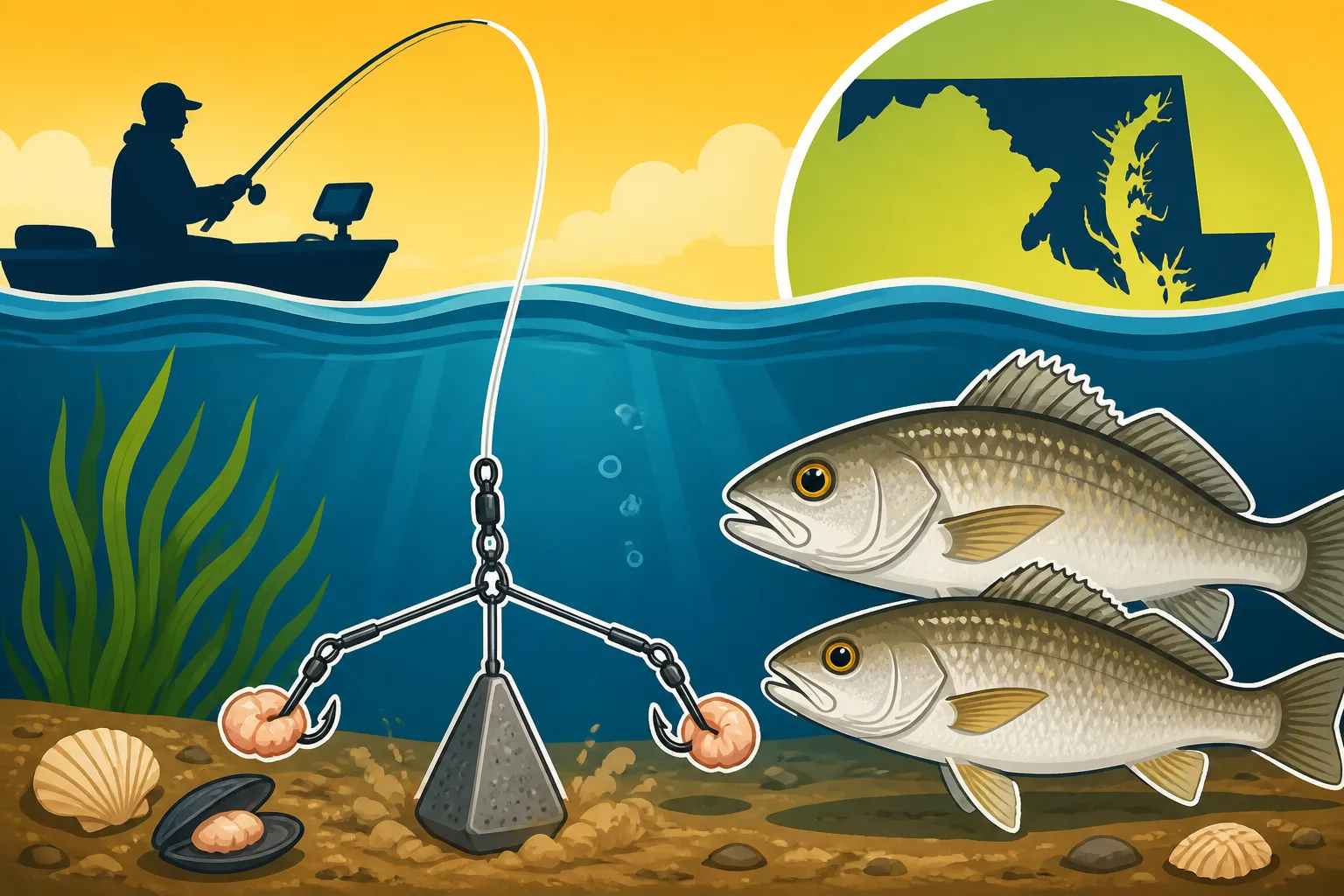
Techniques for Bottom Fishing Spot and Croaker
There’s nothing quite as frustrating as heading out for a day of fishing, hoping to reel in some classic Maryland panfish like spot and croaker, only to find your bait untouched or, worse, completely stripped. It's a common story, and many anglers, especially those new to bottom fishing, struggle to consistently hook into these delicious and plentiful species. But don't you worry, because this comprehensive guide is all about equipping you with the tried-and-true techniques for bottom fishing spot and croaker, turning those frustrating days into successful, fish-filled adventures.
Understanding Spot and Croaker Behavior for Better Bottom Fishing
Before you even think about rigging up, taking a moment to understand why spot and croaker hang out where they do, and what makes them bite, will put you leagues ahead. These aren't just random fish in the water; they have preferences, and knowing them is your secret weapon.
Where to Find These Bottom Dwellers
Spot and croaker are, as their name implies, bottom dwellers. They love to cruise along the seabed, rooting around for their next meal. This means you're going to find them over specific types of bottom structure. Think muddy or sandy bottoms, areas with oyster beds, and especially along channel edges. These are the equivalent of their favorite diners and hangouts.
In Maryland, you'll find them abundant throughout the Chesapeake Bay and its many tributaries, particularly in the lower Bay and the Eastern Shore rivers. Places like the Choptank, Patuxent, and Nanticoke Rivers are hotspots, as are the calmer back bays around Ocean City. They aren't usually found in roaring currents or super deep offshore waters. Instead, focus on those tidal creeks, shallower flats, and areas where there's a gentle current bringing food past them. Piers, jetties, and even bridge pilings offer excellent shore access to these preferred habitats, as the structure often provides both food and shelter. Look for slight depth changes, submerged grass beds, or any feature that breaks up the otherwise uniform bottom – that's where the action often is.
What They Eat and Why It Matters for Bait Selection
Spot and croaker aren't picky eaters, but they do have favorites. Their natural diet consists mainly of small invertebrates, various types of worms, and tiny crustaceans. They're opportunistic feeders, meaning they'll gobble up whatever looks like a good, easy meal on the bottom. This scavenging nature is fantastic news for us anglers, because it makes them relatively easy to tempt with the right bait.
Understanding their diet directly translates into better bait choices. When you're trying to mimic what they naturally forage for, you're stacking the odds in your favor. This is why baits like bloodworms, squid, and peeler crab are so incredibly effective. They either look, smell, or taste like something these fish would encounter daily. If you're using a bait that doesn't resemble anything in their natural food chain, you're essentially trying to get them to eat something completely foreign, and while it might work, it's certainly not the most efficient approach. Always think like the fish you're trying to catch!
The Best Times to Target Spot and Croaker
Timing is often everything in fishing, and spot and croaker are no exception. While you might catch one occasionally outside these windows, focusing your efforts during their peak activity will lead to far greater success.
Generally, the prime season for spot and croaker in Maryland runs from late spring through early fall. As the water temperatures rise after the cooler spring months, these fish become more active and move into shallower areas to feed heavily. Peak summer months, especially July and August, are fantastic, and the fishing often remains strong into September and even early October before the temperatures drop.
Beyond the season, the time of day and tide also play a crucial role. Many experienced anglers swear by fishing at dawn or dusk, as these low-light periods often coincide with increased feeding activity. The turning tides, particularly the last hour of an incoming tide and the first hour of an outgoing tide, tend to concentrate baitfish and nutrients, making the feeding more aggressive. How Tides Affect Fishing in Maryland's Chesapeake Bay can explain this phenomenon in more detail. While a strong midday sun can sometimes make them a bit lethargic, a cloudy summer day can keep them biting throughout. Always check the local tide charts for your chosen fishing spot – it can make all the difference.
Essential Gear for Successful Maryland Spot and Croaker Bottom Fishing
You don't need a boatload of fancy, expensive equipment to catch spot and croaker, and that's one of the beautiful things about this type of fishing! It's accessible to everyone, from kids to seasoned pros. The key is having the right kind of gear that's matched to these relatively smaller, but feisty, fish.
Rod and Reel Setup for Light Tackle Fun
For spot and croaker, we're talking about light tackle. This makes catching even a smaller fish feel like a real fight and significantly increases the fun factor. A light to medium-light spinning rod, typically between 6 to 7 feet in length, is ideal. These rods have enough backbone to cast your rig effectively but are sensitive enough to detect those sometimes subtle bites.
Pair that with a small to medium-sized spinning reel, something in the 2500 to 3000 series range. These reels are lightweight, easy to handle, and have a smooth drag system, which is important when a big croaker decides to make a run. For line, you have a couple of options:
- Monofilament: A classic choice, 8-10 lb test mono offers good stretch, which can be forgiving. It's also very affordable.
- Braided Line: 10-15 lb test braid has no stretch, offering incredible sensitivity to feel even the lightest bite. If you use braid, always tie on a short, 2-3 foot leader of fluorocarbon (10-15 lb test) using a knot like a FG or Double Uni. Fluorocarbon is nearly invisible underwater and provides abrasion resistance.
Many beginners find pre-spooled combos perfectly adequate, and you can find great options on Amazon that are ready to go straight out of the box. The goal here isn't power, it's sensitivity and enjoyment.
The Classic Bottom Rig: What You Need
When it comes to bottom fishing, the rig is truly where the magic happens. For spot and croaker, two common and highly effective setups are the fish-finder rig and the top-and-bottom (or dropper loop) rig.
Let's break down the classic top-and-bottom rig, which is probably the most popular for these species:
- Main Line: Your fishing line coming from the reel.
- Swivel: A small barrel swivel tied to the end of your main line. This helps prevent line twist, especially if you're using mono.
- Leader: A piece of monofilament or fluorocarbon line (20-30 lb test is fine) tied to the other end of the swivel, usually about 18-30 inches long.
- Dropper Loops: Along this leader, you'll tie two small loops, known as dropper loops, about 6-10 inches apart. These loops are where your hooks will attach.
- Hooks: Small, sharp hooks are key. Size 4 to 1/0 Kahle, Octopus, or J-hooks are excellent choices. Attach them to your dropper loops.
- Sinker: At the very bottom of the leader, you'll tie on a sinker. The weight will vary depending on current and depth, but 1/2 oz to 2 oz pyramid or bank sinkers are common. You want just enough weight to hold the bottom without getting swept away.
The beauty of the top-and-bottom rig is that it allows you to present two baits at once, doubling your chances. If you're feeling less adventurous with knot tying, pre-made bottom rigs are widely available in tackle shops and online, including a wide selection on Amazon. This makes getting started incredibly easy. For more detail on similar setups, you can check out Bottom Rig Setup for Maryland Flounder Fishing.
Bait Choices That Drive Spot and Croaker Wild
This is where the rubber meets the road! The right bait can turn a slow day into an epic one.
- Bloodworms: If there's one bait that spot and croaker simply cannot resist, it's the bloodworm. These squiggly, pungent worms have an almost magical attraction. Their scent trail in the water is incredibly powerful, drawing fish from a distance. The downside? They can be a bit pricey and delicate to handle, especially if you're squeamish. To hook them, thread a small piece (1-2 inches) onto your hook, leaving a bit dangling. You don't need to cover the entire hook.
- Squid: A fantastic, all-around bait. Squid is economical, durable, and readily available at almost any bait shop or grocery store. It stays on the hook well, even through nibbles, and releases a good scent. Cut it into small, thin strips (about 1/4 inch wide and 1-2 inches long) and thread it onto your hook. It's a go-to for many anglers, especially for croaker, flounder, and even catfish.
- Peeler Crab: While more expensive and messier to prepare, peeler crab is a premium bait that can entice larger croaker and other species. Peel off the soft shell and cut the remaining soft body into small chunks. It's incredibly natural and highly effective, especially when the fish are being a bit finicky.
- Fish Bites/Artificials: Brands like Fish Bites or Gulp! offer artificial alternatives that can be surprisingly effective. They come in various scents and colors, are easy to store, and don't require refrigeration. While often not quite as potent as fresh natural bait, they can be a great backup or even a primary choice on days when the fish are aggressive. You can often find multi-packs of these on Amazon for convenience.
For a deeper dive into bait selection, you'll want to read Best Bait for Spot and Croaker in Maryland.
Step-by-Step Bottom Fishing Techniques for Spot and Croaker
Now that you have your gear and bait ready, let's talk about the actual process of getting your line in the water and those fish on the hook. It’s more than just chucking a line out there; a little finesse goes a long way.
Setting Up Your Station and Casting Like a Pro
First things first, choose your spot wisely. Whether you're on a pier, jetty, or a quiet bank of a river, look for areas that match the preferences we discussed earlier: muddy or sandy bottoms, structure, or subtle changes in depth. Often, the fish are closer than you think, right off the pilings of a pier or just past the drop-off from the shore.
When casting, you don't always need to hurl your rig out to the horizon. A gentle lob is often all that's required, especially in shallower water or when fishing near structure. The goal is to get your bait to the bottom and let the current do some of the work. Once your rig hits the water, let it sink all the way. You'll feel a slackening of the line as the sinker settles. Once it's down, reel in any excess slack until your line is taut, but not stretched. This lets you feel every bump and nibble.
If you're fishing from a boat, anchoring upcurrent from a promising spot (like an oyster bar or channel edge) and letting your baits drift naturally down into the feeding zone can be incredibly effective. For shore or pier fishing, find a spot where the current isn't too strong, allowing your bait to sit relatively still, but with enough flow to disperse the scent.
Reading the Bite and Hook Setting
This is perhaps the most exciting part! Spot and croaker bites can range from subtle taps to aggressive thumps. Spot often give a series of quick, light pecks, sometimes feeling like seaweed or small crabs investigating your bait. Croaker, true to their name, often give a distinct "thump-thump-thump" or a solid tug, especially the larger ones. Sometimes, you'll even feel a vibration through the rod as they "drum" underwater.
The trick is learning to distinguish between a curious nibble and a committed bite. Don't set the hook on every little tap! Wait for a more sustained pull or a clear thud. When you feel that solid commitment, resist the urge to violently yank the rod back. Instead, a smooth, firm sweep of the rod tip upwards and slightly backward is usually all you need. This allows the hook to properly seat in the fish's mouth without tearing it out. If you're using small hooks and soft baits like bloodworms, sometimes just reeling into the weight of the fish is enough.
Retrieving Your Catch and Handling Guidelines
Once you've set the hook and feel that tell-tale pull, begin a steady, controlled retrieve. If you've got a multiple-hook rig, you might even have two fish on at once, which is always a pleasant surprise! Keep constant pressure on the line, but avoid horsing the fish in, as this can tear the hook out or damage the fish if you plan to release it.
When the fish is at hand, be ready with a pair of pliers or a de-hooker. These tools make removing hooks safer for both you and the fish, especially if the hook is swallowed deep. Handle the fish gently, particularly if it's going back into the water. If you plan to keep your catch for dinner – and spot and croaker are delicious pan-fried – remember to check the current regulations. Is There a Limit on Spot and Croaker in Maryland? and Maryland Daily Bag Limits by Species will provide the latest information on size and creel limits. Place your keepers immediately into a cooler with ice to preserve freshness.
Tips for Maximizing Your Spot and Croaker Haul
Getting bites is good, but consistently filling your cooler is even better! Here are some advanced tips to really up your bottom fishing game for spot and croaker.
Churning the Bottom and Attracting More Fish
These fish are driven by scent. While your bait provides a localized scent, you can greatly enhance your chances by creating a broader scent trail. This is where chumming comes into play. Chum, which is essentially ground-up baitfish or other attractants, disperses in the water and acts like a dinner bell, drawing fish to your area.
You can buy blocks of frozen chum at most tackle shops, or even make your own. Place it in a mesh bag and hang it off your boat or pier, just above the bottom. The current will slowly dissolve it, releasing a cloud of scent and small food particles. The key is consistency – a slow, steady release is better than dumping it all at once.
Another simple but effective trick is to occasionally "churn" the bottom with your sinker. Every few minutes, lift your rod tip a foot or two and let the sinker drop back down, kicking up a small cloud of mud or sand. This mimics natural foraging activity and can draw curious fish right to your bait.
Adapting to Conditions: Tides, Current, and Depth
Successful fishing often means being a chameleon, constantly adapting to the conditions around you. What works at one tide might not work at the next.
- Sinker Weight: If the current is strong, your light sinker might not hold bottom. Don't be afraid to increase your sinker weight to ensure your bait stays where the fish are. Conversely, in slack water, a lighter sinker provides a more natural presentation.
- Depth: Spot and croaker will move with the tides. During high tide, they might venture into shallower creeks or over submerged grass beds. As the tide recedes, they'll often pull back into slightly deeper channels or holes. Pay attention to where you're getting bites and adjust your casting distance or even move to a different spot to match their movements.
- Leader Length: Sometimes, shortening or lengthening your leader (the distance between your hooks and sinker) can make a difference. If fish are extremely finicky, a longer, lighter leader might present the bait more naturally.
Keep an eye on what other anglers are doing if they're having success, and don't be afraid to experiment. Best Time of Year to Fish in Maryland also ties into these seasonal and daily adjustments.
Smart Tackle Management and Troubleshooting Common Issues
Even with the best preparation, things happen. Smart tackle management can save you time and frustration.
- Line Checks: Always inspect your line, especially the last few feet near your rig, for nicks or abrasions. Running your fingernail along the line can reveal damage that might lead to a lost fish.
- Snags and Lost Tackle: Bottom fishing inherently means you'll get snagged occasionally. It's part of the game. If you get hung up, try giving the line a steady pull directly opposite the snag. If it doesn't come free, sometimes a quick, sharp slackening and then a pull can dislodge it. Otherwise, it's often best to break it off cleanly to avoid damaging your rod or reel. This is why having extra rigs pre-tied and a good supply of sinkers and hooks is crucial. You can buy hooks and sinkers in bulk on Amazon to keep your costs down.
- Sharp Hooks: A dull hook is a missed fish. Always check your hook points and sharpen them with a small file or stone if needed. Many smaller panfish like spot have relatively soft mouths, but a sharp hook ensures a solid hookset every time. Remember, the smaller the hook, the easier it can be swallowed, so pliers or a de-hooker are essential for safe release if that's your plan.
By following these techniques and keeping an eye on the details, you'll be well on your way to consistent success bottom fishing for spot and croaker in Maryland's bountiful waters. It’s a rewarding and delicious way to spend a day on the water!
| Bait Type | Pros | Cons | Target Species Preference |
|---|---|---|---|
| Bloodworms | Highly effective, strong scent, irresistible | Expensive, delicate, harder to keep alive | Spot, Croaker, Perch |
| Squid | Durable, economical, easy to find | Less appealing scent than bloodworms | Croaker, Spot, Flounder, Catfish |
| Peeler Crab | Excellent for larger croaker and other species | Expensive, messy, harder to find/prepare | Larger Croaker, Striped Bass |
| Fish Bites/Gulp | Easy to use, no mess, good shelf life | Can be less effective than natural bait | Spot, Croaker, Panfish |
Disclaimer
This article is for general informational purposes only and does not constitute professional advice. Laws, prices and regulations vary by location and change over time. Consult a qualified professional for guidance on your specific situation.