Do Striped Bass Migrate Out of the Chesapeake Bay?
Chesapeake Bay striped bass migration patterns driven by spawning, feeding, and temperature changes throughout the year.
Know what’s on the line.
Gamefish and panfish profiles — identification, behavior, feeding habits, and species-specific strategies for every catch.
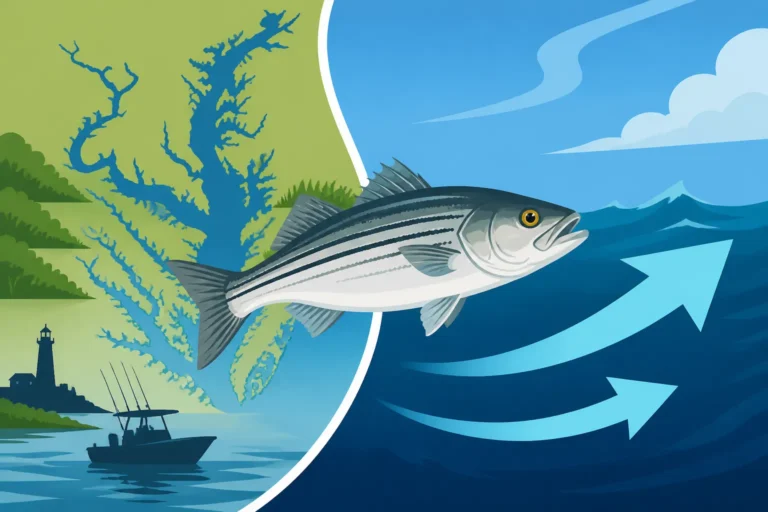
Chesapeake Bay striped bass migration patterns driven by spawning, feeding, and temperature changes throughout the year.
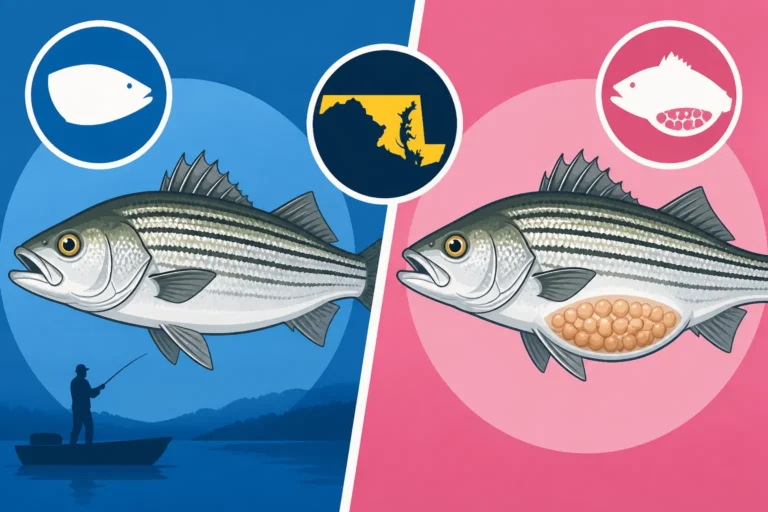
Male and female striped bass visual differences and reproductive cycle characteristics help Maryland anglers identify fish sex.
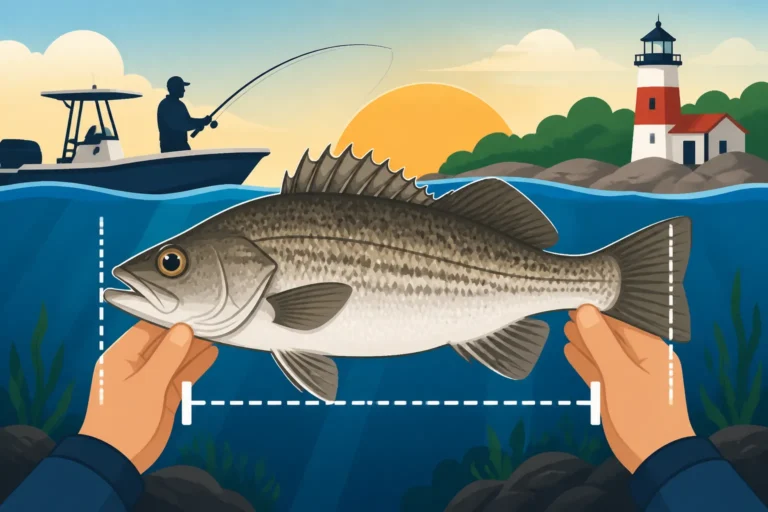
Maryland rockfish slot limits force Chesapeake Bay anglers to release striped bass under nineteen or over twenty four inches.
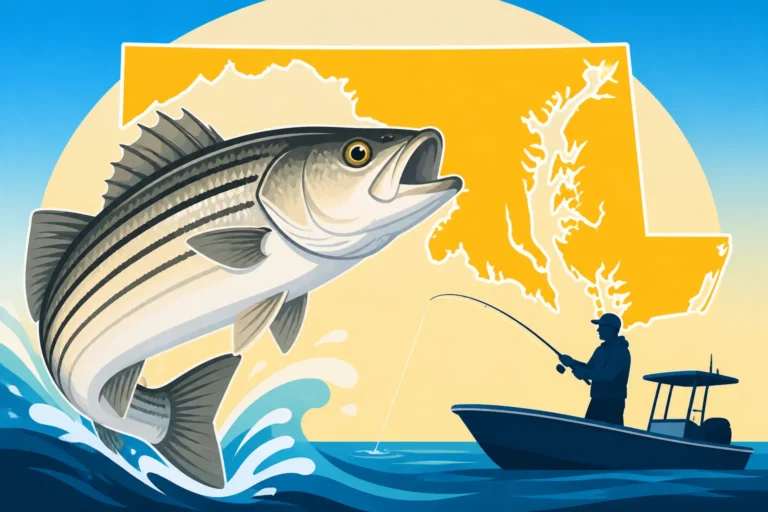
Maryland striped bass history and Chesapeake Bay ecology explain why this iconic rockfish became the official state fish.
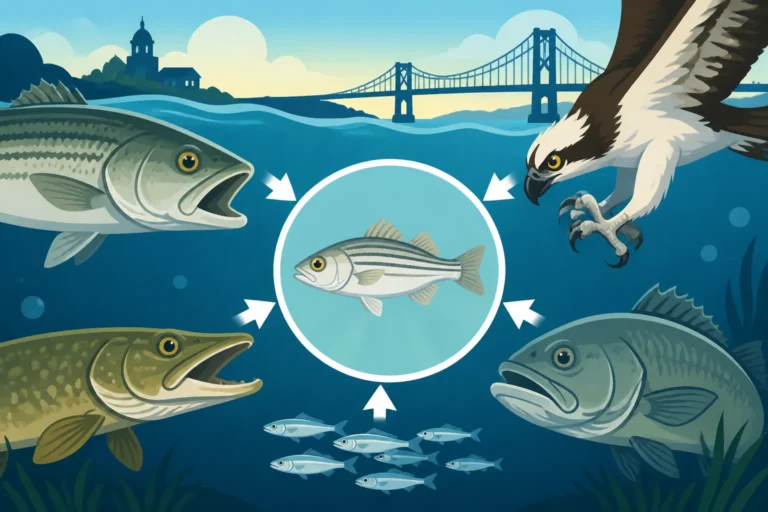
Juvenile striped bass in the Chesapeake Bay nurseries face constant predation from ospreys and other predators in Maryland waters.
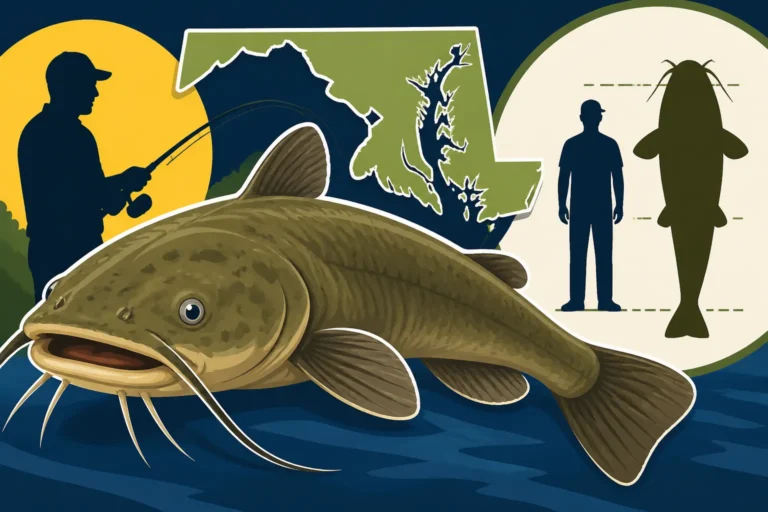
Maryland flathead catfish size potential in the Susquehanna River and their predatory habits as an introduced species.
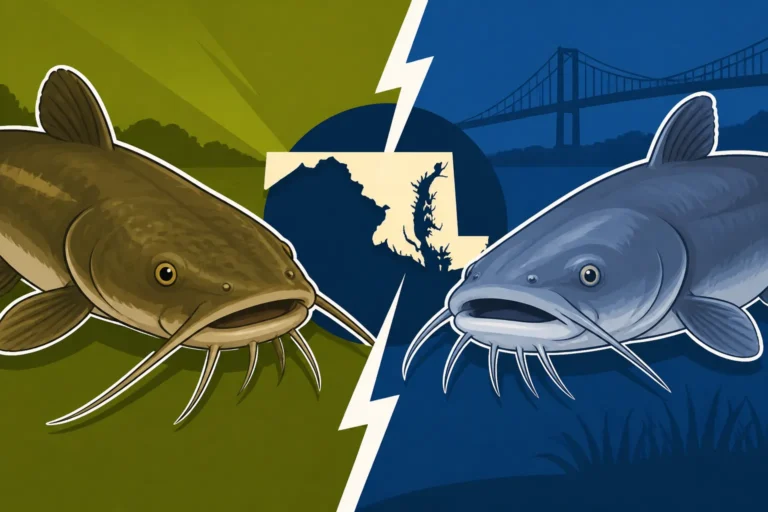
Flathead catfish and blue catfish identification details help Maryland anglers follow fishing regulations and conservation efforts.
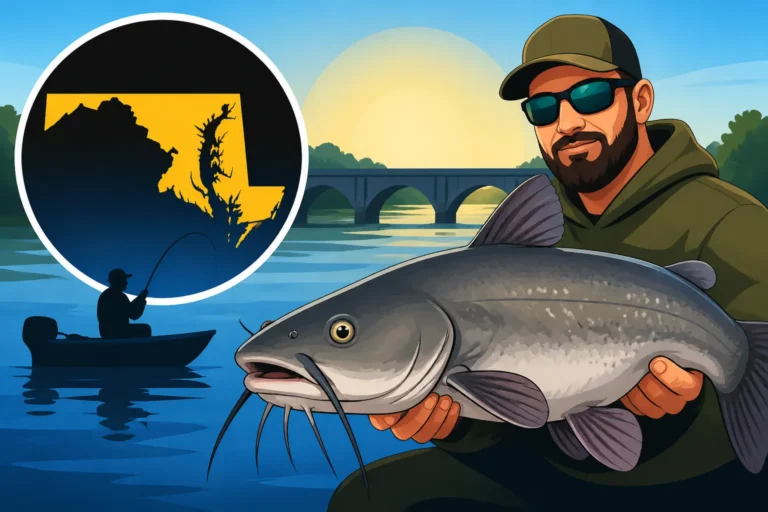
Channel catfish size potential in the Potomac River, including average weights from two to ten pounds and trophy fish targets.
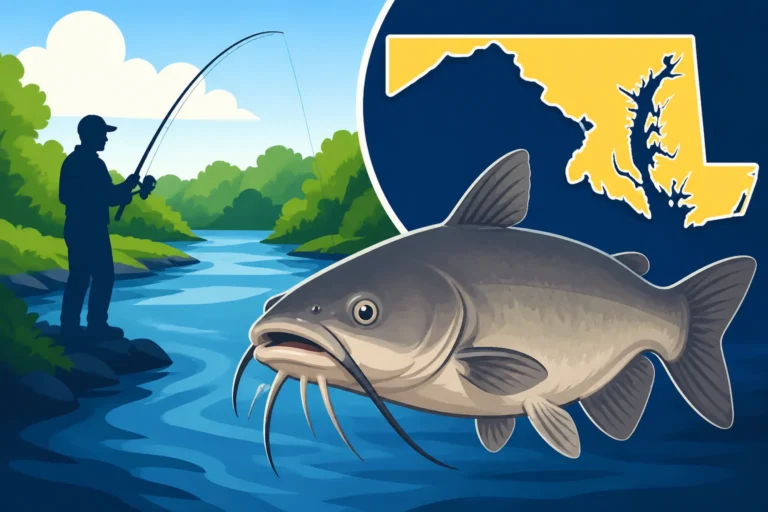
Channel catfish populations in Maryland rivers and reservoirs provide anglers with widely distributed, stable fishing opportunities across the state.
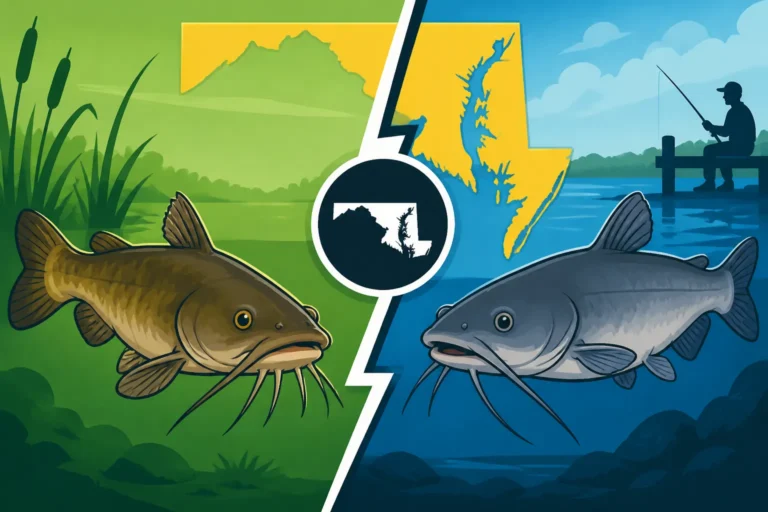
Maryland catfish identification helps anglers tell bullhead and channel catfish apart to follow size limits and prepare table fare.