Are Carp Considered a Nuisance Fish in Maryland?
Common carp status in Maryland waters, including ecological impacts and differences from invasive Asian carp species in local ecosystems.
Know what’s on the line.
Gamefish and panfish profiles — identification, behavior, feeding habits, and species-specific strategies for every catch.
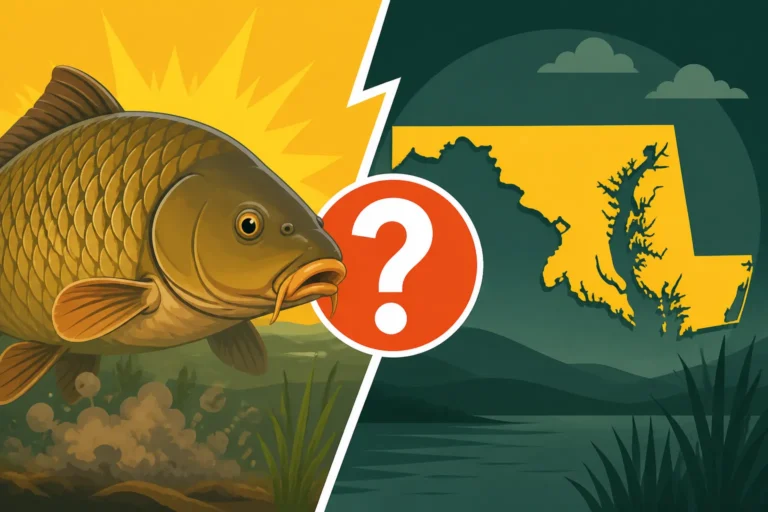
Common carp status in Maryland waters, including ecological impacts and differences from invasive Asian carp species in local ecosystems.
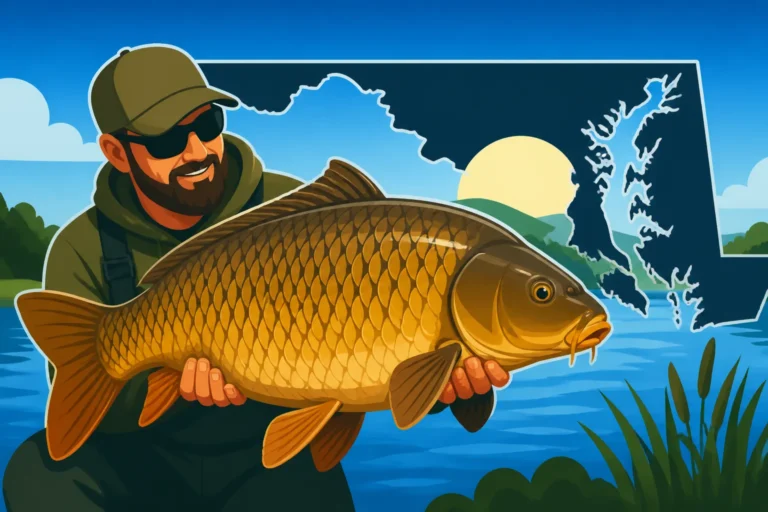
Common carp in Maryland lakes typically weigh five to fifteen pounds, while legendary catches exceed forty pounds in larger impoundments.
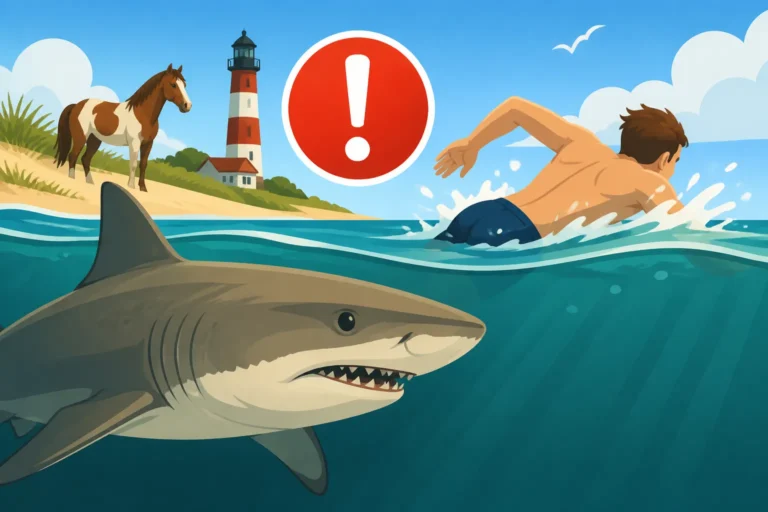
Sand tiger sharks at Assateague grow eight to ten feet long, but their actual danger levels to swimmers remain low based on behavior.
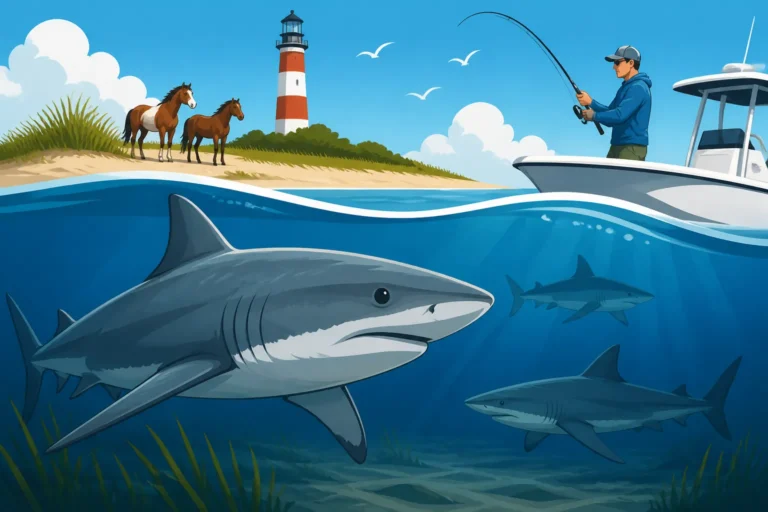
Assateague Island shark species, including sand tigers, sandbars, and dogfish, and their behaviors in Maryland coastal waters.
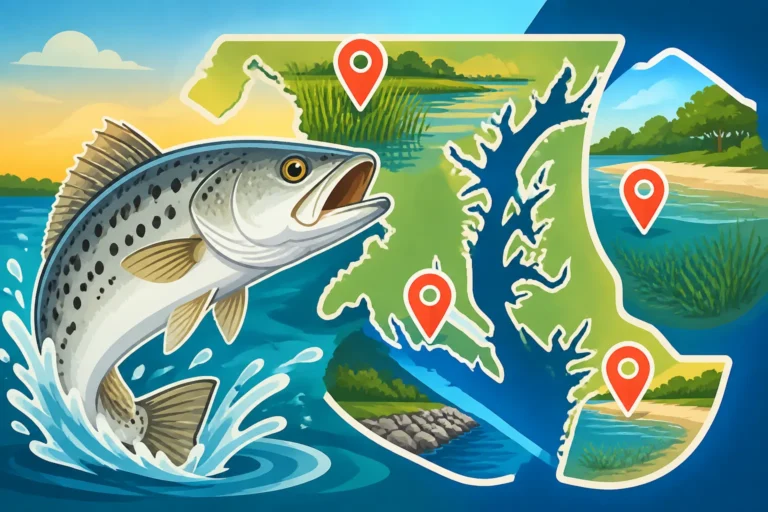
Speckled trout locations in Maryland waters include Tangier Sound and the lower Eastern Shore, featuring shallow grass beds.
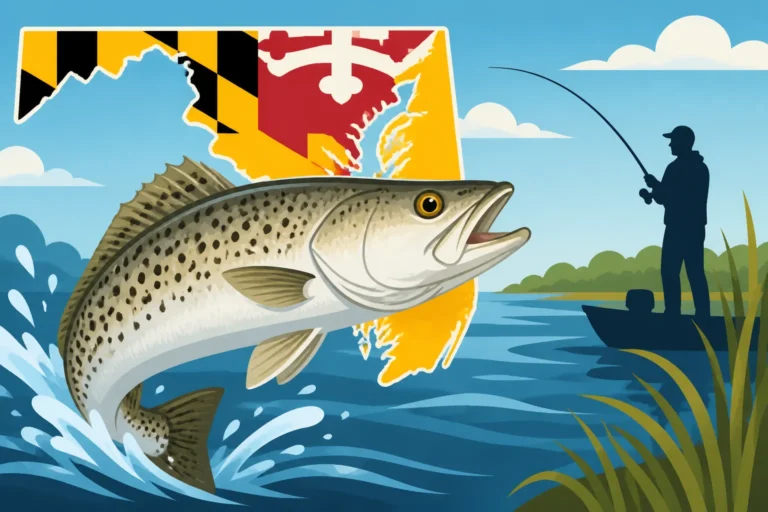
Spotted seatrout local names in Maryland and where to find them in the Chesapeake Bay tributaries and Eastern Shore rivers.
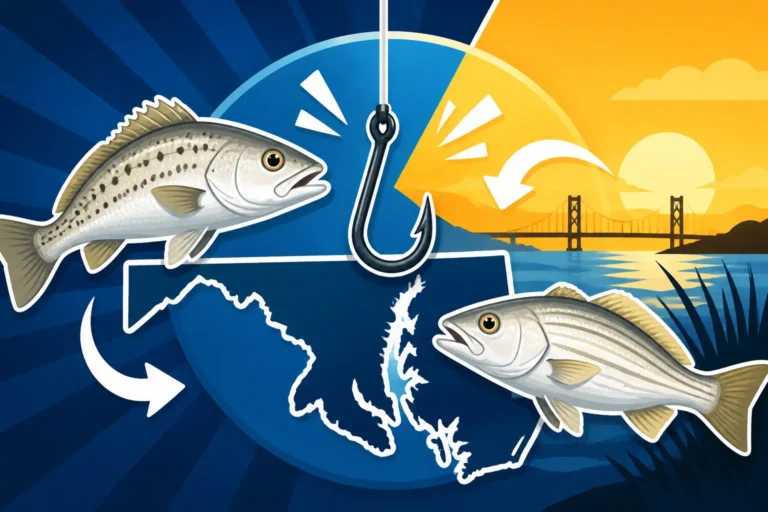
Spot and croaker in Maryland waters serve as effective baitfish to attract larger predators like striped bass and bluefish.
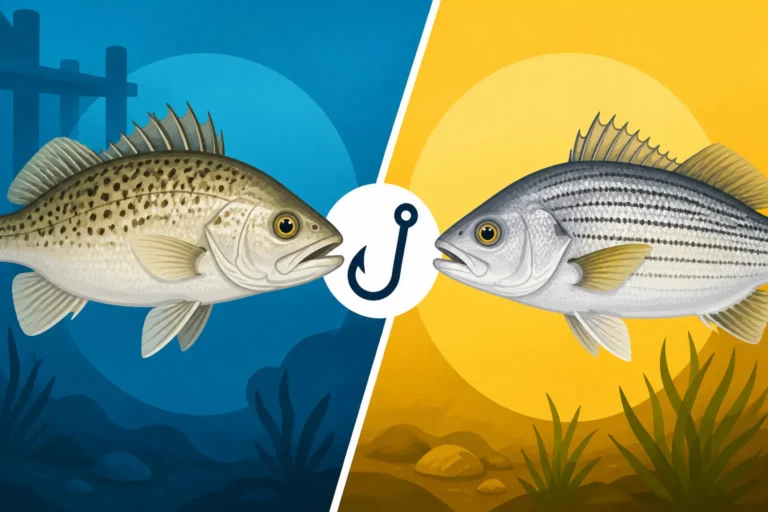
Spot and croaker physical traits, including stripes and mouth shapes, help Maryland anglers identify Chesapeake Bay catches.
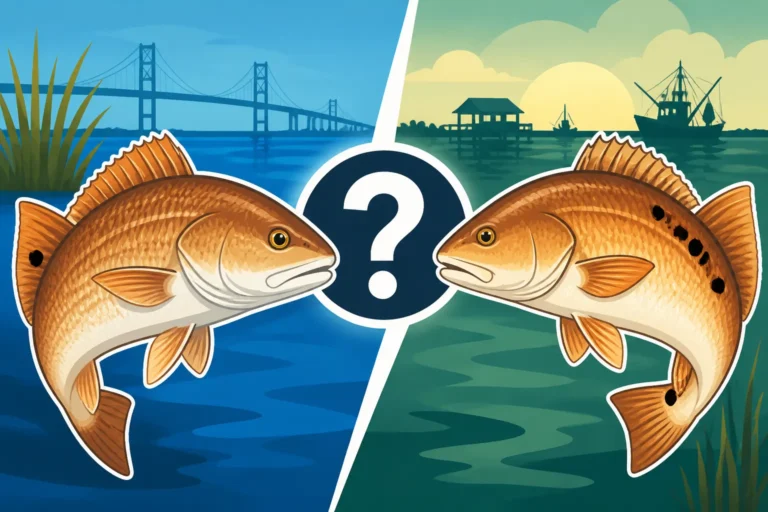
Red drum and redfish are the same fish species, known scientifically as Sciaenops ocellatus along the Atlantic and Gulf Coasts.
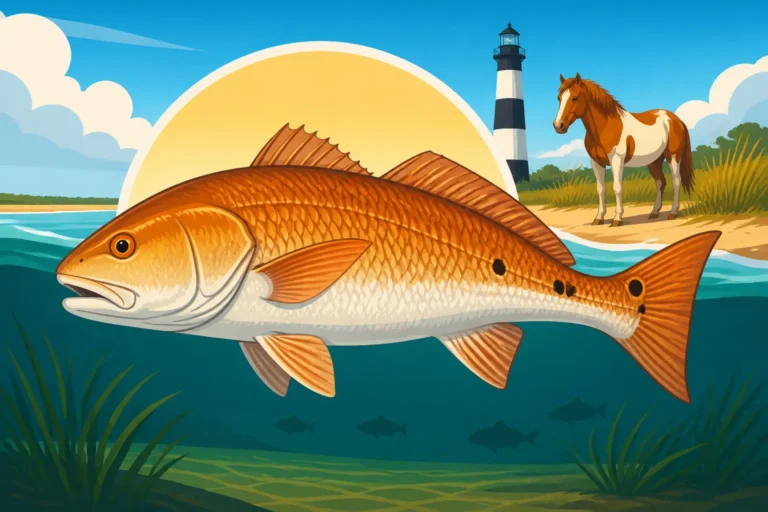
Red Drum near Assateague Island range from fourteen-inch puppy drum to massive bull reds exceeding forty inches in length.