Are There Any Muskie in Maryland Waters?
Muskellunge populations in Maryland waters, historical stocking efforts, and Western Maryland sightings for anglers seeking rare fish.
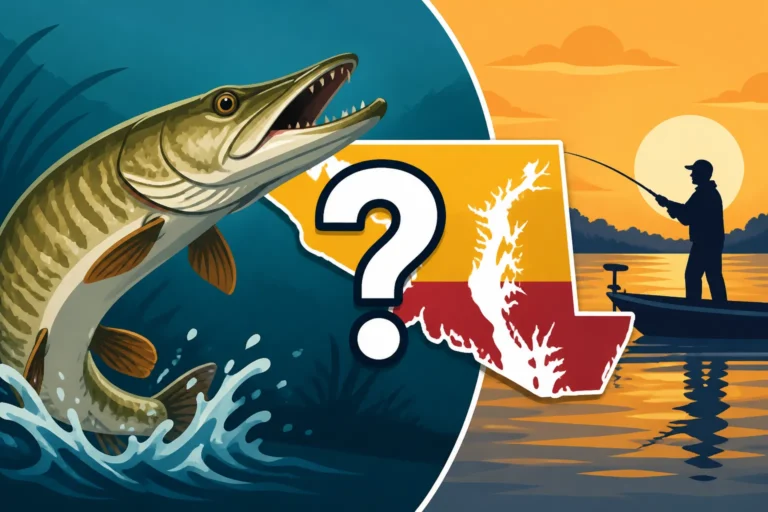
Muskellunge populations in Maryland waters, historical stocking efforts, and Western Maryland sightings for anglers seeking rare fish.
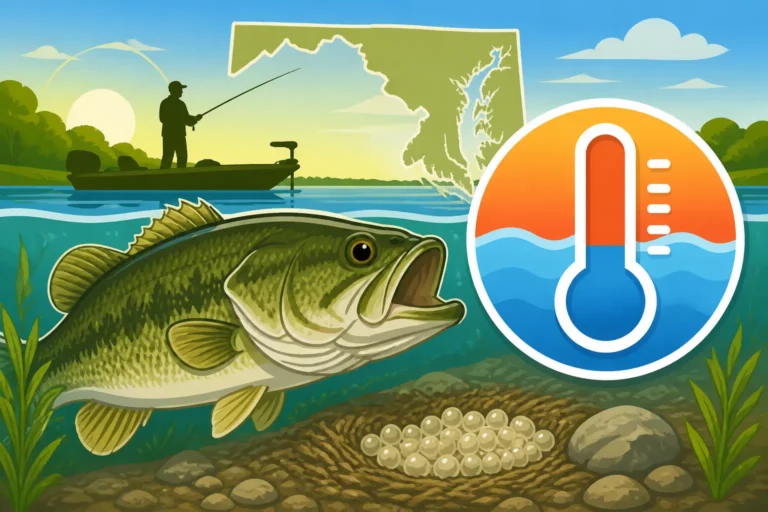
Maryland bass spawning water temperatures ranging from sixty to seventy degrees Fahrenheit dictate optimal spring fishing periods.
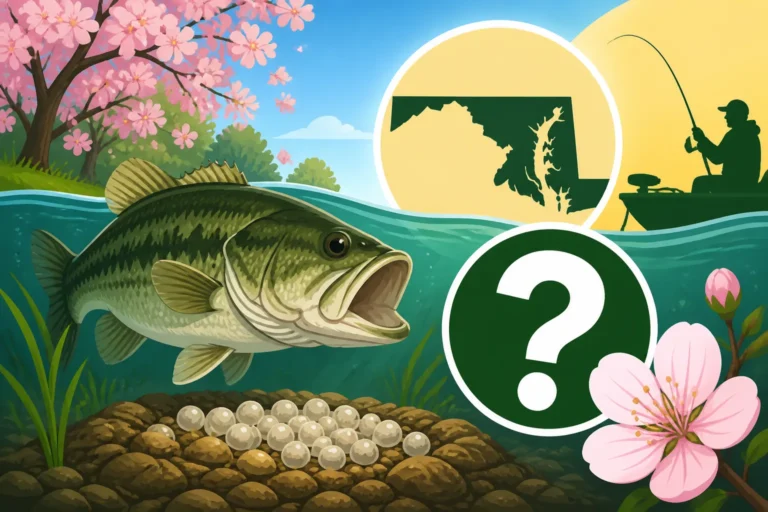
Largemouth bass spawning in Maryland depends on water temperatures reaching sixty to seventy degrees Fahrenheit in shallow coves.
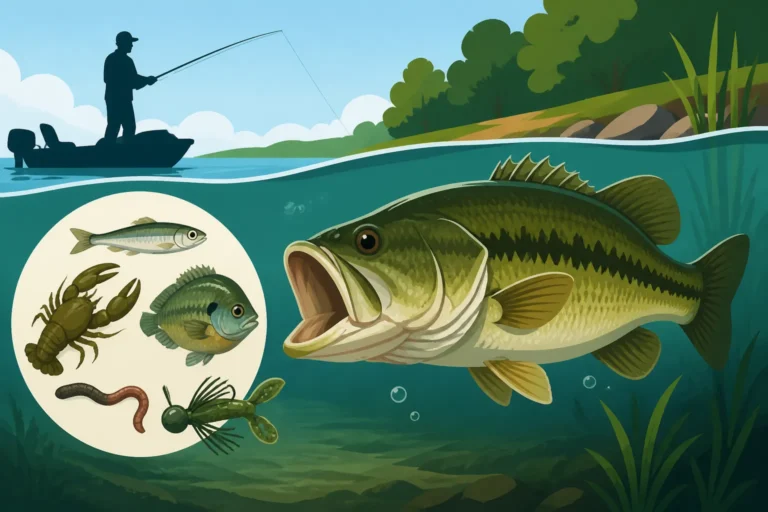
Largemouth bass in Maryland lakes eat plankton, insects, fish, crayfish, frogs, and small mammals depending on their size.
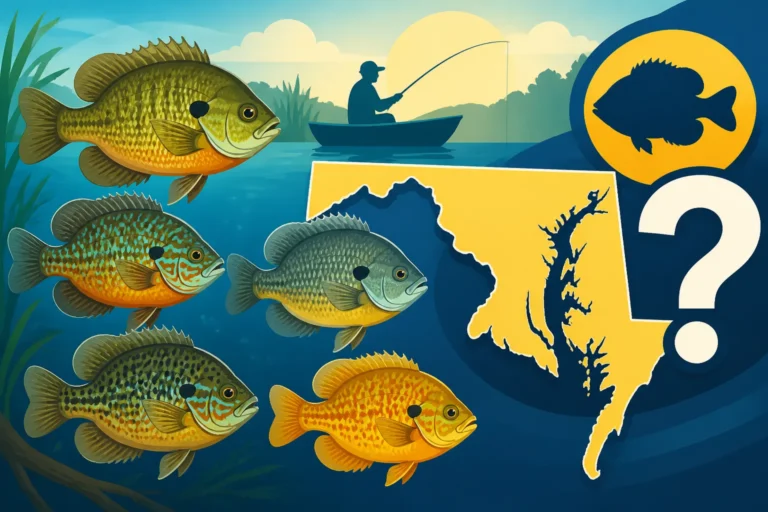
Maryland sunfish species and the broader Centrarchidae family help anglers identify local fish living in ponds and creeks.
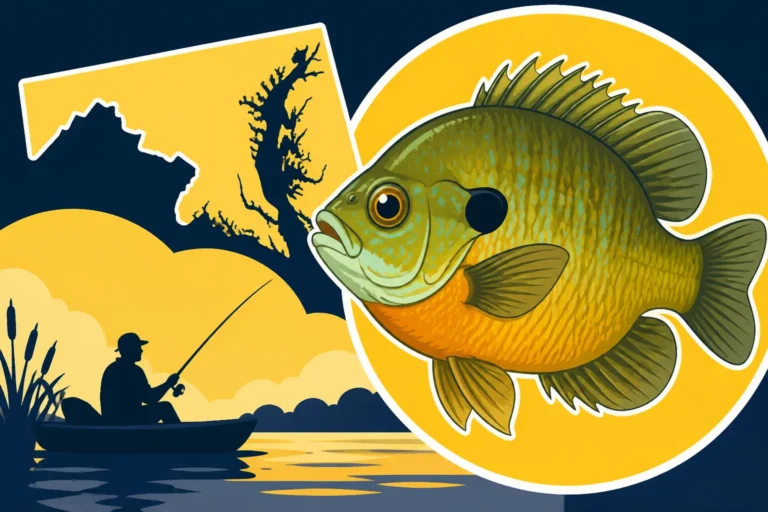
Maryland sunfish local names and regional fishing traditions explained for anglers decoding freshwater panfish nomenclature confusion.
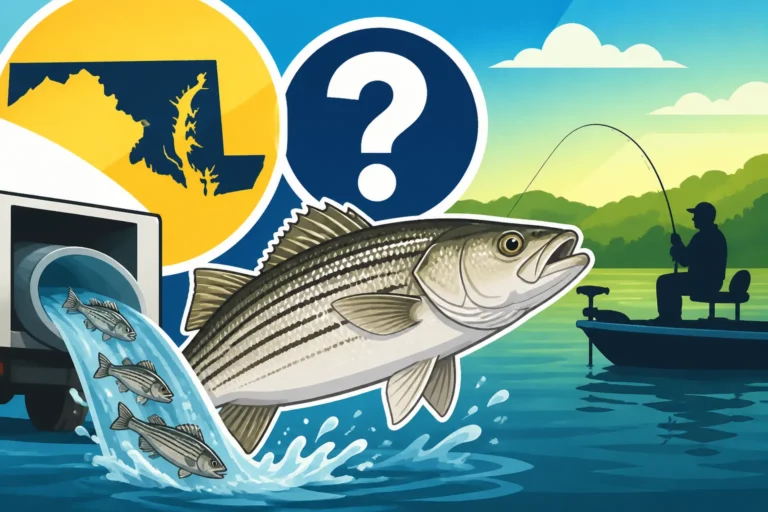
Maryland stocking programs and the Maryland Department of Natural Resources exclude hybrid striped bass from freshwater lakes.
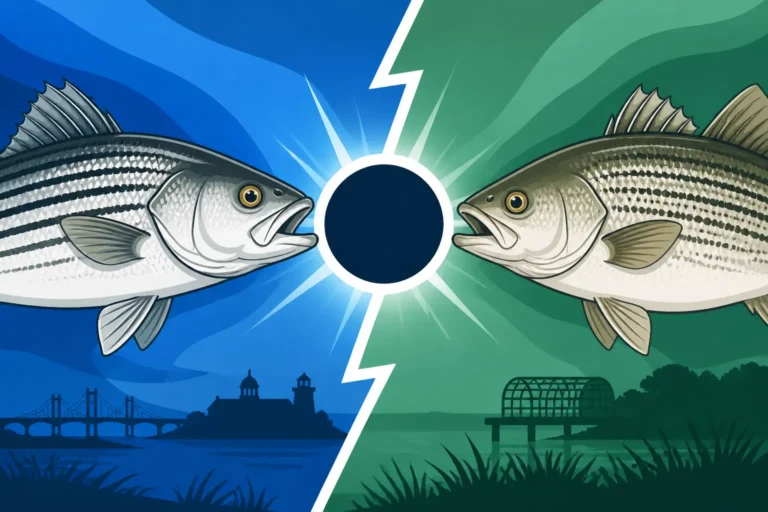
Striped bass and hybrid striped bass identification features help anglers legally and correctly separate both fish species.
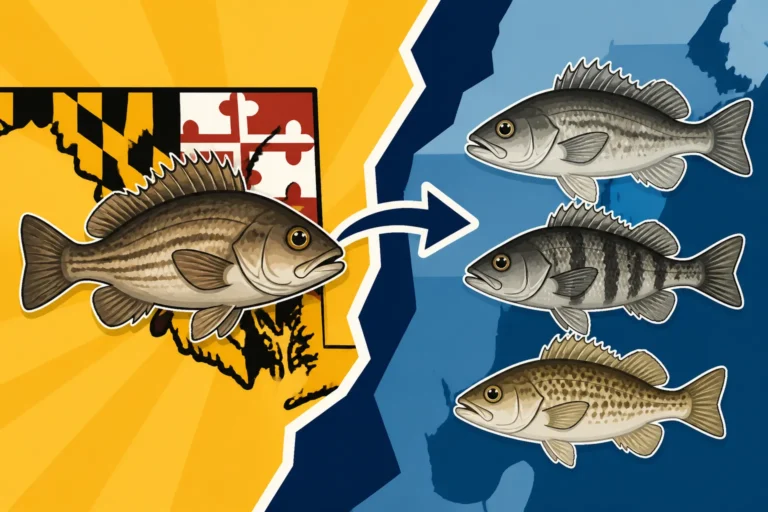
Maryland rockfish is known as striped bass in other places, explaining regional names for the Chesapeake Bay state fish.
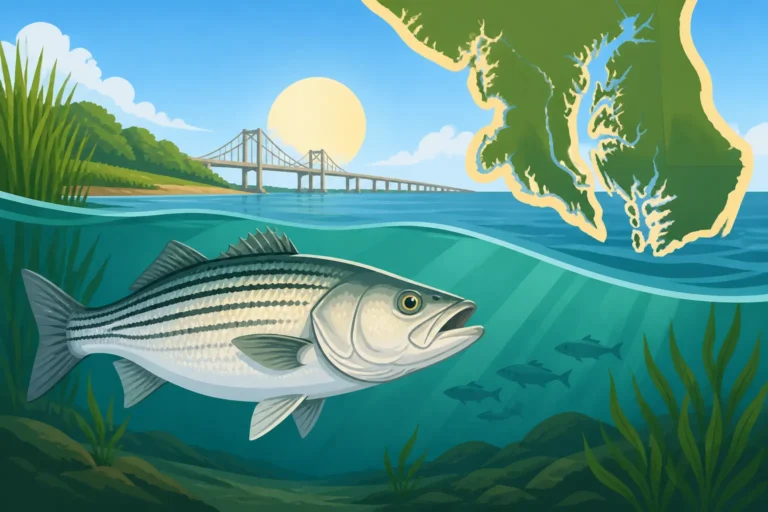
Chesapeake Bay striped bass summer movements, driven by rising water temperatures and low oxygen levels in deep channels.