Trolling Techniques for Deep Creek Lake Trout
Trolling for trout on a big, deep lake like Deep Creek can feel like trying to find a needle in a haystack, especially when those fish move into cooler, deeper waters as the season progresses. Many anglers spend hours just aimlessly cruising, hoping for a bite, only to come back frustrated. This guide is here to cut through that guesswork, giving you the precise trolling techniques and insights you need to consistently put trout in your cooler on Deep Creek Lake.
Understanding Deep Creek Lake Trout Behavior
Before you even think about dropping a line, it's crucial to understand the stars of the show: the trout. Deep Creek Lake is home to a mix of trout, primarily rainbow trout, which are stocked regularly, but you might also encounter brown trout, which are a bit more elusive. These fish are cold-water creatures, and their behavior, especially their depth preferences, is heavily dictated by water temperature and oxygen levels.
Seasonal Trout Movements and Thermal Stratification
Deep Creek Lake, like many deep freshwater lakes, experiences what's called thermal stratification. As spring turns to summer, the sun warms the surface waters, creating distinct layers. The warm, upper layer (epilimnion) is where many shallow-water species thrive. Below that is the thermocline, a transitional layer where the temperature drops rapidly. And beneath that is the cold, deep layer (hypolimnion). Trout prefer the cooler waters, typically congregating in or just below the thermocline where temperatures are optimal for them, usually in the 50s to low 60s Fahrenheit, and where oxygen is still plentiful. This is why understanding How Deep Is Deep Creek Lake? is so critical, as these depths become key trolling zones.
In the spring and fall, when the entire water column is cooler, trout can be found closer to the surface or in shallower areas, especially around points and structures. But come summer, they really drop down. Knowing this seasonal shift is your first step to successful trolling. You can't just troll the surface in August and expect results. For a more general overview of trout habits, our Maryland Trout Species Guide can offer additional insights.
Feeding Habits and Activity Periods
Trout in Deep Creek are opportunistic feeders. They'll eat minnows, insect larvae, crustaceans, and anything else small enough to fit in their mouths. Their activity levels often peak during low light conditions – dawn and dusk. However, when they're deep, light penetration isn't as much of a factor, so they might feed throughout the day. Weather also plays a significant role; a cloudy, overcast day might keep them active longer, while bright sunshine can push them even deeper or make them more lethargic. Understanding these nuances helps you choose the right time and depth for your trolling efforts, aligning with Best Time of Year to Fish in Maryland for trout.
Essential Gear and Setup for Trolling Trout on Deep Creek
Trolling for trout isn't just about putting a lure behind a boat and hoping for the best. It requires specific gear to control depth, present lures effectively, and handle the fight of a deep-water fish. Investing in the right tools will drastically improve your success rate.
Rods, Reels, and Line Choices
For trolling Deep Creek Lake trout, you'll want a setup that can handle the resistance of trolling and the strong runs of a trout.
- Rods: Look for medium-light to medium action rods, typically 7 to 8 feet long. This length provides good leverage and allows for a nice, forgiving bend when a fish strikes, preventing hooks from tearing out. A graphite composite rod offers a good balance of sensitivity and durability.
- Reels: A sturdy spinning reel in the 2500-4000 series or a small baitcasting reel with a reliable drag system will do the trick. The key is smooth drag and sufficient line capacity.
- Line: Many anglers prefer a braided main line (10-20 lb test) for its sensitivity and thin diameter, which helps with depth. Pair this with a 6-10 lb fluorocarbon leader. Fluorocarbon is nearly invisible underwater, which is a huge advantage for wary trout, and its abrasion resistance is a plus, especially if you're hitting structure. Monofilament (8-12 lb test) is also a classic choice for its stretch and shock absorption, but it can be harder to achieve precise depths due to its thicker diameter. You can find excellent options for all these components readily available from retailers like Amazon.
Depth Control Systems: Downriggers and Lead Core
This is where the magic happens for deep-water trolling. Simply letting line out won't get your lure to 40 feet consistently.
- Downriggers: These are mechanical devices that use a heavy weight (called a cannonball) to carry your fishing line, attached by a release clip, down to a precise depth. When a fish strikes, the line releases from the clip, and you fight the fish directly without the weight. Downriggers are arguably the most effective way to target specific depths and are crucial for summer trout fishing. You can run multiple lines at different depths off one boat, greatly increasing your chances.
- Lead Core Line: This specialized line has a lead core encased in a braided nylon sheath. The lead makes the line sink, with a general rule of thumb being about 5-7 feet of depth per color (each color section is usually 10 yards). It's a great option if you don't have downriggers or want to run an extra line. You can vary the amount of lead core you let out to hit different depths. The downside is that fighting a fish with lead core can be a bit more cumbersome due to the line's weight and lack of stretch.
- Dipsy Divers/Planer Boards: While more commonly used for salmon or other species, smaller dipsy divers or inline planer boards can also be used in conjunction with weighted line or lures to achieve some depth and spread your lines out away from the boat. They are more effective for shallower trolling but can still be useful.
Lure Selection: Spoons, Plugs, and Spinners
The right lure can make all the difference. Trout are attracted to flash, vibration, and realistic profiles.
- Spoons: Classic trolling lures like the Acme Kastmaster, Daredevil, or Little Cleo are highly effective. Their wobbling action mimics injured baitfish. Experiment with sizes (1/8 to 1/2 oz) and colors. Silver, gold, blue/silver, and brass are common trout producers.
- Plugs/Stickbaits: Thin, minnow-imitating plugs like Rapala or Rebel brands are excellent. These dive to varying depths depending on their lip and retrieve speed. Again, natural baitfish patterns, silver, gold, and fire tiger are popular. Some plugs are designed to dive deeper, which can be useful when you're not using downriggers for extreme depths.
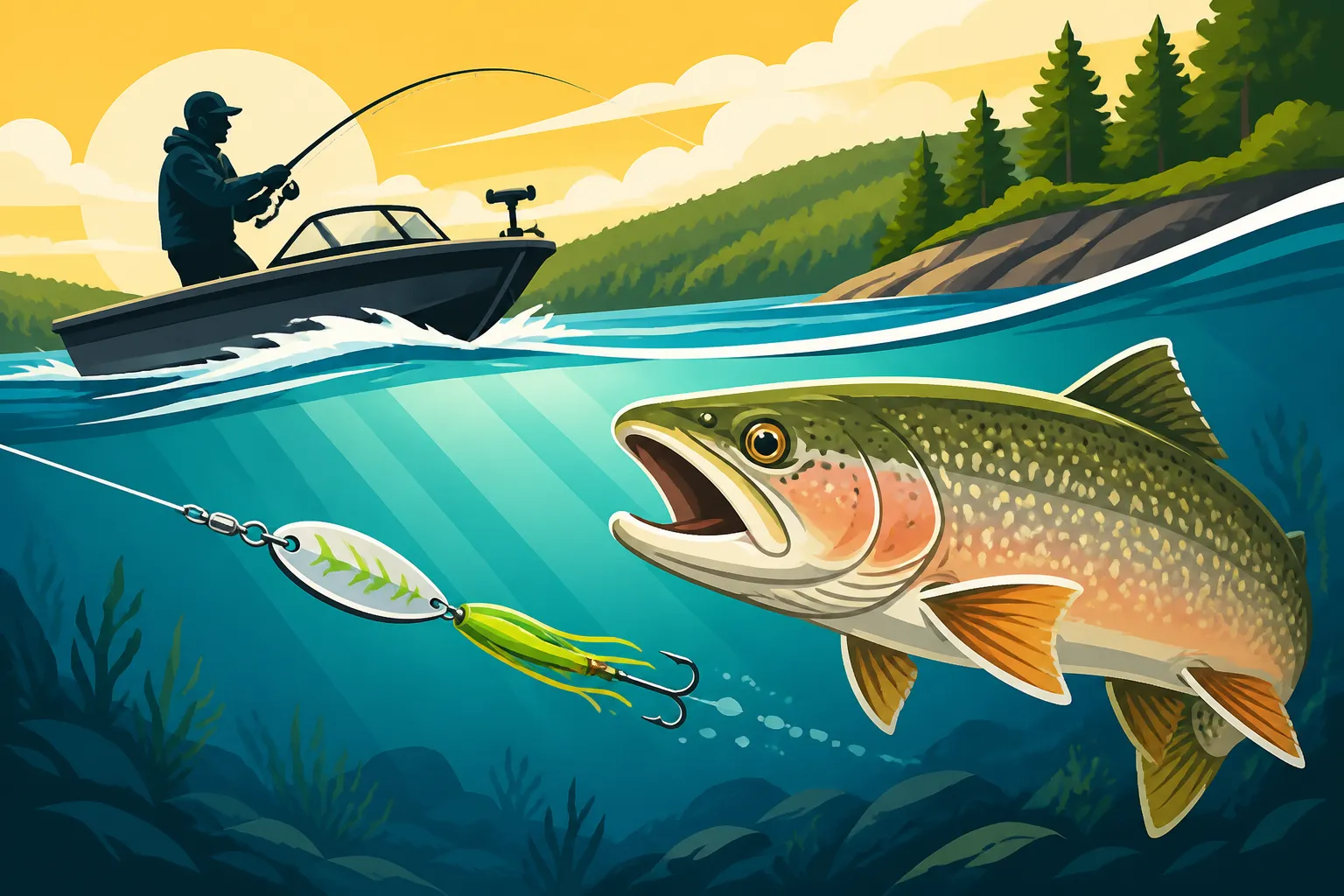
- Spinners: While often associated with casting, in-line spinners like Panther Martin or Mepps can be trolled, especially if you add a small weight a few feet in front to get them down. Their spinning blade creates a lot of flash and vibration. These are particularly good for shallower presentations or when trout are more aggressive.
- PowerBait and Live Bait: While typically used for still fishing, sometimes a small piece of PowerBait or a live minnow (check regulations for live bait usage on Deep Creek Lake) rigged behind a small dodger or flasher can be deadly when trolled slowly. The dodger or flasher adds attraction and can make the bait appear more lively.
Remember to have a variety of lures on hand. Trout can be finicky, and what worked yesterday might not work today. Building up a good collection of lures can be done conveniently through online shopping platforms like Amazon, ensuring you're ready for any situation.
Mastering Trolling Techniques for Deep Creek Lake Success
Now that you have your gear in order, let's talk about how to effectively use it on the water. Trolling is a dynamic process that requires constant adjustment and attention to detail.
Setting Your Speed and Depth
This is the absolute cornerstone of successful trout trolling. You need to present your lure at the depth where the fish are holding, at a speed that makes it irresistible.
- Speed: Trout typically prefer slower trolling speeds, generally between 1.5 to 2.5 miles per hour. However, this isn't a hard and fast rule. Sometimes, a slight increase or decrease in speed can trigger a strike. Pay attention to what your lure is doing; it needs to have its intended action (wobble, flash, spin) at your chosen speed. Use your boat's speedometer or a GPS unit to maintain consistent speed. Varying your speed slightly can also be a good tactic.
- Depth: This is where your electronics come into play. Your fish finder isn't just for showing you the bottom; it's vital for locating baitfish, schools of larger fish, and identifying the thermocline. Once you mark fish or the thermocline, use your downriggers or lead core line to position your lures precisely in that zone. If fish are at 35 feet, set your downrigger to 35 feet. If you're using lead core, determine how many colors you need to let out to reach that depth. Don't be afraid to run multiple lines at different depths to "probe" the water column until you find the fish.
Boat Control and Pattern Trolling
Trolling isn't just driving in a straight line. Strategic boat control can significantly increase your chances.
- S-Turns: Instead of a straight course, make wide, gradual S-turns. When your boat turns, the lures on the inside of the turn slow down and drop slightly, while the lures on the outside speed up and rise. This change in speed and action can often trigger strikes from hesitant fish. It's a classic trick that works wonders for trout.
- Contour Trolling: Use your depth finder and GPS to follow underwater contours, such as old creek channels, drop-offs, or submerged points. Trout often relate to these depth changes as ambush points or travel corridors. If you find fish along a specific contour, try to stay on that line. Deep Creek Lake has plenty of interesting underwater topography, so get familiar with your charts.
- Reading Your Electronics: Your fish finder is your best friend. Look for arches or marks that indicate fish, but also pay attention to bait balls. Where there's bait, there are usually predatory fish. Notice the thermocline as well; it often appears as a distinct layer on your screen. Adjust your depth accordingly based on what your sonar is telling you.
Lure Presentation and Color Choices
The way your lure moves and its appearance are critical for enticing a bite.
- Action: Ensure your lure is running true and has its intended action. Sometimes, a lure can get fouled with a piece of weed or debris, completely killing its effectiveness. Periodically check your lures.
- Color: While natural baitfish colors (silver, gold, white, perch patterns) are often a good starting point, don't be afraid to experiment. On cloudy days or in deeper, darker water, brighter colors like chartreuse, orange, or "fire tiger" (a mix of green, yellow, and orange stripes) can be very effective as they stand out more. On bright, sunny days, more subtle, metallic finishes might be better. Keep a variety of colors from brands available on Amazon to adapt to changing conditions.
- Flashers and Dodgers: These are not lures themselves but attractors that are rigged in front of your actual lure (usually 18-36 inches ahead). They create flash and vibration that draw trout in from a distance, making your trailing lure more noticeable. Different flashers have different actions, from erratic side-to-side movements to tight rotations. Experiment with different sizes and colors, just like you would with your lures.
Here's a quick comparison of popular lure types for Deep Creek Lake trout:
| Lure Type | Common Examples | Trolling Speed Range (MPH) | Typical Depth Range (without additional weights/downrigger) | Key Action/Appeal | Best Conditions |
|---|---|---|---|---|---|
| Spoon | Acme Kastmaster, Daredevil | 1.5 – 2.5 | 5 – 15 ft (can add weight for deeper) | Wobbling, flashing, mimics injured baitfish | Versatile, good in various light conditions |
| Plug/Stickbait | Rapala, Rebel | 1.8 – 3.0 | 5 – 20+ ft (depending on lip size/design) | Minnow imitation, erratic darting motion | Clearer water, targeting aggressive fish |
| Inline Spinner | Panther Martin, Mepps | 1.0 – 2.0 | 2 – 10 ft (requires weight for depth) | Spinning blade, vibration, flash | Shallower water, early/late season, cloudy days |
| Dodger/Flasher | (Attractor, not lure itself) | 1.0 – 2.5 | Varies, enhances trailing lure | Creates attraction, draws fish in | Deeper water, low light, used with bait or small lures |
Remember that this table provides general guidelines. Actual depths and effective speeds can vary based on line diameter, current, and the specific model of lure.
Troubleshooting Common Trolling Challenges
Even with the best gear and knowledge, trolling can present its fair share of head-scratchers. Don't get discouraged if the fish aren't biting right away; troubleshooting is a big part of the game.
No Bites? Time to Adjust!
The most common frustration for any angler is a lack of action. If you've been trolling for a while without a strike, it's time to systematically change things up.
- Change Depth: This is usually the first adjustment. If your fish finder shows fish at 30 feet and you're trolling at 20, you're missing them! Experiment with depths above and below where you're marking fish, as they might be suspended just out of your direct view. Also, don't forget that Maryland's 2026 Striped Bass Season Dates often dictate different depths and tactics, which can give you ideas for adapting to other species.
- Change Speed: Small changes can make a big difference. Speed up by 0.5 mph or slow down by the same amount. Sometimes, that subtle change in lure action is all it takes.
- Change Lure: If depth and speed aren't working, swap out your lure. Try a different size, shape, or, most importantly, color. If you've been running a silver spoon, switch to a fire tiger plug. Trout can be surprisingly picky, and what they prefer can change by the hour.
- Change Location: If you've worked an area thoroughly with no success, it might be time to move. Look for different structures, depth contours, or areas where you're marking baitfish on your electronics. Sometimes, the fish just aren't there.
Dealing with Tangles and Line Management
Running multiple lines, especially with downriggers or lead core, can quickly lead to a tangled mess if you're not careful.
- Stagger Your Depths: If you're running multiple lines, set them at different depths. For instance, if you have two downriggers, run one at 30 feet and the other at 35 feet. This helps prevent lures from crossing paths underwater.
- Vary Your Lead Lengths: When using flashers or dodgers, ensure the leader length to your actual lure is appropriate. Too short, and the lure might get caught in the flasher's action. Too long, and it might tangle more easily. Standard recommendations are 18-36 inches.
- Keep Your Eyes on the Rod Tips: If a rod tip starts vibrating erratically or stops vibrating, it could mean you've picked up a weed or, worse, you've got a tangle. Address it immediately to prevent further issues.
- Smooth Turns: Avoid sharp turns, especially with many lines out. Gradual S-turns minimize the risk of lines crossing and tangling.
- Clear the Deck: Keep your boat deck free of clutter. Hooks, nets, and loose gear are just accidents waiting to happen when you're fighting a fish or reeling in lines.
Weather and Water Conditions
Deep Creek Lake can have varied conditions, and these will impact your trolling strategy.
- Wind and Waves: Windy conditions make boat control challenging. Use your boat's motor and possibly a trolling motor to maintain a consistent speed and course. Waves can also affect how your lures run, sometimes adding an appealing erratic motion, other times making them unfishable. You might need to add heavier weights or adjust your speed.
- Water Clarity: After a heavy rain, the lake might become murky. In these conditions, brighter, more vibrant lures or those that create more vibration and sound can be more effective. If the water is crystal clear, subtle, natural baitfish patterns and long fluorocarbon leaders are usually best. Keep an eye on How Rain Affects Fishing on Maryland Rivers might translate to lake conditions.
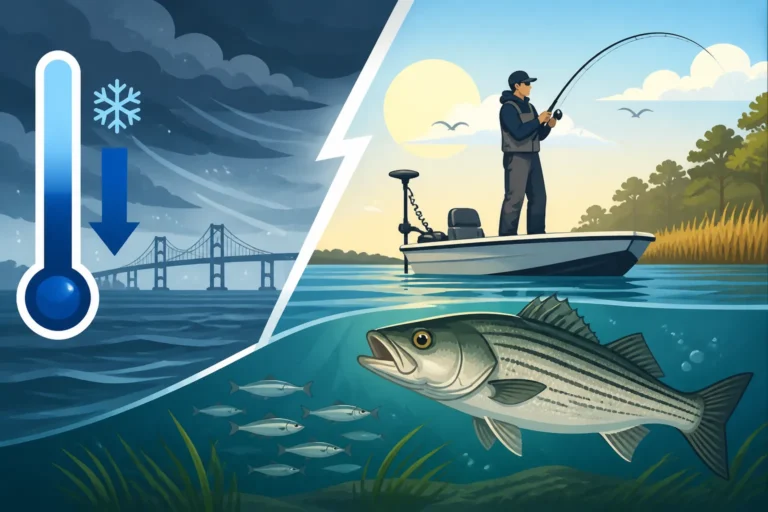
- Temperature Swings: Sudden cold fronts can make trout lethargic and push them deeper. Conversely, a warming trend might bring them slightly shallower. Always consult a good lake thermometer if you have one to help pinpoint the thermocline.
Trolling for trout on Deep Creek Lake is a rewarding experience when done right. By understanding trout behavior, equipping yourself with the proper gear, honing your techniques, and knowing how to troubleshoot, you'll be well on your way to consistent success. If you're looking to gain even more local expertise, consider reaching out to Deep Creek Lake Guide Services for Walleye in Maryland as many of these guides also specialize in trout and can offer invaluable on-the-water tips.
Disclaimer
This article is for general informational purposes only and does not constitute professional advice. Laws, prices and regulations vary by location and change over time. Consult a qualified professional for guidance on your specific situation.