Techniques for Catching Black Sea Bass Near Ocean City
There's nothing quite like the tug of a feisty black sea bass on your line, especially when you're out near Ocean City, Maryland. Many anglers, myself included, have spent countless hours wondering if we're using the right bait, the perfect jig, or just plain fishing in the wrong spot. It can be incredibly frustrating to come back with an empty cooler when you know those delicious fish are out there! This guide is here to unravel the mysteries of catching black sea bass, offering practical advice and techniques to help you fill your cooler on your next Ocean City fishing adventure.
Understanding Black Sea Bass: Habits and Habitats Near Ocean City
Black sea bass are absolutely fascinating fish, and understanding their behavior is the first step to consistently reeling them in. They aren't just swimming around aimlessly; they have preferences, patterns, and specific hangouts, especially in the productive waters off Ocean City. Knowing what makes them tick can turn a slow day into a banner day.
What Attracts Black Sea Bass to Ocean City Waters?
Think of black sea bass as homebodies who love a good structure. They thrive in areas that offer protection, ambush points, and a buffet of smaller prey. This is why the waters off Ocean City are such a prime location for them. We're talking about natural rocky bottoms, mussel beds, and especially the incredible network of artificial reefs and wrecks that have been deployed over the years. These structures provide complex habitats where smaller fish, crabs, and shrimp can hide, and in turn, where sea bass can lie in wait. The currents around these structures also concentrate food, making them irresistible hunting grounds. Without these underwater features, you'd be hard-pressed to find a good concentration of sea bass. It's not just about being "in the ocean"; it's about being on the right kind of bottom.
Seasonal Movements and Feeding Habits
Black sea bass aren't static residents; they have distinct seasonal movements driven primarily by water temperature and spawning cycles. In the spring, as the waters off Ocean City begin to warm up, they move into shallower, inshore areas to spawn. This is often when they become quite aggressive and readily take a bait. As summer progresses and water temperatures continue to rise, many will move slightly deeper to find cooler water, but they'll still be associated with structure. During the fall, as temperatures cool again, they feed heavily in preparation for winter, often becoming incredibly active before retreating to deeper, warmer offshore waters for the coldest months.
Their diet is pretty varied, which makes them fun to target with different baits and lures. They're opportunistic feeders, meaning they'll eat just about anything that crosses their path and fits in their mouth. Crabs are a huge favorite – think fiddler crabs, green crabs, and even small blue crabs. They also love shrimp, squid, small fish like sand eels, minnows, and even juvenile scup. This diverse diet means you have a good range of options when it comes to choosing your bait, and often, what they're biting on can change day to day, or even hour to hour.
Identifying Key Black Sea Bass Hotspots
When you're out near Ocean City, understanding where to drop your line for black sea bass is crucial. It’s not about finding open water, it's about finding relief. As mentioned, they absolutely love structure. This means natural rock piles, ledges, and hard bottom areas are always prime candidates. But the real game-changers are the artificial reefs and shipwrecks. These man-made structures provide incredible habitat, acting like apartment complexes for fish.
Think about the various wreck sites and designated artificial reef zones scattered off the coast. These spots are publicly known for a reason: they consistently hold fish. Sometimes these spots are called "reefs," other times "wrecks," but essentially they are all complex underwater structures. You'll often find these spots marked on navigational charts or fishing apps. It's not uncommon to catch several species around these structures, including tautog, flounder, and even small striped bass, alongside the sea bass. The key is to position your boat directly over or just up-current from these structures so your bait drifts naturally into their strike zone. Without a good depth finder or GPS to mark these spots, you'll be fishing blind.
Gearing Up for Success: Rods, Reels, and Tackle for Black Sea Bass
Having the right equipment can make all the difference between feeling every bite and missing half of them. Black sea bass aren't massive giants, but they can be surprisingly strong, especially when you're pulling them out of structure. A balanced setup is key to both enjoyment and efficiency.
Choosing the Right Rod and Reel Setup
For black sea bass fishing near Ocean City, you'll want a rod and reel combination that offers a good balance of sensitivity and backbone. A medium to medium-heavy action rod, typically seven feet in length, is a popular choice. This allows for comfortable jigging and enough power to hoist fish away from snags. Fiberglass or composite rods are durable and forgiving, while graphite rods offer excellent sensitivity to detect those subtle nibbles. Many anglers prefer a conventional reel rather than a spinning reel for this kind of fishing, especially when using heavier weights or fishing deeper water. A conventional reel provides better control over the drop and retrieval, which is important when trying to stay vertical over structure. A reel with a smooth drag system is essential because even smaller sea bass can put up a decent fight, and you don't want to snap your line.
You can find excellent options on platforms like Amazon for a variety of price points and brands, ensuring you get a setup that fits your budget and fishing style. When selecting your rod, consider the sensitivity for detecting the often light bites of sea bass, but also the lifting power required to quickly pull them away from snags that are abundant in their preferred habitats. For the reel, look for something that holds at least 200 yards of 20-30 pound braided line, which we'll discuss next.
Line, Leaders, and Hooks: The Finer Details
Your choice of line is critical for black sea bass. Most anglers opt for braided line as their main line. A 20 to 30-pound braided line is ideal because it has minimal stretch, which significantly increases your sensitivity to feel bites and helps with quick hook sets. The thinner diameter of braid also cuts through the water better, allowing you to use lighter sinkers. At the end of your braided main line, you'll need a leader, typically 2-4 feet of fluorocarbon or monofilament. Fluorocarbon is often preferred due to its abrasion resistance and invisibility underwater. A 20-30 pound test leader is usually sufficient. Remember, you're fishing around sharp barnacles and rough structure, so a good leader is non-negotiable.
When it comes to hooks, size matters. Black sea bass have relatively small mouths, so you don't want to use hooks that are too large. A 1/0 to 3/0 size Kahle, octopus, or circle hook is generally effective. Circle hooks are particularly popular for their ability to hook fish in the corner of the mouth, leading to fewer gut-hooked fish and making catch-and-release easier if you're not within the legal limits. For lures, jig heads in various weights (from 1 to 4 ounces, depending on current and depth) paired with soft plastics are excellent.
Terminal Tackle and Essential Accessories
Beyond rods, reels, line, and hooks, you'll need a few other pieces of terminal tackle. Bank sinkers or bell sinkers are commonly used, with weights ranging from 1 to 6 ounces. The specific weight depends heavily on the current, depth, and how fast you're drifting. You want just enough weight to keep your bait near the bottom without it dragging excessively or getting swept away. Swivels and snap swivels are also useful for connecting leaders and preventing line twist.
Don't forget some essential accessories:
- Pliers: For removing hooks and cutting line.
- Knife: Always handy for bait preparation or cutting larger lines.
- Measuring device: A legal measuring device is crucial for verifying your catch against the Maryland Black Sea Bass Season and Limit. You want to make sure your fish is of legal size before you even think about putting it in the cooler.
- Cooler with ice: For keeping your catch fresh.
- Gloves: Can protect your hands from fish spines and line cuts.
- Sun protection: Hat, sunglasses, and sunscreen are a must when fishing offshore.
- Fish Finder/GPS: Absolutely essential for locating those underwater structures.
- Net or gaff: For landing larger fish. For sea bass, a net is usually sufficient and safer.
Investing in quality gear, perhaps even from trusted retailers on Amazon, will enhance your experience and increase your chances of success.
Proven Techniques for Targeting Black Sea Bass Near Ocean City
Now that you're geared up, let's talk about how to actually get those black sea bass to bite. There are several effective techniques, and often, the best approach is to be versatile and willing to try different methods until you find what the fish prefer on any given day.
Bottom Fishing with Bait
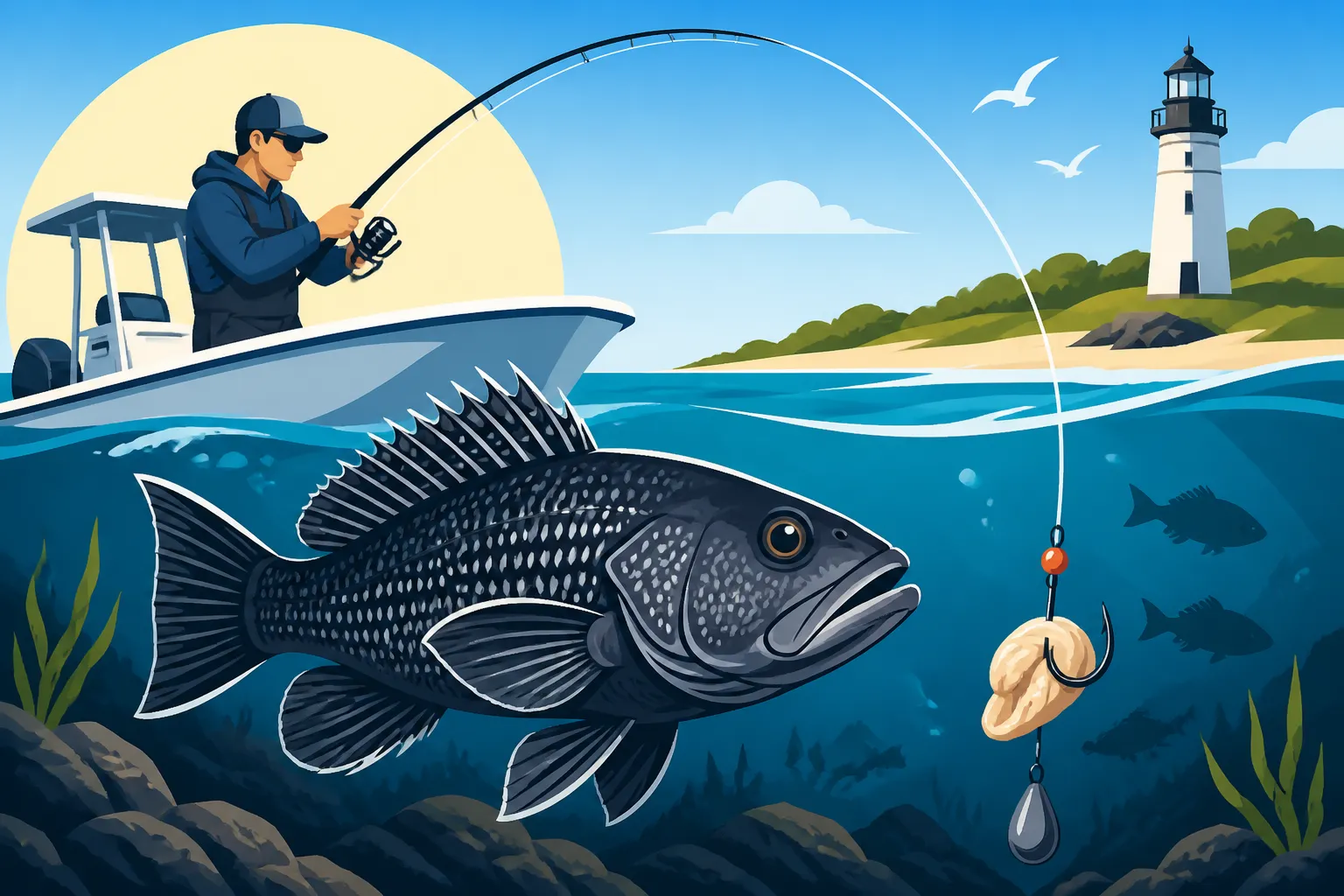
Bottom fishing is perhaps the most straightforward and consistently productive method for black sea bass. The general idea is to present your bait right where the fish live – on or very near the bottom. The classic rig for this is a top-and-bottom rig or a high-low rig, which typically has two snelled hooks tied above a sinker. This allows you to present two baits at different depths just off the bottom.
Bait Choices:
- Squid: This is a universal sea bass killer. Cut squid into strips about 1-2 inches long and 1/4 inch wide. They stay on the hook well and have a strong scent. You can even buy pre-cut strips.
- Clams: Fresh shucked clams, particularly surf clams, are another excellent bait. They are soft, so handle them carefully, but their scent is very attractive.
- Fish strips: Small strips of mackerel, herring, or even spot and croaker can be effective.
- Crabs: Small green crabs, fiddler crabs, or pieces of blue crab are irresistible to sea bass. Often, you might even find you're using similar bait to what you'd use for flounder, so some of the advice from a guide like Best Bait for Flounder in Ocean City could overlap!
Technique: Drop your rig down until it hits the bottom, then reel up a foot or two to keep your bait just off the structure but still in the strike zone. If you're drifting, this means your bait will be constantly moving over new territory. If you're anchored, you might need to give your line a little slack and then reel up to bounce the bait periodically, creating a little puff of sand to attract attention. When you feel a bite, don't immediately set the hook with a huge swing; a gentle upward lift is usually enough, especially with circle hooks, to let the fish hook itself.
Jigging with Artificial Lures
Jigging is a more active and often very rewarding way to target black sea bass. It involves using artificial lures, primarily metal jigs or soft plastic baits on jig heads, to mimic injured baitfish or crustaceans. This technique is particularly effective when fish are aggressive.
Lure Choices:
- Metal Jigs: Diamond jigs, speed jigs, or flat-fall jigs in weights from 1 to 4 ounces are excellent. Silver, chartreuse, pink, and glow-in-the-dark are popular colors.
- Soft Plastics: Gulp! curly tail grubs or swim shads on bucktail or lead-head jigs are deadly. White, chartreuse, pink, and natural baitfish colors work well. Consider looking for these on Amazon for a wide selection.
Technique: Drop your jig to the bottom, then engage your reel. The idea is to work the jig vertically, lifting your rod tip sharply a foot or two, then letting the jig fall back down on a semi-slack line. Most bites occur on the fall, so pay close attention. Vary your retrieve speed and the height of your lifts. Sometimes a fast, aggressive jigging motion works, other times a slow, subtle bounce is better. It's often helpful to tip your jig with a small piece of squid or clam for added scent and attraction. This can make an otherwise ignored lure irresistible.
Drifting vs. Anchoring
The decision to drift or anchor often comes down to current, wind, and how precise you need to be with your presentation.
- Drifting: This is highly effective when you're covering a larger area of structure, or when the fish are scattered. It allows you to present your bait or jig to a wider range of fish without having to constantly reposition the boat. The key to successful drifting is managing your drift speed with a sea anchor (drogue) if necessary, and adjusting your sinker weight to keep your line as vertical as possible. You want to feel the bottom occasionally but not constantly snag. This method is great for locating schools of fish.
- Anchoring: If you've found a particularly productive piece of structure – a specific wreck or a dense rock pile – anchoring directly over or slightly up-current from it can be incredibly effective. This allows you to saturate a small area with bait and keep your offerings in the prime strike zone for a longer period. However, getting anchored perfectly can sometimes take a few tries, especially in strong currents or choppy conditions. This is where a good GPS and fish finder become indispensable. Many anglers on Ocean City Maryland Offshore Charter Fishing trips will use anchoring techniques once a hot spot is found.
| Technique | Best For | Pros | Cons |
|---|---|---|---|
| Bottom Fishing (Bait) | Consistent catches, less active | High success rate, uses natural attractants | Can be slower, less interactive |
| Jigging (Lures) | Active fishing, targeting aggressive fish | More engaging, can cover ground quickly | Requires more skill, may not work on slow days |
| Drifting | Covering wide areas, finding scattered fish | Locates fish effectively, wide coverage | Less precise, difficult in strong currents |
| Anchoring | Concentrating on specific hotspots | Highly precise, saturates productive areas | Can be hard to set up, limited coverage |
Timing is Everything: Best Seasons and Spots for Black Sea Bass
Knowing when and where to go can significantly impact your black sea bass success. Ocean City offers some fantastic opportunities, but understanding the nuances of the seasons and specific locations will give you an edge.
Optimal Seasons and Weather Conditions
As hinted at earlier, black sea bass are generally available for a good portion of the year in Maryland waters, but certain seasons are definitely better than others. The spring and fall are typically the peak seasons for targeting these fish.
- Spring: As the water warms, black sea bass move into shallower, more accessible inshore structures to spawn. This is a time of high activity, and they can be quite hungry after their winter dormancy. The fish are often aggressive, making them excellent targets for both bait and jigs. You'll find a lot of boats out targeting them during this period.
- Summer: While still catchable, many sea bass will move to slightly deeper, cooler waters offshore during the hottest summer months. Fishing can still be good, especially in the mornings or late afternoons, but you might need to venture a bit further out. This is also when you'll find more anglers targeting other species, so competition might be lower.
- Fall: This is another prime time! As water temperatures begin to drop, sea bass begin to feed heavily to build up reserves for winter. They can be found in good numbers and are very active. This period often offers some of the most consistent action.
- Winter: Black sea bass generally move offshore into deeper waters during the coldest parts of winter, making them harder to access for recreational anglers fishing from Ocean City.
Regarding weather, calm to moderate seas are always preferable for comfort and safety. Overcast days can sometimes be better than bright sunny days for bottom fishing, but sea bass are often less finicky than other species. Light to moderate currents are ideal, as they help concentrate baitfish and allow for controlled drifts. You can often find detailed insights on these movements in resources like the Best Time of Year for Black Sea Bass in Maryland article.
Top Fishing Grounds Near Ocean City
Ocean City is blessed with a fantastic array of fishing spots, many of which are absolute magnets for black sea bass. These generally fall into a few categories:
- Artificial Reef Sites: Maryland's Department of Natural Resources (DNR) has done an incredible job developing a network of artificial reefs off Ocean City. These sites, often composed of old subway cars, bridge rubble, and decommissioned ships, provide intricate habitats that sea bass adore. Reef sites like the Great Eastern Reef, African Queen Reef, and the Bass Grounds are legendary hotspots. These are often marked on charts or publicly available GPS coordinates. A guide like Ocean City Maryland Fishing Guide will certainly mention these spots.
- Natural Bottom Structure: Even without man-made additions, there are natural rock formations, ledges, and hard bottom areas that consistently hold fish. These might be a bit harder to pinpoint without local knowledge or a good depth finder, but they are often less pressured.
- Wreck Sites: Numerous shipwrecks dot the ocean floor off Ocean City, ranging from historic vessels to more recent sinkings. Each wreck acts as a vertical apartment complex, attracting baitfish and, consequently, sea bass. Popular wrecks are often targeted by charter boats, so sometimes booking an Ocean City Maryland Offshore Charter Fishing trip is the best way to hit these locations efficiently.
When planning your trip, consider checking local bait and tackle shops in Ocean City. They are invaluable resources for current conditions, what bait is working, and where the fish have been biting. Often, they'll have charts or local tips that aren't widely published.
Respecting Regulations and Limits
No matter how good the fishing is, it's absolutely crucial to respect Maryland's fishing regulations. Black sea bass populations are carefully managed, and adhering to the rules ensures sustainable fishing for everyone. This includes understanding the Maryland Black Sea Bass Season and Limit, which dictates minimum size, daily creel limits, and open seasons. These regulations can change, so always consult the latest Maryland DNR fishing guide before heading out. Failure to do so can result in hefty fines and penalties, which nobody wants.
Always measure your fish as soon as you catch them. If they are undersized, release them gently and quickly to maximize their chances of survival. Using circle hooks, as discussed, can also aid in this by leading to fewer deep-hooked fish. Good stewardship of our marine resources means we can all enjoy the thrill of catching black sea bass off Ocean City for years to come!
Disclaimer
This article is for general informational purposes only and does not constitute professional advice. Laws, prices and regulations vary by location and change over time. Consult a qualified professional for guidance on your specific situation.