Kayak Fishing Safety Tips for Maryland’s Chesapeake Bay
There's nothing quite like gliding silently across the water in your kayak, the sun on your face, the rhythmic dip of your paddle, and the thrill of the hunt for that big rockfish. But let's be real, the Chesapeake Bay, with its vast expanses, unpredictable weather, and commercial traffic, can be an intimidating place, especially for us kayak anglers. It's easy to get caught up in the excitement and overlook the critical steps that ensure a safe return. This comprehensive guide is here to walk you through all the essential safety tips and precautions you need to know before you ever dip your paddle into Maryland's iconic waters.
Prioritizing Pre-Trip Planning and Preparation
Before you even think about loading your kayak onto the car, a successful and safe trip begins long before you reach the launch ramp. Many of the most common issues out on the water can be mitigated, or even avoided entirely, with diligent planning. It’s not just about what you bring; it’s about what you know and how you prepare.
Checking Regulations and Permits
One of the most fundamental steps for any angler, regardless of whether you’re in a kayak or a motorboat, is ensuring you’re legally allowed to fish. Maryland has specific requirements, and getting caught without the proper paperwork can quickly turn a peaceful day into a frustrating one, not to mention costly fines. Always double-check the current regulations for the specific waters you plan to fish, especially if you're targeting species like striped bass which have evolving slot limits and seasons. Make sure your Maryland fishing license is up-to-date, and remember that there are distinctions between Maryland Nontidal vs Tidal Fishing License, Explained depending on where you're casting your line.
Beyond your personal fishing license, remember that some areas might have specific access permits or rules for launching kayaks, especially within state parks or private marinas. A quick call to the local park office or a check of the Maryland Department of Natural Resources (DNR) website can save you a lot of hassle. It’s also wise to be aware of any recent Maryland Emergency Fishing Closures, How They Work that might impact your chosen fishing spot, as these can happen with little notice due to environmental factors or fish stock health. Being informed is your first line of defense against both legal trouble and unsafe conditions.
Crafting a Detailed Float Plan
This isn't just for ocean crossings, folks; a float plan is crucial for kayak fishing on the Chesapeake Bay. Think of it as leaving breadcrumbs for search and rescue if things go sideways. Before you head out, tell someone reliable where you're going, when you expect to return, and what your kayak looks like. This includes your launch point, your intended fishing area, and your estimated time of return. Give them a description of your kayak, including its color, and any identifying marks, as well as the make and model.
If you don't return by your stated time, this person knows to initiate a check-in or, if necessary, contact the authorities. This simple step can dramatically reduce the time it takes for help to reach you if you encounter an emergency, especially in a vast waterway like the Bay where getting lost or capsizing can quickly become critical. Don't just tell anyone; choose someone who will genuinely pay attention and act if needed. It’s a small effort with potentially life-saving consequences.
Performing Essential Kayak Maintenance
Your kayak is your vessel, your life raft, and your fishing platform all rolled into one. Neglecting its maintenance is like ignoring the oil light in your car – eventually, something major is going to go wrong. Before every trip, give your kayak a thorough once-over. Check for cracks, dings, or leaks that might have developed since your last outing. Ensure all scupper plugs are present and properly seated, especially if you're in a sit-on-top kayak and expect some chop.
Inspect your rudder system if you have one; make sure the cables are tight and the rudder moves freely. Check paddle integrity – are there any cracks in the shaft or blades? Are all your rigging points and bungee cords secure for holding gear? Even something as simple as a loose seat can become a major distraction or cause instability when dealing with waves. A few minutes of pre-trip inspection can prevent a minor issue from escalating into a serious safety hazard on the water.
Essential Gear for Chesapeake Bay Kayak Fishing
When you're out on the Chesapeake, especially further from shore, you are largely on your own. This isn't a small pond where you can easily walk back if something breaks. Your gear needs to be reliable, redundant, and suited to the challenging conditions the Bay can present. Think of your gear as your toolkit for survival and success.
Personal Flotation Devices PFDs
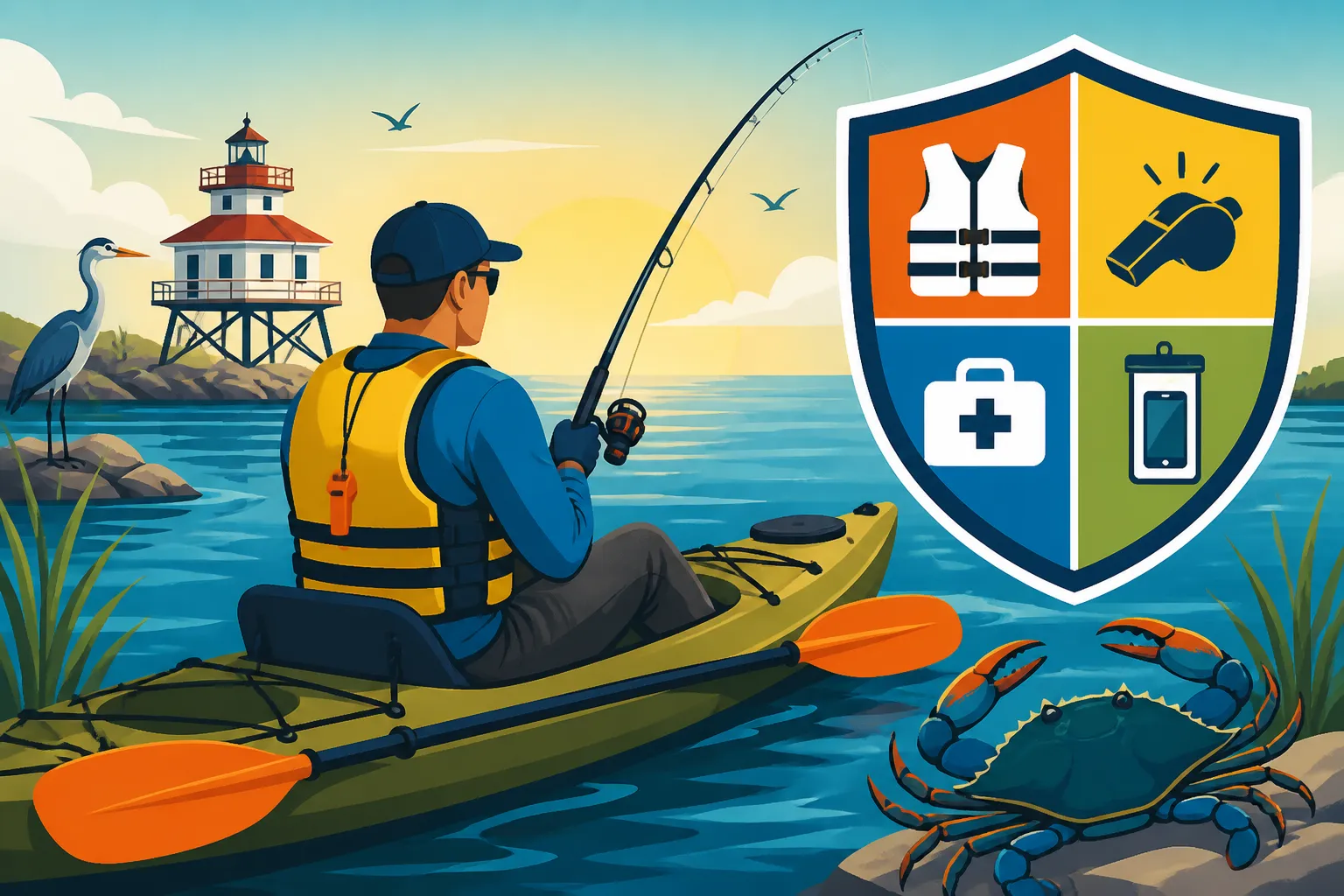
Let's get this out of the way: a U.S. Coast Guard-approved Personal Flotation Device (PFD), or life jacket, is not optional; it’s absolutely non-negotiable. And simply having it on board isn't enough; you must wear it. Even the most experienced paddlers can be caught off guard by a sudden wake, a strong gust of wind, or an unexpected capsize. Trying to put on a PFD after you've already flipped into cold water, especially with fishing gear tangled around you, is a recipe for disaster.
Invest in a comfortable, fishing-specific PFD. These are designed with pockets, gear attachment points, and a cut that allows for full range of motion while paddling and casting. Brands like NRS and Old Town offer excellent options that are often available on platforms like Amazon. Make sure it fits snugly – not so tight it restricts breathing, but tight enough that it won't ride up around your ears if you go into the water. Wear it from the moment you launch until you beach your kayak. No excuses.
Reliable Communication Devices
Being able to call for help is paramount. Cell phones are great, but they're not always reliable on the water, especially in remote Bay areas or if they get wet. A waterproof VHF marine radio is a vastly superior option for communicating over water, allowing you to hail the Coast Guard or other vessels. Even a handheld model can transmit over several miles, and many now come with GPS and DSC (Digital Selective Calling) features, which can transmit your exact location in an emergency.
Always keep your communication device within easy reach and, if possible, in a waterproof case or bag that's tethered to you or your kayak. Having a fully charged portable power bank (also readily available on Amazon) for your cell phone or other USB-charged devices is also a smart move. Remember, a dead battery renders any communication device useless. For longer trips or more remote areas, consider carrying a personal locator beacon (PLB) or satellite messenger, which can provide a truly global lifeline.
Visibility Gear and Lighting
Picture this: you're out enjoying a beautiful sunset bite, completely absorbed in the moment. Suddenly, a much larger vessel, say a powerboat or a commercial crabber, barrels past uncomfortably close, and you realize they might not have even seen you. Being visible on the water, particularly on a busy waterway like the Chesapeake Bay, is absolutely critical. Kayaks are low-profile, and we're often camouflaged by our surroundings or the choppy water.
Always use a tall visibility flag or light pole, especially if you're fishing near shipping channels or after dusk. A bright, fluorescent flag (orange, yellow, or lime green) on a flexible pole that extends several feet above your head significantly increases your visual footprint. For low light conditions, dawn, dusk, or night fishing, federal law requires a 360-degree white light visible for at least 2 miles. Many kayak anglers use LED navigation lights specifically designed for kayaks, which are small, bright, and often magnetic or suction-cup mounted. Consider adding reflective tape to your paddle and kayak, and wear bright clothing. The more you stand out, the safer you'll be.
First Aid and Repair Kit
It's not just about what happens to you; it's also about what happens to your gear. A comprehensive first aid kit is a must for treating minor cuts, scrapes, hook punctures, or even more serious injuries until professional help arrives. Include basics like bandages, antiseptic wipes, pain relievers, and any personal medications. But don't forget the repair kit. A roll of duct tape or marine-grade sealant, a small multi-tool, extra paddle clips, and a patch kit for inflatable gear can turn a trip-ending problem into a manageable inconvenience.
Think about common kayak mishaps: a fishing hook gets stuck in your finger (it happens!), a paddle leash snaps, or a minor leak develops. Having the right tools on hand allows you to address these issues promptly, preventing them from escalating into bigger problems. Keep both kits in separate, clearly labeled, waterproof bags, tethered to your kayak for easy access.
On-Water Safety and Situational Awareness
Once you’re out on the water, planning and gear give way to active awareness and good judgment. The Bay is a dynamic environment, and staying safe means constantly assessing your surroundings and understanding how to react to unexpected situations.
Mastering Self-Rescue Techniques
Falling out of your kayak is almost a rite of passage, but knowing how to get back in quickly and efficiently is what truly makes you a safe paddler. Practice self-rescue in calm, shallow water before you ever venture into the deeper, choppier waters of the Bay. There are several methods, but the most common for sit-on-top kayaks involves approaching the kayak from the side, kicking your legs, and pulling yourself over the hull until you can slide back onto the seat.
For sit-inside kayaks, often a paddle float and bilge pump are essential. The paddle float attaches to one end of your paddle, providing stability while you bail water and re-enter. The key is practicing until it becomes muscle memory. Imagine trying to do this in cold water, with waves, and perhaps strong currents, all while holding onto your rod. That's why practice is so vital. It’s a skill that will build your confidence and could genuinely save your life.
The Buddy System for Kayak Fishing
While the solitude of kayak fishing is often part of its appeal, going alone, especially on a large body of water like the Chesapeake Bay, significantly increases your risk. The buddy system isn't just for kids at summer camp; it's a profound safety measure for adult kayak anglers. Having a companion means there's someone else who can assist you if you capsize, need help with a tangled line, or encounter a medical emergency. They can also provide an extra set of eyes for spotting hazards or navigating.
Even if you’re fishing with a friend, maintain visual contact and agree on check-in intervals, especially if you plan to spread out. If one of you is having trouble, the other can provide immediate assistance, call for help, or paddle for aid. This shared responsibility drastically improves your chances if an unforeseen problem arises. If a buddy isn't available, make sure you've shared your detailed float plan with someone on shore.
Maximizing Visibility and Avoiding Commercial Traffic
As mentioned earlier, visibility is crucial, but it's equally important to actively avoid large vessels. The Chesapeake Bay is a working waterway, teeming with commercial fishing boats, freighters, ferries, and recreational powerboats that move at high speeds. These vessels often have limited visibility due to their size and speed, and they simply aren't looking for a small, low-profile kayak. Never assume they see you.
Stay clear of shipping channels and marked navigation routes. If you must cross a channel, do so quickly and at a 90-degree angle to minimize your time in the path of oncoming traffic. Always give large boats a wide berth, understanding that they cannot stop or change course quickly, and their wakes can be substantial and dangerous to a kayak. Sometimes, just a simple paddle stroke or two to move a few feet can mean the difference between a close call and a serious collision. Being proactively visible and staying out of the way is the name of the game.
Weather and Environmental Considerations
The Chesapeake Bay's conditions can change faster than a striped bass hits a topwater lure. What starts as a calm, glassy morning can turn into a white-capping, wind-swept nightmare in a matter of minutes. Respecting the weather and understanding the Bay's unique environmental factors is paramount.
Understanding Wind and Waves
Wind is arguably the kayak angler's biggest nemesis on the Chesapeake. Even a moderate breeze can kick up significant chop on the Bay, making paddling exhausting, fishing impossible, and capsizing a real threat. Always check the wind forecast before you go, and understand that wind speeds predicted for land can be amplified over open water. A 10-knot wind on land might feel like 15-20 knots on the water.
Pay attention to both wind speed and direction. An offshore wind can make paddling out easy, but an exhausting and potentially dangerous battle to get back to shore. If the forecast calls for winds above 10-15 knots, especially sustained, it's generally best to stay home or choose a very protected tributary. Strong winds can also generate dangerous wakes from other boats, amplifying the wave action. When in doubt, err on the side of caution.
Navigating Tides and Currents
Unlike many freshwater lakes, the Chesapeake Bay is a tidal estuary, meaning its waters are constantly ebbing and flowing. These tidal currents can be incredibly strong, especially in narrower channels, river mouths, and around bridge pilings, easily overpowering a kayak if you're not prepared. Fishing during an incoming or outgoing tide can concentrate fish, but it also demands a keen understanding of how these forces affect your paddle effort and safety. Knowing How Tides Affect Fishing in Maryland's Chesapeake Bay is key to both success and safety.
Always consult a tide chart for your specific fishing location before you launch. Plan your trip to utilize the currents, perhaps riding an outgoing tide to your spot and then an incoming tide back. Avoid fighting strong currents unnecessarily, as it can quickly lead to exhaustion and leave you vulnerable. Be especially cautious around structures like the Chesapeake Bay Bridge or specific river mouths where currents can become turbulent and unpredictable.
Monitoring Water Temperature
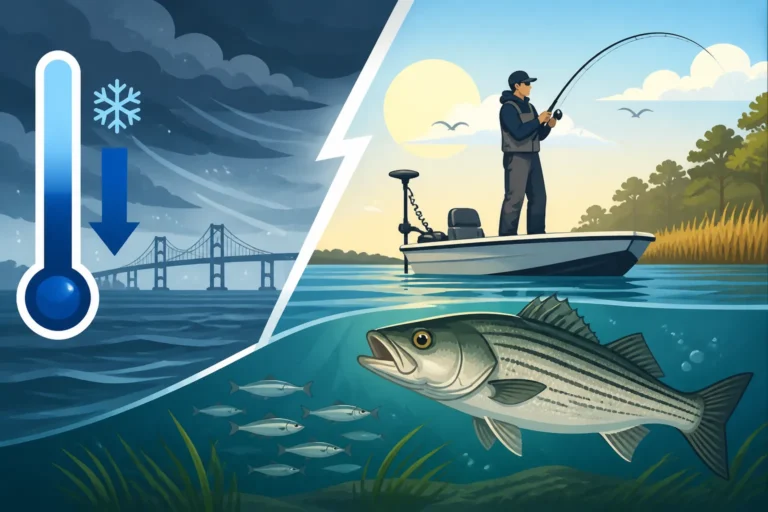
Many people focus on air temperature, but water temperature is often a far more critical safety factor for kayak anglers, especially during the shoulder seasons (spring and fall). Even on a sunny 60-degree day, the water might still be in the 40s or 50s. Cold water can induce hypothermia much faster than cold air, rapidly incapacitating you and making self-rescue incredibly difficult or impossible.
The general rule of thumb is the "120-degree rule": if the combined air and water temperature is less than 120 degrees Fahrenheit (approximately 50 degrees Celsius), you should dress as if you expect to be immersed in the water. This means wearing a dry suit or a wetsuit, even if you don't plan on going for a swim. Beyond appropriate clothing, having a change of dry clothes sealed in a dry bag is essential. Knowing the Cold-Weather Fishing Tips for Maryland's Chesapeake Bay can make all the difference between an enjoyable outing and a dangerous ordeal.
Emergency Protocols and What to Do
Despite all your planning and preparation, emergencies can and sometimes do happen. Knowing how to react calmly and effectively in a crisis is paramount to ensuring your safety and the safety of others.
Signaling for Help
If you find yourself in a genuine emergency, whether it's a capsize you can't recover from, a medical issue, or a rapid change in weather that puts you at risk, knowing how to call for help is crucial. Your waterproof VHF radio (channel 16 for emergencies) is your best bet for contacting the Coast Guard or nearby vessels. A loud whistle, tethered to your PFD, is also an essential piece of gear. Three short blasts is the universal distress signal.
For visual signals, an orange distress flag, a signal mirror (especially effective on sunny days), or a flare gun can attract attention from a distance. Again, make sure these items are readily accessible and you know how to use them. If you carry a personal locator beacon (PLB) or satellite messenger, activate it according to its instructions. These devices transmit your exact GPS coordinates to a rescue coordination center, dramatically speeding up response times. Don’t hesitate to call for help if you are in true distress; it’s better to be safe than sorry.
Addressing Hypothermia and Heatstroke
The Bay can throw both extremes at you. Hypothermia, as discussed, is a significant risk in cooler waters. Symptoms include shivering, confusion, slurred speech, and loss of coordination. If you or your buddy starts showing these signs, the immediate priority is to get out of the water, get into dry clothes, and seek warmth. Huddling together, consuming warm liquids, and using emergency blankets (available on Amazon) can help.
Conversely, heatstroke is a danger on hot, sunny summer days, especially when you're exerting yourself. Symptoms include dizziness, nausea, confusion, and a lack of sweating. Prevention is key: stay hydrated, wear light-colored, breathable clothing, and seek shade when possible. If heatstroke symptoms appear, get out of the sun, cool the body with water, and seek medical attention if symptoms persist or worsen. Carrying plenty of water or electrolyte drinks is not just for comfort; it's a safety measure.
Handling Minor Injuries and Hook Punctures
Fishing inevitably involves hooks, and sooner or later, one might end up where it doesn't belong – in your finger, or worse, your buddy’s arm. Knowing how to deal with a hook puncture is a vital skill. For shallow punctures without barbs, simply backing it out is usually fine. For barbed hooks, the "push-through and snip" method is often recommended: push the barb through the skin, snip off the barb with pliers, and then withdraw the hook. This technique, however, requires careful execution and should be practiced or learned from an experienced individual before you're in an emergency situation.
Beyond hooks, minor cuts, scrapes, and bruises are common. Your first aid kit, as detailed earlier, should have the necessary supplies to clean and bandage these. Always prioritize cleanliness to prevent infection. If any injury seems severe, involves significant bleeding, or appears to be deeply infected, seeking professional medical attention is crucial.
Special Considerations for Chesapeake Bay Kayak Fishing
The Chesapeake Bay isn't just any body of water; it has its own unique character and challenges that demand specific attention from kayak anglers.
Navigating Large, Open Water Bodies
Unlike small ponds or narrow rivers, the Chesapeake Bay is a massive estuary. Its main stem is wide and can feel like an ocean, especially on windy days. This means that shore is often much further away than it appears, and paddling back against wind and current can be an overwhelming task. Understanding the scale of the Bay is critical for planning your trips. Don't overextend your reach.
Always consider your physical capabilities and experience level when choosing a launch point and fishing area. Beginners should stick to protected creeks, coves, and smaller tributaries, gradually working their way up to more open water. Even experienced paddlers should exercise caution and choose their days wisely when venturing into the main stem of the Bay, especially if fishing for popular species like those covered in Maryland Striped Bass Season and Rockfish Rules. It’s easy to get disoriented on large water, so have a reliable GPS or compass.
Dealing with Fast-Moving Commercial Traffic
We've touched on this, but it bears repeating: commercial traffic on the Chesapeake Bay is not to be underestimated. From huge cargo ships transiting to Baltimore, to fast-moving passenger ferries, to countless workboats, these vessels operate on schedules and often at high speeds. Their operators are often positioned high above the water, making it extremely difficult to spot a low-profile kayak, particularly in choppy conditions or at night.
Your primary strategy is avoidance. Stay out of marked shipping lanes. If you see a large vessel approaching, even if it seems far away, assume it hasn't seen you and take proactive measures to increase your visibility and move out of its path. Paddle perpendicular to its course if you need to cross, minimizing your exposure time. Remember that their wake can be significant, capable of swamping a kayak or even flipping you. Turn your kayak into the wake at an angle to safely ride over it.
Understanding Variable and Unpredictable Conditions
The Chesapeake Bay is renowned for its rapidly changing conditions. A sunny, calm morning can quickly give way to squalls, thunderstorms, or sudden high winds in the afternoon. The unique geography of the Bay, with its numerous tributaries and open expanses, means localized weather phenomena are common. It's not uncommon for one area to be calm while another just a few miles away is experiencing rough seas.
Always check multiple weather sources before you go, including marine forecasts, and keep an eye on the sky and water conditions as your day progresses. Don't rely solely on one forecast you checked the night before. Be prepared to cut your trip short if conditions start to deteriorate. Having a small, battery-powered weather radio can be a valuable addition to your kit for real-time updates. The ability to adapt and make sound judgments in response to changing conditions is a hallmark of a safe and experienced Chesapeake Bay kayak angler.
Kayak Safety Gear Checklist
Here’s a quick overview of essential safety gear to consider for your Chesapeake Bay kayak fishing trips. This is not exhaustive, but covers the most critical items.
| Category | Item | Why It's Essential |
|---|---|---|
| Personal Safety | USCG Approved PFD (worn) | Non-negotiable flotation, life-saving in a capsize. |
| Whistle | Audible distress signal. | |
| Paddle Leash | Prevents losing your paddle in a capsize or windy conditions. | |
| Dry Bag with Spare Clothes | Protection against hypothermia if immersed; dry essentials. | |
| Communication | Waterproof Cell Phone (tethered) | Secondary communication, but beware of signal gaps. |
| VHF Marine Radio (handheld, waterproof) | Primary water-to-water/shore communication; Coast Guard contact. | |
| Personal Locator Beacon (PLB)/Sat Messenger | Global distress signal for remote areas or severe emergencies. | |
| Visibility | Visibility Flag/Light Pole | Makes you visible to other boats, especially low-profile kayaks. |
| 360-degree White Light (for low light) | Required by law for night/dawn/dusk, crucial for preventing collisions. | |
| Reflective Tape | Enhances visibility on kayak and paddle. | |
| Navigation | GPS (with charts) | Essential for knowing your location, especially in large water bodies. |
| Compass & Chart | Backup navigation, good practice for situational awareness. | |
| First Aid & Repair | Comprehensive First Aid Kit | Treats injuries, hook punctures, cuts, scrapes. |
| Kayak Repair Kit (duct tape, sealant) | Fixes minor leaks or gear malfunctions on the spot. | |
| Multi-tool/Pliers | Essential for hook removal, minor repairs. | |
| Emergency Supplies | Water/Hydration | Prevents dehydration, especially on hot days. |
| Snacks | Sustains energy for long paddles or unexpected delays. | |
| Emergency Blanket | Provides warmth in hypothermia situations. | |
| Paddle/Propulsion | Spare Paddle (or paddle blade) | Critical if main paddle is lost or damaged. |
| Anchor & Anchor Trolley | Holds position for fishing, but also provides stability in wind. |
Conclusion
Kayak fishing on the Chesapeake Bay offers an unparalleled sense of freedom and connection to nature, along with incredible angling opportunities. But with that freedom comes a significant responsibility to prioritize your safety. The Bay is a magnificent fishery, but it demands respect. By diligently planning your trips, equipping yourself with the right gear (much of which is easily found on Amazon), maintaining constant situational awareness, and understanding how to react in an emergency, you can mitigate most of the inherent risks. Remember, a successful fishing trip isn't just about the fish you catch; it's about making it home safely, ready for your next adventure. So, gear up, be smart, and enjoy the incredible waters of Maryland!
Disclaimer
The information provided in this guide is for general informational purposes only and does not constitute professional advice. Kayak fishing carries inherent risks, and conditions on the Chesapeake Bay can change rapidly. Always exercise caution, use common sense, and consult with local authorities or experienced professionals for specific safety concerns. The author and publisher are not responsible for any accidents, injuries, or losses incurred as a result of using this information.