Fishing Deep Creek Lake for Smallmouth Bass
There's nothing quite as frustrating as heading out to a beautiful lake, full of anticipation, only to spend hours casting without a single bite from that feisty smallmouth bass you’ve been dreaming about. Deep Creek Lake, with its clear waters and rocky structure, can be incredibly rewarding, but it also presents a unique challenge to anglers. This guide is here to unravel those mysteries, helping you understand the smallmouth's habits, master the right techniques, and pinpoint the best locations to ensure your next Deep Creek Lake smallmouth adventure is a resounding success.
Deep Creek Lake: A Haven for Maryland Smallmouth Bass
Deep Creek Lake, nestled in Garrett County, Maryland, isn't just a picturesque vacation spot; it's a genuine treasure trove for smallmouth bass enthusiasts. When we talk about quality bass fishing in Maryland, Deep Creek is consistently at the top of the list, especially when it comes to the hard-fighting smallmouth. Its unique characteristics make it an ideal habitat for these bronzeback beauties, offering them everything they need to thrive.
Why Deep Creek Stands Out for Smallmouth
Unlike many other Maryland waters that are dominated by largemouth bass, Deep Creek Lake offers a distinct advantage for those who prefer the smallmouth. Its geological makeup—primarily a deep, clear, and rocky reservoir—mimics the natural preferences of smallmouth bass perfectly. They absolutely love structure, and Deep Creek is brimming with it, from natural rock formations and ledges to man-made docks and riprap. The cooler, well-oxygenated water, especially in deeper sections, is also a huge draw, allowing smallmouth to remain active even when other species might be sluggish. It’s a completely different experience than fishing the tidal rivers or brackier portions of the Chesapeake Bay; here, you're embracing true mountain lake fishing.
What really sets Deep Creek apart is its consistent population of healthy, robust smallmouth. Anglers frequently report catching fish in the 2-4 pound range, with larger trophy-sized smallmouth certainly not uncommon. This isn't just a place where you might get lucky with one or two; it's a destination where a productive day of smallmouth fishing is a real expectation. The sheer volume of diverse structure also means there's always a new spot to explore, preventing the fishing from ever feeling stale. It's a lake that demands you think like a smallmouth, which is part of the fun.
Unique Characteristics of Deep Creek Lake
Deep Creek Lake is Maryland's largest freshwater lake, covering roughly 3,900 acres with over 69 miles of shoreline. Its depth is significant, with some areas plunging to over 70 feet, but it also has plenty of shallower coves and flats. This diverse topography creates a multitude of fishing scenarios, catering to different techniques and angler preferences. The water clarity, which is generally quite good, means that smallmouth often rely on sight and reaction, making precise lure presentations critical.
The lake's water levels can fluctuate, particularly with power generation operations, so it’s always a good idea to check local conditions before heading out. The rocky bottom, often covered with submerged timber and scattered weed beds, provides ample ambush points for smallmouth. These features are key to understanding where the fish will hold. When you're out on the water, you'll notice a mix of natural shoreline, developed areas with docks and boat lifts, and even some deeper basins. Each of these zones can hold smallmouth at different times of the year, providing a rich tapestry of fishing opportunities. For those wondering, you can find more detailed information on how Deep Creek Lake formed and its dimensions by looking into How Deep Is Deep Creek Lake?.
The Deep Creek Lake Smallmouth Population
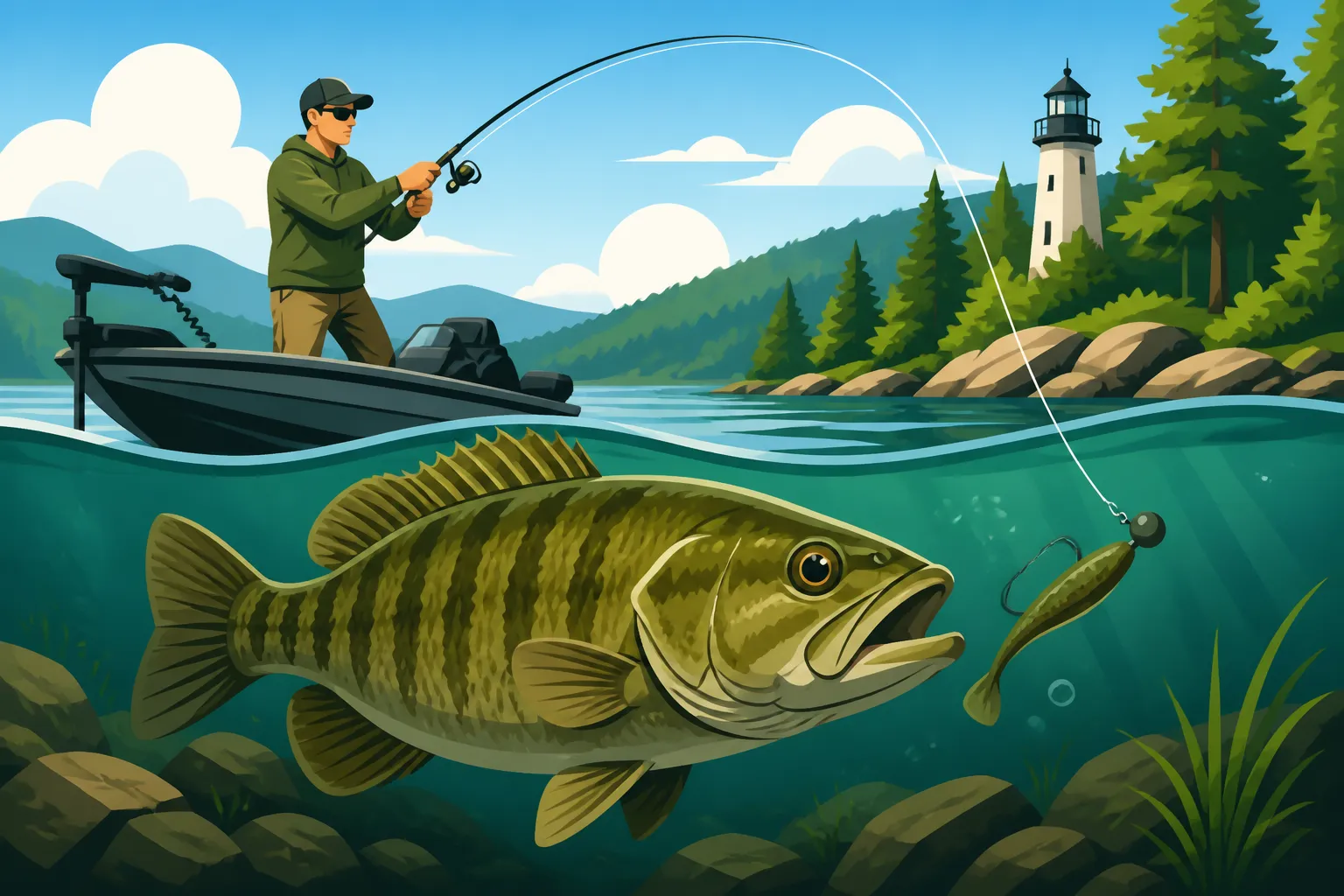
The smallmouth bass population in Deep Creek Lake is robust and well-managed by the Maryland Department of Natural Resources (DNR). These fish are characterized by their bronze-colored sides, dark vertical bars, and a jaw that typically doesn't extend beyond the eye (a key differentiator when you're trying to figure out if you've caught a smallmouth vs largemouth, as explained in Smallmouth Bass vs Largemouth Bass in Maryland, How to Tell Them Apart). They are known for their aggressive strikes and powerful fights, often leaping out of the water when hooked, making them a favorite among sport anglers.
The health of the smallmouth population is a testament to the lake's ecological balance and the efforts of conservationists. While they are a sought-after game fish, anglers are encouraged to practice responsible catch and release, especially for larger breeding-size fish, to ensure the sustainability of the fishery. Understanding the specific regulations around Deep Creek Lake is crucial, and we'll delve into that later. The consistent availability of forage, including crayfish, minnows, and various insects, keeps the smallmouth well-fed and ready to strike.
Deciphering Smallmouth Bass Behavior by Season
Smallmouth bass are creatures of habit, but their habits are profoundly influenced by the changing seasons and, more specifically, by water temperature. To consistently catch them in Deep Creek Lake, you need to understand where they are likely to be and what they're likely to be doing throughout the year. Ignoring these seasonal patterns is a surefire way to have a slow day on the water.
Springtime Spawning and Pre-Spawn Patterns
Spring is arguably one of the most exciting times to target smallmouth bass in Deep Creek Lake. As the ice melts and water temperatures begin to climb into the 40s and 50s Fahrenheit, the fish start to move from their deeper wintering grounds towards shallower areas to feed aggressively in preparation for spawning. This is the "pre-spawn" phase, and the smallmouth are often ravenous. Look for them around rocky points, submerged humps, and the mouths of coves where they can intercept baitfish. They'll be shallower than you might expect, sometimes in as little as 5-10 feet of water, soaking up the warmer sun.
Once water temperatures reach the upper 50s to low 60s, smallmouth will begin to spawn. This typically happens from late April through May, sometimes extending into early June depending on the year. During this "spawn" phase, male smallmouth construct nests on gravel or rocky bottoms in shallower, protected areas, often near submerged logs or boulders. They become incredibly territorial, making them susceptible to sight fishing with jigs, tubes, or small swimbaits. However, it's crucial to exercise extreme caution and practice immediate, gentle catch and release when targeting bedding fish to avoid disrupting their reproductive cycle. Many anglers choose to avoid targeting bedding fish altogether to ensure future generations.
Summer Habits and Deep-Water Tactics
As Deep Creek Lake's water temperatures continue to rise into the 70s during summer, smallmouth bass will generally move to deeper, cooler, and more oxygenated water. This doesn't mean they're impossible to catch, it just means you have to adjust your tactics significantly. They’ll often relate to deeper rock piles, main lake points that drop off quickly, humps, and the deeper edges of weed lines. You might find them suspended over deeper water near bait schools, or tightly hugging the bottom near submerged timber.
During the hot summer months, early morning and late evening bites are often the most productive. Topwater lures can be incredibly effective during these low-light periods, as the fish will come up from the depths to strike. As the sun gets high, switching to vertical jigging with drop shots, football jigs, or creature baits presented slowly along the bottom can entice strikes. Understanding how to find structure with your boat's electronics becomes paramount. You might also find good fishing around private docks, especially those with deep water access and shade, where the smallmouth can ambush prey. If you're looking for guidance on finding charters for Deep Creek Lake, Hiring a Deep Creek Lake Fishing Guide in Maryland can provide valuable resources.
Fall Feeding Frenzies and Winter Doldrums
Fall is another fantastic time for smallmouth bass fishing on Deep Creek Lake. As water temperatures begin to drop again, the fish sense the impending winter and embark on a serious feeding spree. They'll move back into shallower areas, especially rocky points and flats, aggressively chasing baitfish. This "fall feeding frenzy" can last for weeks, and smallmouth are often found schooling up, making for some incredible days on the water. Crankbaits, jerkbaits, and spinnerbaits that imitate baitfish can be incredibly effective during this period. The fish are often more willing to chase and strike reaction baits as they try to pack on calories.
Once winter fully sets in and the lake freezes over, smallmouth bass retreat to their deepest haunts. They become much less active, their metabolism slowing significantly. Ice fishing for smallmouth on Deep Creek Lake is possible, but it requires patience and specific techniques. They'll often be found near deep-water structure, sometimes suspended, sometimes right on the bottom. Small jigs, blade baits, or vertically presented spoons fished slowly are usually the ticket. While not as active as in other seasons, dedicated ice anglers can still pull some impressive smallmouth through the ice. Just remember to prioritize safety when ice fishing, always checking ice thickness. More details on the broader seasonal fishing opportunities in the state can be found in Best Time of Year to Fish in Maryland.
Top Lures and Techniques for Deep Creek Smallmouth
Catching smallmouth bass in Deep Creek Lake often comes down to matching the hatch and understanding how to present your lure in a way that triggers a strike. Smallmouth are naturally curious and aggressive, but they can also be finicky, especially in clear water. Having a diverse arsenal of lures and a versatile approach to techniques will significantly increase your success rate.
Go-To Artificial Lures for Different Depths
For smallmouth in Deep Creek, artificial lures are often the preferred choice for their versatility and ability to cover water.
- Jigs: Arguably the most consistent smallmouth catcher. Football jigs in brown, green pumpkin, or black-and-blue are fantastic for crawling along rocky bottoms in deeper water. Pair them with crawfish-imitating trailers. Tube jigs (like the classic Berkley PowerBait Power Tube) are also phenomenal, especially for dragging and hopping along the bottom, mimicking crayfish or dying baitfish. Colors like green pumpkin, smoke, or watermelon seed are winners.
- Crankbaits: Medium to deep-diving crankbaits are excellent for covering water and finding active fish, especially during the pre-spawn and fall periods. Look for baits that dive to the depths where the smallmouth are holding, often 8-20 feet. Colors that mimic perch, shad, or crawfish are usually effective. Vary your retrieve speed and incorporate pauses to generate reaction strikes.
- Jerkbaits: These baits are deadly, particularly in cooler water during spring and fall, and even suspended over deep water in summer. A jerkbait's erratic, darting action perfectly imitates a wounded baitfish. Suspending jerkbaits allow you to pause them in the strike zone, which is often when a smallmouth will commit. Popular colors include clear, ghost minnow, or chrome with a blue back.
- Drop Shots: For finicky or deep-water smallmouth, the drop shot rig is invaluable. It allows you to present a small plastic worm, minnow imitation, or creature bait precisely at the fish's eye level, keeping it off the bottom. This technique is highly effective when fish are suspended or tightly schooled on deep structure. Light line and a sensitive rod are key for detecting subtle bites.
- Topwater Lures: During low-light conditions (dawn, dusk, cloudy days) or when smallmouth are actively feeding on the surface, topwater lures like poppers, walking baits, or prop baits can provide explosive strikes. These are especially fun to fish around rocky points and shallow flats in the summer.
Live Bait Strategies for Finicky Biters
While artificials are popular, sometimes the smallmouth in Deep Creek Lake get a serious case of lockjaw, and live bait is the only way to entice a bite. This is especially true when fish are pressured or metabolism is slow due to cold water.
- Crayfish: Smallmouth absolutely devour crayfish, which are abundant in Deep Creek Lake. Hooking a live crayfish through the tail or carapace and slowly dragging it along the bottom on a Carolina rig or a simple split-shot rig can be irresistible. This is an excellent tactic for targeting fish around rocky cover.
- Minnows/Shiners: Live minnows, particularly medium-sized shiners, are another fantastic option. They can be fished under a bobber in shallower areas, or on a slip sinker rig near deep structure. Their natural swimming action often elicits strikes when artificials fail.
- Nightcrawlers/Worms: While perhaps more associated with largemouth, a lively nightcrawler fished on a plain hook with a small weight can also catch smallmouth, especially when they are foraging on the bottom. This is a simple, effective method, particularly good for beginners or when you just want to put some fish in the boat.
When using live bait, remember that presentation is still key. Don't just cast it out and let it sit. Lightly twitch, drag, or subtly move your bait to make it appear more natural and alive. The clarity of Deep Creek Lake means fish have good visibility, so a natural presentation is vital.
Kayak and Shoreline Fishing Specifics
Deep Creek Lake is a fantastic destination for both kayak and shoreline anglers, offering unique advantages.
For kayak anglers, the stealth and maneuverability of a kayak are huge assets for targeting smallmouth. You can access smaller coves, navigate around docks, and slip into shallow, rocky areas that larger boats might avoid. This quiet approach often spooks fewer fish, allowing for closer presentations. Focus on paddling to rocky points, submerged timber, and areas with scattered boulders. Trolling small crankbaits or spinnerbaits behind your kayak can be an effective way to cover water, or you can paddle-and-cast with jigs and soft plastics to specific structures. Always prioritize safety on Deep Creek's busy waters, especially near boat traffic. For more tips on how to safely enjoy kayak fishing in Maryland, you might read up on Kayak Fishing Safety Tips for Maryland's Chesapeake Bay.
Shoreline fishing at Deep Creek Lake is a viable option, though access can be limited by private property. State parks and public access areas are your best bet. Can You Fish From Shore at Deep Creek Lake? gives more details on these access points. Look for spots where the shoreline drops off quickly into deeper water, or where there's plenty of natural rock cover. Casting jigs, small crankbaits, or soft plastics can be productive. Early mornings and late evenings are often the best times, as smallmouth might move closer to the shore. A common frustration for shore anglers is the inability to reach prime offshore structure, but by focusing on transition areas and visible cover, you can still have a successful day.
Key Locations and Structures for Smallmouth Hotspots
Knowing what to throw is one thing, but knowing where to throw it is often the bigger challenge. Deep Creek Lake is vast, but smallmouth bass consistently relate to certain types of structure and locations. Pinpointing these hotspots will drastically improve your chances of success.
Targeting Rocky Shorelines and Main Lake Points
Smallmouth bass and rocks go hand-in-hand, and Deep Creek Lake has no shortage of them. Rocky shorelines, especially those that have a gradual slope leading to deeper water, are prime areas to target. These areas provide excellent cover, ambush points, and often hold populations of crayfish, a primary food source for smallmouth.
- Rocky Points: These are absolute magnets for smallmouth. Main lake points that extend out into the lake, particularly those with significant rock or boulder fields, are crucial. Smallmouth will use these points as staging areas and ambush points, especially during feeding migrations. Work these points thoroughly with crankbaits, jerkbaits, and jigs. During the summer, target the deeper edges of the points where they drop into cooler water.
- Riprap and Retaining Walls: Around bridges, causeways, or developed shoreline areas, you'll often find riprap or man-made rock walls. These provide fantastic cover and habitat. Cast parallel to these structures with spinnerbaits, crankbaits, or jigs to mimic baitfish moving along the edge.
- Boulder Fields: Underwater boulder fields, often found near rocky points or humps, create complex structures that smallmouth love to hide in. Fan-cast these areas with jigs, tubes, or Carolina rigs, slowly working your bait over and around the rocks. The key is to feel for every bump and change in bottom composition.
Exploiting Docks, Pilings, and Submerged Cover
Deep Creek Lake also has a lot of man-made structure that smallmouth readily utilize. These features provide shade, cover from predators, and additional ambush points.
- Docks and Boat Lifts: Private docks and boat lifts, especially those that extend over deeper water, are excellent smallmouth spots. The pilings provide vertical cover, and the shade offers a cool retreat during sunny days. Pitch jigs, tubes, or small swimbaits under and around these structures. In the summer, smallmouth will often suspend near the pilings or underneath the dock. Be courteous to property owners and avoid casting too close to private boats or property.
- Submerged Timber and Brush Piles: While Deep Creek isn't as famous for vast submerged forests as some southern reservoirs, scattered submerged timber and man-made brush piles (often placed by anglers or property owners) exist and can be smallmouth goldmines. These offer excellent cover. Fish these areas carefully with weedless jigs, Texas-rigged soft plastics, or creature baits to avoid snags.
- Bridge Pilings: If there are any bridge pilings or major navigational markers, these can be significant current breaks and deep-water structures that attract smallmouth. Vertical jigging or dropping live bait near these structures can be very effective, especially during times of higher water flow.
Exploring Inlets, Coves, and Deep Water Haunts
Beyond the obvious rock and man-made structures, the broader topography of Deep Creek Lake offers diverse smallmouth opportunities.
- Inlets and Coves: The mouths of coves, especially those with rocky entrances or channels, can be transition zones where smallmouth move between deeper and shallower water. These are particularly good during pre-spawn and fall. The deeper, larger coves can also hold fish in the summer, especially if they have significant drop-offs or submerged structure. For specific recommendations, check out Best Coves at Deep Creek Lake for Bass.
- Deep Water Humps and Drop-offs: Don't be afraid to venture into the open lake, especially if you have good electronics. Look for submerged humps, ledges, and sharp drop-offs in deeper water. These offshore structures are often overlooked but can hold large schools of smallmouth, particularly in summer and winter. Vertical jigging, drop-shotting, or slow-rolling football jigs are effective here.
- The Main Lake Basin: While often featureless on the surface, the main basin of Deep Creek Lake can hold suspended smallmouth over bait schools, especially during the colder months or when fish are following alewives or other forage. Your fish finder will be crucial here to locate bait and the fish feeding on them.
A great way to get a better understanding of the lake and its potential hotspots is to consult with local bait shops or consider booking a trip with a guide. Services like FishingBooker can help you find experienced local guides who specialize in Deep Creek Lake smallmouth bass, offering invaluable insights into current patterns and locations.
Essential Gear and Tackle for Deep Creek Smallmouth
Having the right equipment can make all the difference when fishing for smallmouth bass, especially in a diverse fishery like Deep Creek Lake. Smallmouth are powerful fighters, and the rocky environment demands durable, sensitive gear. Skimping on tackle can lead to frustrating break-offs and missed opportunities.
Rod and Reel Combinations for Sensitivity and Power
For Deep Creek Lake smallmouth, you'll want a versatile setup that balances sensitivity for detecting subtle bites with enough backbone to handle strong, acrobatic fish and pull them away from cover.
- Spinning Rods (Medium-Light to Medium Action): For lighter presentations like drop shots, tubes, and smaller jerkbaits, a 6'6" to 7' medium-light or medium action spinning rod is ideal. Look for a fast or extra-fast tip for maximum sensitivity to feel those subtle "ticks" or weight changes. Pair this with a 2000- or 2500-size spinning reel, known for its smooth drag and easy casting of lighter lures. Brands like Shimano, Daiwa, and Abu Garcia offer excellent options that are both durable and perform well. This setup is crucial for finesse fishing, especially in clear water.
- Casting Rods (Medium to Medium-Heavy Action): For power fishing techniques such as throwing crankbaits, heavier jigs, spinnerbaits, or topwater lures, a 6'8" to 7'2" medium or medium-heavy casting rod with a fast action is preferred. This gives you the leverage to cast heavier baits, set hooks firmly, and control bigger fish. Match it with a baitcasting reel with a gear ratio appropriate for your technique (e.g., a slower retrieve for deep crankbaits, a faster retrieve for burning spinnerbaits). Again, major brands provide reliable options.
Having a couple of different rod and reel combos rigged for different techniques will allow you to quickly adapt to changing conditions and target different depths and structures without constantly retying.
Line Choices and Terminal Tackle Considerations
The line you choose is the direct connection between you and the fish, so it's not a place to compromise.
- Braided Line: Many anglers start with braided line as their main line, especially on spinning reels, due to its incredible strength-to-diameter ratio, zero stretch for maximum sensitivity, and excellent casting distance. A 10-20 lb test braid is common. The downside is its visibility, so it's almost always paired with a fluorocarbon leader.
- Fluorocarbon Line: This is a favorite for smallmouth anglers, either as a main line on baitcasting reels (10-15 lb test) or as a leader material (6-12 lb test) when using braid. Fluorocarbon is nearly invisible underwater, extremely abrasion-resistant (a must for rocky Deep Creek), and offers good sensitivity due to its low stretch.
- Monofilament Line: While less sensitive and more visible than fluorocarbon, monofilament (8-12 lb test) has its place, especially for topwater baits where its buoyancy is an advantage, or for crankbaits where its stretch can help prevent hooks from tearing out.
Terminal Tackle:
- Hooks: Invest in sharp, strong hooks. Offset EWG hooks for Texas rigging, round bend hooks for Carolina rigs, and sharp jig heads are essential. Gamakatsu, Owner, and Mustad are trusted brands.
- Weights: Tungsten weights are preferred for their smaller profile, increased sensitivity, and environmental friendliness. Have an assortment of bullet weights, drop shot weights, and football head jig weights.
- Swivels and Snaps: Quality ball-bearing swivels can prevent line twist, especially with spinning lures. Snaps allow for quick lure changes.
Electronics and Accessories to Enhance Your Trip
Modern fishing electronics can significantly improve your efficiency and success on Deep Creek Lake.
- Fish Finder/Depth Sounder: A good quality fish finder with GPS and mapping capabilities is almost a necessity for offshore smallmouth fishing. It allows you to locate submerged humps, rock piles, ledges, and even individual fish. Side imaging and down imaging are incredible tools for scanning wide areas and pinpointing structure. Garmin, Lowrance, and Humminbird are industry leaders.
- Electric Trolling Motor: A bow-mounted electric trolling motor with GPS Spot-Lock technology (like those from Minn Kota or MotorGuide) is invaluable for holding your position over structure, navigating quietly, and making precise casts. It frees you up to focus on fishing rather than constantly steering the boat.
- Fishing Pliers and Line Cutters: Always have good quality fishing pliers for hook removal (especially important for quick, safe release) and line cutters for braid, fluorocarbon, and mono.
- Landing Net: A rubberized landing net is ideal for smallmouth bass. It protects the fish's slime coat, reduces injury, and makes unhooking much easier, especially with a lively fish.
- Measuring Board/Scale: If you plan to keep fish (within regulations) or simply want to document your catches, a measuring board and a reliable scale are great accessories.
When preparing for your trip, don't forget to secure your Maryland Fishing License Guide for 2026, as it's a non-negotiable requirement for all anglers. You'll also want to look into Best Boat Ramps at Deep Creek Lake if you're bringing your own vessel, or Deep Creek Lake Boat Rental Options for Fishing if you're planning to rent.
Understanding Deep Creek Lake Regulations and Conservation
Fishing Deep Creek Lake for smallmouth bass is an absolute blast, but it's crucial to be a responsible angler. This means not only adhering to the Maryland Department of Natural Resources (DNR) regulations but also practicing ethical conservation methods to ensure the health and longevity of this incredible fishery for generations to come.
Current Size and Creel Limits for Smallmouth Bass
Regulations for specific species can change, so it's absolutely vital to check the most current Maryland fishing regulations before you head out. These can often be found on the Maryland DNR website or in their annual fishing guide. As of my last check, smallmouth bass in Deep Creek Lake typically have a minimum size limit and a daily creel (possession) limit.
For example, a common regulation might be a minimum size of 12 or 14 inches, with a daily creel limit of 5 fish. These regulations are put in place to protect the breeding stock and allow fish to reach a mature size before being harvested. It's not just about avoiding a fine (which can be significant, as highlighted in Maryland Fishing License Penalties for Violations); it's about doing your part to keep the fishery healthy. Always measure your fish carefully and accurately. If a fish is undersized, immediately and gently release it. Ignorance of the law is never an excuse, so a quick check online or at a local bait shop before your trip is a must.
Catch and Release Best Practices
Many smallmouth anglers, especially those targeting larger fish, practice catch and release exclusively. Even if you plan to keep a limit, practicing proper catch and release for fish you aren't harvesting is essential. Smallmouth bass are hardy fish, but they can be easily stressed or injured if not handled correctly.
Here are some best practices:
- Minimize Fight Time: Bring the fish in as quickly as possible to reduce exhaustion.
- Keep Fish in Water: Whenever possible, unhook the fish while it's still in the water. If you must remove it, do so quickly.
- Wet Hands: Always wet your hands before touching the fish. Dry hands can remove the fish's protective slime coat, making it vulnerable to disease.
- Support the Fish: Support the fish horizontally, especially larger ones, by holding the lower lip and supporting the belly. Never hold a fish vertically by the jaw alone, as this can damage its internal organs.
- Remove Hooks Quickly: Use pliers or a de-hooking tool to quickly and gently remove hooks. If the fish is deeply hooked, cut the line as close to the hook as possible rather than trying to rip it out.
- Revive If Necessary: If a fish seems sluggish before release, hold it gently in the water, facing into any current, until it regains its strength and swims away on its own.
By following these simple steps, you significantly increase the chances of the released fish surviving and thriving, contributing to the overall health of Deep Creek Lake's smallmouth population. This is particularly important for species like smallmouth, where maintaining a healthy population is key to continued great fishing. More on this topic can be found in Maryland Catch and Release Rules During Closed Seasons.
Supporting Deep Creek Lake's Fishery Health
Beyond individual angler actions, there are broader ways to support the health of Deep Creek Lake's smallmouth fishery and the ecosystem as a whole.
- Report Violations: If you witness illegal fishing activity, such as exceeding creel limits, keeping undersized fish, or fishing without a license, report it to the Maryland Natural Resources Police. You can find their contact information on the DNR website. This proactive step helps protect the resource for everyone.
- Participate in Cleanups: Get involved in local lake cleanups or simply make it a habit to pick up any trash you find, even if it's not yours. Preventing litter and pollution is vital for water quality.
- Support DNR Initiatives: The Maryland DNR actively manages Deep Creek Lake through stocking programs, habitat restoration, and monitoring. Supporting these efforts through license purchases or donations contributes directly to the fishery's well-being.
- Control Invasive Species: Be mindful of preventing the spread of invasive species. This means cleaning your boat, trailer, and gear thoroughly before moving between different bodies of water. For example, understanding Maryland Invasive Fish Rules: Blue Catfish and Snakehead (though primarily focused on tidal waters) highlights the importance of preventing the spread of unwanted species.
Ultimately, we are all stewards of our natural resources. A great fishing experience today depends on responsible actions taken yesterday, and a great fishing experience tomorrow depends on what we do today. Enjoy the incredible smallmouth fishing Deep Creek Lake offers, and help protect it for future anglers. If you're looking for an easier way to find the perfect Deep Creek adventure, remember that platforms like FishingBooker list many reputable guides who are dedicated to sustainable practices.
Deep Creek Lake Smallmouth Bass Planning Table
To help you quickly plan your next Deep Creek Lake smallmouth bass adventure, here's a handy table summarizing key information by season, along with general tips.
| Season | Water Temperature (F) | Smallmouth Location (General) | Best Techniques / Lures | Key Considerations |
|---|---|---|---|---|
| Spring | 40s – Low 60s | Rocky points, shallow coves, spawning beds | Jigs (tubes, football), Crankbaits, Jerkbaits, Spinnerbaits | Pre-spawn: Fish aggressively feeding. Spawn: Exercise extreme caution and practice strict catch & release for bedding fish. Watch for active fish in 5-15 feet of water. |
| Summer | 70s | Deep rock piles, main lake points, thermocline, deep docks | Drop Shot, Carolina Rig, Deep Cranks, Topwater (low light), Vertical Jigs | Hot Season: Focus on early morning/late evening, or deep-water structure during the day. Smallmouth will seek cooler, oxygenated water. Electronics are crucial for finding fish on offshore structure. |
| Fall | Low 60s – 40s | Rocky points, humps, coves, schooling baitfish | Crankbaits, Jerkbaits, Spinnerbaits, Jigs | Feeding Frenzy: Fish are actively chasing bait to bulk up for winter. Often schooling, making for high-action days. Look for fish migrating between deep and shallow water, targeting bait. |
| Winter | Below 40s (Ice Fishing) | Deepest basins, offshore humps, structure | Small Jigs, Blade Baits, Spoons, Live Bait (minnows) | Ice Fishing: Requires specific gear and safety precautions. Fish are lethargic; slow, subtle presentations are key. Fish very deep, often near the bottom or suspended over deep water. Check ice thickness carefully. |
Disclaimer
The information provided in this guide is for general informational purposes only and is not intended as legal advice. Fishing regulations in Maryland, including those for Deep Creek Lake, can change frequently. It is the angler's sole responsibility to consult the most current Maryland Department of Natural Resources (DNR) fishing guide or website for the most up-to-date regulations, size limits, creel limits, and licensing requirements before engaging in any fishing activity. Failure to do so may result in penalties. Always prioritize safety and environmental stewardship.