Why Maryland Wants Anglers to Kill Invasive Fish
It can feel a little counterintuitive, can’t it? As anglers, many of us are taught the mantra of "catch and release," respecting the fish we pursue and ensuring future populations. So, when you hear that Maryland actually wants you to kill certain fish, it might throw you for a loop. But trust me, this isn't about cruelty; it's about critical ecological survival, and this guide will unpack exactly why the Free State urges us to harvest specific invasive species like blue catfish and northern snakeheads to protect our precious native waters.
The Urgent Need to Manage Invasive Species in Maryland Waters
Maryland's diverse waterways, from the mighty Chesapeake Bay to our pristine trout streams, are vibrant ecosystems teeming with life. Unfortunately, some unwelcome guests have made their way into these waters, disrupting the delicate balance that has evolved over millennia. These aren't just nuisance fish; they are biological invaders that pose a serious threat to our native species, our fishing heritage, and even our local economy. Understanding this critical situation is the first step in becoming a more responsible and effective conservation-minded angler.
Understanding the Ecological Threat
When a species is introduced to an environment where it doesn't naturally belong, and it starts to cause harm, it's labeled "invasive." The problem with these species is that they often don't have natural predators in their new home, allowing their populations to explode unchecked. They outcompete native fish for food, habitat, and spawning grounds. Imagine a bully moving into a quiet neighborhood and taking over everything – that’s essentially what invasive fish do to our local aquatic communities. They can alter the entire food web, leading to a cascade of negative effects on smaller fish, crustaceans, and even the plants that form the base of the ecosystem. It's a complex puzzle, and when you pull out a few key pieces (like a native species), the whole picture can fall apart.
Protecting Maryland's Native Fisheries
The core of Maryland's fishing culture revolves around iconic native species. Think about the majestic striped bass (our beloved rockfish), the feisty yellow perch, or the plentiful white perch that are a staple of Bay fishing. These species have specific dietary needs, spawning habits, and habitat requirements that have co-evolved with their environment. Invasive species like blue catfish and northern snakeheads often have broad diets and are incredibly adaptable, making them direct competitors with our native fish. They consume vast quantities of the same forage fish that striped bass and other native predators depend on. This competition puts immense pressure on native populations, making it harder for them to thrive, grow, and reproduce. If left unchecked, the abundance of invasive species can directly lead to the decline, or even local extinction, of our cherished native fish. This isn't just theory; we're seeing it happen in real-time in various rivers and tributaries.
Economic and Recreational Impacts
Beyond the ecological damage, invasive species also hit us where it hurts: our wallets and our favorite pastimes. Maryland boasts a robust recreational and commercial fishing industry, supporting countless jobs and local businesses. When native fish populations dwindle due to invasive competition, it directly impacts the livelihoods of charter captains, tackle shop owners, seafood restaurants, and bait suppliers. Think about the decrease in tourism dollars when fishing for traditional species becomes less productive. For recreational anglers, the joy of targeting a specific native fish can be diminished when you're constantly reeling in something you'd rather not see. The cost of managing these invasive populations – from monitoring efforts to potential eradication programs – also falls on taxpayers. It’s a costly problem with far-reaching implications, which is why angler participation in removal is such a valuable, low-cost solution.
Maryland's Primary Invasive Targets: Blue Catfish and Northern Snakehead
When we talk about invasive fish in Maryland, two species consistently rise to the top of the list for their sheer impact and proliferation: the blue catfish and the northern snakehead. These fish have established strong footholds in our waters and represent the most urgent conservation challenges. Understanding their unique threats and why they are so problematic is crucial for any angler wanting to contribute to the health of our local fisheries.
The Voracious Blue Catfish
The blue catfish ( Ictalurus furcatus) is a true monster of the deep, not just in size, but in its appetite and impact. Originally introduced to Virginia rivers in the 1970s and 80s for recreational fishing, they’ve since spread rapidly throughout the Chesapeake Bay watershed, including many Maryland rivers like the Potomac, Patuxent, and Nanticoke. These fish are incredibly adaptable, tolerate a wide range of salinities, and can grow to immense sizes, often exceeding 50 pounds, with some records pushing over 100 pounds.
What makes them so devastating is their diet. Blue catfish are opportunistic apex predators that will eat almost anything. Their menu includes native fish like perch, shad, river herring, and even juvenile striped bass. They also consume crabs and shellfish, directly competing with the blue crab industry, a cornerstone of Maryland's identity. Because Maryland has no size limit on blue catfish, there's no restriction on how many you can catch or how large they can be. This aggressive "kill on sight" approach is necessary because their population growth is exponential, and they reproduce at an alarming rate. Imagine a fish that can eat everything in its path, grow huge, and have hundreds of thousands of offspring. That's the blue catfish problem in a nutshell. Anglers are encouraged to actively target them, and if you’re looking for Best Bait for Blue Catfish in Maryland Rivers, cut bait like fresh herring or gizzard shad is often very effective. You can find specialized catfish rigs and sturdy rods and reels on Amazon designed to handle these powerful fish.
The Resilient Northern Snakehead
Another major concern for Maryland fisheries is the northern snakehead (Channa argus). These exotic, air-breathing fish first made headlines in Maryland in the early 2000s and have since become firmly established in the Potomac River system and its tributaries, as well as parts of the Eastern Shore. Native to Asia, snakeheads are known for their incredibly tenacious survival skills, including their ability to breathe air and even "walk" short distances over land when wet, though this ability is often exaggerated. Their reputation as a "Frankenfish" is well-earned.
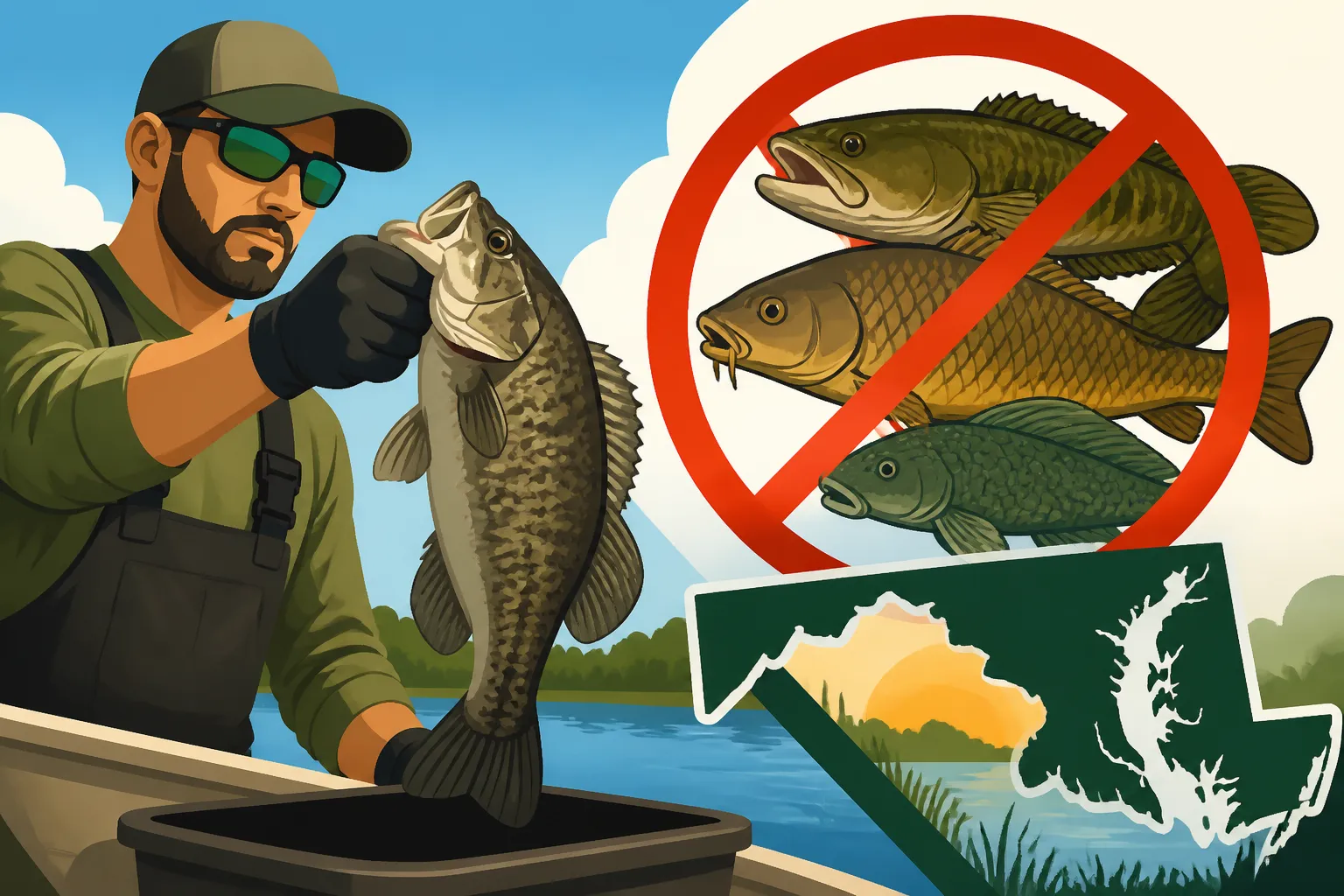
Snakeheads are ambush predators that thrive in shallow, weedy areas, preying on native fish, frogs, and invertebrates. Their aggressive nature and ability to reproduce quickly pose a significant threat to local ecosystems. Unlike blue catfish, which are often found in deeper waters, snakeheads often occupy the same shallow, vegetated habitats critical for the spawning and nursery grounds of native species like largemouth bass, pickerel, and various panfish. Why Snakehead Can't Be Released in Maryland? is a critical regulation; it is illegal to release a live snakehead back into the water, even if it's just for a quick photo. If you catch one, the instruction is clear: harvest it. What to Do If You Catch a Snakehead in Maryland involves immediately dispatching it and then either keeping it for consumption (they are delicious!) or properly disposing of it. For those targeting these fish, Techniques for Catching Snakehead in Maryland often involve topwater lures, frogs, and chatterbaits, which you can easily find on Amazon to upgrade your tackle box.
Here’s a quick overview of Maryland's approach to these two key invaders:
| Feature | Blue Catfish (Ictalurus furcatus) | Northern Snakehead (Channa argus) |
|---|---|---|
| Origin | Native to Mississippi River Basin | Native to Eastern Asia |
| Primary Habitat | Rivers, estuaries, often deeper channels, tolerates brackish water | Shallow, vegetated waters, tributaries, freshwater |
| Diet | Opportunistic predator: fish, crabs, mussels, anything | Ambush predator: fish, frogs, crustaceans, insects |
| Reproduction | High fecundity, rapid growth, long lifespan | Multiple spawns per year, parental care, resilient eggs |
| Size | Can reach over 100 lbs | Up to 3 feet, 20 lbs+ |
| Maryland Angler Rule | No possession limit, no size limit, kill on sight encouraged | Illegal to release alive, must be immediately killed, no possession limit |
| Ecological Impact | Outcompetes native predators, consumes forage fish & shellfish | Preys on native fish & amphibians, competes for habitat |
Your Role as an Angler: Catching and Harvesting Invasive Fish
Now that we understand why Maryland wants us to kill invasive fish, the next logical question is how we can actively participate. Anglers are on the front lines of this battle, and our efforts, even on a small scale, can make a significant difference in mitigating the spread and impact of these detrimental species. This isn't just about catching fish; it's about making a positive contribution to the health of our waterways.
Specific Regulations and Best Practices for Harvest
The Maryland Department of Natural Resources (DNR) has very clear guidelines regarding invasive species. For both blue catfish and northern snakeheads, there are no closed seasons, no size limits, and no possession limits. This means you can keep as many as you catch, no matter how big or small. This is a stark contrast to the stringent regulations on native species like striped bass, which have specific slot limits and seasons. The key distinction is the "no release" rule for snakeheads: Is It Illegal to Release a Snakehead in Maryland?. You must dispatch it immediately upon capture. For blue catfish, while you aren't legally required to kill them, it is strongly encouraged by the DNR.
When you catch one of these invaders, the best practice is to dispatch it humanely and quickly. A swift blow to the head with a fish bonker (you can find various options on Amazon or at local tackle shops) or a sharp knife to the brain is effective. Ensure it’s truly deceased before placing it in your cooler. Avoid throwing it back, even if you don't plan to eat it. Instead, consider giving it away or disposing of it properly in a trash receptacle. Always check the latest Maryland Invasive Fish Rules: Blue Catfish and Snakehead as regulations can change.
Recommended Gear and Methods
Targeting invasive species often requires slightly different gear and approaches than you might use for native fish. For blue catfish, heavy-duty tackle is essential. These fish are incredibly strong, and a standard bass rod might not cut it, especially if you hook into a true monster. You'll want a medium-heavy to heavy action rod, matched with a reel spooled with at least 20-30 lb monofilament or braided line. Bottom fishing rigs with large hooks and heavy sinkers are common. Live or cut bait, such as shad, herring, or even chicken liver, are highly effective. For anglers who love a good fight and want to help the Bay, targeting blue cats can be incredibly rewarding. You can check out Best Spots to Catch Blue Catfish on the Potomac for some prime locations.
For northern snakeheads, a different approach is often more successful. They inhabit dense cover, so weedless lures are paramount. Topwater frogs, soft plastic swimbaits, and chatterbaits are popular choices. A medium-heavy to heavy action casting rod with a good baitcasting reel spooled with 30-50 lb braided line is recommended for muscling them out of thick vegetation. Be prepared for aggressive strikes and strong, short runs. Look for these fish in shallow, lily pad-filled areas or along grassy banks. Knowing Where to Catch Snakehead on the Potomac River can give you a head start. Quality pliers and a fish gripper (available on Amazon) are also essential for safely handling these toothy creatures.
Safe Handling and Reporting
Safety is paramount when handling any fish, and invasive species are no exception. Northern snakeheads have sharp teeth and can thrash violently, so using a fish gripper or sturdy gloves is a good idea. Blue catfish have sharp spines on their dorsal and pectoral fins, which can deliver a painful poke if you're not careful. Always exercise caution.
While you don't need to report every single blue catfish you catch, reporting snakehead sightings is often encouraged, especially in new areas, to help DNR track their spread. Even if you just caught one and killed it, knowing its location can provide valuable data. The Maryland DNR website provides channels for reporting unusual catches. Additionally, remember that Maryland Rules on Transporting Live Blue Catfish generally prohibits moving them to new waters, as this can inadvertently contribute to their spread. The same applies to snakeheads; they must be dead before transport.
Addressing Common Questions and Ethical Considerations
It's natural to have questions and even some ethical qualms about actively participating in the killing of any fish, even if they are invasive. Many anglers have been conditioned to respect fish life, and the idea of intentionally harvesting without limits can feel unsettling at first. Let's delve into some common concerns and clarify the rationale behind Maryland's stance.
The Ethics of Killing Fish for Conservation
For many, the idea of "catch and kill" clashes with the ethos of responsible angling. We cherish the sport, the thrill of the fight, and often the release. However, conservation isn't always about saving every individual animal; sometimes, it's about protecting the entire ecosystem. When a non-native species threatens the very existence of native species and disrupts the ecological balance, ethical considerations shift. The greater good, in this case, is the preservation of Maryland's natural aquatic heritage.
Think of it this way: if your garden was being overrun by an invasive weed that was choking out your prized native plants, you wouldn't hesitate to remove the weed. The same principle applies here. These invasive fish are ecological weeds that consume resources, decimate prey populations, and alter habitats, to the detriment of species that belong. By removing them, you're not being cruel; you're performing an act of ecological restoration and preservation. Your actions as an angler become a vital part of the conservation effort, a tangible way to help restore balance to our waters. This active participation highlights how Maryland's DNR views anglers as crucial partners in managing our natural resources.
Dispelling Myths About Invasive Species Control
There are a few myths that sometimes circulate regarding invasive species and their control, which are important to address.
One common misconception is that catching a few fish won't make a difference. While one angler's catch might seem small, the collective effort of thousands of anglers can indeed have a significant impact. Every blue catfish or snakehead removed is one less predator consuming native prey and one less breeding fish contributing to the problem. The cumulative effect is what matters. This is why widespread angler participation is so important, as outlined in How Blue Catfish Threaten Native Species in Maryland's Chesapeake Bay.
Another myth is that these fish are somehow "bad" or "evil." They are simply doing what comes naturally to them: surviving and reproducing. The problem lies not with the fish themselves, but with their presence in an ecosystem where they don't belong and where their natural controls are absent. The intent behind asking anglers to remove them is not punitive toward the fish, but protective of the native environment.
Finally, some might wonder if releasing a smaller invasive fish is harmless. For species like the snakehead, the answer is a definitive no. Is It Legal to Release a Blue Catfish in Maryland? is a question often posed, and while it's not illegal, it's certainly discouraged. Even small fish grow, and even a single breeding pair can contribute to an exploding population. Maryland's guidelines, including Maryland Snakehead Fishing Rules and Maryland Blue Catfish Possession Rules, are designed to address the problem at every level. The goal is to remove as many as possible to alleviate the pressure on our struggling native populations and allow our waterways to begin to heal.
So, the next time you're out on a Maryland river or the Chesapeake Bay and you hook into a blue catfish or a northern snakehead, remember that your actions go beyond the thrill of the catch. You're actively participating in a vital conservation effort, making a real difference in protecting the future of Maryland fishing.
Disclaimer
Please note that fishing regulations, including those pertaining to invasive species, can change. Always consult the latest official Maryland Department of Natural Resources (DNR) guide or website before heading out to ensure you are compliant with all current rules and regulations. This guide is for informational purposes only and should not be considered a substitute for official DNR guidance.