Maryland’s Winter Catch and Release Striped Bass Season
The crisp bite of winter air usually signals the end of many fishing seasons, and for many Maryland anglers, the thought of putting away the rods until spring can feel a bit heartbreaking. But for those who cherish the thrill of targeting our state fish, the striped bass (or "rockfish" as we lovingly call them), there’s a silver lining: Maryland's Winter Catch and Release Striped Bass Season. This guide is dedicated to helping you understand all the ins and outs of this unique period, ensuring you can still enjoy the water responsibly, even when the air is chilly.
Understanding Maryland's Winter Catch and Release Striped Bass Season
When the regular striped bass harvest seasons close, it doesn't mean the fish disappear. They're still out there, hunkering down in deeper waters, and for dedicated anglers, the winter months offer a peaceful, often productive, opportunity to connect with these magnificent fish. But it's a season with specific rules, and understanding them is paramount for both your enjoyment and the health of the striped bass population.
Why a Catch and Release Season?
Let's be honest, the striped bass population in the Chesapeake Bay has faced its challenges over the years. We've all seen the news and felt the changes in regulations. The Maryland Department of Natural Resources (DNR) implements this dedicated catch and release season primarily as a conservation measure. During the colder months, striped bass are often less active and congregate in deeper, more predictable areas. This makes them particularly vulnerable to overfishing if a harvest season were open. By allowing only catch and release, the DNR aims to reduce fishing pressure on these wintering fish, especially the larger, more mature spawners, giving them a much-needed respite before their critical spawning migrations in the spring. It's a testament to the dedication of anglers and the state to ensure future generations can still experience the thrill of a bending rod. It's about balancing recreational opportunity with the long-term health of this iconic species.
Key Dates and Duration of the Season
For Maryland's tidal Chesapeake Bay and its tributaries, the winter striped bass catch and release season typically runs from January 1 through March 31. This three-month window is specifically designated for targeting striped bass with the absolute understanding that all fish caught must be immediately and safely returned to the water. It’s important to remember that these dates are non-negotiable for anyone fishing in the mainstem Bay and its tidal rivers. While the regular harvest seasons might have different opening and closing dates throughout the year, this winter period is singularly focused on conservation through catch and release. You can always check the official Maryland's 2026 Striped Bass Season Dates for any minor adjustments, but historically, this winter window remains consistent.
Eligible Waters and Locations
The winter catch and release season applies to the entire tidal Chesapeake Bay and its tributaries within Maryland's jurisdiction. This means from the Upper Bay down to the mouth of the Potomac and all the major tidal rivers flowing into it – think the Patuxent, Choptank, Chester, Severn, Patapsco, and many more. However, there are some critical exceptions to be aware of:
- Coastal Waters: This winter catch and release season does not apply to Maryland's Atlantic Ocean, coastal bays, or their tributaries (like near Ocean City). These areas operate under separate regulations, often tied to federal Atlantic Coast Striped Bass management plans. If you're planning an ocean-side trip, you'll need to consult those specific rules.
- Potomac River: Fishing in the mainstem Potomac River (shared with Virginia) falls under the jurisdiction of the Potomac River Fisheries Commission (PRFC), which often has slightly different regulations. Always double-check PRFC rules if you plan to fish the Potomac.
- Spawning Sanctuaries: While not directly during the winter catch and release window, it's worth noting that some spawning rivers and areas have special closures in spring to protect striped bass. These areas, like the Susquehanna Flats, have their own specific rules for Maryland Spawning River Closures for Striped Bass that are crucial to respect.
Generally, if you're in a tidal area connected to the Chesapeake Bay within Maryland, you're good to go for winter catch and release. But as always, it’s best practice to confirm your specific location's rules before heading out.
Rules and Regulations for Winter Catch and Release
This isn't just a suggestion; it's a set of strict rules designed to give striped bass the best chance of survival after being caught. Disregarding these regulations can lead to serious penalties, so pay close attention. It's a little different from typical fishing where you might keep your catch, so mental preparation is key.
Barbless Hooks: A Non-Negotiable Requirement
Perhaps the most critical rule during the winter catch and release season is the absolute mandate for barbless hooks. This isn't just a recommendation; it's law. Why is this so important? When a fish is hooked, especially in sensitive areas like the gills or throat, a barbed hook can cause significant tissue damage, making it much harder to remove cleanly. In cold water, fish are already under stress, and severe injuries can greatly reduce their chances of survival.
If you don't have hooks that are specifically manufactured as barbless, don't fret! You can easily convert most barbed hooks using a pair of pliers. Simply take your needle-nose pliers and firmly crimp down on the barb until it's flush with the hook shank. Give it a quick test on your finger or a piece of cloth to ensure it doesn't snag. Having a good supply of barbless hooks, or a pair of pliers ready to convert, is essential for every winter striped bass angler. This rule applies across the board for Maryland Catch and Release Rules During Closed Seasons, not just for striped bass.
Handling Striped Bass Safely for Release
Catching a beautiful rockfish in the dead of winter is an exhilarating experience, but the fight is only half the battle. How you handle the fish after it's caught determines its survival. Striped bass are resilient, but they are also delicate, especially in cold water.
Here's how to ensure the best chance of survival for your winter catch:
- Minimize Air Exposure: This is the golden rule. Fish don't breathe air, and even a few seconds out of water can damage their gills and internal organs. Try to keep the fish in the water as much as possible while removing the hook. If you need a quick photo, be prepared, take it fast, and get the fish back in the water immediately.
- Wet Hands Only: Always wet your hands before touching the fish. Dry hands can remove the fish's protective slime coat, making it susceptible to disease and infection.
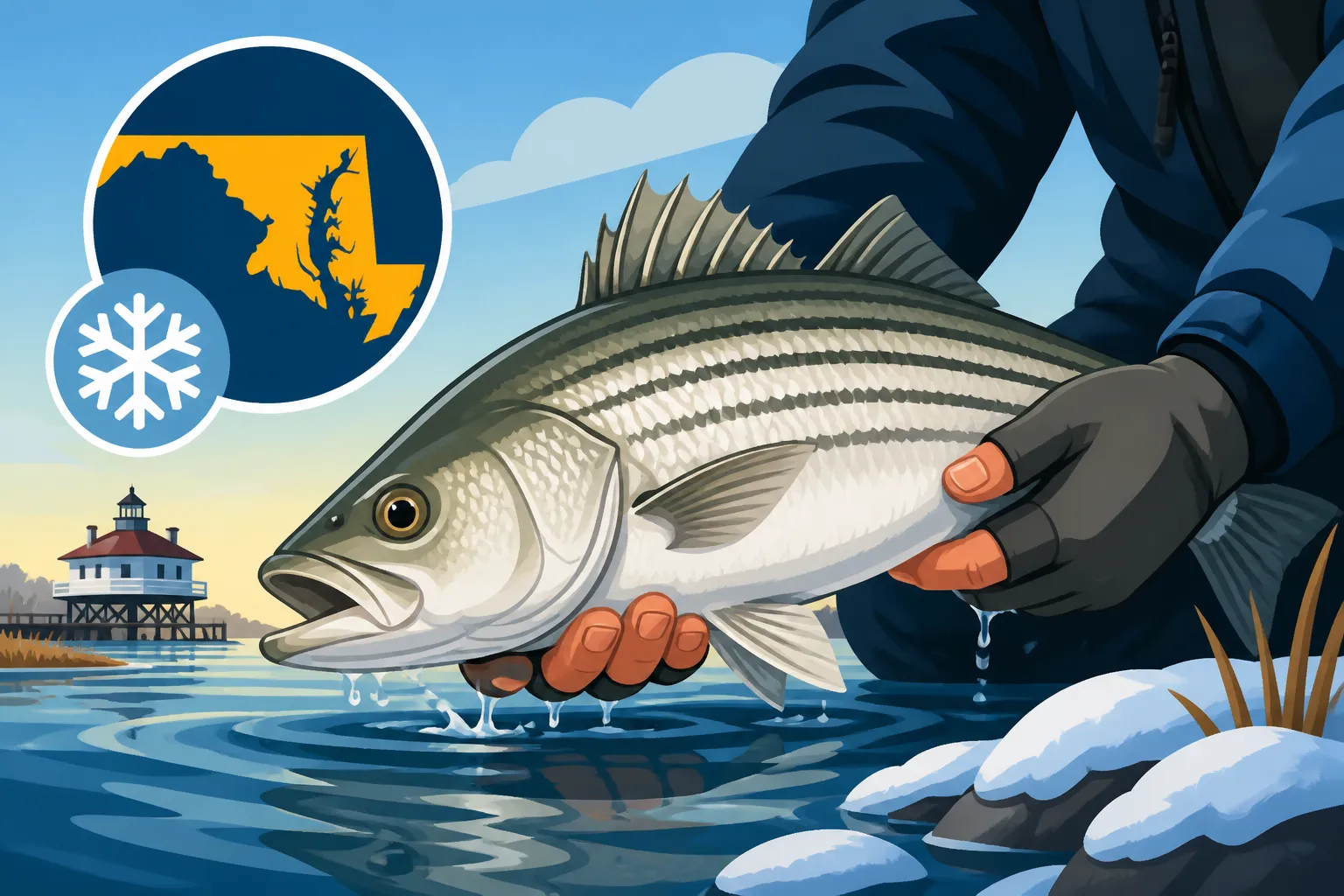
- Support the Fish: If you must lift the fish, support its entire body horizontally. Never hold a large striped bass vertically by its jaw or tail alone, as this can cause severe damage to its internal organs and spine. A proper two-handed grip, with one hand supporting the belly and the other gently gripping the lower jaw, is ideal.
- Use a De-Hooking Tool: A good pair of long-nose pliers or a specialized de-hooking tool can make removing hooks much faster and safer, allowing you to keep your hands away from sharp teeth and minimizing contact with the fish. You can find excellent options for these tools on platforms like Amazon.
- Avoid Landing Nets (if possible): While convenient, some landing nets, especially those with knotty mesh, can scrape off a fish's protective slime and damage fins. Knotless rubberized nets are a better option if you must use one, as they are much gentler.
- Revive, Don't Just Release: Once the hook is out, gently hold the fish in the water, facing into any current, until it regains its strength and can swim away on its own. It might take a minute or two, especially for larger fish that fought hard. Don't just toss it back; make sure it's ready.
Tackle and Gear Considerations
Choosing the right tackle isn't just about catching fish; it's about catching them responsibly. During the winter catch and release season, you're not trying to yank a fish into the boat as fast as possible for the cooler. You're aiming for a clean hookset and a quick, effective fight that minimizes stress on the fish.
- Rod and Reel: A medium to medium-heavy spinning or baitcasting setup, capable of handling 15-30 lb braided line, is usually ideal. This provides enough backbone to control a larger fish without over-stressing it with excessively heavy gear.
- Line Choice: Braided line with a fluorocarbon leader is a popular choice. Braid offers sensitivity to detect subtle winter bites, and the abrasion resistance of fluorocarbon is great around structure. Choose a leader strength appropriate for the size of fish you expect (e.g., 20-30 lb test).
- Lures and Baits: Many anglers find success with artificial lures during the winter, which often results in cleaner hooksets than bait fishing. Metal jigs, soft plastics on jig heads, and even suspending jerkbaits can be highly effective. The key is often a slower presentation, mimicking lethargic baitfish. Using artificials can also lead to fewer deep hooks, aiding in quick release.
- Essential Accessories: In addition to barbless hooks and a de-hooking tool, consider a pair of sturdy fish grippers (wet them before use) for handling larger fish, especially if you're fishing alone. Warm gloves, layered clothing, and a good thermos of hot coffee are also non-fishing essentials for your comfort!
No Retention Whatsoever
This rule cannot be stressed enough: during Maryland's Winter Catch and Release Striped Bass Season, absolutely no striped bass may be kept or possessed. This means that even if you catch what you think is a state record fish, or a slot-sized fish that would be legal during a harvest season, it must be immediately returned to the water unharmed. This is not a "one fish limit" or a "certain size" season. It is zero retention. If a striped bass is inadvertently caught, it must be released. Possessing a striped bass during this season is a serious violation and carries significant penalties, including fines and potential license suspension. This strict rule protects the species and ensures the integrity of the conservation effort. Remember, you still need a valid Maryland Fishing License Guide for 2026 to even participate in catch and release fishing.
Navigating the Challenges of Winter Striped Bass Fishing
Winter fishing for striped bass isn't for the faint of heart. It presents its own unique set of challenges, but for those who brave the cold, the rewards can be immense. The tranquility of the empty waterways, the stark beauty of the winter landscape, and the satisfying pull of a strong fish make it all worthwhile.
The Cold Reality: Weather and Water Temperatures
Maryland winters can be brutal, and cold temperatures aren't just uncomfortable for you; they profoundly affect the fish. As the water temperatures plummet, usually into the 40s (Fahrenheit) and even colder, striped bass become much less active. Their metabolism slows down, they feed less frequently, and they tend to seek out deeper, more stable thermal refuges.
- Your Safety First: Layering clothing is essential. Think thermal base layers, fleece, and a waterproof/windproof outer shell. A hat, gloves, and warm socks are non-negotiable. Always check the marine forecast before heading out, paying close attention to wind chill and potential for sudden weather changes. Hypothermia is a real risk.
- Fish Behavior: How Cold Water Affects Striped Bass Behavior in the Bay is crucial to understand. They won't be chasing baits aggressively in shallow water. Instead, they'll be lethargic, often holding tight to structure or congregating in deeper channels and holes. Your approach needs to match their mood: slow, deliberate, and often right on their nose.
Finding Winter Striped Bass
This is where the detective work comes in. Winter striped bass are not randomly scattered throughout the Bay. They're typically in specific types of locations:
- Deeper Channels and Holes: Look for the deepest parts of the main Bay channels or major tributary rivers. These areas often have slightly warmer, more stable water temperatures, providing refuge for the fish. Chartplotters with good bathymetry maps are invaluable here.
- Structure: Submerged bridge pilings, artificial reefs, rock piles, and deep ledges can hold schools of baitfish, and where the bait is, the rockfish will follow. They'll hug these structures tightly, seeking cover and easy ambush points for passing prey.
- Warm Water Discharges: Power plants or industrial facilities with warm water discharges can create localized thermal refuges that attract striped bass, as well as a variety of baitfish species. These spots can be incredibly productive, but always be mindful of safety zones and public access rules.
- Areas with Abundant Bait: While general activity is slower, if you can find schools of baitfish (like menhaden or silversides) on your sonar, chances are the striped bass won't be far behind, even if they're not actively busting on the surface.
Best Techniques for Winter Success
Given the fish's lethargic state, your techniques need to be refined. Aggressive retrieves or noisy presentations often won't cut it.
- Vertical Jigging: This is arguably the most popular and effective winter technique. Using heavy metal jigs or soft plastics on heavy jig heads, you drop your lure directly down to the fish you've located on your sonar. A slow, subtle lift and drop, often with a pause at the bottom, is key. The idea is to entice a strike from a fish that's not actively hunting, but can't resist an easy meal presented right in front of it.
- Slow Trolling: In certain deeper channels, slow trolling with deep-diving crankbaits or umbrella rigs (equipped with barbless hooks, of course) can sometimes be effective, especially if fish are spread out across a wider area.
- Live-Lining (with caution): While live-lining spot or eels is incredibly effective in warmer months, using live bait in cold water can be tricky. It often leads to deeper hooksets, which is detrimental to fish survival in a catch and release scenario. If you choose this method, be extremely vigilant for subtle bites and set the hook immediately to avoid deep hooking. Use barbless hooks.
- Patience is a Virtue: Winter fishing tests your patience. The bites can be few and far between, and often very subtle. Don't get discouraged if it's slow. The reward of catching a hard-fighting striped bass in the stillness of winter is worth the wait. Knowing the Best Gear for Winter Striped Bass Fishing in Maryland can make a huge difference in your comfort and success.
Ethical Angling and Conservation During Winter C&R
Participating in the winter catch and release season is more than just going fishing; it's an active contribution to conservation. Every angler has a role to play in the stewardship of our precious striped bass resource.
The Importance of Responsible Angler Behavior
We all want to catch fish, but during this sensitive season, our actions directly impact the survival of the fish we target. Responsible behavior goes beyond just following the rules; it encompasses an attitude of respect for the resource.
- Lead by Example: Other anglers, especially those new to winter fishing, will observe your actions. Demonstrate best practices for handling and releasing fish.
- Report Violations: If you witness someone violating the catch and release rules, especially by keeping fish, it's important to report it to the Maryland DNR. Poaching undermines everyone's efforts.
- Minimize Disturbance: Avoid unnecessary noise or excessive boat traffic in areas where fish are schooling. Respect other anglers' space, especially when they've found a productive spot. The quiet solitude of winter fishing is part of its charm; let's preserve it.
- Leave No Trace: Always pack out everything you pack in, and perhaps even pick up any trash you find. Keeping our waterways clean benefits everyone, including the fish.
Contributing to Striped Bass Recovery Efforts
The striped bass population in the Chesapeake Bay is a dynamic one, constantly being monitored and managed. Our participation in the winter catch and release season is a direct way to support these efforts. Every fish released properly is a fish that has a better chance of spawning in the spring, contributing to the next generation. It's a long-term investment, and the more dedicated anglers who adhere to the spirit of conservation, the better the outlook for our beloved rockfish. The regulations, like the requirement for barbless hooks, are a direct response to scientific data on fish mortality and are designed to maximize survival rates. We want to be able to enjoy Striped Bass: Maryland's State Fish for generations to come.
Alternative Winter Fishing Opportunities
While striped bass are a prime target, sometimes the bite is just off, or you might want to try something different. Maryland offers other winter fishing opportunities that are worth exploring:
- Yellow Perch: In the upper reaches of many tidal rivers, yellow perch make strong winter runs. They offer fantastic light tackle action and are delicious table fare. Check specific regulations for limits.
- Chain Pickerel: These aggressive predators can be found in many freshwater lakes, ponds, and even brackish tidal creeks throughout the winter. They're fun to catch and can provide a good fight.
- Trout: Many of Maryland's freshwater streams and impoundments are stocked with trout throughout the fall and winter, offering a completely different angling experience. Just be sure to check the Maryland Trout Stamp Requirements and specific area regulations, as many trout streams have special catch and release or gear restrictions, like Barbless Hook Rules on Maryland Trout Streams.
- Blue Catfish: These invasive giants are active year-round and have no closed season or creel limits in many areas of the Chesapeake Bay and its tributaries. They offer fantastic winter fishing, can grow to enormous sizes, and are excellent to eat. You're encouraged to harvest as many as you can!
Exploring these alternatives can keep your fishing skills sharp and provide a rewarding experience when the striped bass are being particularly finicky.
Here’s a quick overview of the key rules for winter catch and release striped bass fishing:
| Rule Category | Specific Requirement | Importance |
|---|---|---|
| Season Dates | January 1 – March 31 | Designated period for conservation, allowing anglers to fish without harvest pressure. |
| Retention | NO RETENTION ALLOWED | All striped bass caught MUST be immediately released, regardless of size or condition. |
| Hook Type | Barbless hooks are MANDATORY | Minimizes injury to fish, especially in cold water, increasing post-release survival. |
| Fish Handling | Minimize air exposure, wet hands, support horizontally, use de-hooking tools, revive gently | Crucial for the fish's survival; reduces stress, injury, and disease susceptibility. |
| Eligible Waters | Maryland's tidal Chesapeake Bay and its tributaries | Specific to the Bay system; excludes ocean/coastal bays and the mainstem Potomac River (check PRFC rules). |
| Licensing | Valid Maryland fishing license is required | Even for catch and release, a license is necessary to legally fish. |
Disclaimer
Please note that fishing regulations can change. While every effort has been made to provide accurate and up-to-date information, it is the angler's responsibility to consult the latest official regulations published by the Maryland Department of Natural Resources (DNR) before heading out. This guide is for informational purposes only and should not be considered a substitute for official DNR publications.