Where Do Chesapeake Bay Striped Bass Spend the Summer?
Summer on the Chesapeake Bay is a magical time for many, but for our beloved striped bass, often affectionately called rockfish here in Maryland, it can be a real struggle. The rising water temperatures and decreasing oxygen levels can push these iconic fish into very specific areas, making them harder to locate and presenting unique challenges for anglers. If you've ever wondered where these adaptable fish vanish to when the heat truly kicks in, you're not alone! This guide will dive deep into the summer habits of Chesapeake Bay striped bass, explaining their movements and the environmental factors that dictate their whereabouts.
The Summer Challenge: Heat and Hypoxia in the Bay
When the long, lazy days of summer arrive in Maryland, the Chesapeake Bay transforms, and not always in a way that’s comfortable for striped bass. These fish are cold-blooded, meaning their body temperature mirrors the water around them, and they thrive in cooler conditions. As surface temperatures climb into the high 70s and even low 80s Fahrenheit, the Bay becomes a less hospitable environment for them. This isn't just about comfort; it's about survival.
Understanding Temperature and Oxygen Needs
Striped bass are physiologically designed for cooler water. They prefer temperatures typically ranging from the mid-50s to low 70s Fahrenheit. When the water gets too warm, their metabolism speeds up, requiring more oxygen. The problem is, as water heats up, its capacity to hold dissolved oxygen decreases. This creates a double whammy: the fish need more oxygen just as less is available. It's like trying to run a marathon in a room with dwindling air supply. This explains why they seek out specific thermal refuges. You'll hear us talk a lot about How Cold Water Affects Striped Bass Behavior in the Bay because it truly is the driving force behind their summer movements.
Beyond just surface heat, the Chesapeake Bay has another unique challenge: summer hypoxia. This refers to areas of low dissolved oxygen, often called "dead zones," which typically form in the deeper channels of the Bay during summer months. As microscopic organisms die and sink to the bottom, they are decomposed by bacteria, a process that consumes vast amounts of oxygen. This forms a layer of oxygen-depleted water, sometimes hundreds of square miles wide, effectively squeezing the fish into a much smaller, livable zone above it. Imagine being trapped between a hot ceiling and a suffocating floor – that's the reality for many fish in the Bay during peak summer.
Seeking Thermal Refuge: Deep Channels and Cooler Depths
So, with warm surface waters and potentially hypoxic deep zones, where do the striped bass go? Their primary strategy is to find "thermal refuges"—pockets of cooler, oxygenated water. This often means congregating in very specific, deeper areas of the Bay where conditions are just right.
The Main Stem Channels
Many striped bass retreat to the main shipping channels of the Chesapeake Bay, particularly in the Middle and Lower Bay. These channels are naturally deeper, which means the water down there remains cooler than the shallower flats and rivers. While the very bottom of these channels can be hypoxic, there's often a "sweet spot" at a certain depth—a thermocline, essentially—where the water is cool enough and still holds enough oxygen for them to comfortably reside. Anglers who successfully target summer stripers often rely on good electronics to find these specific depth bands, sometimes only a few feet thick, where the fish are holding. Fishing Maryland's Chesapeake Bay, A Complete Guide will often emphasize the importance of understanding these features.
During these hot months, you won't find them chasing baitfish in the shallow estuaries as much. Instead, they’ll often be lethargic, conserving energy in these cooler spots. Baitfish like spot and croaker still abound in shallower, warmer waters, but the rockfish are playing a different game now. Finding these deep-water havens can be like finding a needle in a haystack, but when you do, it can be incredibly rewarding. It's all about understanding the contours of the Bay floor and how temperature layers create these pockets of refuge.
River Mouths and Estuarine Retreats
While many fish head to the main Bay channels, some resident striped bass will seek refuge in the deeper sections of larger river mouths, especially those with good tidal flow and cooler, incoming ocean water. Rivers like the Patuxent, Choptank, and Potomac, especially closer to their confluence with the main Bay, can offer these conditions. They might not move far upriver, but rather find the deepest holes or points where cooler water from the Bay can circulate. This isn't always a perfect solution, as these areas can still warm up, but they can provide temporary relief, especially during periods of strong tidal exchange.
It's also worth noting that during brief periods of strong easterly winds, cooler oceanic water can be pushed into the mouth of the Bay, sometimes bringing temporary relief to some of the lower Bay regions. These brief windows can sometimes spark a feeding frenzy, but they are often short-lived. Anglers should always consult local water temperature and oxygen reports, often available from the Maryland Department of Natural Resources (DNR), to get the clearest picture of current conditions.
The Offshore Migration: Heading for the Atlantic
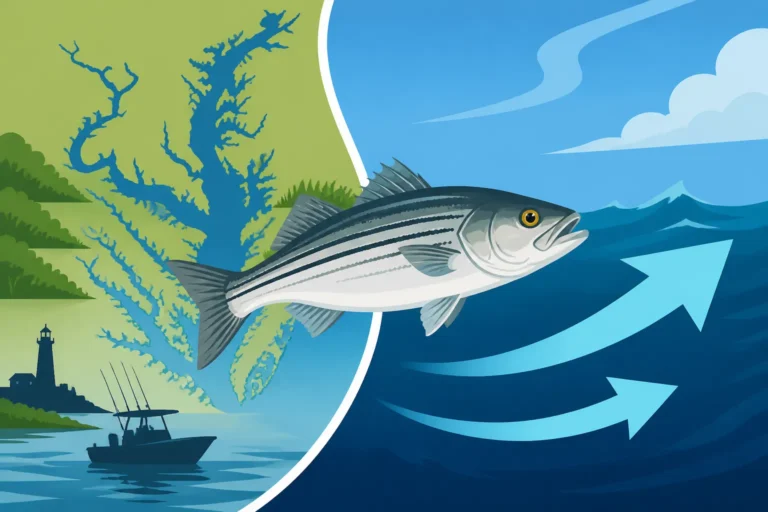
While many striped bass stay within the Bay, toughing out the summer in those thermal refuges, a significant portion of the population, particularly the larger, mature fish, will actually leave the Chesapeake Bay entirely and head out into the Atlantic Ocean.
Why Some Fish Leave the Bay
This offshore migration is a critical part of their life cycle and a survival mechanism. For these larger fish, the challenges of warm water and low oxygen within the relatively enclosed Bay can be too great. The open ocean offers vastly more stable and cooler water temperatures, consistent oxygen levels, and abundant food sources. Think of it as a summer vacation to a luxurious, air-conditioned resort with an all-you-can-eat buffet! These fish will often join the larger Atlantic migratory stock, traveling north along the coast toward New England in the spring and returning south in the fall.
This migration is a testament to the resilience and adaptability of Striped Bass: Maryland's State Fish. It’s also why anglers fishing off the coast of Maryland near Ocean City or further north will encounter large striped bass during the summer months – they’re the Bay fish enjoying their oceanic escape. Maryland Striped Bass Fishing Techniques offshore will differ greatly from those used inside the Bay. This seasonal exodus highlights the interconnectedness of different fishing grounds along the East Coast.
Where They Go in the Ocean
Once in the ocean, these migratory striped bass can spread out considerably. They'll follow temperature breaks and bait concentrations, often staying within a few miles of the coastline but sometimes venturing further offshore to underwater structures, wrecks, or ledges. They are constantly on the move, chasing schools of bunker (menhaden), mackerel, squid, and other oceanic forage. This is why you'll hear about excellent striper fishing off New Jersey, New York, or New England during the summer—many of those fish originated right here in our Chesapeake Bay.
For anglers looking to target these ocean-roaming stripers, it often means booking an offshore charter or having a capable ocean-going vessel. The fishing style is different, often involving trolling large plugs or live bait, or jigging over structure. If you’re looking for a change of pace from the Bay's summer grind, the ocean might be calling your name.
Angling Strategies for Summer Striped Bass
Given the challenges of summer, finding and catching striped bass in the Bay requires a different approach than during the more prolific spring and fall runs. It's often about precision, patience, and understanding fish behavior in adverse conditions.
Early Morning and Late Evening Windows
No matter where striped bass are, they're most active during periods of low light. In the summer, this becomes even more critical. The cooler temperatures of dawn and dusk, before the sun has fully heated the surface or as it begins to recede, often represent the best feeding windows. This is when the fish might move slightly shallower, or rise higher in the water column, to feed on baitfish that are also more active at these times. Trying to catch them during the blazing midday sun in July is often a futile effort, unless you've pinpointed a very deep, stable thermal refuge. Best Time of Day to Catch Striped Bass in the Bay always leans towards these low-light periods, especially in summer.
A productive strategy can be to start fishing well before sunrise, targeting known deep channels or structure, and retreating as the sun gets high. Similarly, evening trips, fishing into twilight, can also be effective. Always keep an eye on weather patterns too; a passing cold front or a cloudy day can sometimes stir up the bite.
Finding the Right Depth and Structure
The key to summer Bay fishing for stripers is your fish finder. Seriously, it's not a luxury; it's a necessity. You're looking for baitfish (often seen as clouds or arcs) and the larger, distinct arcs of striped bass, all holding at a specific depth, usually somewhere between the surface and the hypoxic zone. Look for channel edges, humps, ledges, or even bridge pilings that extend into deeper water. These structures provide current breaks and ambush points even in these deeper, cooler zones.
Once you find them, vertical jigging with soft plastics or metal jigs can be highly effective. The fish are often lethargic, so slow, deliberate presentations are usually best. Sometimes, if they're feeding on smaller bait, using sabiki rigs to catch live spot or peanut bunker and then "live-lining" them down to the marked depth can be deadly. Trolling vs Jigging for Maryland Striped Bass are both viable, but jigging often allows for more precise targeting of specific depths. If you're looking for gear, you can often find a wide array of options, from fish finders to specific jigs, on platforms like Amazon.
Respecting the Fish: Catch and Release Considerations
Because summer conditions are so stressful for striped bass, it's incredibly important to practice responsible angling. Elevated water temperatures and low oxygen levels make fish much more vulnerable to stress and mortality after being caught and released. If you plan to target stripers during the summer, here are a few critical points:
- Handle with care: Minimize handling time, keep the fish in the water as much as possible, and avoid excessive netting.
- Use appropriate gear: Don't "fight" a fish longer than necessary on light tackle; it exhausts them.
- Revive properly: If a fish seems sluggish, hold it upright in the water, facing into the current, until it swims away strongly.
- Know when to stop: If fish are coming up completely lethargic and not recovering, it's a good sign that conditions are too stressful, and it might be best to switch to a different species or stop fishing for the day. This is particularly important during periods of Summer Fishing Patterns on Maryland's Chesapeake Bay where conditions can be brutal.
- Consider the August closure: Remember that Maryland typically has an August closure for striped bass in the Bay, precisely to protect these stressed fish. Always check Maryland's 2026 Striped Bass Season Dates to ensure you're fishing legally.
A quick note on gear: Having the right tools for effective catch and release, like de-hookers and strong, sharp hooks, can be important. Many anglers find these specialized tools readily available on Amazon.
Conclusion: Adapting to the Bay's Rhythms
Understanding where Chesapeake Bay striped bass spend their summer is all about appreciating the intricate relationship between these incredible fish and their environment. Whether they retreat to the cooler, oxygenated pockets of the Bay's deep channels or embark on an epic journey to the open Atlantic, their movements are driven by the fundamental needs for survival. For us anglers, it means that summer fishing for stripers isn't just about casting a line; it's about becoming a keen observer, a respectful participant, and adapting our strategies to the ever-changing rhythms of the Chesapeake Bay. By doing so, we not only increase our chances of success but also help ensure the health and longevity of this cherished fishery for years to come.
Disclaimer
This article is for general informational purposes only and does not constitute professional advice. Laws, prices and regulations vary by location and change over time. Consult a qualified professional for guidance on your specific situation.