Where Did Snakehead Come From Originally?
It’s a question that many Maryland anglers ask themselves when they hook into one of those toothy, elongated fish with the distinctive markings: "Where did this even come from?" The Northern Snakehead (Channa argus) has become a notorious resident in our waters, spreading rapidly and often causing a mix of awe and alarm. Understanding its origins isn't just a matter of curiosity; it's key to comprehending its impact and why managing this invasive species is such a persistent challenge for our state's ecosystems. This guide delves deep into the unexpected journey of the snakehead from its native lands to becoming a fixture in Maryland's rivers and reservoirs.
A Fish Out of Water: The Unwelcome Arrival of Snakeheads
Imagine a fish that can survive out of water, gulping air, and wriggling across damp ground. It sounds like something out of a horror movie, but for Maryland, it became a reality with the introduction of the Northern Snakehead. These aren't just another fish; they are a formidable invasive species, disrupting local ecosystems and posing a unique challenge to our native fish populations. Their story in Maryland is one of accidental release, rapid adaptation, and an ongoing battle for ecological balance.
Native Lands: A World Away from Maryland
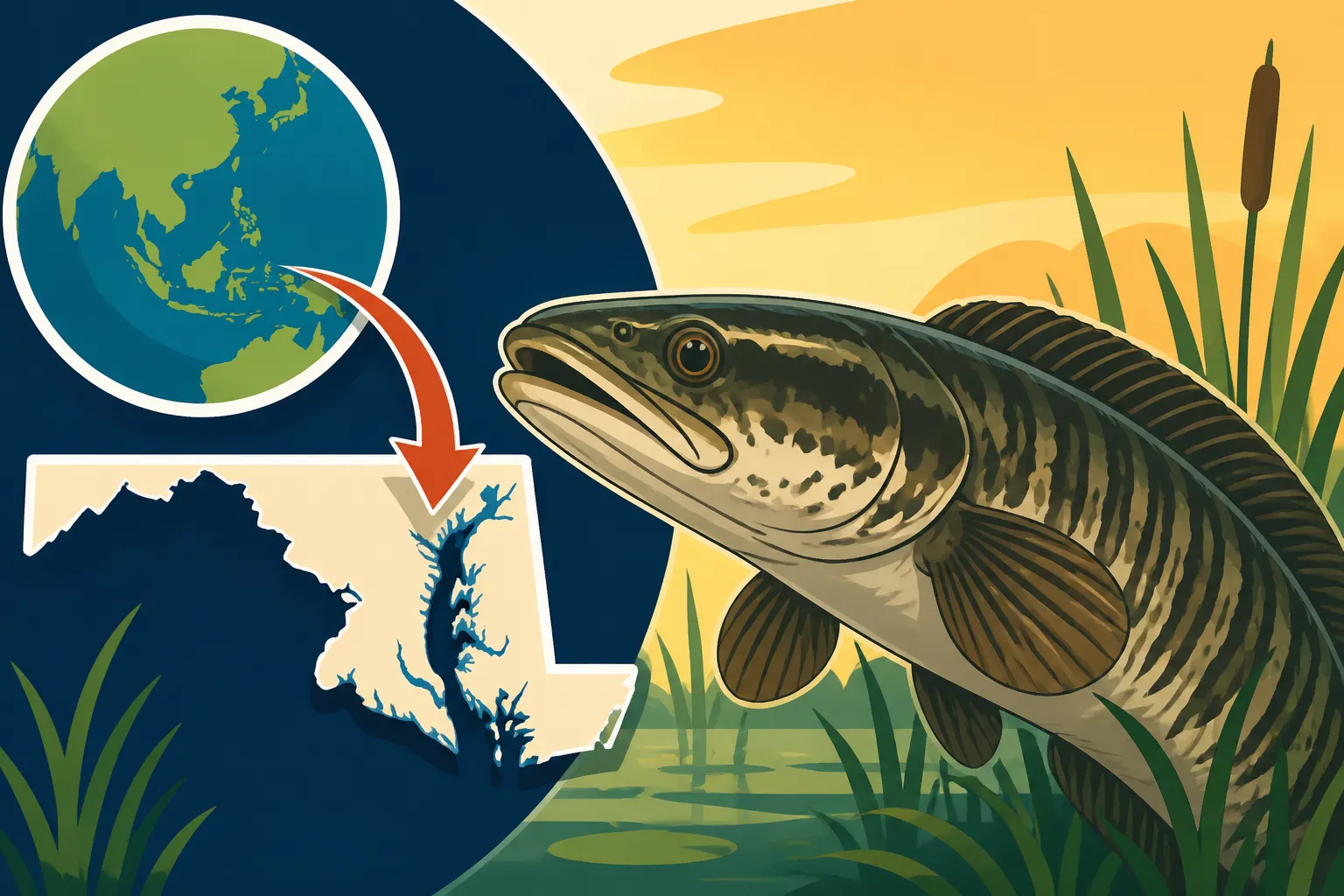
To truly grasp the snakehead's foreignness to Maryland, we need to look at its natural home. Northern Snakeheads are native to parts of Asia and Africa, specifically found in eastern Russia, China, and Korea. These regions feature diverse aquatic environments, from slow-moving rivers and canals to swamps and ponds, all with varying degrees of water quality and oxygen levels. In these native habitats, they are often a highly sought-after food fish and are part of a balanced ecosystem where natural predators and environmental pressures keep their populations in check.
Their ancestral waters are often shallow, heavily vegetated, and can experience periods of low oxygen or even drought. This is where their incredible adaptability first evolved. Unlike most fish that rely solely on gills, snakeheads developed a suprabranchial organ, essentially a primitive lung, allowing them to breathe atmospheric air. This evolutionary trait, honed over millennia in their native lands, is what makes them such formidable colonizers when introduced to new environments, especially those that might be challenging for native fish. Their natural range is quite vast, but always far, far from the Chesapeake Bay watershed.
How Did They Get Here? The Accidental and Intentional Introduction
The story of how Northern Snakeheads made their way across oceans and continents to Maryland's backyard is a tale of unintended consequences and, at times, sheer irresponsibility. There are generally two main pathways for invasive species like the snakehead to establish themselves: accidental release and intentional introduction. For the Northern Snakehead, both likely played a role in its initial spread across the United States.
One of the most common vectors for the introduction of species like the snakehead is the live food fish market. In many Asian cultures, snakeheads are considered a delicacy and are sold live to ensure freshness. It’s not hard to imagine a scenario where live fish intended for consumption might escape from holding ponds, transportation vehicles, or even be deliberately released by individuals who didn't want to kill them. Another significant pathway is the aquarium trade. Exotic fish can be appealing pets, but when they grow too large or become too difficult to manage, some owners unfortunately decide to "set them free" into local waterways, unaware of the potential ecological damage they are causing. In some instances, it's believed that individuals may have intentionally introduced snakeheads into local ponds, hoping to establish a new sport fishery or food source, completely disregarding the potential devastation to existing fish populations. Regardless of the exact intent, the result is the same: an alien species suddenly competing with, and preying upon, native fish in a system unprepared for its presence.
The Crofton Incident: A Wake-Up Call for Maryland
While snakeheads had popped up in other states, Maryland's introduction story truly captured national attention and became a cautionary tale. It all began in the spring of 2002 when an angler fishing in a pond behind a shopping center in Crofton, Anne Arundel County, caught a very strange-looking fish. He photographed it, released it, and reported it to the Maryland Department of Natural Resources (DNR). DNR biologists quickly identified it as a Northern Snakehead, a species never before confirmed in Maryland's waters. The angler's initial action of releasing the fish was understandable given the circumstances, but it highlighted a crucial public awareness gap at the time.
The discovery immediately sent shockwaves through the scientific community and the general public. Media outlets quickly picked up the story, and the "Frankenfish" moniker was born, stirring both fear and fascination. DNR responded swiftly, initiating a drastic plan to eradicate the fish from the Crofton pond. They applied rotenone, a fish toxicant, to the pond in an attempt to completely wipe out the population. While this operation successfully eliminated the snakeheads in that specific pond, it was a dramatic and expensive undertaking, and ultimately proved to be a temporary fix, as it was discovered later that snakeheads had likely already moved into other connected waterways, often undetected. The Crofton incident served as a stark, undeniable wake-up call, forcing Maryland to confront the reality of this tenacious new invader.
Thriving in a New Home: Why Maryland Waters Suit Snakeheads So Well
Despite coming from half a world away, Maryland's diverse aquatic environments, particularly the slow-moving, vegetated waters that feed into the Chesapeake Bay, proved to be an almost perfect new home for Northern Snakeheads. Their incredible biological adaptations gave them an unfair advantage over many native species, allowing them to quickly establish and expand their territory. It’s like they found an all-you-can-eat buffet with no bouncers at the door.
Adaptability: A True Survivor
One of the most remarkable and concerning traits of the Northern Snakehead is its unparalleled adaptability. As mentioned, their ability to breathe atmospheric air using a specialized organ means they aren't dependent on highly oxygenated water, unlike most of our native fish. This allows them to survive in stagnant ponds, muddy backwaters, and even during periods of drought when water levels drop significantly. Imagine a hot summer day when a small pond's oxygen levels plummet; most native fish would struggle or die, but the snakehead can simply gulp air at the surface and continue hunting. This physiological advantage makes them incredibly resilient.
Beyond air-breathing, snakeheads are also incredibly tolerant of a wide range of water temperatures and salinities. While primarily freshwater fish, they have been found to tolerate brackish water for extended periods, allowing them to move between different interconnected systems, like from tidal freshwater rivers into the less salty parts of the Chesapeake Bay itself. This flexibility in habitat allows them to colonize new areas that might ordinarily be barriers to other species, leading to their rapid and widespread distribution throughout Maryland's intricate network of creeks, rivers, and shallow water bodies. They are truly built for survival, almost to a fault when it comes to preserving native ecosystems.
No Natural Predators: A Top of the Food Chain Problem
In their native Asian ecosystems, Northern Snakeheads face a variety of predators, especially when they are young. Larger fish, birds of prey, and even some reptiles keep their numbers in check, maintaining a natural balance. However, when these fish arrived in Maryland, they landed in a system where such natural controls were largely absent. There isn't a native predator here that consistently targets and consumes enough snakeheads to significantly impact their population. This lack of natural checks and balances is a critical factor in why invasive species can explode in numbers and dominate new environments.
Without predators keeping them in check, snakeheads quickly rise to the top of the food chain in many of our freshwater and tidal freshwater habitats. They are voracious predators themselves, feeding on a wide variety of prey, including native fish, frogs, crayfish, and insects. This directly impacts populations of our cherished native species, like Largemouth Bass Fishing in Maryland or White Perch in Maryland's Chesapeake Bay, by competing for food and actively preying on them. Young snakeheads grow rapidly, reaching reproductive maturity quickly, further accelerating their spread. This unchecked predatory behavior can fundamentally alter the delicate balance of our aquatic ecosystems, making them one of the most concerning invasive species we face.
The Ongoing Battle: Management and Angler Efforts
The introduction of the Northern Snakehead has presented Maryland's Department of Natural Resources (DNR) with a persistent and evolving challenge. Since that initial discovery in Crofton, the state has adopted various strategies, and perhaps most importantly, has enlisted the help of its passionate angling community. It's a testament to the resilience of both the fish and the human spirit that we continue to adapt and fight for our native waters.
Maryland's "Kill on Sight" Policy
Given the destructive potential of the Northern Snakehead, Maryland DNR has implemented a strict "kill on sight" policy for anglers. This means that if you catch a snakehead, you are legally required to immediately kill it and are prohibited from returning it to the water alive. This regulation is crucial for preventing further spread, as even a single live release could establish a new population in an uninfected waterway. It’s a serious directive, and understanding the implications is vital for every angler. Anglers also play a key role in monitoring; if you catch one, it's recommended to report the location to the Maryland DNR, which helps them track the species' spread and concentration.
The reasoning behind this policy is simple: eradication is nearly impossible once a species is established in a vast and interconnected system like the Chesapeake Bay watershed. Therefore, the focus shifts to containment and population control. Every snakehead removed from the water is one less predator impacting native fish and one less fish reproducing. It's not about making a sport out of killing; it's about protecting the future of our local fisheries. For detailed regulations on possession and transport, it’s always best to check the latest DNR guidelines, as they can sometimes evolve based on the situation, but the "kill on sight" directive remains firm. You can learn more about the specifics in Maryland Snakehead Fishing Rules.
Anglers as Allies: The Role of Recreational Fishing
In this ongoing battle against the invasive Northern Snakehead, recreational anglers have become indispensable allies. The DNR actively encourages anglers to target snakeheads, transforming a potential ecological disaster into a unique and exciting fishing opportunity. Many anglers have embraced this challenge, finding snakeheads to be powerful fighters and a worthy adversary, especially on light tackle. This engagement from the fishing community is vital because the sheer number of anglers on the water far surpasses what any government agency could deploy for population control alone.
Anglers are experimenting with various techniques, from topwater frog lures that mimic their natural prey to soft plastics and even live bait, to actively pursue these fish. This pursuit not only helps reduce snakehead numbers but also provides valuable data on their distribution and abundance. Beyond the ecological benefit, many anglers have discovered that snakeheads are also excellent table fare, offering firm, white, flaky meat that is surprisingly delicious. This culinary appeal provides an added incentive for anglers to keep their catch, further contributing to population management. So, when you're out on the water, remember that targeting snakeheads isn't just about fun; it's about being an active participant in protecting Maryland's precious aquatic ecosystems. It’s a unique scenario where your passion for fishing directly aids conservation efforts.
Here's a quick comparison of key characteristics between the Northern Snakehead and a familiar native species like the Largemouth Bass, to highlight what makes the snakehead such an effective invader:
| Feature | Northern Snakehead | Largemouth Bass |
|---|---|---|
| Native Range | Eastern Asia (China, Korea, Russia) | Eastern and Central North America |
| Air Breathing | Yes (Suprabranchial organ) | No |
| Habitat Preference | Shallow, vegetated, low-oxygen waters | Diverse, structure-oriented, good oxygen |
| Movement on Land | Yes (can wriggle short distances) | No |
| Parental Care | Yes (both parents guard eggs/fry) | Yes (male guards nest/fry) |
| Tolerance to Conditions | Very High (low oxygen, varying temps) | Moderate (prefers stable conditions) |
| Predatory Impact | Apex predator on native fish, amphibians | Apex predator on smaller fish, insects |
This article is for general informational purposes only and does not constitute professional advice. Laws, prices and regulations vary by location and change over time. Consult a qualified professional for guidance on your specific situation.