Fishing Techniques for Smallmouth Bass in the Potomac
Fishing for smallmouth bass on the Potomac River can be an incredibly rewarding experience, but it’s certainly not without its challenges. Anglers often face frustrations with reading the dynamic currents, choosing the right lures for specific conditions, and simply understanding where these feisty bronzebacks like to hide. This comprehensive guide is here to unravel those mysteries, offering you a deep dive into the most effective fishing techniques and strategies to help you hook into more smallmouth bass on Maryland's iconic Potomac River.
Understanding the Potomac's Smallmouth Habitat
The Potomac River is a vast and varied waterway, offering diverse environments that smallmouth bass call home. To effectively target these hard-fighting fish, you first need to understand the different sections of the river and the types of structures they prefer. It's not just about casting; it's about casting smart.
River Sections and Their Characteristics
When we talk about smallmouth bass fishing on the Potomac, we're primarily focusing on the upper, nontidal stretches of the river. This includes the water above Great Falls, extending far upriver towards the Maryland and West Virginia borders. This section of the Potomac is characterized by its rocky bottom, swift currents, and a mix of riffles, runs, and pools. It's a stark contrast to the wider, slower, and often muddier tidal Potomac closer to Washington D.C., which tends to favor largemouth bass and catfish.
The upper Potomac's smallmouth habitat is a dynamic system, constantly sculpted by water flow and geology. You'll find sections where the river is wide and shallow, punctuated by exposed bedrock and small islands. Other areas narrow into deeper channels with significant current, forming prime ambush points for smallmouth. Understanding these transitions is crucial for your success, as a technique that works in a shallow riffle might be completely ineffective in a deep, slow pool. Identifying these different "rooms" in the river helps you decide which techniques to employ.
As you explore the river, you'll notice how the character changes dramatically from one bend to the next. Some stretches will have long, shallow runs that require careful wading and accurate casting, while others might feature deep scour holes where the current has carved out significant depressions, often holding larger fish. Paying attention to these subtle changes in the river's topography is like piecing together a puzzle, and each piece you identify brings you closer to finding those elusive smallmouth.
Key Structures Smallmouth Love
Smallmouth bass are ambush predators, and they absolutely adore structure that offers them current breaks and hiding spots. Think of them like underwater lions, patiently waiting for their prey to drift by. On the Potomac, this usually means rocks – lots of them. Boulders, rock piles, ledges, and rocky points are all prime real estate. The bigger the rocks, the more current break they create, and the more likely a big smallmouth is lurking behind them.
Beyond just rocks, smallmouth also hold tightly to current seams and eddies. A current seam is where fast-moving water meets slower water, creating a distinct line in the surface. This is a super highway for baitfish, and smallmouth will position themselves along these seams to pick off an easy meal. Eddies, those swirling pockets of calmer water behind large obstructions, are also fantastic spots. They offer a comfortable resting place out of the main current while still providing easy access to passing food. When you're reading the water and targeting productive zones, always look for these subtle signs.
Don't overlook submerged logs, fallen trees (also known as laydowns), and even patches of aquatic vegetation, especially during warmer months. While rocks are king, any structure that breaks the current and provides cover is a potential smallmouth hotspot. A lone log sticking out into a strong current can be just as productive as a massive boulder field. These spots provide both shelter from the current and a hidden vantage point from which to strike passing baitfish or crayfish. Keep an eye out for these less obvious structures as you move along the river.
Seasonal Movements and Water Conditions
Smallmouth bass on the Potomac are highly influenced by water temperature and flow. Their behavior, where they hold, and what they're willing to eat shifts dramatically with the seasons. Spring, after the initial high water recedes, sees smallmouth moving into shallower, warmer water to feed aggressively before their spawn. This is often an excellent time for consistent action, as the fish are hungry and less wary.
As summer progresses and water temperatures rise, smallmouth often seek out deeper pools, shaded areas, or oxygenated riffles where the water is cooler. Early mornings and late evenings become prime fishing times, and the fish might become a bit more lethargic in the midday heat. Conversely, cooler water in the fall spurs another feeding frenzy as smallmouth fatten up for winter, often moving into moderate depths with good current flow. Understanding these patterns, like knowing the Best Time of Year to Fish the Potomac for Smallmouth, is crucial.
Water clarity and flow are also huge factors. After heavy rains, the Potomac can become high and muddy, making fishing incredibly tough. Smallmouth will typically move out of the main current and into calmer back eddies or feeder creeks to escape the turbid water. Conversely, during periods of low, clear water, the fish can become extremely spooky and require longer casts, lighter lines, and more subtle presentations. Always check river levels and clarity before you head out; it can save you a lot of wasted time and effort.
Essential Gear for Potomac Smallmouth
Having the right tools for the job makes all the difference, especially when you're tackling the rugged Potomac River. From your rod and reel to your choice of lures, being properly equipped will increase your chances of success and make your time on the water more enjoyable.
Rods, Reels, and Line Selection
For Potomac smallmouth, a versatile spinning rod is often the go-to. I recommend a medium-light to medium power rod, about 6'6" to 7' in length. This setup offers a good balance of casting distance, sensitivity, and backbone to handle strong fish in current. A fast action tip is ideal, allowing for precise casts and quick hook sets, which are essential when fishing with jigs or plastics in rocky terrain. A slightly shorter rod might be beneficial if you're Wading the Susquehanna River Safely (and by extension, the Potomac) through tight, overgrown areas.
Pair your rod with a lightweight spinning reel in the 2000 or 2500 series size. Look for a reel that's smooth, durable, and has a reliable drag system. You'll be making countless casts, so comfort and balance are key. For line, 6 to 10-pound test monofilament or fluorocarbon is generally sufficient. Monofilament offers good knot strength and a bit of stretch, which can be forgiving with aggressive strikes. Fluorocarbon, being nearly invisible underwater and more abrasion-resistant, is excellent for clear water conditions and battling fish around sharp rocks. Braided line can also be used, especially in heavier cover, but you'll want to add a fluorocarbon leader for stealth.
Many anglers find it convenient to have a few different setups ready if they plan on mixing techniques throughout the day. For instance, a dedicated topwater rod with monofilament might be lighter, while a jigging rod could be a bit stiffer with fluorocarbon. You don't need to break the bank for this, as many reputable brands offer excellent mid-range options. You can find a vast array of high-quality rods, reels, and lines for Potomac smallmouth fishing available on Amazon, making it easy to compare and select the best fit for your budget and style.
Lure and Bait Recommendations
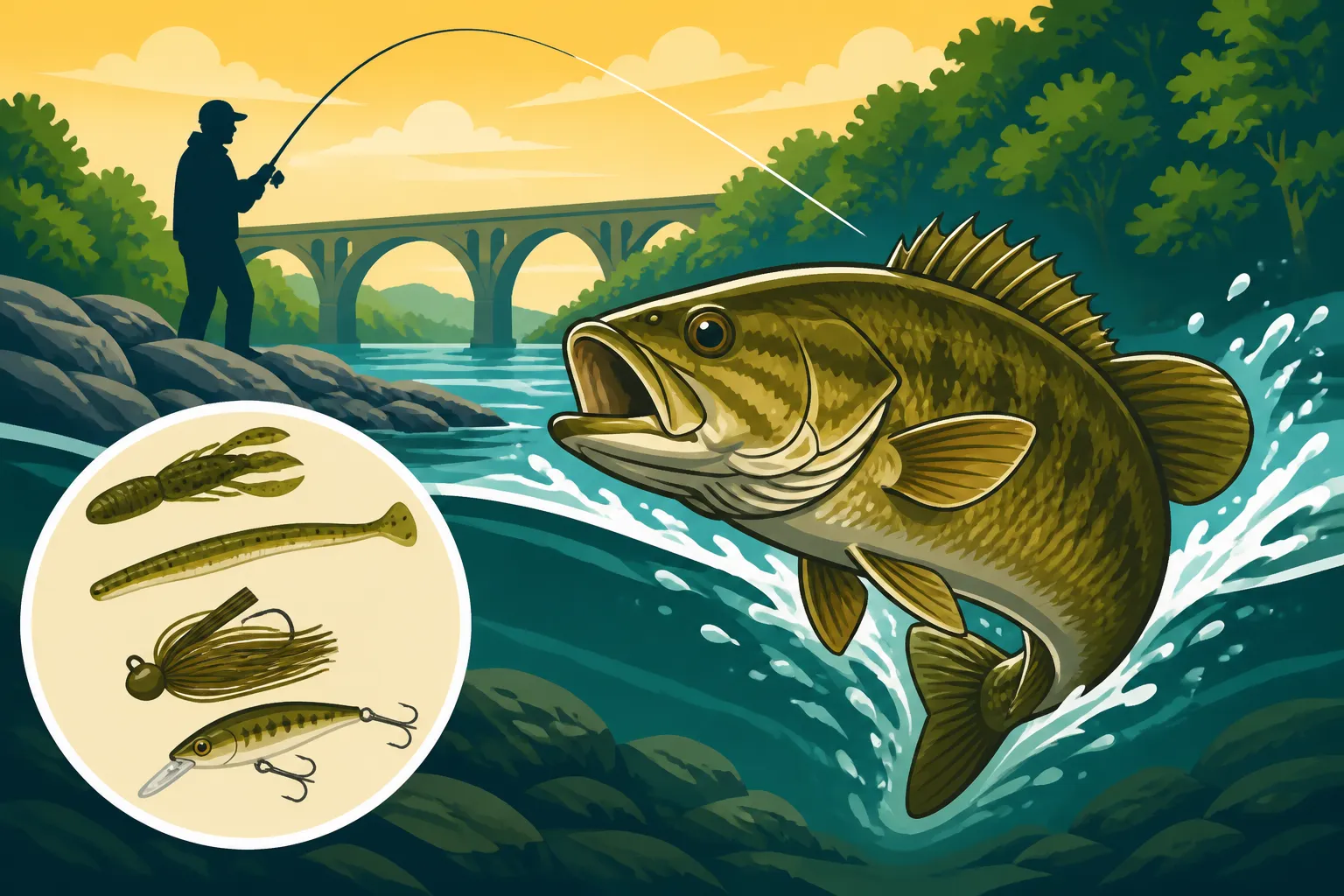
When it comes to lures for Potomac smallmouth, versatility is your friend. Smallmouth are opportunistic feeders, so having a selection of baits that mimic their natural prey – crayfish, baitfish, and insects – is crucial. Soft plastics are a perennial favorite. Tube jigs, grubs, and creature baits in natural colors like green pumpkin, brown, or watermelon are deadly. Rig them on a 1/8 to 1/4 ounce jig head, depending on current strength, and work them along the bottom.
Crankbaits are also incredibly effective, especially when smallmouth are actively feeding on baitfish. Shallow-diving crankbaits that mimic minnows or crawfish, in patterns like firetiger, shad, or brown craw, work wonders when bounced off rocky bottom in runs and pools. For topwater action, which can be explosive during low light conditions, small poppers, walk-the-dog baits, and prop baits are a blast. Watching a smallmouth explode on a topwater lure is one of the most exciting experiences in freshwater fishing. If you're looking for recommendations, check out what other anglers are saying about Best Crankbaits for Susquehanna Smallmouth Bass, which are often highly applicable to the Potomac.
For fly anglers, streamers that imitate baitfish or crayfish are essential. Clouser Minnows, Woolly Buggers, and other weighted patterns in olive, black, or brown can be stripped through current seams and around structure. Poppers and foam bugs are fantastic for surface action, especially in calmer pools. Don't forget live bait either, if regulations allow. Crayfish, minnows, or worms can be incredibly effective, particularly when fish are finicky. Many fly tiers also sell their creations on Amazon, giving you access to a wide variety of effective patterns.
Wading and Boating Considerations
The Potomac River is often best fished by wading, especially in the upper nontidal sections. Wading allows you to move stealthily, access prime casting positions, and cover water effectively. However, safety is paramount. Always wear sturdy wading boots with good grip (felt or studded soles are great for slippery rocks) and use a wading staff for balance, especially in strong currents. A personal flotation device (PFD) is not just a good idea; it's a non-negotiable safety item, even in seemingly shallow water. River levels can change quickly, and currents can be deceptively powerful.
If you prefer to cover more ground or access deeper sections, a kayak or canoe is an excellent choice. These craft allow for quiet navigation and access to areas that might be difficult to reach by wading alone. Again, a PFD is absolutely essential, and always be aware of potential hazards like rapids, low-head dams, and submerged rocks. Kayak Fishing Safety Tips for Maryland's Chesapeake Bay has principles that apply just as well to river fishing, emphasizing preparedness and situational awareness.
No matter your method of transport, ensure you have a way to securely carry your gear. A small backpack or chest pack can hold extra lures, water, snacks, and first-aid supplies. If you're using a boat, make sure all your equipment is strapped down. The Potomac can be a wild river, and losing your gear overboard is a frustrating way to end a fishing trip. Having a good dry bag for essentials, which can easily be found on Amazon, is a smart investment.
Top Fishing Techniques for the Potomac
Catching smallmouth bass on the Potomac often comes down to presenting your lure effectively and understanding how the fish relate to the river's structure and current. It's an active style of fishing that rewards attention to detail and a willingness to adapt.
Casting and Retrieving Strategies
One of the most effective techniques for Potomac smallmouth is working soft plastics, particularly tube jigs. Cast your tube upstream or quartering upstream of a likely holding spot (like a large boulder or current seam) and let it sink to the bottom. As it drifts downstream, maintain just enough tension to feel the lure bouncing along the bottom, mimicking a crayfish scuttling over rocks. Every so often, give your rod tip a subtle twitch to impart action. Strikes often feel like a light "tick" or simply a sudden heaviness on your line.
Crankbaits are fantastic for covering water quickly and eliciting aggressive strikes. For these, cast across or slightly upstream into the current, reeling just fast enough for the lure to dive and bounce off the bottom. The erratic deflections off rocks often trigger a reactionary strike from a smallmouth. Experiment with different retrieve speeds and pauses. Sometimes a steady retrieve works, but often, a stop-and-go retrieve or a quick twitch will be what draws the fish out. This technique is particularly effective when smallmouth are actively feeding.
Topwater fishing offers some of the most thrilling action. During dawn, dusk, or overcast days, cast poppers or walk-the-dog baits over shallower flats, around submerged logs, or near current breaks. Work poppers with a "pop-pause-pop" retrieve, letting the rings dissipate between pops. For walk-the-dog baits, a steady cadence of rod twitches will make the lure sashay back and forth across the surface. Be patient after a strike; don't set the hook until you feel the weight of the fish.
Fly Fishing Approaches for Smallmouth
Fly fishing for smallmouth on the Potomac is a truly engaging experience. Streamers are your bread and butter here. Cast weighted streamers, like Clouser Minnows or Woolly Buggers, across or slightly upstream of current seams, rocky drop-offs, or eddies. Allow the fly to sink and then retrieve it with a series of quick strips and pauses, mimicking a darting baitfish. Vary your retrieve until you find what the fish are responding to. Colors like olive, black, brown, and white are usually good starting points.
When the smallmouth are looking up, especially during warmer months or low-light conditions, poppers and Chernobyl Ants can be incredibly effective. Cast these buoyant flies into slower-moving water near structure, or along shaded banks. Let the popper sit for a moment after it lands, then give it a gentle twitch to create a disturbance. Be ready for an explosive take! Fly fishing requires a bit more technique than spin casting, but the reward of landing a hard-fighting smallmouth on a fly rod is unmatched. For more on this, you might find tips on Fly Fishing for Smallmouth Bass on the Susquehanna helpful, as many of the principles cross over.
Beyond just the cast and retrieve, fly fishing also involves understanding line management and drift. Mending your line to achieve a natural drift with your streamer or adjusting your cast to minimize drag on a popper can make a huge difference. Smallmouth are incredibly sensitive to unnatural presentations, so perfecting your drift and retrieve is a continuous learning process that makes the sport so captivating.
Reading the Water and Targeting Productive Zones
Successfully fishing the Potomac boils down to your ability to "read the water." This means identifying the subtle clues the river gives you about where smallmouth are likely to be holding. Look for changes in current speed, water depth, and bottom composition. A good rule of thumb is to look for where fast water meets slow water, and where shallow water drops off into deeper areas. These are classic ambush points.
Current seams, created where a fast main current flows past a slower eddy or a large rock, are prime targets. Fish will sit in the slower water, expending minimal energy, while waiting for food to be swept past in the faster current. Also, pay close attention to riffles (shallow, fast-moving sections) that transition into deeper pools. The tailout of a riffle, where the water begins to slow, and the head of a pool are often excellent spots for active smallmouth. Fishing the Nontidal Upper Potomac for Smallmouth Bass goes into detail on identifying these productive areas.
Don't be afraid to experiment with your casting angles. Sometimes, casting directly upstream and letting your lure drift down is best; other times, casting quartering downstream and retrieving against the current is more effective. The key is to present your lure in a way that looks natural to a smallmouth, bringing it past their hiding spot at a believable speed. The more you practice reading the water, the more intuitive it becomes, and the more consistently you'll find those feisty Potomac smallmouth.
Here's a quick guide to matching techniques with conditions:
| Water Condition | Target Area | Recommended Lure Type | Technique |
|---|---|---|---|
| Low, Clear | Deep pools, shaded banks, large boulders | Small tubes, finesse jigs, topwater (early/late) | Slow, subtle drifts; precise casts; quiet retrieves |
| Moderate Flow | Current seams, riffle tailouts, rocky runs | Crankbaits, larger tubes, jerkbaits, streamers | Erratic retrieves, bumping bottom; quick strips |
| High, Stained | Back eddies, slower pockets, feeder creek mouths | Darker colored tubes, spinnerbaits, plastic worms | Slower retrieves; focus on distinct current breaks |
| Warm Water | Deeper oxygenated riffles, shaded structure | Poppers, small crankbaits, sub-surface plastics | Focus on low light; target deeper cover midday |
| Cold Water | Deep, slow pools, current breaks (minimal flow) | Finesse jigs, blade baits, slow-moving plastics | Very slow retrieves; keep lure near bottom |
Best Practices for a Successful Trip
A truly successful fishing trip isn't just about catching fish; it's about preparation, respect for the resource, and ensuring everyone gets home safely. These best practices will help you maximize your enjoyment and contribute to the health of the Potomac River's smallmouth fishery.
Timing Your Trip for Optimal Success
While you can technically fish for smallmouth bass on the Potomac year-round, certain times offer significantly better opportunities. The spring and fall are generally considered the prime seasons. In spring, as water temperatures climb into the 50s and 60s Fahrenheit, smallmouth become highly active, feeding aggressively before and after their spawn. This is when they are often found in more accessible, shallower waters.
Fall offers another fantastic bite as smallmouth prepare for winter. They're on the move, chasing baitfish and fattening up, making them very susceptible to a variety of lures. Water temperatures in the 50s are often ideal. Summer can be productive, but you'll often need to adjust your approach to early morning, late evening, or focus on deeper, cooler stretches of the river. Winter fishing is possible but challenging, requiring very slow presentations in deep pools. Knowing the Best Time of Day to Catch Striped Bass in the Bay might give you some transferable insights into low-light fishing, even for freshwater species.
Always check the local weather forecast and river conditions before you go. Sudden heavy rains can blow out the river, making it high and muddy, while prolonged dry spells can lead to very low, clear water that makes fish extremely wary. The Maryland Department of Natural Resources (DNR) website often provides real-time stream gauges and reports that can be invaluable for planning your trip.
Catch and Release for Sustainable Fishing
Smallmouth bass populations on the Potomac are a precious resource, and practicing catch and release is vital for their long-term health. While it's perfectly fine to keep a legal fish for dinner occasionally, releasing the majority of your catch, especially larger breeding-sized fish, helps ensure future generations of anglers can enjoy this fantastic fishery. Is a Maryland Fishing License Required for Catch and Release? Yes, absolutely, always abide by licensing regulations regardless of your intent to keep fish.
When you do release a fish, handle it with care. Minimize its time out of the water, use wet hands to avoid removing its protective slime coat, and support its body horizontally. If you're using treble hooks, consider crimping down the barbs or switching to single, barbless hooks to make unhooking easier and less damaging. Needle-nose pliers or a hook remover can be incredibly helpful for extracting hooks quickly. Gently hold the fish in the water, facing upstream into a mild current, until it regains its strength and swims away on its own.
Educating fellow anglers about responsible catch and release practices is also part of being a good steward of the environment. We all want to enjoy robust fisheries, and our collective actions play a huge role in achieving that. If you're targeting smallmouth, you're likely interested in other bass species too, so understanding Largemouth Bass Fishing in Maryland and their ecological role can broaden your appreciation for sustainable practices.
Safety First on the River
Fishing the Potomac River can be an incredible adventure, but it demands respect. Safety should always be your top priority. As mentioned earlier, wearing a PFD is non-negotiable, whether you're wading or in a boat. The Potomac has strong currents, hidden obstacles, and rapidly changing conditions that can turn a pleasant outing into a dangerous situation in an instant.
Always tell someone where you're going and when you expect to return. Carry a fully charged cell phone (in a waterproof bag, of course!) and know the location of emergency services. Be aware of your surroundings, especially if you're wading. Slippery rocks, sudden drop-offs, and swift currents can all lead to falls. Always wade slowly and deliberately, testing the bottom with each step or with a wading staff. Wading the Susquehanna River Safely provides excellent, directly applicable advice for navigating river currents and uneven footing.
Finally, dress appropriately for the weather and water conditions. Layering is key, as temperatures can change quickly. Even on warm days, quick-drying clothing is a good idea. Wear polarized sunglasses to reduce glare and help you see structure and fish in the water, and always protect yourself from the sun with a hat and sunscreen. Being prepared for any eventuality allows you to focus on the fishing and truly enjoy the beauty and challenge of the Potomac River.
Disclaimer
This article is for general informational purposes only and does not constitute professional advice. Laws, prices and regulations vary by location and change over time. Consult a qualified professional for guidance on your specific situation.