Where Do Yellow Perch Spawn in the Upper Bay?
There's nothing quite like the excitement of the yellow perch spawn in Maryland's Upper Chesapeake Bay. Anglers from all over eagerly await this time of year, but figuring out exactly where these elusive fish choose to lay their eggs can feel like searching for a hidden treasure. Many of us have spent countless hours casting into promising waters only to come up empty, wondering if we've missed the magic window or the secret spot. This guide will unravel the mystery, detailing the specific areas in the Upper Bay where yellow perch gather to spawn, what conditions trigger their migration, and how you can ethically target them during this crucial period.
The Annual Yellow Perch Spawning Migration
The yellow perch spawn is one of the rites of passage for Maryland anglers, signaling the tail end of winter and the promise of spring. It's a truly remarkable natural event that sees these golden-sided fish undertake a significant journey, driven by instinct and environmental cues. Understanding this migration is key to appreciating and successfully fishing for yellow perch in the Upper Bay.
Timing and Environmental Triggers
The precise timing of the yellow perch spawn can feel a bit like a guessing game, shifting slightly each year depending on the whims of Mother Nature. Generally, we're looking at late February through March, sometimes stretching into early April if winter holds on tight. The absolute biggest trigger for this massive upstream movement is water temperature. When the water in the tributaries of the Upper Chesapeake Bay consistently hovers in the mid-40s to low 50s Fahrenheit (around 7-12 degrees Celsius), it's like a signal going off for the perch. They feel that warmth, and their biological clocks tell them it's time.
Beyond temperature, daylight hours also play a role. As the days lengthen, it further reinforces the spawning urge. You'll often hear experienced anglers talk about a "warm rain" in late winter or early spring as being a perfect trigger. A good rain can raise water levels, slightly increase the temperature, and give the perch that final push to surge up the creeks and rivers. It's a delicate balance, and we're always watching the weather and water conditions like hawks for those perfect indicators. To learn more about seasonal patterns, check out Best Month to Catch Yellow Perch in Maryland.
The Journey Upstream
So, where do these yellow perch come from before they head for the spawning grounds? Throughout much of the year, adult yellow perch in the Upper Chesapeake Bay spend their time in deeper, slightly brackish bay waters. They might be congregating around oyster beds, channel edges, or other submerged structures where they can find food and relative safety. But once those environmental triggers hit, it’s a mass exodus. They begin their migration from these deeper bay waters into the shallower, freshwater or very low-salinity sections of the tributaries.
This journey isn't just a leisurely swim; it’s a directed upstream movement, often against current, as they seek out specific conditions for reproduction. They’re looking for those hidden coves, marshy edges, and slow-moving stretches of water that offer protection and suitable substrate for their eggs. The sheer number of fish making this journey can be astounding, creating what we affectionately call "perch runs" in many of our beloved rivers. It’s a true spectacle of nature and a prime opportunity for anglers.
Key Spawning Grounds in the Upper Chesapeake Bay Tributaries
When we talk about the Upper Chesapeake Bay and yellow perch spawning, specific rivers and creeks immediately come to mind. These waterways offer the perfect blend of freshwater influence, submerged structure, and protected areas that yellow perch instinctively seek out. Knowing these hotspots is half the battle in finding those impressive stringers of golden perch.
Northeast River and Elk River
The Northeast River and the Elk River, both located in Cecil County, are absolute legends when it comes to yellow perch spawning. These rivers flow into the very top end of the Chesapeake Bay, offering a crucial mix of fresh and slightly brackish water that perch seem to love. The lower sections of both rivers, particularly their many coves and smaller feeder creeks, become prime real estate for spawning yellow perch. You'll find anglers lining the banks and boaters slowly cruising the shallows, all in pursuit of these fish.
The key to these rivers is their combination of sheltered areas and ample submerged vegetation and woody debris. The perch will stage in deeper channels at the river mouths and then push further upstream into the shallow, warmer waters when conditions are right. Places like the areas around North East Community Park or the many smaller coves along the Elk River are renowned for their annual perch runs. It's a fantastic experience, and these rivers see some of the earliest and strongest runs in the Upper Bay.
Susquehanna River and Flats
The Susquehanna River, the largest tributary to the Chesapeake Bay, is another undisputed heavyweight for yellow perch spawning. While the main stem of the lower Susquehanna below the Conowingo Dam can hold fish, it's the adjacent Susquehanna Flats area that really shines. The Flats are a vast expanse of shallow water, often less than 6 feet deep, characterized by extensive grass beds and submerged aquatic vegetation (SAV). This incredible habitat provides both food and protection, and it's a critical nursery area for many species, including yellow perch.
During the spawn, yellow perch push into these grassy flats and the slow-moving creeks and channels that feed them. They use the submerged grasses and woody debris to attach their distinctive, accordion-like egg strands. While Fishing the Susquehanna Flats in Maryland is often associated with striped bass, it's an equally vital spot for yellow perch. Anglers targeting perch here often focus on the edges of the deeper channels that snake through the flats, or the mouths of the smaller creeks like Port Deposit Creek, especially during periods of warmer water. It’s a truly unique environment that draws huge numbers of spawning fish.
Bush River and Gunpowder River
Moving further south into Harford and Baltimore Counties, the Bush River and Gunpowder River are two more excellent Upper Bay tributaries that consistently produce strong yellow perch runs. The Bush River, with its sprawling marshlands and numerous shallow coves, provides ideal protected spawning habitat. Anglers often find success in the upper reaches and smaller creeks of the Bush River, such as Bynum Run or Swan Creek, where the water is fresh and the current is minimal.
The Gunpowder River, famous for its excellent trout fishing in its upper reaches, also hosts a significant yellow perch spawn in its lower, tidal sections. As the perch push upstream from the bay, they'll congregate in the slow-moving, shallow areas with good cover. The section below the I-95 bridge, particularly around Dundee Creek or Saltpeter Creek, can be incredibly productive during the peak of the spawn. These areas offer the perfect balance of calm water and submerged structure needed for successful reproduction. Remember, knowing the difference between tidal and nontidal regulations is important, so brush up on Maryland Nontidal vs Tidal Fishing License, Explained.
Ideal Spawning Habitat: What Yellow Perch Look For
Yellow perch aren't just looking for any old creek to drop their eggs. They're quite particular about their spawning grounds, seeking out very specific conditions that maximize the chances of survival for their offspring. Understanding these preferences can help you pinpoint the best spots even in rivers you're less familiar with.
Submerged Structure and Vegetation
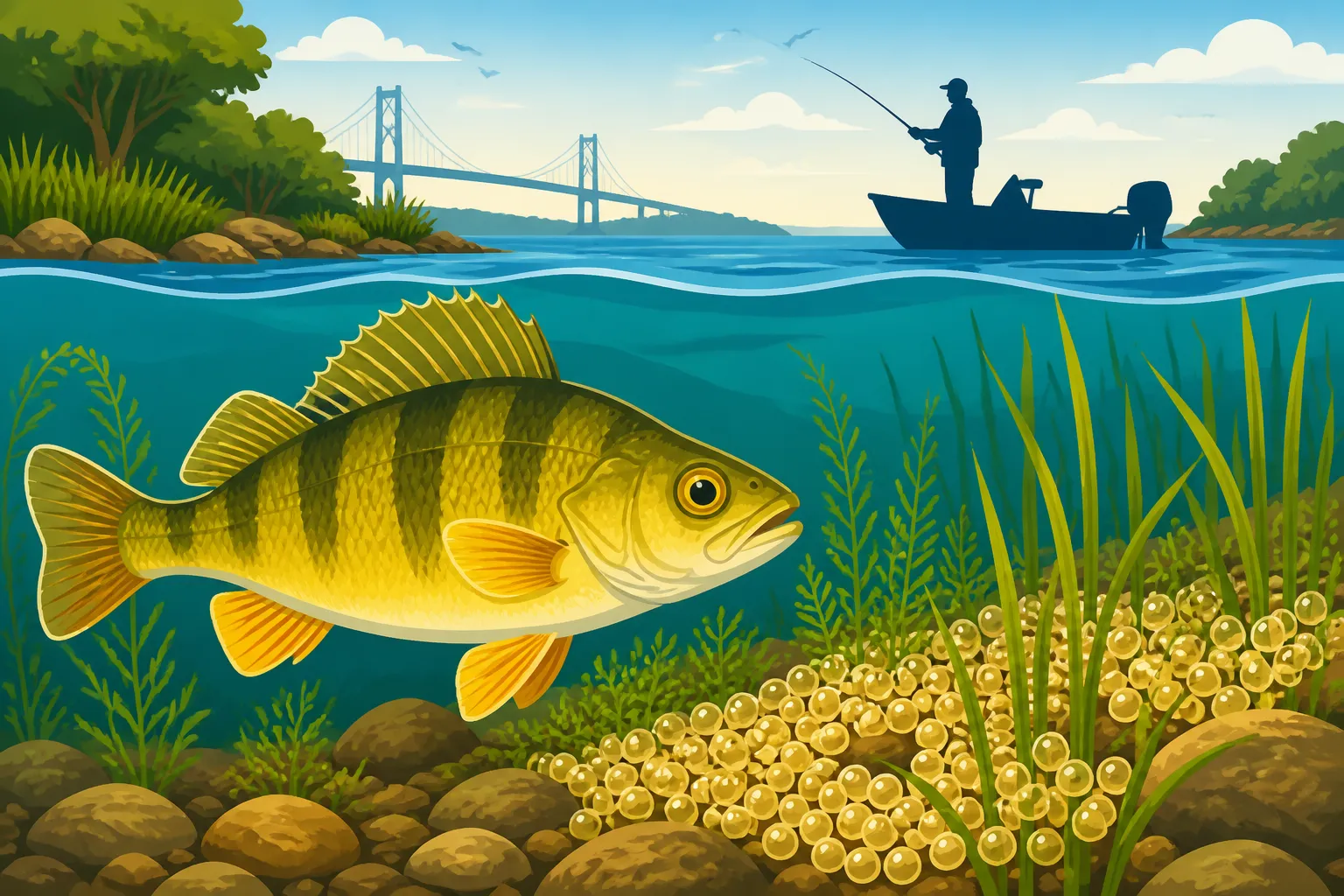
The absolute hallmark of prime yellow perch spawning habitat is an abundance of submerged structure and vegetation. Think about fallen trees, logjams, thick brush that's partially submerged, and especially dense beds of submerged aquatic vegetation (SAV) like milfoil or hydrilla. These structures serve multiple crucial purposes. Firstly, they provide a rough surface for the perch to attach their unique, gelatinous egg strands. These strands, which can be quite long, drape over branches and plants, keeping the eggs suspended and oxygenated.
Secondly, this cover offers protection. The eggs are vulnerable to predation from other fish and aquatic insects, and the tangled network of branches and plants creates a natural shield. Furthermore, the vegetation provides shelter for the adult perch during the spawning process, allowing them to focus on reproduction without constant threats. When you're scouting for spawning perch, look for these "junky" areas – places where it looks like a mess of branches and weeds. It's often where the magic happens.
Water Flow and Bottom Composition
While perch need fresh or very low-salinity water for spawning, they don't want strong, ripping currents that could dislodge their delicate egg strands. Instead, they seek out areas with slow-moving water, often in protected coves, backwaters, or oxbows of the main river channel. These calmer conditions ensure the eggs remain undisturbed and properly oxygenated without being swept away. A gentle flow is ideal, but anything too turbulent is usually avoided.
The bottom composition is also a factor, though perhaps less critical than structure. Perch prefer a relatively firm bottom, often composed of mud, silt, or sand, as long as there's plenty of submerged cover for egg attachment. They aren't typically spawning on hard, rocky bottoms like some other fish species. The combination of shallow, slow-moving water, abundant submerged structure, and suitable bottom substrate creates the perfect nursery for the next generation of yellow perch.
Angling Strategies During the Spawn and Ethical Considerations
Fishing for yellow perch during their spawning run can be incredibly rewarding, offering some of the fastest action of the year. However, because these fish are actively reproducing, it's paramount that we approach it with respect and a strong commitment to ethical angling practices. It’s about ensuring future generations of yellow perch for us and for the ecosystem.
Best Baits and Techniques for Spawning Perch
When yellow perch are in full spawn mode, their metabolism is often high, and they can be quite aggressive. They're also concentrated, making them easier to locate. Small jigs, often tipped with a piece of bloodworm, grass shrimp, or even a small minnow, are incredibly effective. Think tiny jig heads – 1/16th to 1/8th ounce – paired with equally small soft plastics like grub tails or curl-tail baits. Colors like chartreuse, white, and motor oil can be particularly deadly.
Many anglers also have great success with simple bottom rigs, often with two small hooks baited with bloodworms or grass shrimp. A small split shot a foot or so above the bait is usually all you need to get it down. The key is to present your bait slowly and methodically, often bouncing it gently along the bottom near submerged structure or dropping it directly into those brushy areas where they're known to hold. Casting small spinners or spoons can also entice a strike, especially on more aggressive fish. For more detailed techniques, you might want to read Techniques for Catching Yellow Perch in the Upper Bay.
Protecting Spawning Fish
While the bite can be incredible, remember that these fish are at their most vulnerable during the spawn. They are literally the future of the fishery. Practicing responsible catch and release, especially for larger females, is crucial. If you plan to keep fish, make sure you understand and adhere to all Maryland Fishing Size and Catch Limits by Species. Only keep what you'll reasonably eat, and release the rest gently.
Minimize the time fish are out of the water, use appropriate tackle that doesn't overstress the fish, and handle them carefully with wet hands. Avoid dragging them on the bank or boat deck. If you're encountering fish that are clearly gravid (full of eggs), consider moving to a different spot or switching to a catch-and-release only mindset for that outing. We all want to enjoy fishing, and being mindful during this critical time ensures that the yellow perch populations remain healthy and vibrant for years to come. Remember, a valid fishing license is required for most fishing in Maryland waters, so be sure to pick up your Maryland Fishing License Guide for 2026 before you head out.
| River/Tributary | Primary Spawning Areas | Key Characteristics | Best Fishing Approach |
|---|---|---|---|
| Northeast River | Upper tidal sections, various coves | Sheltered, fresh to low-salinity water, woody debris | Small jigs, bloodworms, minnows |
| Elk River | Lower sections, numerous small feeder creeks | Sheltered coves, submerged vegetation, slow current | Bottom rigs, grass shrimp |
| Susquehanna Flats | Grassy areas, channel edges, creek mouths | Extensive SAV, shallow, slow-moving water | Jigging, small swimbaits |
| Bush River | Upper reaches, marshy coves (Bynum Run) | Abundant marshland, protected shallow areas | Small jigs, live bait |
| Gunpowder River | Lower tidal sections (Dundee Creek) | Protected coves, moderate current, woody structure | Soft plastics, bloodworms |
Disclaimer
This article is for general informational purposes only and does not constitute professional advice. Laws, prices and regulations vary by location and change over time. Consult a qualified professional for guidance on your specific situation.