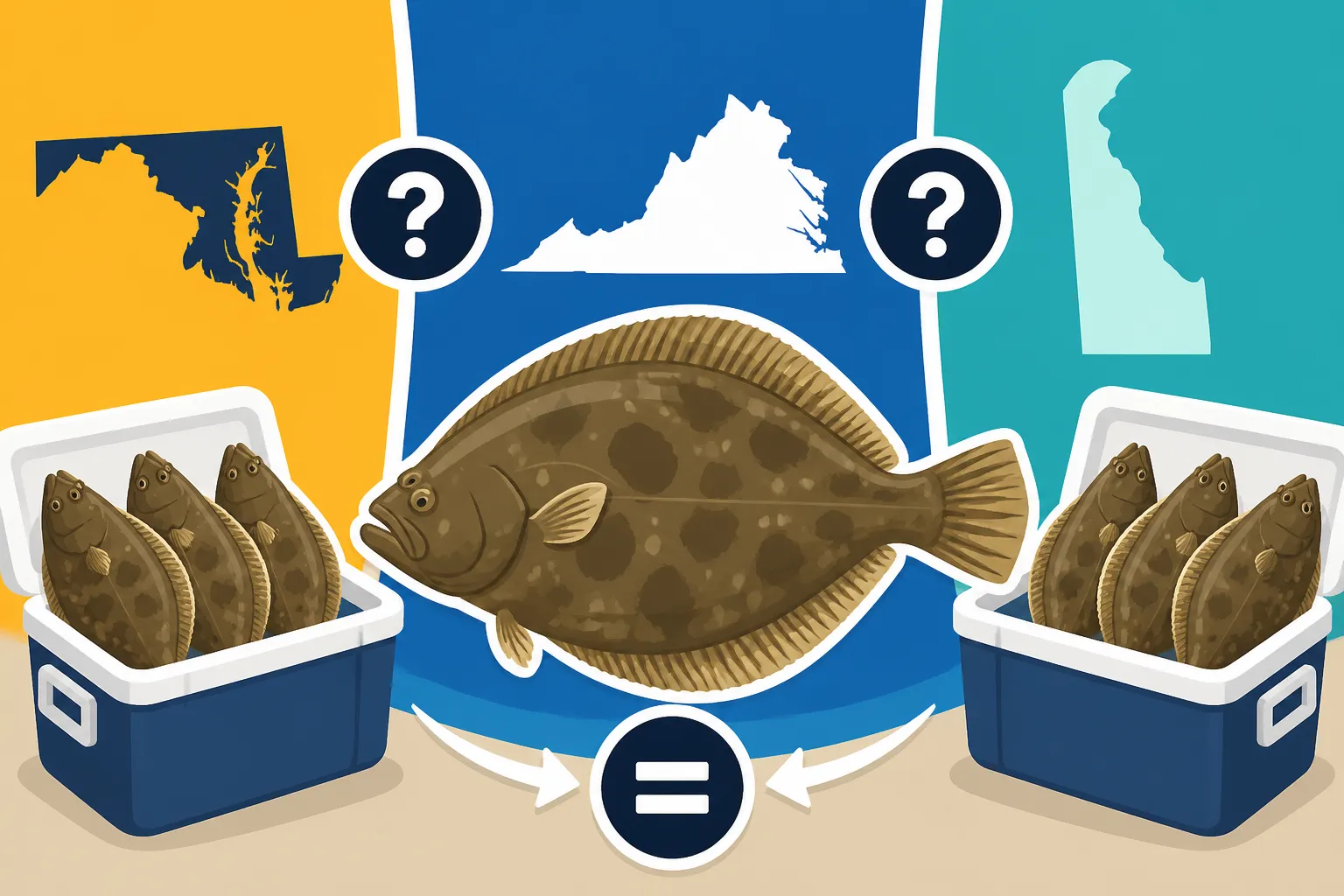
Do Maryland, Virginia and Delaware Share the Same Flounder Limit?
It's incredibly frustrating, isn't it, when you're trying to plan a fishing trip that might cross state lines, and you find yourself buried in a labyrinth of conflicting regulations? One of the most common questions I hear from anglers who love chasing flatfish, especially the delicious summer flounder, is whether they can just assume the rules are the same everywhere along the Mid-Atlantic. Sadly, the answer is often a resounding "not exactly," and this guide is here to untangle the specific flounder limits for Maryland, Virginia, and Delaware so you can fish confidently and legally.
Understanding Flounder Regulations Across State Lines
The notion that neighboring states might have identical fishing regulations for popular species like flounder makes perfect sense intuitively. After all, fish don't exactly respect invisible lines drawn on a map. However, the reality of fisheries management is a complex dance between state and federal agencies, often influenced by specific stock assessments within their jurisdictional waters, historical fishing pressure, and regional management plans. This means that while there's often coordination, there are almost always subtle, yet crucial, differences you need to be aware of.
Maryland Flounder Regulations
Here in Maryland, our Department of Natural Resources (DNR) works diligently to manage our fisheries, including the popular summer flounder, often referred to simply as "flounder." For a while, it felt like the rules were shifting constantly, and if you haven't checked them recently, you might be surprised by some of the latest updates. As of my last check, the Maryland DNR has set the minimum size for summer flounder at 17.5 inches. This means any flounder you catch must measure at least that long from the tip of its snout to the end of its tail, otherwise, it needs to go back into the water immediately.
The possession limit, which is the number of fish an individual angler can keep in a single day, is currently 4 flounder per person. This limit applies whether you're fishing in the Chesapeake Bay or out in the Atlantic Ocean waters off Ocean City. It's important to always double-check the latest rules before you head out, as regulations can sometimes change mid-season, as they have in the past. If you’re curious about more details, our comprehensive guide on Maryland Flounder Regulations for 2026 dives even deeper into these specifics.
Virginia Flounder Regulations
Just south of us, Virginia's waters are also prime territory for flounder, and anglers often make trips across the state line to explore different fishing grounds. The Virginia Marine Resources Commission (VMRC) is responsible for setting and enforcing these regulations. For summer flounder in Virginia, the minimum size limit is set slightly differently than Maryland's. Anglers must ensure their flounder measure at least 17 inches from snout to tail.
Similar to Maryland, Virginia also maintains a daily possession limit of 4 flounder per person. This applies to all state waters, including the lower Chesapeake Bay and its tributaries, as well as the coastal waters off places like Virginia Beach. While a half-inch difference in size might seem minor, it's a critical detail that could lead to a violation if you're not paying close attention, especially if you're used to fishing primarily in Maryland. Make sure your measuring device is accurate and that you're always mindful of the specific state's rules you're fishing in.
Delaware Flounder Regulations
Moving north, Delaware offers its own fantastic opportunities for flounder fishing, particularly in its inland bays and coastal areas. The Delaware Department of Natural Resources and Environmental Control (DNREC) oversees the fishing regulations for the First State. For summer flounder in Delaware, the minimum size limit is currently 17.5 inches. This puts Delaware's minimum size in line with Maryland's.
The daily possession limit in Delaware is also consistent with its neighbors, set at 4 flounder per person. This applies to all of Delaware's tidal waters. So, while Maryland and Delaware share the same minimum size and possession limit for flounder, Virginia has that slight half-inch difference on the minimum size. It's these small variations that can trip up even the most seasoned anglers.
Why the Differences Exist
You might wonder why these seemingly minor differences in size limits exist when the fish are essentially the same species swimming in interconnected waters. The answer lies in the complex world of fisheries science and management. Each state conducts its own stock assessments and participates in regional management plans, often spearheaded by bodies like the Atlantic States Marine Fisheries Commission (ASMFC). These bodies aim to manage migratory species like flounder across their entire range.
However, local conditions, historical harvest data, specific habitat characteristics, and even differing state legislative priorities can lead to slight variations in regulations. For example, one state might have a higher proportion of smaller, younger flounder in a particular area, leading them to set a slightly higher minimum size to protect those fish and allow them more time to reproduce. These decisions are data-driven and aim to ensure the sustainability of the flounder population for future generations, even if it means a little more homework for us anglers.
The Interstate Waters Conundrum
When you're dealing with a region like the Delmarva Peninsula, where three states share coastlines and influence various bays and estuaries, the concept of "state lines" can become a bit fuzzy, especially on the water. It’s not always clear cut which state's jurisdiction you’re in, and this can lead to considerable confusion regarding which regulations apply.
Fishing the Pocomoke River and Tangier Sound
Consider fishing areas like the Pocomoke River or parts of Tangier Sound. These are classic examples of border waters that can sometimes fall under different jurisdictions depending on precisely where you drop your line. The Pocomoke River, for instance, flows from Delaware into Maryland and then into the Chesapeake Bay. Tangier Sound, while primarily in Maryland, is very close to the Virginia line in its southern reaches.
If you're fishing in these areas, it's absolutely crucial to know your precise location and the corresponding state boundaries. While flounder are more commonly targeted in the larger bay or ocean, these estuarine waters can hold them too. My advice? Always carry a reliable GPS chartplotter or a marine navigation app on your phone (like Navionics or C-MAP) that clearly shows state boundaries. If there's any doubt, err on the side of caution and adhere to the stricter of the two states' regulations or, better yet, confirm you are safely within the state whose license you hold and whose regulations you are following.
Ocean Waters vs. Bay Waters
Another common point of confusion arises with ocean versus bay regulations. For many species, federal waters (typically three miles offshore and beyond) have their own set of rules, often managed by the Mid-Atlantic Fishery Management Council (MAFMC) in coordination with NOAA Fisheries. However, for flounder, most of the recreational fishing effort happens within state waters (from the shoreline out to three miles).
What this means is that both Maryland and Delaware's Atlantic coastal waters, and Virginia's Atlantic coastal waters, will follow their respective state regulations for flounder. There isn't a separate "federal flounder limit" that recreational anglers need to worry about unless they are venturing significantly offshore for other species. So, if you're surf fishing off Assateague Island or fishing the Ocean City Inlet, you’ll be following Maryland's rules. If you're fishing off Cape Henlopen in Delaware, it's Delaware's rules. This simplifies things a bit, but still requires awareness of which state you're physically in.
Navigating the Rules for a Multi-State Angler
For those of us who love to explore and frequently fish in multiple states, keeping track of all the different rules can feel like a full-time job. But it doesn't have to be overwhelming if you adopt a few smart habits.
Checking Current Regulations Before You Go
This is, without a doubt, the single most important piece of advice I can give you. Fishing regulations are not static; they change. Sometimes they change annually, sometimes mid-season, and sometimes in response to emergency stock assessments. Relying on an old printout or what you "heard last year" is a recipe for trouble.
Before every trip, especially one near state lines, make it a habit to:
- Visit the official state DNR/VMRC/DNREC website: These are always the most up-to-date and authoritative sources. Look for recreational fishing guides or regulation summaries.
- Download relevant apps: Many states have official fishing apps that provide regulations directly to your phone.
- Grab a current print guide: Tackle shops in coastal areas usually have free printed regulation guides. Just make sure it's the current year's version.
A quick search for "Maryland fishing regulations 2024" or "Virginia flounder limits" on your phone before you leave home can save you a hefty fine and a lot of headaches. It's a small investment of time that pays off big in peace of mind.
Licensing Requirements for Each State
Beyond catch limits, don't forget about your fishing license! Just as regulations for fish species differ, so do the licensing requirements. A Maryland fishing license does not grant you the right to fish in Virginia or Delaware, and vice-versa. Each state requires its own separate license.
- If you're fishing in Maryland, you need a Maryland license. Our guide on the Maryland Fishing License Guide for 2026 can help you sort through your options.
- If you plan to fish in Virginia, you'll need a Virginia license.
- If you're headed to Delaware, you'll need a Delaware license.
There are some exceptions, such as certain public piers in Maryland that cover the license for anglers fishing from them, or specific interstate agreements for shared waterways like the Potomac River, but these are exceptions, not the rule. Always assume you need a separate license for each state you plan to fish in. The cost of a non-resident 3-day or 7-day license is usually quite reasonable and well worth avoiding a citation. You'll also need to understand the difference between a Maryland Nontidal vs Tidal Fishing License, Explained, as these also dictate where you can fish within Maryland's borders.
Consequences of Misunderstanding Regulations
It's easy to think, "What's the big deal if my flounder is a half-inch short?" The big deal is that fisheries enforcement officers take these regulations very seriously, and for good reason. They are vital to protecting fish stocks and ensuring sustainable fishing for everyone. Getting caught with undersized fish or over your daily limit can result in significant fines, confiscation of your catch, and even suspension of your fishing privileges.
It's not just about the money; it's about being a responsible angler. We all want healthy fish populations for years to come. So, do your due diligence, understand the rules for where you're fishing, and if you're ever in doubt, just release the fish. It's better to be safe than sorry, and it's always satisfying to watch a healthy fish swim away.
To help you keep track of the specific differences for flounder, here's a quick comparison table:
| State | Minimum Size Limit (Summer Flounder) | Daily Possession Limit | Season |
|---|---|---|---|
| Maryland | 17.5 inches | 4 fish per person | Year-round |
| Virginia | 17 inches | 4 fish per person | Year-round |
| Delaware | 17.5 inches | 4 fish per person | Year-round |
As you can see, the main difference lies in that crucial half-inch between Virginia and its northern neighbors. While the daily limit is consistent across all three, always double-check these details with the official sources before your trip, as regulations are subject to change. And remember, when you're stocking up on tackle for your flounder adventures, whether it's bucktails, Gulp! artificial baits, or a new measuring board, you can find a wide variety of options on Amazon to get you ready for the water.
So, while Maryland, Virginia, and Delaware don't share identical flounder limits, they are quite similar, with the main distinction being a small difference in the minimum size requirement for Virginia. Staying informed is your best tool for a successful and lawful fishing trip across the beautiful Mid-Atlantic.
Disclaimer
Please note that fishing regulations are subject to change by state and federal authorities. While we strive to provide the most current information, it is the angler's responsibility to verify all regulations with the relevant state's Department of Natural Resources or equivalent agency before fishing. This guide is for informational purposes only and should not be considered legal advice.