Best Tide for Fishing the Chesapeake Bay
Chesapeake Bay tidal currents and their influence on fish feeding patterns explain fishing success across Maryland waters.
Match the method to the moment.
Seasonal patterns, proven tactics, rigging and presentation basics, bait choices, and how to adapt as conditions change.
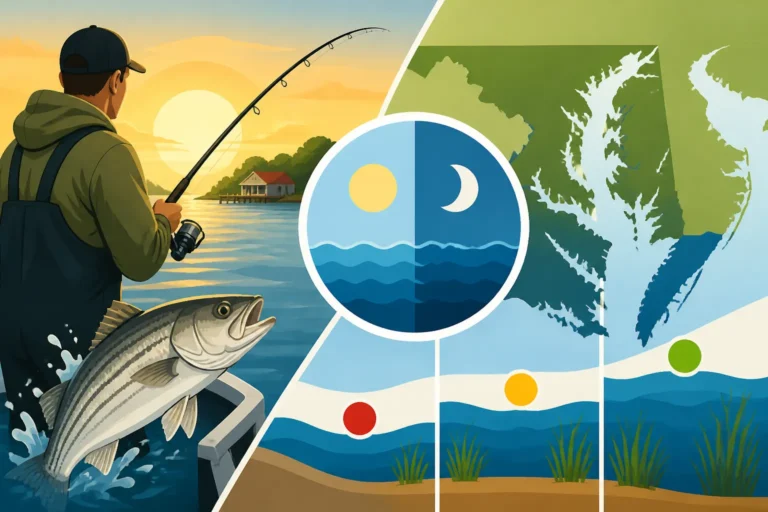
Chesapeake Bay tidal currents and their influence on fish feeding patterns explain fishing success across Maryland waters.
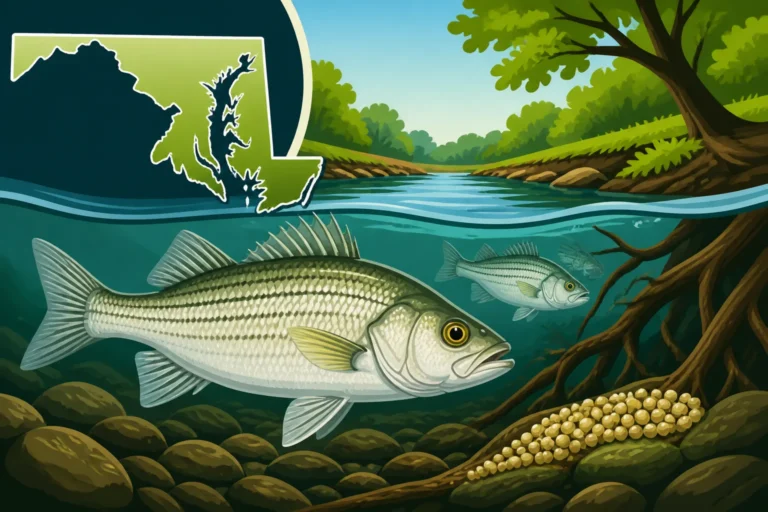
White perch migration into shallower creeks during spring for spawning ensures adhesive egg survival in protected nursery environments.
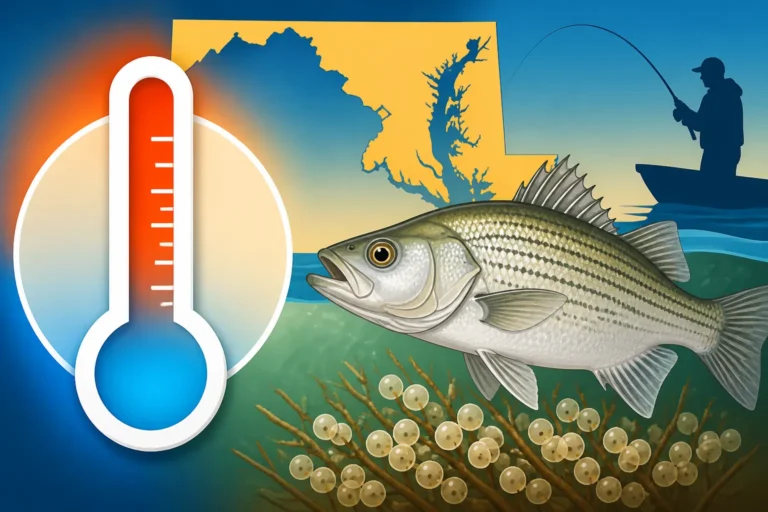
White perch spawning in Maryland requires water temperatures of fifty to fifty-five degrees Fahrenheit to trigger the annual run.
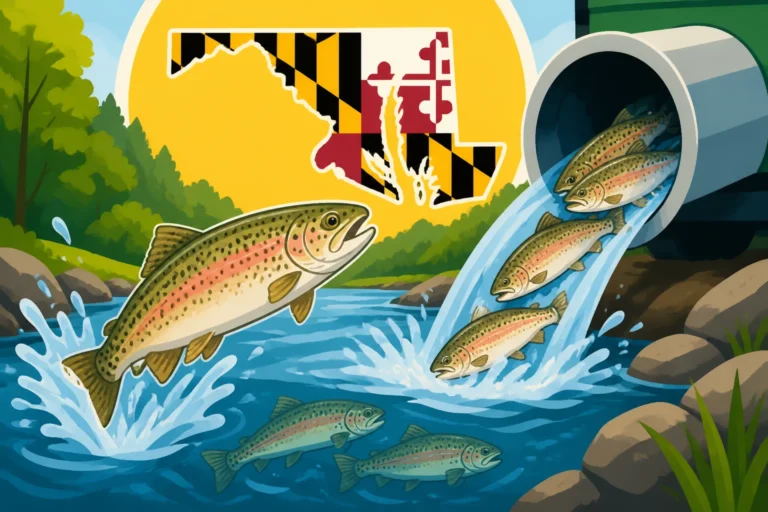
Maryland trout stream restocking schedules depend on weather, fish availability, angler access, and management area designations.
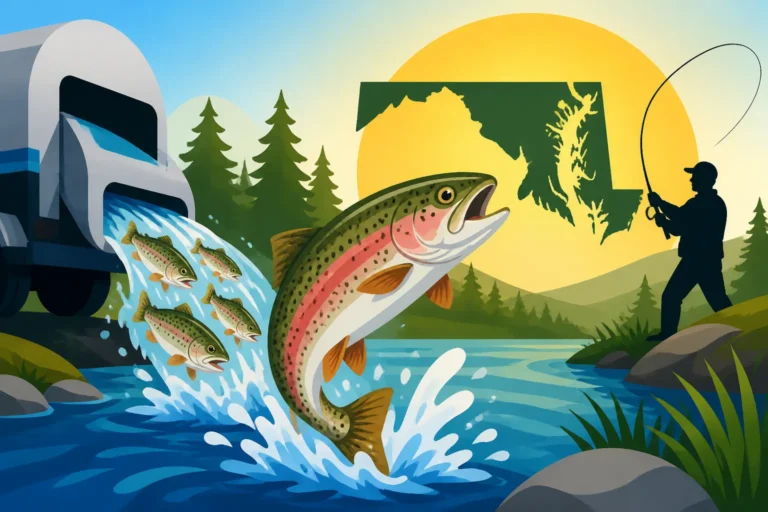
Maryland trout stocking schedules, managed by the Department of Natural Resources, begin in late winter and peak through spring.
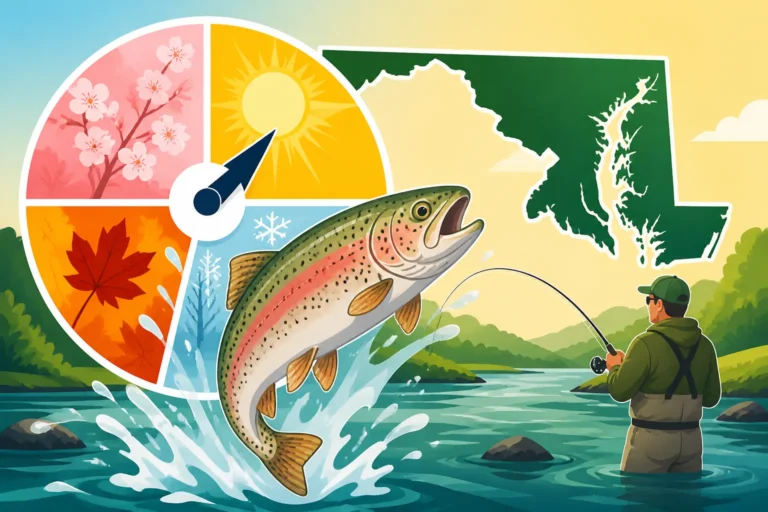
Maryland trout fishing seasons and Department of Natural Resources stocking schedules help anglers catch rainbow, brown, and golden trout.
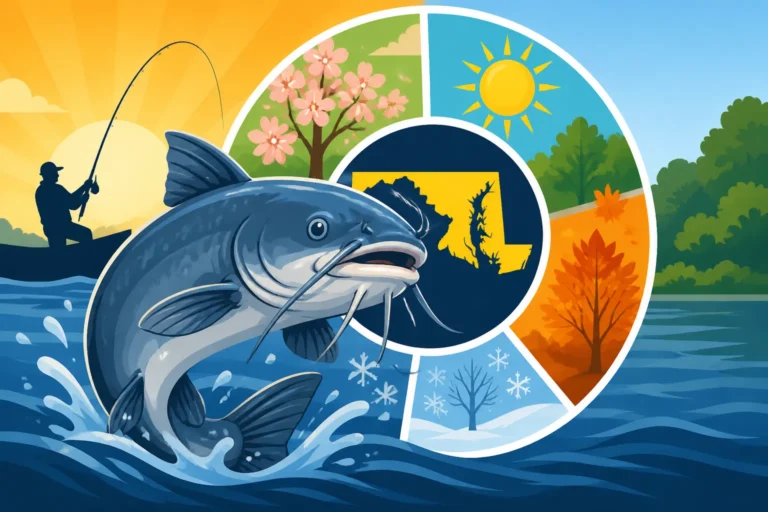
Blue catfish seasonal behavior and water temperature patterns in Maryland rivers explain the best months for targeting them.
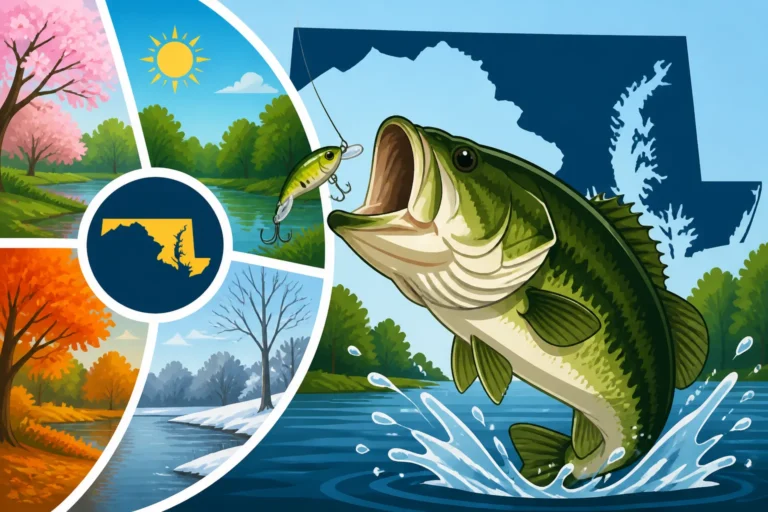
Seasonal patterns of Maryland largemouth bass reveal water temperatures and feeding habits for catching fish throughout the year.
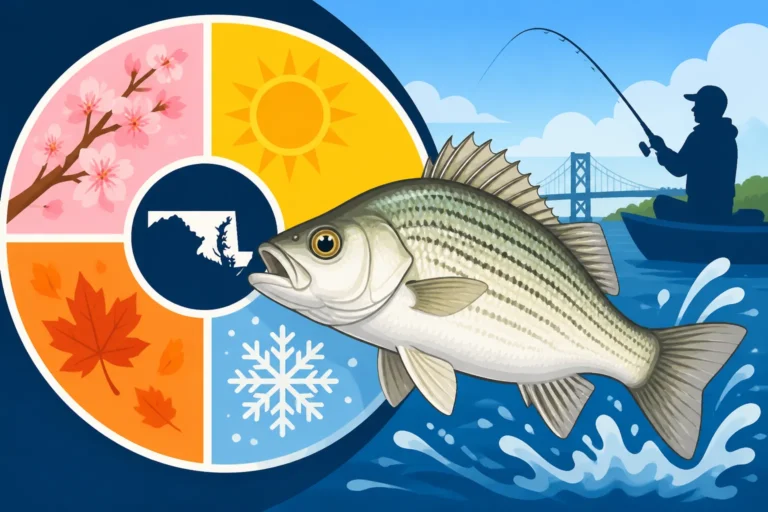
Spring spawning runs in March and April bring Maryland white perch into shallow creeks, creating peak fishing opportunities.
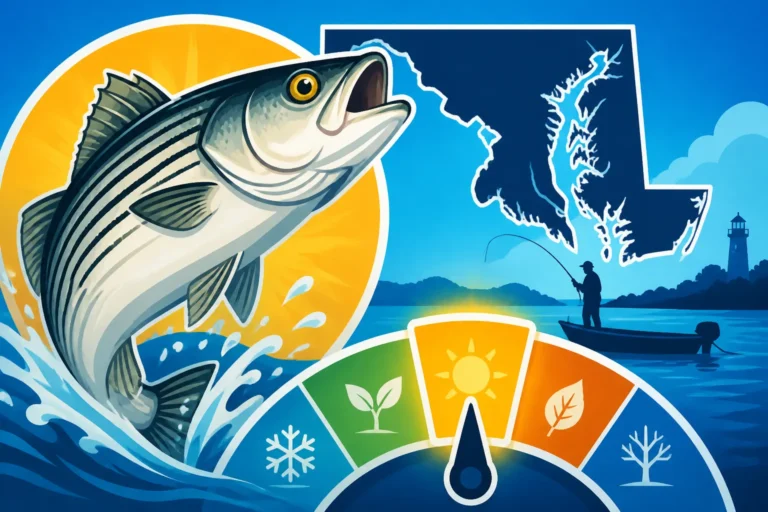
Maryland striped bass seasons, annual migration patterns, and spawning habits determine the best months for catching rockfish in the Chesapeake Bay.