How to Read a Sandbar for Surf Fishing
It can be incredibly frustrating to spend hours casting into what looks like promising water from the beach, only to come up empty-handed while another angler just a hundred yards down the shore is consistently reeling in fish. The secret often lies not just in your bait or technique, but in your ability to "read the water"—specifically, understanding the subtle clues that sandbars offer in the surf. This guide will walk you through how to decipher the patterns of the waves and the lay of the sand beneath the surface, transforming you from a casual caster into an angler who knows exactly where the fish are hiding along Maryland's beautiful coastline.
The Dynamic Nature of Sandbars in Surf Fishing
Sandbars are not static structures; they are constantly shifting underwater landscapes sculpted by the relentless action of waves, currents, and tides. This dynamic environment is precisely what makes them so attractive to various fish species. Understanding this fluid nature is the first step in learning how to effectively read them for surf fishing success. They create a complex underwater topography that provides food, shelter, and ambush points for fish.
Why Sandbars Are Fish Magnets
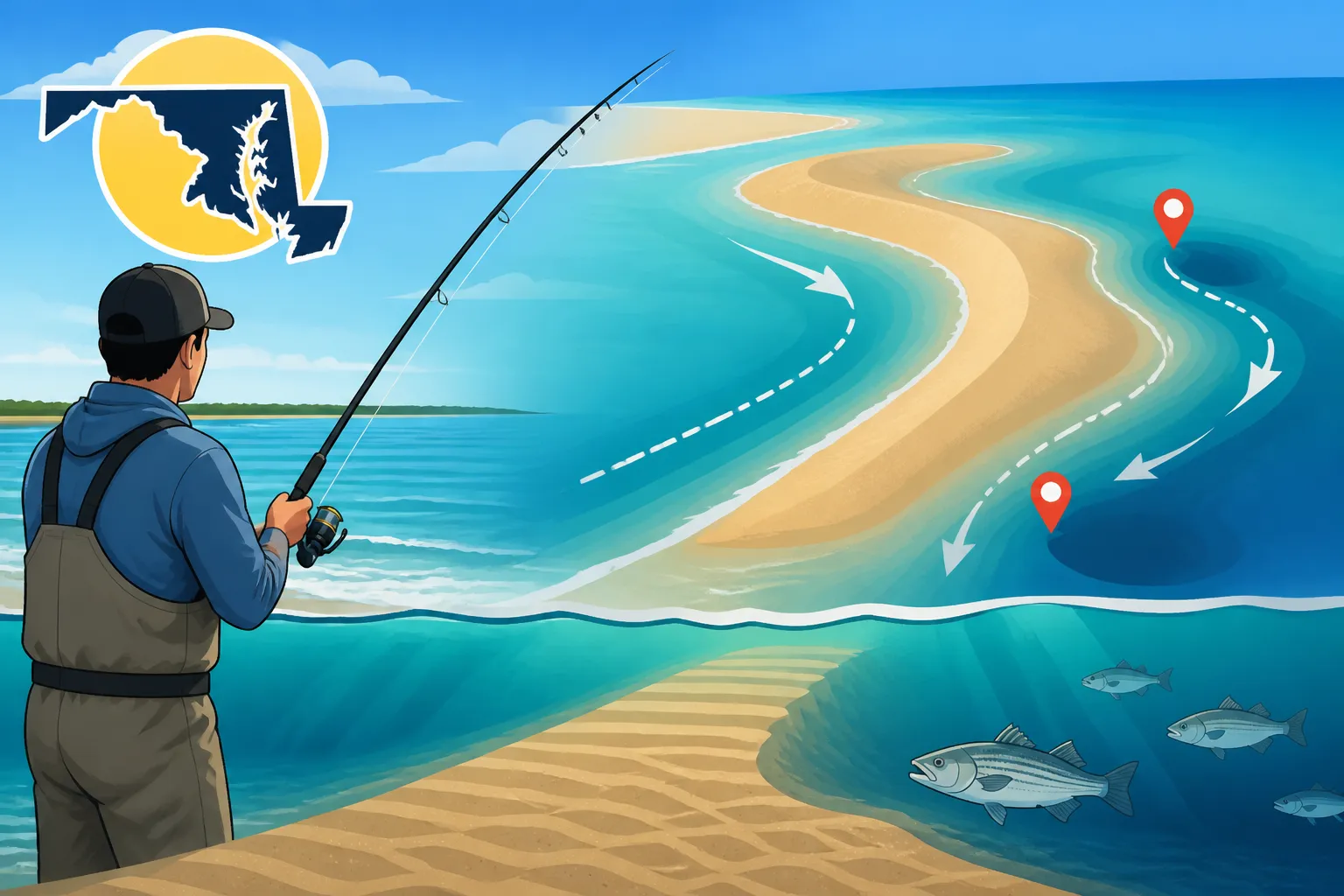
Think of a sandbar as an underwater ridge or hill. On the ocean side, waves break over the shallower crest of the bar. On the landward side, or between sandbars, are deeper channels known as troughs or gutters. These gutters are highways for baitfish and gamefish alike, offering deeper water for travel and protection. The breaking waves stir up the bottom, dislodging crabs, sand fleas, and other invertebrates, which become an irresistible buffet for hungry fish like striped bass, red drum, and flounder. Fish will patrol these gutters, especially where they connect to deeper water or where structure concentrates bait.
Consider a typical scenario: you arrive at the beach, and the waves are consistently breaking in the same spot, perhaps 30-50 yards out. This indicates a shallower sandbar. The water behind that initial break, closer to shore, is often a deeper trough. This is prime real estate. Larger predatory fish will often sit in the deeper water of the trough, waiting for baitfish to be swept over the bar or to simply patrol the calmer, food-rich waters. It's a natural conveyor belt of food, and knowing how to identify it is crucial.
Shifting Sands: How Currents and Storms Reshape the Beach
One of the biggest challenges, and opportunities, in surf fishing is that the beach environment is always changing. A strong storm can completely rework the underwater landscape overnight. What was a deep trough yesterday might be a shallow flat today, and a new, productive cut might have formed. This is why "reading the water" isn't a one-time skill you learn; it's an ongoing observation. The same beach you fished last week might require a completely different approach this week.
Coastal currents, known as longshore currents, also play a huge role. These currents run parallel to the shore and can gradually move vast amounts of sand, creating and destroying sandbars and cuts over time. A strong outgoing tide can carve out deeper cuts through a sandbar, which are fantastic ambush points for fish. Because of this constant flux, anglers who take the time to observe the water before casting are often the most successful. You might even consider bringing a good pair of binoculars, available on Amazon, to scan the distant water for wave patterns that indicate structure before you even step onto the sand.
Key Features to Spot When Reading a Sandbar
Learning to read the sandbar is all about understanding what different wave patterns and water movements tell you about the underwater topography. It's like learning a secret language that the ocean speaks, and once you understand it, you'll unlock far more productive fishing spots.
Wave Breaks and Whitewater: Your First Clues
The most obvious indicators of underwater structure are where waves break. Waves typically break when they encounter shallower water. If you see a line of waves consistently breaking further offshore, that's almost certainly the crest of a sandbar. The whitewater created by these breaking waves is also a visual beacon. This foamy, turbulent water is where baitfish get disoriented and where small crustaceans are churned up, creating an easy meal for predatory fish.
However, don't just focus on the furthest break. Look for multiple lines of breaking waves. This could indicate several parallel sandbars with troughs in between. The water between the furthest breaking waves and the shore is often where you'll find the most productive gutters. Fish will sit in these deeper, calmer channels, waiting for the food stirred up by the breaking waves to come to them. When you're ready to cast, try targeting the edges of these whitewater zones or just beyond them, rather than directly into the most turbulent section.
Gutters, Cuts, and Rip Currents: Fish Highways
Once you've identified the main sandbar, your next task is to find the deeper channels that fish use.
- Gutters (Troughs): These are the deeper areas between the sandbar and the shore, or between two parallel sandbars. They appear as darker, calmer stretches of water where waves might not break, or only roll rather than crash. These are prime feeding zones. You'll often see baitfish schooling here, and bigger gamefish will patrol these areas looking for an easy meal.
- Cuts: A "cut" is essentially a break or a deeper channel through a sandbar. You can often spot a cut by observing a section of the sandbar where the waves aren't breaking, or where they appear to be moving more smoothly and with less intensity than on either side. These cuts are especially valuable because they act as funnels for bait and offer an easy escape route to deeper water for gamefish. Fish love to hold on either side of a cut, ambushing anything that passes through.
- Rip Currents: These are powerful, narrow currents of water moving directly away from the shore, often formed when water pushed onto the beach by waves finds an escape route through a break in a sandbar. You can spot a rip current by a calm stretch of water where waves aren't breaking, often with foamy, discolored water extending offshore. While dangerous for swimmers, rip currents are phenomenal fishing spots. They carry disoriented baitfish and food offshore, attracting gamefish that will lie in wait on the edges of the rip, or even within its calmer center, waiting for food to be delivered. Always be cautious around rips, but know that they can concentrate fish significantly.
When fishing the Maryland coast, particularly spots like those on Assateague Island, being able to identify these subtle changes in the water can make all the difference. Remember, fish are always looking for the path of least resistance and the best feeding opportunities, and these features provide just that.
Subtle Color Changes and Debris Lines
Beyond wave patterns, pay attention to the color of the water. Deeper gutters and cuts will often appear darker than the shallower sandbars around them. This is due to the increased depth allowing less light to reflect from the bottom. These color variations might be subtle, especially on an overcast day, but they are reliable indicators of depth changes.
Furthermore, look for lines of debris (seaweed, foam, small pieces of wood) floating parallel to the shore. These "debris lines" often form at the convergence of different currents or along the edges of deeper channels. Baitfish and larger predators will frequently gather around these lines, as they can indicate currents that concentrate food or provide a visual reference point for fish holding in an area. Sometimes, these lines also form where different water temperatures meet, which can also be a fish attractor. If you see a consistent line of debris, it's a good bet that there's a current or depth change creating that boundary, making it a promising area to cast.
Practical Tips for Locating Productive Sandbar Spots
Armed with the knowledge of what to look for, the next step is to refine how you apply this knowledge to find the most productive spots for your surf fishing adventure. It takes practice and patience, but the rewards are well worth it.
Observing at Low Tide: Nature's Blueprint
One of the absolute best ways to understand the structure of the beach you're fishing is to visit it at dead low tide, if possible. At low tide, the sandbars, troughs, and cuts are often exposed or much shallower, revealing their true shape. What looks like an undifferentiated flat at high tide might reveal a complex network of channels and ridges at low tide. Take photos, make mental notes, or even draw a simple map of the prominent features.
This reconnaissance mission allows you to see the "bones" of the beach, helping you visualize where fish might hold during higher tides. You'll see exactly where those deep gutters run, where cuts funnel out to the ocean, and how far offshore the main sandbars extend. For example, if you see a significant exposed sandbar with a deep, dark channel running behind it near the shore, you know that during high tide, that channel will be an excellent place to target with your bait. This insight can dramatically increase your success rate, especially when you return to fish during a different tidal stage.
Using Elevation and Polarized Sunglasses
When you're actually fishing, try to get a bit of elevation if you can. Standing on a dune (where permitted) or even just a cooler can give you a better vantage point to see the wave patterns and color changes. From a slightly higher perspective, the nuances of the water become much clearer, allowing you to differentiate between breaking waves over a sandbar and smooth water in a channel.
Polarized sunglasses are not just a fashion accessory for anglers; they are an essential tool. They cut through the glare on the water's surface, allowing you to see into the water much more clearly. This means you can spot darker troughs, lighter sandbars, and even schools of baitfish or larger gamefish patrolling close to the surface. It's an immediate upgrade to your ability to read the water effectively. You can find excellent, affordable polarized options on Amazon that will make a significant difference in your visibility.
The Role of Tides and Currents
While sandbars define the stationary (or semi-stationary) structure, tides and currents bring that structure to life. Fish feeding behavior is heavily influenced by moving water. The incoming and outgoing tides create currents that sweep bait in and out of the gutters, over and around sandbars, and through cuts. Typically, the hour or two leading up to high tide, and the first hour or two of the outgoing tide, are often the most productive for surf fishing. This is when the water movement is strongest, activating fish.
Understanding How Tides Affect Fishing in Maryland's Chesapeake Bay can give you a deeper insight into how these forces influence fish behavior, even if you're fishing the open coast. On the outgoing tide, pay close attention to any visible cuts or channels through the sandbar. These become conduits where baitfish are swept out, and gamefish will line up to intercept them. Conversely, on an incoming tide, baitfish often get pushed up against the sandbar, making the landward side of the bar a productive area.
Strategic Casting for Maximum Coverage
Once you've identified potential fish-holding structures like gutters and cuts, your casting strategy becomes key. Don't just cast as far as you can every time. Instead, aim to cover different depths and areas.
- Fan Casting: Start by casting directly out, then make a cast slightly to your left, then another slightly to your right, working your way across a section of the beach like a fan. This ensures you cover the entire width of the visible trough or target area.
- Targeting the Edges: Instead of casting directly into the middle of a breaking wave, try casting just beyond the whitewater, where the water is deeper, or along the edges of a rip current. Fish will often hold where the turbulent water meets the calmer water, as it offers a balance of food and less effort for them.
- Exploring Different Depths: If you identify a main sandbar and a shore-side trough, make sure some casts land on the shallow side of the bar, some directly on top of it, and others in the deeper trough. By varying your retrieve speed and bait presentation, you can effectively prospect different depths. This is particularly important when fishing for species like flounder, which often hug the bottom in deeper cuts and channels. When you're fishing coastal Maryland spots like Assateague Island, applying these techniques can drastically improve your chances. For more specific advice on this location, check out our guide on Techniques for Surf Casting at Assateague or Best Bait for Surf Fishing at Assateague Island.
Recognizing Productive Patterns and Zones
Reading a sandbar isn't just about identifying individual features; it's about seeing how these features combine to create high-probability fishing zones. It's where the art of observation meets the science of fish behavior.
The Inner Gutter: Often Overlooked and Highly Productive
Many novice surf anglers focus solely on casting out past the furthest breaking waves, believing bigger fish are always way out there. While offshore bars can be productive, the inner gutter – the deeper channel closest to shore, often just behind the first breaking wave – is frequently overlooked and can hold a surprising number of fish. This is especially true for species like white perch, smaller striped bass, and even flounder that cruise close to the beach looking for disturbed bait.
This inner gutter might only be knee-deep, but it acts as a perfect ambush point where fish can snatch food churned up by the waves or target baitfish trapped in the shallows. On Maryland's coast, especially during certain times of year, these closer-in areas can provide incredible action. Don't be afraid to make some shorter casts directly into this zone. You might be surprised by what you find!
Intersections and Converging Currents
Just like on land, intersections are often key activity hubs. In surf fishing, look for where cuts through a sandbar intersect with a deeper trough, or where a rip current pulls water out. These points of convergence often concentrate bait and, consequently, gamefish. Imagine a narrow highway (the cut) feeding into a wider thoroughfare (the trough or the ocean). Fish will stage at these junctions, ready to intercept anything moving between these different sections of water.
These areas can be identified by more turbulent water patterns, stronger currents, or subtle changes in wave direction. It's where different "flows" of water meet and mix, creating eddies and current seams that baitfish love to congregate in. Targeting these confluence points with your casts can be incredibly effective. Sometimes, you'll see a distinct change in the water's surface, like a V-shape pointing offshore, which can indicate such a convergence.
Understanding Fish Preferences for Specific Structure
Different fish species will favor different types of sandbar structure.
- Striped Bass (Rockfish): These powerful predators love to cruise the deeper gutters parallel to the shore, especially on an incoming or outgoing tide. They also ambush bait around cuts and the edges of rip currents. For more on targeting these fish, our guide on Maryland Striped Bass Fishing Techniques offers plenty of advice.
- Flounder: Flounder are ambush predators that lie on the bottom. They prefer the deeper, calmer pockets within cuts and troughs, waiting for baitfish or crustaceans to drift by. They are less likely to be found on top of shallow sandbars. If you're focusing on flounder, concentrate on the darkest, calmest areas you can identify.
- Red Drum: Red drum often patrol the surf line, especially in the deeper troughs and near strong current areas like cuts and rips, feeding on crabs and other bottom dwellers. Our guide on Techniques for Catching Red Drum at Assateague provides more detailed insights for these powerful fish.
- Bluefish: These aggressive fish are often found wherever bait is abundant. They will crash through bait schools in the whitewater over a sandbar or aggressively feed in the deeper gutters. If you see active feeding frenzies, that's often bluefish.
By combining your knowledge of the sandbar's features with the preferences of your target species, you can refine your approach and increase your chances of a successful outing. Don't forget that specific times of year can also influence what fish are present, so checking guides like Best Time to Surf Fish Assateague Island can be very helpful.
Here's a quick reference table to help visualize these features:
| Feature | Visual Cues | What It Means for Fish | Target Fish (Examples) |
|---|---|---|---|
| Sandbar (Crest) | Line of consistent breaking waves, whitewater, lighter water color. | Shallower water, often turbulent. Baitfish can get disoriented here. Offers a "speed bump" for bait moving offshore. | Striped Bass, Bluefish |
| Gutter (Trough) | Darker, calmer water between sandbar and shore (or between sandbars), less breaking waves. | Deeper water, protection, highway for bait and gamefish. Fish patrol here for food churned from the bar. | Striped Bass, Flounder, Red Drum |
| Cut (Through Bar) | Section of the sandbar where waves don't break, or break less intensely; often V-shaped foam. | Funnels bait and water through the bar. Excellent ambush points on either side of the cut as fish travel through. | Striped Bass, Flounder, Red Drum |
| Rip Current | Calm stretch of water where waves don't break, often discolored or foamy, moving offshore. | Carries disoriented baitfish and food offshore. Fish stage on the edges or in the calmer center of the rip to intercept food. | Striped Bass, Bluefish, Red Drum |
| Debris Line | Floating seaweed, foam, or trash forming a line. | Indicates converging currents or edges of channels. Baitfish and predators often gather along these lines where food concentrates. | Various |
Ultimately, becoming proficient at reading a sandbar for surf fishing is a journey of observation and experience. Each trip to the beach offers new lessons, as the ocean constantly reshapes its sandy canvas. By understanding the dynamic nature of sandbars, recognizing their key features, and applying practical observation techniques, you'll be well on your way to consistently finding those sweet spots where the fish are hiding along Maryland's scenic coast. So grab your gear, put on those polarized sunglasses, and start speaking the ocean's secret language!
Disclaimer
This article is for general informational purposes only and does not constitute professional advice. Laws, prices and regulations vary by location and change over time. Consult a qualified professional for guidance on your specific situation.