Anchoring and Chum Lines for Chesapeake Bay Rockfish in Maryland
Ever spent a gorgeous day on the Chesapeake Bay, rods out, hoping for that thrilling tug, only to be met with frustrating silence? We've all been there, staring at a glassy surface, wondering where the rockfish (our beloved striped bass) have gone. But what if you could turn the tables and literally draw the fish to your boat, creating your own feeding zone? That's the magic of anchoring and deploying a well-managed chum line. This comprehensive guide will walk you through everything you need to know to master this highly effective, yet often misunderstood, technique for targeting striped bass in Maryland waters.
Understanding the Why and When of Chumming
Chumming isn't just about throwing food in the water; it's a strategic method designed to exploit a fish's most primal senses. When done correctly, it can turn a slow day into a memorable one, bringing the fish directly to your hooks.
Why Chumming Works: The Scent Trail Advantage
At its core, chumming works because fish, especially predatory species like striped bass, have an incredibly keen sense of smell. They are constantly on the lookout for food, and a consistent trail of attractive scent and small particles acts like a dinner bell ringing through the water. This scent trail mimics natural feeding activity, sending a clear signal to any passing fish: "Food is here, and lots of it!"
This potent olfactory invitation attracts fish from a wider area than you could ever hope to cover with casting alone. Instead of actively searching for dispersed schools, you're creating an irresistible aroma corridor that guides them right to your boat. Wary rockfish, which might ignore a single bait, often become more aggressive and competitive when they encounter a continuous food source and sense other fish potentially feeding. It taps into their competitive instincts, making them more likely to strike your baited hook.
Think of it this way: when you're just casting, you're hoping to place your bait right in front of a fish's nose. With a chum line, you're creating a giant, invisible net of scent that pulls fish from all directions into your strike zone. It's a fundamental shift from hunting to attracting, dramatically increasing your chances of a hook-up, especially when fish are not actively chasing schools of baitfish.
When to Deploy Your Chum Line: Optimal Conditions
Timing and location are crucial for an effective chumming operation. You can't just drop chum anywhere and expect miracles. The most critical factor is a moving tide. Chum needs current to disperse properly and create that inviting scent trail. Without current, your chum will simply sink in a pile beneath your boat, doing little to attract fish from a distance. However, too strong a current can disperse your chum too quickly or push it away from your target area, making it less effective. A moderate, steady current is ideal. For a deeper dive into how these forces affect your fishing, you might want to read about How Tides Affect Fishing in Maryland's Chesapeake Bay.
Ideal spots for chumming are typically areas where rockfish are known to congregate, but might not be actively feeding or chasing bait. This often includes channel edges, humps, oyster reefs, or sudden depth changes in areas of moderate current. Your sonar is your best friend here, helping you identify these structures and even marking schools of baitfish or larger fish holding on the bottom or suspended in the water column. Setting up just up-current from such a feature allows your chum to drift directly into the fish's waiting mouths.
While dawn and dusk are often touted as prime fishing times due to lower light and active feeding, chumming can extend your productive window significantly. On days when fish are a bit lethargic or simply not showing themselves, a consistent chum line can spark a feeding response. You are, in essence, creating the feeding opportunity, rather than waiting for one to present itself naturally. This makes chumming a fantastic technique for those mid-day lulls or when fish are holding deeper. For more on how time of day impacts your angling success, check out Best Time of Day to Fish Maryland's Chesapeake Bay.
Essential Gear and Setup for a Maryland Chumming Trip
Getting your gear dialed in before you hit the water is paramount for a successful chumming expedition. From the actual chum to your rods and reels, every piece plays a role in attracting and landing those Chesapeake Bay rockfish.
Choosing Your Chum and Dispenser
The choice of chum itself is critical, and for rockfish in the Chesapeake, frozen blocks of menhaden (often called bunker) are the undisputed champions. Menhaden are incredibly oily and break down slowly, releasing a pungent, irresistible scent trail that perfectly mimics a natural food source for striped bass. While some ambitious anglers grind their own fresh menhaden, pre-frozen blocks are readily available and highly effective. The key is freshness, even in frozen form; avoid blocks that look freezer-burnt or have been defrosted and refrozen multiple times. To learn more about this crucial baitfish, read What Is a Menhaden and Why Does It Matter to Maryland Fishing?.
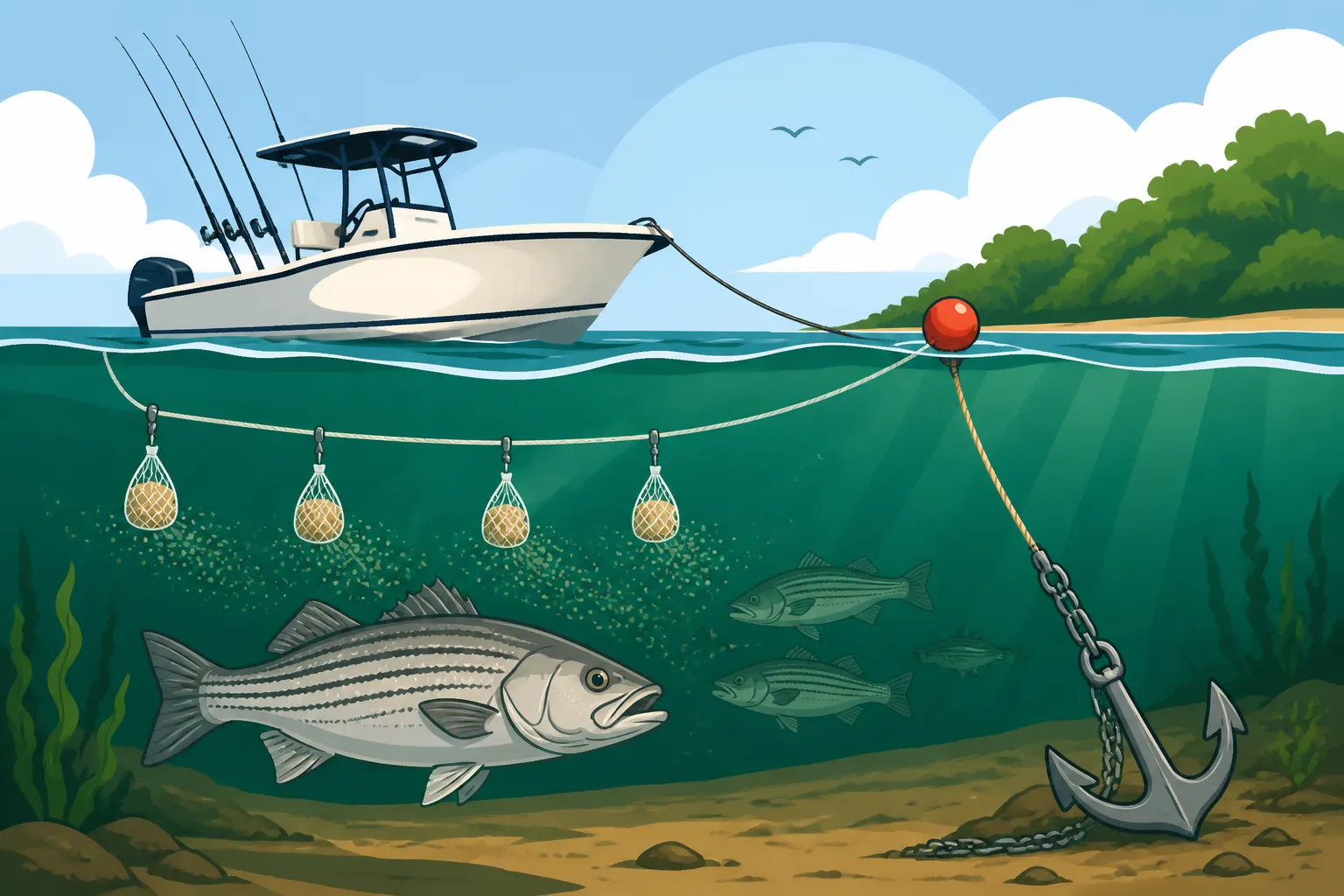
To deploy your chum effectively, you'll need a suitable dispenser. The two most common types are chum pots (usually plastic with holes, or wire mesh cages) and mesh chum bags. Chum pots are durable and reusable, offering a steady release, while mesh bags provide excellent scent dispersal and are often disposable, making cleanup easier. Both are typically weighted to ensure they sink and stay put in the current, deploying the chum at the desired depth. A good quality mesh bag bought from somewhere like Amazon can make a real difference in deployment, allowing a steady leak of scent without premature disintegration. You can often find multi-packs of robust chum bags on Amazon at a reasonable price, which is perfect for multiple trips.
Deployment is straightforward: secure your chosen dispenser to a sturdy cleat on the stern of your boat using a strong rope. Position it so it hangs deep enough to be in the main current, but not so deep that it snags on the bottom. The goal is a steady, consistent release of scent and small particles. For those who prefer a hands-off approach, some anglers even rig small, battery-operated chum dispensers, which are increasingly available on Amazon and other online retailers, providing an ultra-consistent flow.
Rods, Reels, and Line: Matching the Method
For chumming, you'll want a medium-heavy rod with a fast action. The medium-heavy power provides the backbone needed to handle larger rockfish that a chum line can attract, while the fast action tip allows for better bite detection. Bites while chumming can sometimes be subtle, a gentle tap or a slight increase in pressure, so a sensitive tip is crucial. Rods in the 6.5 to 7.5-foot range are generally versatile enough for most chumming scenarios in the Bay, offering a good balance of casting ability (if needed) and fish-fighting power.
When it comes to reels, both spinning and conventional gear can work, but many seasoned chumming anglers lean towards conventional reels, especially for bottom fishing with heavier weights. Conventional reels often offer superior drag systems and more precise control when fighting a strong fish or reeling up heavier sinkers. A good quality reel with a smooth, consistent drag is non-negotiable. Line strength typically ranges from 20 to 30 lb monofilament or braided line. Braid offers sensitivity and strength in a smaller diameter, but a monofilament top shot or leader is often preferred for its stretch and abrasion resistance, especially around sharp structures or barnacle-encrusted pilings.
The importance of a properly set and smooth drag cannot be overstated. When a large striped bass hits a chum-baited hook, it can be an explosive strike. A sticky or inconsistent drag can lead to snapped lines or pulled hooks. Make sure your drag is set correctly for your line strength, allowing the fish to take line when it runs but applying enough pressure to tire it out. A fluorocarbon leader (20-40 lb test) of a few feet is also highly recommended. Its invisibility underwater adds stealth, which can be critical for wary fish, and its abrasion resistance protects your main line. Don't forget essentials like a good marine knife, extra rope, and a first-aid kit, all readily available on Amazon, to ensure a safe and prepared outing. A high-quality pair of polarized sunglasses, also found on Amazon, will help you spot subtle movements in the water and even the chum line itself.
Mastering the Art of Anchoring for a Perfect Chum Line
Anchoring for a chum line is more than just dropping metal to the bottom. It's a strategic maneuver that ensures your boat and, more importantly, your chum trail are positioned precisely where you want them, maximizing your chances of success.
Reading the Current and Wind for Positioning
This is arguably the most critical component of successful chumming. You need to position your boat so that your chum line drifts directly into the zone where you expect fish to be. This means understanding the interplay between current and wind. They rarely cooperate, often pushing your boat in different directions, which can make things tricky. Your goal is to anticipate where your boat will settle once anchored and adjust your initial drop point accordingly.
A common and highly effective method is the "reverse drift." Instead of just dropping your anchor and hoping, you motor up-current and/or up-wind from your intended fishing spot. Once you're sufficiently up-drift, you drop your anchor. As your boat drifts backward with the prevailing current and wind, the anchor rode pays out, and the anchor digs in. The aim is for your stern, where your chum bucket will hang, to end up directly over your desired fishing zone—be it a channel edge, a hump, or a specific depth contour. This requires a bit of practice and feel, as you learn how your boat handles in different conditions.
If you're scouting a new spot or dealing with challenging conditions, a marker buoy can be an invaluable tool. Drop a marker buoy directly on the structure or area you want to fish. Then, motor a significant distance up-current and up-wind from that buoy (the distance will depend on depth and current/wind strength, typically 3-5 times the depth). Drop your anchor, allowing your boat to drift back until it's positioned correctly in relation to the buoy. If you miss the mark, don't hesitate to pull the anchor and try again. Precision matters when you're trying to create a focused scent trail.
Anchor Types and Setting Techniques
For most Chesapeake Bay bottom compositions, which tend to be sandy or muddy, a Danforth (also known as a fluke anchor) is an excellent choice. Its design allows the flukes to dig deeply into soft bottoms, providing superior holding power. While other anchor types like plow anchors (e.g., Delta, CQR) also offer good holding in varied bottoms, the Danforth is often sufficient and easier to manage for recreational fishing boats in the Bay. Grapple anchors are generally reserved for rocky bottoms or kayaks where snagging is a concern and less holding power is acceptable, which isn't ideal for a steady chum line.
Regardless of the anchor type, the "7:1 scope rule" is fundamental for proper anchoring. This means you should aim to have at least seven feet of anchor rode (rope) out for every one foot of water depth. In strong currents or windy conditions, you might even increase this to 10:1 or more. Adequate scope allows the anchor's shank to lie flat, enabling the flukes or blades to dig in horizontally and hold firmly. Without enough scope, the anchor simply skips or drags along the bottom, rendering your chumming efforts useless. Managing this much rode effectively requires a clear deck and, ideally, a sturdy anchor roller system on your bow.
Setting the anchor correctly is the final crucial step. Once you've dropped your anchor and let out sufficient scope, slowly motor your boat in reverse. This action pulls the anchor, forcing its flukes to dig into the bottom. You'll feel the boat slow down and then come to a steady halt, often accompanied by a distinct "thump" or vibration as the anchor bites. Once set, visually confirm your position relative to fixed landmarks or use your GPS to ensure you're holding steady and not dragging. A firmly set anchor prevents unwanted boat swing and ensures your chum line remains consistently in your desired zone.
| Anchor Type | Best for Bottom Type | Holding Power | Retrieval | Common Use in Maryland |
|---|---|---|---|---|
| Danforth | Mud, Sand, Clay | Excellent | Easy | Chesapeake Bay, Tidal Rivers |
| Plow/Delta | Mud, Sand, Rock | Very Good | Moderate | Larger Bay Boats, Coastal Ocean |
| Grapnel | Rock, Snags | Fair | Difficult | Kayaks, Small Skiffs, Rocky Areas |
| Box/River | Mud, Sand, Current | Good | Moderate | Non-Tidal Rivers, Gentle Currents |
Deploying and Maintaining an Effective Chum Line
Once your boat is firmly anchored, the real work of creating and managing your chum line begins. This isn't a "set it and forget it" operation; constant observation and subtle adjustments are key to attracting fish and keeping them interested.
Initial Chum Deployment and Scent Trail Establishment
With your anchor set, it's time to introduce your chum to the water. Resist the urge to dump a large quantity of chum all at once. The goal is to establish a steady, consistent release that creates a continuous scent trail, not to feed the fish immediately. If using a frozen block in a mesh bag or pot, it will take some time to thaw and start releasing its goodness. Be patient; the initial scent cloud might be faint, but it will grow.
For faster initial attraction, especially if you're eager to get bites, some anglers will periodically "mash" or "squeeze" their chum bag. This action forces more chum particles and oil out, creating a more immediate and potent burst of scent. This can be particularly useful in areas with a slightly weaker current or when you've just arrived and want to draw attention quickly. Don't forget the visual aspect: small, shimmering particles drifting down-current can also attract baitfish, which in turn draws the attention of hungry rockfish looking for an easy meal.
Once your chum is in the water, pay close attention to how it disperses. Observe the direction and speed of the current by watching the chum particles drift away from your boat. Is it forming a narrow, concentrated line, or is it fanning out too widely? Is it moving too fast or too slow? This observation is absolutely critical because it tells you exactly where your scent trail is going and where you should be presenting your baits. If the chum isn't drifting into your target area, you might need to adjust your anchor or even relocate.
Monitoring and Adjusting for Optimal Results
The Chesapeake Bay's currents and winds are rarely static; they ebb and flow, shift and swirl. This means your chum line, and your boat's position, will require constant vigilance and adjustment. If you notice your chum line veering off course, or if the current changes significantly, you might need to make a subtle adjustment to your anchor line. Sometimes, simply taking up or letting out a few feet of rode can realign your boat and chum trail perfectly.
The true art of chumming lies in adhering to the "Goldilocks" principle: not too much chum, not too little. Overfeeding the fish is a common mistake. If you're constantly releasing large quantities of chum, you might fill the fish up without them ever needing to bite your hook bait. They'll just gorge on the free offerings. Conversely, too little chum results in a weak, inconsistent scent trail that won't effectively draw fish from a distance. The sweet spot is a steady, tantalizing trickle—just enough to keep them interested and searching for the source, but not so much that they become satiated.
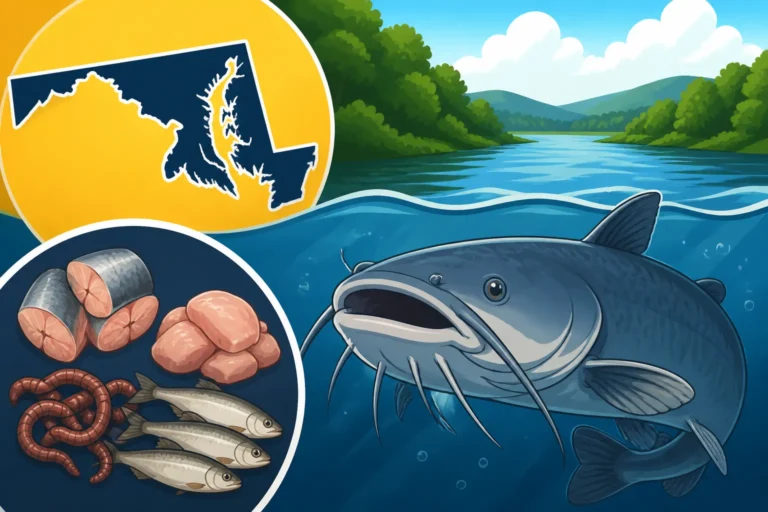
Be prepared to deal with unwanted guests. A robust chum line can sometimes attract species you're not targeting, such as pesky bait stealers like small spot or crabs, or even an abundance of invasive blue catfish. While blue catfish can be fun to catch and are excellent table fare, if your primary target is rockfish, this can be frustrating. Adjusting your bait size, using larger hooks, or moving slightly can sometimes help deter smaller nuisance fish. For more on handling those often-present blue catfish, check out Maryland Blue Catfish Possession Rules.
Choosing the Right Bait and Rigs for Chumming Success
A compelling chum line is only half the battle; you still need to present your hooks with baits that are irresistible to the rockfish it attracts. Matching your bait and rig to the chum line is paramount.
Best Baits for a Maryland Rockfish Chum Line
When it comes to bait for chumming in Maryland for striped bass, freshness is king, and fresh cut bait is often the absolute best choice. Nothing beats freshly caught menhaden (bunker) or spot, cut into appealing chunks. The natural oils and blood from these fish perfectly complement the menhaden-based chum, creating a consistent and highly attractive offering. Use a sharp knife to cut baits into sizes appropriate for your target fish, typically strips or chunks about 1-3 inches long. The fresher the cut, the more scent it releases, and the more likely it is to fool a wary rockfish.
Live bait, when available, is arguably even more irresistible. If you can net or sabiki-rig live spot or peanut bunker, live-lining them into your chum slick can be incredibly effective. A struggling live baitfish presented within the scent trail is a powerful trigger for a predatory rockfish. However, keeping live bait healthy requires a dedicated livewell and diligent care, adding another layer of complexity to your trip. For detailed techniques on using live spot, refer to Live-Lining Spot for Maryland's Chesapeake Bay Rockfish.
While fresh cut and live baits are generally superior, other options can work, especially as secondary offerings. Peeler crabs are another excellent choice, particularly during certain times of the year when rockfish are actively feeding on crabs. Squid can also be effective, either whole or cut into strips. Even artificial lures, such as soft plastics, can be effective if tipped with a small piece of cut bait to add scent. The golden rule is to always try to match your hook bait to your chum, or at least use something similar and equally appealing, to maintain the illusion of a natural feeding scenario.
Effective Rigging Techniques for Chumming
The classic and most effective rig for bottom fishing while chumming is the Fish-Finder Rig. This setup is incredibly popular for a reason: it allows the fish to take the bait without feeling the weight of the sinker, making it a natural presentation. To construct one, slide an egg sinker (or a similar no-roll sinker) onto your main line, followed by a bead. Tie a strong swivel to the end of your main line. To the other end of the swivel, attach a 2-3 foot leader of fluorocarbon (20-40 lb test) and then tie on an appropriately sized circle hook. When a fish bites, the line slides freely through the sinker, giving the fish time to fully engulf the bait before feeling resistance, leading to better hookups.
Top-and-bottom rigs, also known as high-low rigs, are another viable option, particularly if you suspect fish might be suspended at different depths within your chum line. These rigs typically feature two dropper loops or snelled leaders, allowing you to present two baits at varying heights above the bottom, usually with a sinker at the very end. While excellent for species like white perch or smaller rockfish, they can sometimes be more prone to tangling with larger, more aggressive striped bass. They are fantastic for exploring the water column and seeing at what depth the fish are feeding.
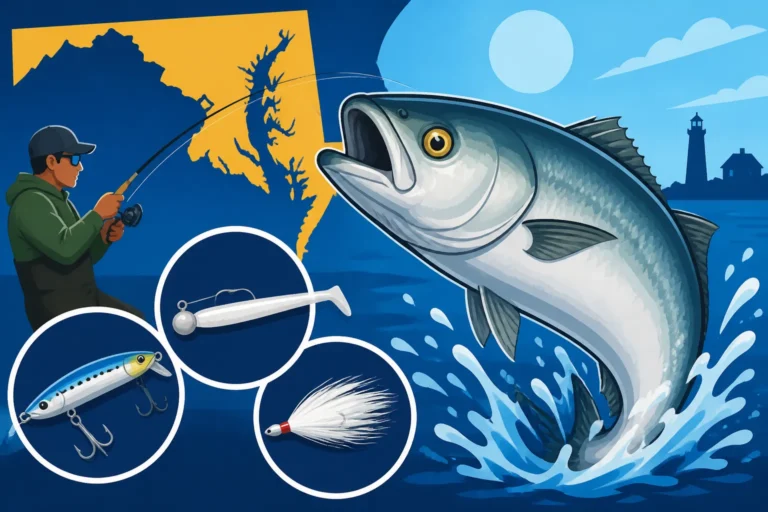
Don't neglect the potential for light tackle fun. While your primary chumming rods might be medium-heavy, having a lighter spinning rod rigged with a small jig or metal lure can be enjoyable. Sometimes, curious rockfish will venture to the edges of the chum slick but won't commit to a bottom bait. A quick cast with a lighter lure can entice these more active fish. Just remember that Maryland regulations allow for multiple rods, but you might need a What Is Maryland's Two-Pole Endorsement? if you plan on using more than two rods per angler. This small additional endorsement lets you maximize your coverage in the chum line.
Troubleshooting Your Chum Line and When to Adapt
Even with the perfect setup, chumming on the Chesapeake can throw you curveballs. Understanding common issues and knowing when to change tactics is what separates a good angler from a great one.
Common Issues: Current, Wind, and Boat Swing
The eternal struggle for any Chesapeake Bay angler setting up a stationary position is the dance between wind and current. They are rarely in perfect alignment and often push your boat in opposite directions. This can lead to your chum line being erratic, swirling in unpredictable patterns, or your boat swinging excessively. An unpredictable boat swing makes it incredibly difficult to keep your bait consistently in the sweet spot of the chum trail, leading to missed opportunities. When the wind and current are fighting, your chum line might even fold back on itself or disperse too rapidly, failing to create that clear scent corridor.
Addressing these issues sometimes means getting creative. In moderate conditions, a second "stern anchor" deployed off the back of the boat can significantly reduce boat swing and help align your vessel more effectively with the chum line. However, this is a more advanced technique that requires careful planning and execution to avoid line tangles. For most recreational anglers, the best approach is often to observe how your boat settles and if it's not optimal, be willing to make small, calculated adjustments to your main anchor position. Understanding how your specific boat reacts to varying wind and current conditions in different depths is an acquired skill that pays dividends.
The importance of observation cannot be overstated. Constantly monitor your chum line visually. Are other boats around having success with similar methods, or are they fishing differently? Is your chum line visible and steady, or is it breaking up quickly? If your chum line isn't performing as expected, or if you're not getting bites despite what seems like a good setup, don't be afraid to reassess your anchor set. Sometimes, even subtle changes in the current due to tidal shifts or underwater topography can disrupt a seemingly perfect flow, requiring you to adapt your strategy.
When to Call It Quits or Change Tactics
One of the hardest lessons to learn in fishing is knowing when to give up on a spot or a technique. If you've been anchored and chumming diligently for an hour or two with no bites, despite having a well-established and consistent chum line, the fish simply might not be there or might not be in a biting mood. Persistent anglers often fall into the trap of thinking "just one more cast," but sometimes, the best decision is to pull anchor and try a new location or an entirely different fishing method. Don't waste precious fishing time on a dead spot.
A common frustration is attracting an abundance of "trash fish." Sometimes, your perfectly deployed chum line will become a magnet for species you aren't targeting, such as small spot, croakers, or even crabs that steal your bait before a rockfish ever sees it. Worse, if you're constantly hooking into invasive species like blue catfish and your goal is striped bass, it's a clear sign that something needs to change. While blue catfish offer great sport and are encouraged for harvest, if your target species isn't showing up, you're not achieving your objective. Consider if you're in an area too heavily populated by these other species, or if adjusting your bait or hook size could help.
Always be prepared to adapt and overcome. If chumming isn't producing, maybe the rockfish are actively schooling on bait in a different area, requiring you to switch to a trolling or jigging approach. Or perhaps they are holding tight to a specific structure that your chum isn't effectively reaching, calling for precision casting or vertical jigging. Having a diverse set of skills and a willingness to change plans is crucial for success on the water. Keep an eye on your Maryland DNR Fishing and Boating Guide, Explained for any new rules or suggestions, and be familiar with other Maryland Striped Bass Fishing Techniques so you can switch gears easily. Remember to always be aware of Maryland's 2026 Striped Bass Season Dates and Maryland Striped Bass Minimum Size in the Ocean vs the Bay to ensure your catches are legal. And of course, make sure you have your Maryland Fishing License Guide for 2026 in order!
Disclaimer
Fishing regulations, including license requirements, seasons, and size limits, are subject to change by the Maryland Department of Natural Resources (DNR). Always consult the latest Maryland Fishing Guide or the official DNR website before heading out on the water. This article is for informational purposes only and does not constitute legal advice or an exhaustive list of regulations.