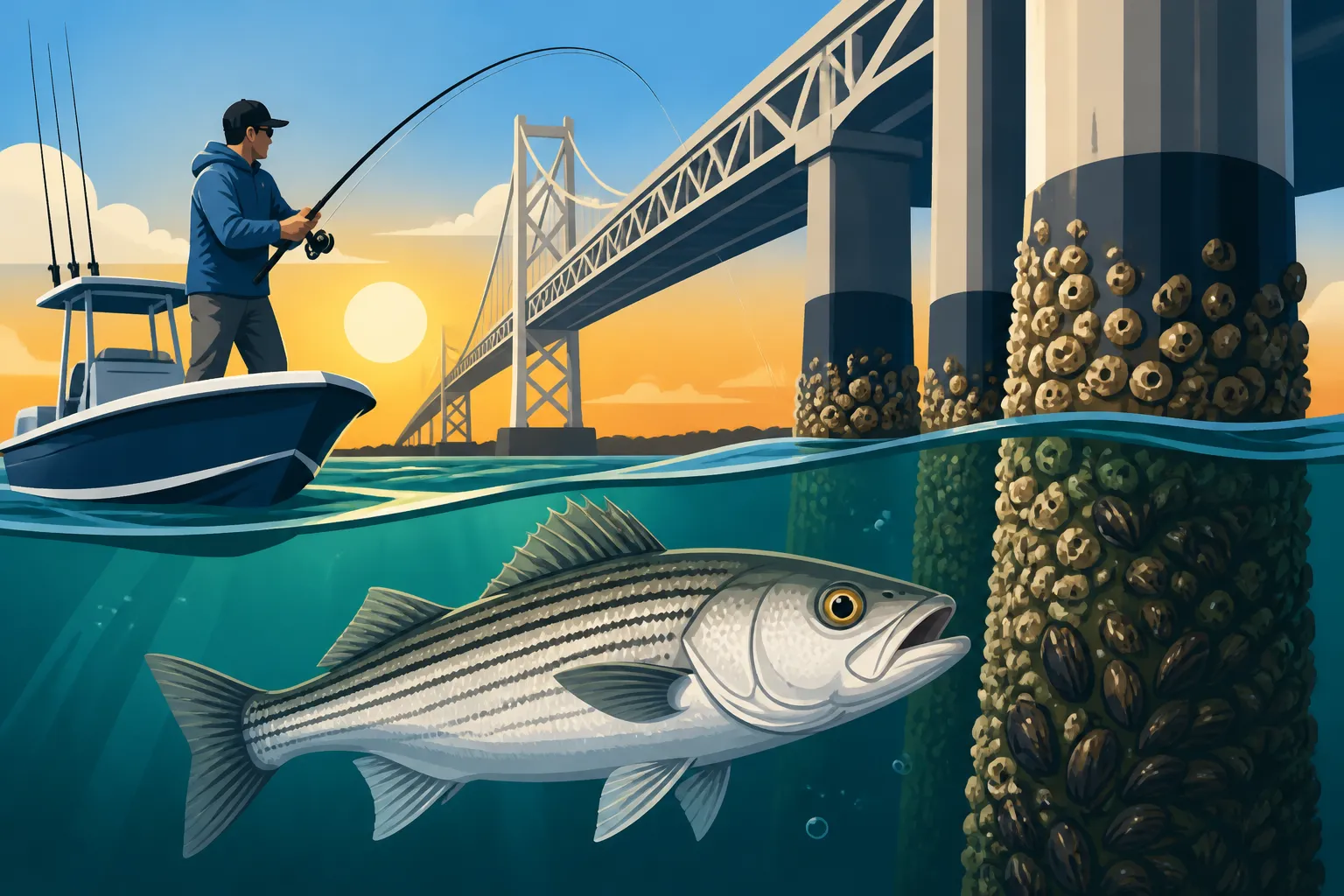
Fishing the Bay Bridge Pilings for Striped Bass
There's nothing quite like the sight of the Chesapeake Bay Bridge, an iconic landmark that offers some of the most thrilling striped bass fishing opportunities in Maryland. For many anglers, figuring out how to consistently catch those elusive rockfish around the labyrinth of pilings can feel like cracking a secret code. Between the strong currents, boat traffic, and the sheer vastness of the structure, it’s easy to feel overwhelmed. This comprehensive guide will break down everything you need to know to successfully target and reel in striped bass around the Bay Bridge.
Why the Bay Bridge Pilings are Prime Striped Bass Habitat
The Chesapeake Bay Bridge isn't just a way to get from one shore to the other; it's a massive artificial reef system, a veritable underwater city for marine life. The hundreds of concrete and steel pilings that hold the bridge aloft create incredible structure, drawing in baitfish and, consequently, hungry striped bass. This makes it one of the most productive and exciting fishing destinations in the region.
A Forage-Rich Ecosystem
Think of the pilings as apartment buildings in a bustling metropolis. Each piling provides shelter and a feeding ground for an entire ecosystem. Barnacles and mussels attach themselves to the concrete, attracting small crabs and shrimp. These, in turn, draw in schools of baitfish like anchovies, juvenile menhaden, and spot. Striped bass, being opportunistic predators, are never far behind, lurking in the shadows and current breaks, ready to ambush their prey. The constant flow of the Bay's tidal currents ensures a steady supply of food, making these areas incredibly rich feeding zones. It’s this abundance of food that makes the Bay Bridge pilings such a magnet for rockfish, from eager schoolies to genuine trophy-sized specimens.
Current Breaks and Ambush Points
The sheer number and size of the bridge pilings create complex current patterns. As the tide flows, water hits the pilings, creating eddies and slack water zones on the downstream side. These current breaks are crucial ambush points for striped bass. Instead of fighting the main current, the bass can hold in these calmer areas, expending less energy while waiting for baitfish to be swept past them. Anglers who understand how to "read" the current and position their boats and baits accordingly will find much greater success. Learning to identify these subtle shifts in water flow is a skill that comes with practice but is essential for consistently hooking into fish at the bridge. It's not just about being at the bridge; it's about being in the right spot at the right tide.
Essential Gear for Tackling the Pilings
Fishing the Bay Bridge requires a specific setup to handle the strong currents, potentially large fish, and the abrasive nature of the pilings. You can't just show up with any old freshwater rod and expect to succeed here; you need robust gear that can stand up to the challenge.
Rod and Reel Selection
For jigging or live-lining around the pilings, a medium-heavy to heavy action spinning or baitcasting rod, typically 6.5 to 7.5 feet long, is ideal. This length provides enough leverage to fight strong fish while still being maneuverable in tight spots. Pair this with a sturdy reel in the 4000-6000 size range (spinning) or a comparable conventional reel that holds at least 200 yards of 30-50 lb braided line. Braided line is crucial because its thin diameter, high strength, and lack of stretch allow for better sensitivity to detect subtle bites and help cut through the strong currents, getting your lure down quicker. You’ll definitely want a good quality reel with a smooth, reliable drag system, as those Bay Bridge rockfish can pull hard. Brands like Penn, Shimano, and Daiwa offer excellent options that can withstand the saltwater environment and the demands of this type of fishing.
Lures and Baits of Choice
When it comes to lures for jigging the pilings, heavy metal jigs (1-4 oz) in chartreuse, white, or silver are perennial favorites. Soft plastics, like Z-Man or Bass Kandy Delight (BKD) lures, rigged on heavy jig heads (3/4 – 2 oz), are also incredibly effective. For live-lining, spot are the bait of choice when available, but eels can also produce excellent results, especially for larger fish. For those who prefer bait fishing from an anchored position, fresh cut menhaden or peeler crabs fished on a bottom rig can also entice a strike. The key is to match the bait to what the striped bass are feeding on at the time, and to have a variety of options on hand. For a deeper dive into lures, check out our guide on Best Lure Colors for Jigging Chesapeake Bay Rockfish.
Here’s a quick overview of popular choices:
| Fishing Method | Primary Baits/Lures | Recommended Weight/Size | Target Depth |
|---|---|---|---|
| Jigging | Metal Jigs, Soft Plastics (BKD, Z-Man) | 1-4 oz (jigs), 3/4-2 oz (plastics) | Mid-water to Bottom |
| Live-lining | Live Spot, Live Eels | Circle hooks (5/0-7/0) | Varies (with weight) |
| Bottom Fishing | Cut Menhaden, Peeler Crab | 2-4 oz sinker | Bottom |
Effective Techniques for Catching Striped Bass at the Bridge
Success at the Bay Bridge largely hinges on mastering a few key techniques and understanding how the striped bass behave in this complex environment. It's not just about casting; it's about precision, timing, and stealth.
Precision Jigging Along the Pilings
Jigging is perhaps the most popular and effective method for targeting striped bass at the Bay Bridge. The goal is to drop your jig or soft plastic vertically, letting it flutter and dart near the pilings. You want to get as close as possible without getting hung up. This often means motoring up-current, casting slightly ahead of a piling, and letting your lure sink as you drift back towards it. Once your lure reaches the desired depth (often near the bottom or where you see bait on your fishfinder), give it sharp lifts and drops, mimicking an injured baitfish. The strike often comes on the fall.
The tide plays a massive role here. On a strong current, you'll need heavier jigs to maintain that vertical presentation. It’s a constant battle to stay vertical and avoid snagging on the bridge structure. Many anglers will "bump" their jig along the bottom, or just a few feet off it, especially during slack tide. Having a strong hookset is important, and quickly reeling up any slack will help you steer the fish away from the barnacle-covered pilings once hooked. If you want to refine your jigging, our guide on Jigging Techniques for Maryland's Chesapeake Bay Striped Bass offers even more detailed advice.
Live-Lining for Bigger Fish
When schools of baitfish like spot are abundant in the Bay, live-lining them around the pilings can be absolutely deadly for larger striped bass. This technique involves hooking a live baitfish, usually through the nose or back, and letting it swim naturally around the pilings. Use just enough weight (a small sinker or none at all, depending on the current) to get the bait down to where the fish are holding.
The trick is to use circle hooks – they are mandatory in Maryland for live-lining when targeting striped bass – to prevent gut-hooking the fish. Once you feel a pickup, resist the urge to set the hook aggressively. Instead, let the fish take the bait, then slowly reel in until the line comes tight. The circle hook will typically slide into the corner of the fish's mouth as it tries to swim away. This method often requires a bit more patience but can yield some truly impressive catches, especially during the warmer months. You'll find more insights into this technique in our article on Live-Lining Spot for Maryland's Chesapeake Bay Rockfish.
Trolling Around the Bridge Footings
While jigging and live-lining focus on the immediate structure, trolling can be effective around the wider footings and channel edges near the bridge. This method is particularly useful for covering more ground and finding schools of fish that might be moving in and out of the pilings' immediate vicinity. Use diving crankbaits, bucktails with plastic trailers, or umbrella rigs to imitate schools of baitfish.
Pay close attention to your fishfinder to identify schools of bait or marks of larger fish, and adjust your trolling depth and speed accordingly. It's crucial to stay alert to boat traffic and respect other anglers who might be anchored or drifting closer to the pilings. Trolling offers a different approach to locate those active fish, especially when they're not holding tight to the structure. For more on this, consider reading our advice on Trolling Bucktails for Maryland Striped Bass.
Navigating the Bay Bridge Safely and Legally
Fishing the Bay Bridge is exhilarating, but it also demands a high level of awareness and adherence to safety and legal guidelines. The bridge is a high-traffic area, both above and below the water, and Maryland's fishing regulations are strictly enforced.
Understanding Boat Traffic and Navigation
The waters around the Bay Bridge are bustling with recreational boaters, commercial vessels, and fellow anglers. Always maintain a safe distance from other boats and respect navigation channels. The shipping channel runs directly under the main span of the bridge, and large ships have the right of way. Never anchor or drift in a way that obstructs their path.
Be mindful of your wake, especially when passing smaller boats or kayaks. High currents can make navigating challenging, so ensure your boat is in good working order and you have all required safety equipment, including life jackets for everyone on board. Using a good GPS and depth sounder is invaluable for staying on course and identifying productive fishing areas while avoiding hazards. For those looking to book a guided trip, platforms like FishingBooker can help you find experienced captains who know these waters intimately and prioritize safety.
Maryland Fishing Regulations for Striped Bass
Maryland Department of Natural Resources (DNR) regularly updates its fishing regulations, especially for striped bass, due to conservation efforts. It is your responsibility to know and adhere to the current Maryland Striped Bass Season and Rockfish Rules and Maryland Fishing Size and Catch Limits by Species. These rules cover minimum and maximum size limits (often a "slot limit"), daily creel limits, and specific seasons when fishing for striped bass is permitted or restricted.
For instance, there are often specific dates for the trophy striped bass season, regular season, and sometimes even closures in certain spawning rivers. Always check the official Maryland DNR website or their annual fishing guide before heading out. Violations can result in hefty fines and even loss of fishing privileges. Remember, conservation is key to ensuring healthy fish populations for future generations. Don't forget, even for catch and release, there are guidelines to follow to minimize stress on the fish.
Seasonal Considerations for Bay Bridge Striped Bass
The Bay Bridge offers incredible fishing year-round, but the best times for striped bass vary significantly with the seasons. Understanding these seasonal patterns is crucial for maximizing your success.
Spring and Fall Runs: Peak Activity
The spring and fall represent the peak seasons for striped bass fishing at the Bay Bridge. In spring, typically from April into early June, large migratory striped bass move into the Bay to spawn. After spawning, many fish will hang around the bridge area, feeding aggressively to regain strength before heading north. This is often when you'll encounter some of the largest fish of the year, particularly during the early "trophy" season. Our detailed guide on Best Month to Catch Striped Bass in Maryland offers specific timing advice.
In the fall, from late September through December, baitfish school up in massive numbers as they prepare to migrate out of the Bay, triggering the famous "fall run." Striped bass follow these baitfish, creating frenzies of feeding activity. The bridge pilings become a prime ambush point for these actively feeding fish. Jigging and live-lining can be incredibly effective during these periods. This is a fantastic time to be on the water, but also when boat traffic can be at its heaviest.
Summer and Winter Challenges
Summer fishing at the Bay Bridge can be productive, but it requires adjusting your tactics. As water temperatures rise, striped bass often move to deeper, cooler waters, or become more active during low light hours (dawn, dusk, or even night fishing). They might still hold tight to the pilings, but you'll likely need to target them deeper with heavier jigs or live bait. During summer, other species like bluefish, white perch, and spot become more prevalent, offering alternative targets.
Winter fishing at the Bay Bridge, while less popular due to the cold, can still yield results, especially for anglers targeting larger, lethargic fish that might be holding in deep channels near the bridge footings. Jigging vertically with heavy metal jigs can be effective, but you'll need to focus on finding those deeper holes where the fish are staging. Always dress warmly and prioritize safety during cold weather outings. FishingBooker can connect you with charter captains who are equipped and experienced in these colder conditions.
Disclaimer
The information provided in this guide is for general informational purposes only and is subject to change. Fishing regulations, seasons, and limits are set by the Maryland Department of Natural Resources (DNR) and can be modified at any time. It is the responsibility of every angler to consult the most current official Maryland DNR fishing regulations before engaging in any fishing activity. Always prioritize safety on the water and adhere to all boating laws and guidelines.