Maryland Crappie Size and Creel Limits
It's incredibly frustrating when you're out on the water, the crappie are biting, and suddenly you're second-guessing yourself about whether you're following all the rules. The last thing any angler wants is to accidentally break a regulation because the rules can sometimes feel like a tangled mess of lines. This comprehensive guide will untangle the specifics of Maryland's crappie size and creel limits, making sure you're well-informed for your next trip.
Understanding Maryland's Crappie Regulations
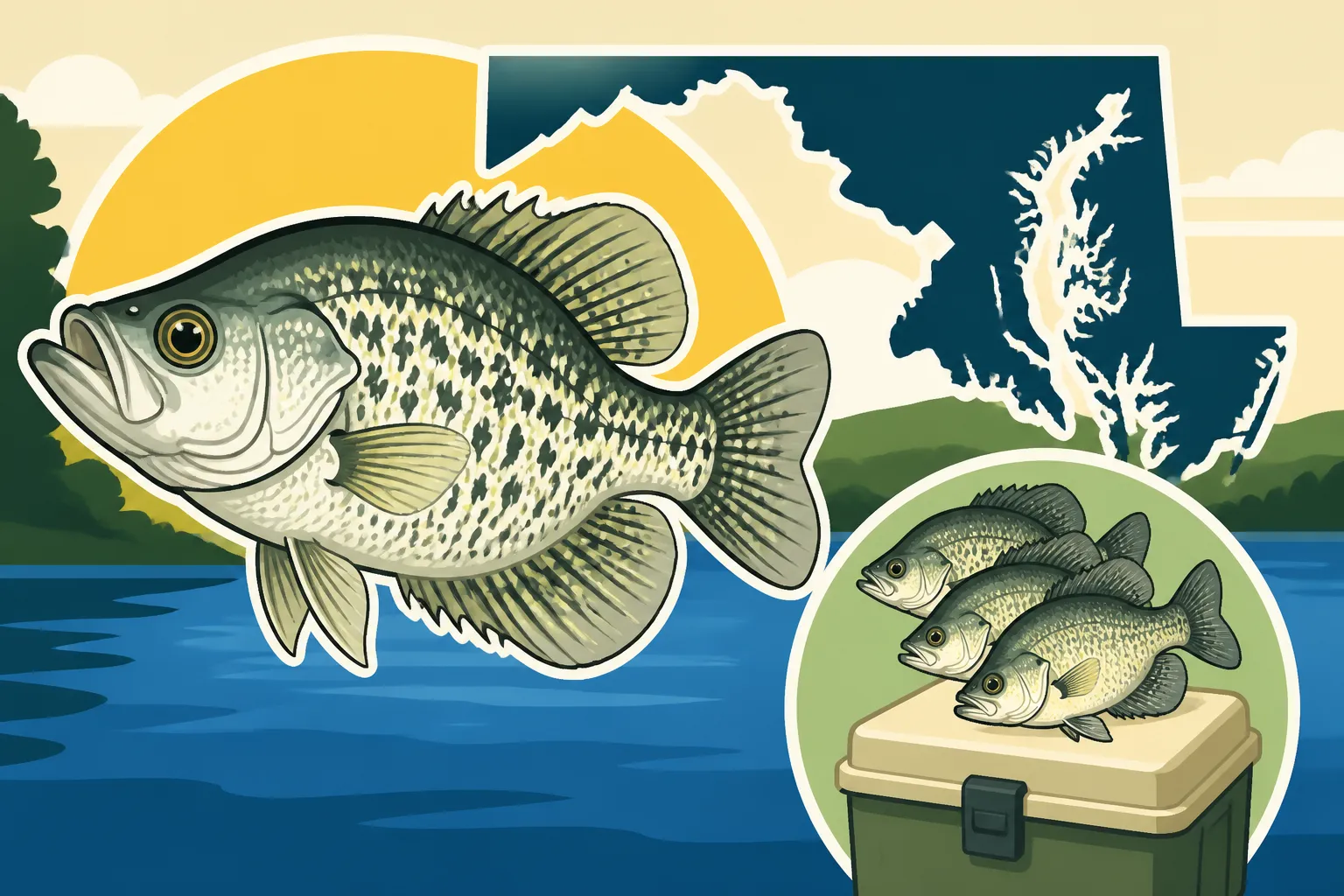
Crappie, whether black or white, are among Maryland's most popular panfish, cherished for their delicious taste and the sheer fun of catching them. Because they’re such a favorite, responsible management is crucial to keep their populations healthy and thriving.
Why Regulations Exist for Crappie
Regulations aren't put in place just to make your life harder; they're vital tools for conservation. Think of it this way: if every angler kept every single crappie they caught, regardless of size or quantity, it wouldn't take long before our favorite fishing spots became barren. Crappie populations, like all fish, need time to grow and reproduce. Size limits ensure that enough fish reach maturity to spawn at least once, contributing to the next generation. Creel limits prevent overfishing, ensuring that the total number of fish removed from a body of water remains sustainable. It’s a delicate balance, and we, as anglers, play a huge role in maintaining it. Without these rules, the excellent crappie fishing we enjoy today could quickly disappear, leaving future generations without the same opportunities. It's about protecting the resource for everyone, including those just learning the ropes, perhaps with their first Maryland fishing license guide for 2026 in hand.
General Overview of Crappie Limits in Maryland
In Maryland, the regulations for crappie fishing are generally straightforward, but with some very important exceptions you absolutely need to know about. For most of the state's waters, you're looking at a standard daily creel limit and a minimum size requirement. These general rules are designed to apply broadly, offering a baseline for crappie conservation across diverse habitats. However, Maryland's fishing landscape is incredibly varied, from sprawling reservoirs to winding rivers and the expansive Chesapeake Bay tributaries. This diversity means that a "one-size-fits-all" approach isn't always the most effective for localized fish management. Always remember that while there's a general rule, the specific body of water you're fishing might have its own unique set of guidelines. It's the angler's responsibility to know the local rules before casting a line, especially for species like crappie that thrive in many different environments.
Specific Crappie Size Limits in Maryland
Understanding length requirements is critical. Catching an undersized fish happens to everyone, but knowing how to handle it properly and release it unharmed is part of being a responsible angler.
The Statewide Minimum Length
For the vast majority of waters in Maryland, the minimum size limit for both black and white crappie is 9 inches. This means that any crappie you catch must measure at least 9 inches from the tip of its nose (with the mouth closed) to the very end of its tail. If it’s even a hair shorter, it needs to go back into the water immediately. This 9-inch rule is designed to allow crappie to reach sexual maturity and spawn at least once, ensuring they contribute to the population before being harvested. It's a cornerstone of sustainable crappie management.
Measuring correctly is key here. Don't eyeball it; always use a reliable measuring board or tape. Many anglers keep a small, waterproof ruler or a specialized fish measuring board (you can find various options on Amazon) right in their tackle box, making it easy to check a fish's length quickly while minimizing its time out of the water. When measuring, lay the fish flat on its side, mouth closed against a solid stop, and pinch the tail to get the maximum length. If there's any doubt, it's always best to err on the side of caution and release the fish.
Notable Exceptions and Special Waters
Here's where it gets really interesting, and where a lot of anglers can get confused if they're not careful. Maryland manages several of its major impoundments (reservoirs and larger lakes) with different crappie size limits, often to promote population control or to encourage anglers to harvest more fish from abundant stocks. For these specific bodies of water, there is no minimum size limit for crappie. This means you can keep crappie of any size you catch, as long as you adhere to the creel limit.
These "no size limit" waters include some of Maryland's most popular fishing destinations:
- Deep Creek Lake: A Western Maryland gem, often known for its walleye and smallmouth bass, also boasts excellent crappie fishing with no size limit. If you're planning a trip there, you'll find plenty of opportunities for Fishing Deep Creek Lake for Walleye and a wide array of other species.
- Liberty Reservoir: Located near Baltimore, this large reservoir is a fantastic spot for crappie, and you can keep any size. Learn more about Fishing Liberty Reservoir and its other offerings.
- Loch Raven Reservoir: Another major crappie hotspot in the Baltimore area, also operates under the no-size-limit rule for crappie. Fishing Loch Raven Reservoir is a favorite pastime for many locals.
- Triadelphia Reservoir and Rocky Gorge Reservoir: Part of the Patuxent River watershed, these reservoirs are managed by WSSC Water and also feature no size limits for crappie.
- Piney Run Lake: A popular Carroll County park lake, it too allows anglers to keep crappie of any size.
- St. Mary's Lake: Down in Southern Maryland, this lake also falls under the no-size-limit crappie regulation.
The reason for these exceptions is usually tied to specific fisheries management goals. In many of these reservoirs, crappie populations can become extremely abundant, leading to stunted growth if too many fish are competing for limited food resources. By removing the size limit, the Maryland Department of Natural Resources (DNR) encourages anglers to harvest more of these fish, which can actually improve the overall health and average size of the remaining crappie population over time. Always double-check the latest Maryland DNR Fishing and Boating Guide or the local signage at these specific locations, as regulations can change.
Maryland's Crappie Creel Limits
Beyond size, knowing how many fish you can legally keep in a day is just as important. It’s easy to get caught up in the excitement of a hot bite, but adhering to the creel limit is crucial for conservation.
The Daily Catch Limit
The standard daily creel limit for crappie in Maryland is 15 fish per person. This applies to most tidal and non-tidal waters across the state where the 9-inch minimum size limit is also in effect. The creel limit is designed to spread the harvest among more anglers and prevent individual anglers from significantly impacting the crappie population in a single outing. It's a generous enough limit that you can still take home a fantastic meal, but it encourages responsible harvesting.
For the special impoundments we mentioned earlier that have no size limit for crappie (Deep Creek Lake, Liberty Reservoir, Loch Raven Reservoir, Triadelphia Reservoir, Rocky Gorge Reservoir, Piney Run Lake, and St. Mary's Lake), the daily creel limit is actually 30 fish per person. This higher limit, coupled with the absence of a size restriction, is part of the same management strategy: encouraging greater harvest in waters where crappie are exceptionally abundant, often to manage population density and prevent stunting.
It's critical to understand that this limit is per person, per calendar day. If you go out fishing in the morning, reach your limit, and then decide to go out again in the afternoon, you cannot keep any more crappie until the next calendar day. Transporting fish, especially cleaned fish, can also be tricky if you're close to the limit without proof of how many you caught. To avoid any potential Maryland fishing license penalties for violations, always be mindful of your count. For a broader look at other species, you might be interested in Maryland Daily Bag Limits by Species.
Cumulative Limits and Mixed Species Bags
Maryland's regulations generally count black crappie and white crappie together under the single "crappie" designation for both size and creel limits. So, whether you catch 15 black crappie, 15 white crappie, or a mix of both totaling 15, you've reached your limit for waters with the standard regulations. In the special waters where the limit is 30, the same principle applies – any combination of black and white crappie up to 30 counts.
What about other panfish? Generally, crappie limits are distinct from other species. For example, if you're out targeting Crappie Fishing in Maryland Reservoirs and also happen to catch a bunch of yellow perch or bluegill, those species will have their own separate daily limits. There isn't typically a cumulative "panfish" limit that combines all panfish species into one overarching number. Each species has its own specific set of rules. However, always consult the most current Maryland DNR fishing guide to be sure, as regulations are periodically updated. Knowing the difference can prevent confusion and ensure you're compliant, especially if you're trying to fill a cooler with a mixed bag of various panfish.
Best Practices for Responsible Crappie Fishing in Maryland
Beyond just knowing the rules, how you act on the water makes a big difference to the health of the fishery. Responsible angling means minimizing harm and being a steward of our natural resources.
Measuring and Releasing Undersized Crappie
When you catch an undersized crappie, or one you simply don't intend to keep, proper handling is paramount to its survival. Fish are delicate, and mishandling can cause stress, injury, or even death, undermining the conservation efforts that the regulations aim to achieve.
Here are some tips for quick and safe measurement and release:
- Handle with Care: Wet your hands before touching the fish. Dry hands can remove the crappie's protective slime coat, leaving it vulnerable to disease.
- Minimize Air Exposure: Keep the fish in the water as much as possible. If you must lift it out for a quick measurement, do so swiftly. Crappie struggle to breathe out of water, and prolonged exposure is stressful.
- Support Its Body: When holding a crappie, support its full body weight, especially if it's a larger fish. Avoid holding it just by the jaw or squeezing its belly, which can damage internal organs.
- Use Proper Tools: A soft measuring board or a durable tape measure is invaluable. Many anglers opt for a ruler that adheres to their boat or kayak, making measurement instant. Products like a quality fish gripper and a non-abrasive measuring mat, often found on Amazon, can greatly aid in ethical handling and measurement.
- Quick Release: Once measured, gently place the crappie back into the water, headfirst, and allow it to swim away on its own. Sometimes, a fish needs a moment to regain its bearings; gently hold it upright until it kicks strongly and swims off.
Remember, the goal is for that undersized fish to survive and grow larger, potentially to be caught again when it meets the legal size or to contribute to future spawns. This is especially important for juveniles who may not yet be mature enough to reproduce.
Avoiding Overharvest and Supporting Conservation
Even when fishing within legal limits, thoughtful angling can further support crappie populations. Consider taking only what you need for a meal, rather than always filling your creel limit, particularly in waters where crappie might be less abundant or more sensitive to pressure.
Here are ways you can contribute to conservation:
- Voluntary Catch-and-Release: If you're not planning to eat your catch or already have enough, consider releasing healthy fish, even legal-sized ones. This is especially true for larger, older crappie which are often important breeders.
- Report Violations: If you witness someone violating fishing regulations (like exceeding creel limits or keeping undersized fish), report it to the Maryland Natural Resources Police. Reporting helps protect our fisheries from irresponsible behavior.
- Stay Informed: Regulations can and do change. The Maryland DNR regularly updates its rules to respond to changes in fish populations or environmental conditions. Staying current, perhaps by checking how often Maryland updates its fishing regulations, ensures you're always fishing legally and responsibly.
- Respect Spawning Areas: Be extra mindful during crappie spawning season, typically in the spring when water temperatures rise. Crappie move into shallower waters to spawn, making them more vulnerable. Minimizing disturbance in these areas helps ensure successful reproduction.
By understanding and respecting Maryland's crappie size and creel limits, and by practicing responsible angling, you're not just avoiding fines; you're actively participating in the long-term health and enjoyment of Maryland's fantastic crappie fishery for everyone.
Maryland Crappie Regulations Summary Table
For a quick reference, here's a breakdown of Maryland's general crappie regulations and common exceptions:
| Regulation Type | Statewide General Rule | Specific Impoundments (e.g., Deep Creek, Liberty, Loch Raven, Triadelphia, Rocky Gorge, Piney Run, St. Mary's) |
|---|---|---|
| Minimum Size | 9 inches | No minimum size |
| Daily Creel Limit | 15 crappie per person per day | 30 crappie per person per day |
| Species Counted | Both Black Crappie and White Crappie count together | Both Black Crappie and White Crappie count together |
| License Needed | Yes, for ages 16 and older | Yes, for ages 16 and older (unless on a Maryland Free Fishing Days or Do Kids Need a Fishing License in Maryland?) |
This table provides a concise overview, but remember, the detailed explanations above are crucial for a full understanding.
Disclaimer
Please note that fishing regulations are subject to change. While we strive to provide the most current and accurate information, it is always the angler's responsibility to consult the latest official Maryland Department of Natural Resources (DNR) fishing guide or website before heading out. This guide is for informational purposes only and should not be considered legal advice.