Maryland Fishing License for Piers and Shore Access
The waters of Maryland, from the vast Chesapeake Bay to serene freshwater lakes, call to many of us. But if you're like a lot of anglers, you might find yourself scratching your head, wondering if that relaxing day of fishing from a local pier or a quiet shoreline means you need a full-blown fishing license. It's a common point of confusion that can quickly turn a peaceful outing into a moment of anxiety about inadvertently breaking the rules. This guide is here to clear up exactly when and where a Maryland fishing license is required for those who prefer to keep their feet on solid ground.
Understanding the Basic Maryland Fishing License Requirements
Let's face it, navigating fishing regulations can feel like trying to untangle a particularly stubborn fishing knot. The Maryland Department of Natural Resources (DNR) does its best to make things clear, but the nuances between tidal and nontidal, public and private, can still leave many shore and pier anglers wondering about their legal standing. It’s a completely valid frustration, as the rules aren't always intuitive for those new to the state or new to a specific type of fishing.
General Rules for Angling in Maryland Waters
At its heart, Maryland's fishing regulations are designed to protect fish populations and manage access for everyone. Generally speaking, if you are 16 years of age or older and intend to catch fish, you will need a fishing license. This isn't unique to Maryland; it's a standard practice across most states. However, the type of license you need is where things can get a bit more complex, especially when you consider the vast array of fishing opportunities Maryland offers, from mountain streams to the Atlantic Ocean.
The regulations cover not just the act of catching fish, but often the gear you use, the species you target, and even the time of year. While the focus of this guide is on shore and pier access, it's always a good idea to familiarize yourself with the broader landscape of rules. For a comprehensive overview, you might want to check out the Maryland Fishing License Guide for 2026 which lays out all the general requirements.
The Core Principle: Tidal vs. Nontidal Waters
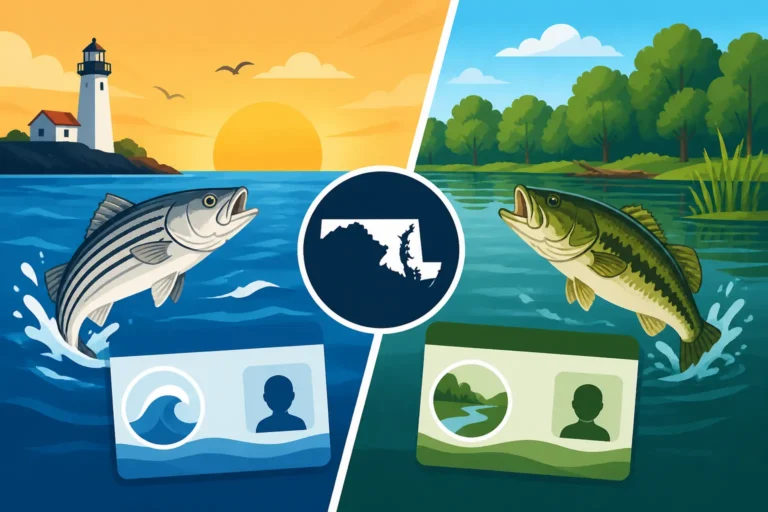
The biggest determinant of which license you need in Maryland boils down to whether you're fishing in tidal or nontidal waters. This distinction is absolutely crucial and often misunderstood. Tidal waters are generally those connected to the Chesapeake Bay and the Atlantic Ocean, where the water level fluctuates with the tides. Think of the Bay, its tributaries, and coastal areas. Nontidal waters are typically freshwater lakes, rivers, streams, and ponds that aren't significantly affected by ocean tides.
Many anglers assume that if they're not on a boat, the rules are different, but the water type is the primary factor. Even if you're standing on the bank of a river that eventually flows into the Bay, if that specific stretch of river is considered nontidal, you'll need a nontidal license. If you're on a pier in the Chesapeake Bay, you're in tidal waters. Understanding this fundamental difference is the first step to ensuring you have the correct license. You can find a more detailed explanation in our guide on Maryland Nontidal vs Tidal Fishing License, Explained.
Why the Confusion About Shore and Pier Access?
The confusion surrounding shore and pier access is totally understandable. For many, the idea of needing a license while simply casting a line from a public boardwalk feels different than going out on a boat. There's also the common misconception that if you're paying a fee to access a pier or park, that fee somehow covers your fishing license. While some commercial piers or charter operations do have "blanket licenses" that cover their patrons, this is an exception, not the rule.
Another source of confusion can be conflicting information, or rules that change periodically. It’s easy to hear something from a friend, or read an old forum post, and assume it’s current law. Always refer to the official Maryland DNR website or their annual fishing guide for the most up-to-date regulations. Don't let misinformation lead to a fine!
Specifics of Shore Fishing in Maryland
Shore fishing offers a unique blend of accessibility and tranquility. Whether you're casting from a sandy beach, a rocky bank, or a grassy shoreline, the experience can be incredibly rewarding. However, the rules for shore fishing are not always uniform; they vary depending on where you drop your line.
Public Shoreline Access and License Needs
When you're fishing from public shorelines in Maryland, a fishing license is generally required if you are 16 or older. This applies to most state-owned land, public access points, and road-side pull-offs along rivers or lakes. For instance, if you're fishing along the banks of the Monocacy River (nontidal) or a public beach along the Chesapeake Bay (tidal), you'll need the appropriate Maryland fishing license.
The key here is "public." If the land is open to the public for recreational use, and it's not a designated "free fishing" area or day, assume a license is needed. This is where many people get tripped up, thinking that since they aren't in a boat, the rules don't apply. Remember, the fish don't care if you're standing on solid ground or floating in a vessel; the state cares about managing harvest and participation.
Private Property and Permission
Fishing from private property is another area where questions often arise. If you own the property or have explicit permission from the landowner to fish on their private property, you still need a fishing license if you are 16 or older and the waters are public waters (which most are, even if accessible only via private land). The only real exception here is if you are fishing in a completely private pond or lake where no fish can enter or leave from public waters. These are rare, and usually involve landlocked ponds stocked privately.
However, if you're fishing from someone else's private pier or shoreline, always ensure you have permission. Trespassing is a separate issue entirely, and even with a valid fishing license, you could face legal trouble if you're on private land without consent. It's always best to ask first. A polite request can go a long way, and you might even discover a new favorite fishing spot!
State and Federal Parks: Special Rules Apply
Maryland's state parks and federal lands, such as Assateague Island National Seashore or Point Lookout State Park, offer fantastic shore fishing opportunities. For the most part, standard Maryland fishing license requirements apply in these locations. If you're fishing in tidal waters at Assateague, you'll need a Maryland Chesapeake Bay Sport Fishing License Explained or a comparable saltwater license. If you're fishing a nontidal pond within a state park, a Maryland Nontidal Fishing License would be necessary.
However, some parks might have additional rules or permits specific to their location. For example, some areas might have restrictions on bait, tackle, or even specific zones for fishing. Always check with the park office or their website before heading out. This little bit of research can save you a lot of hassle and ensure a smooth, enjoyable fishing trip. And remember, even if you’re driving onto the beach at Assateague for surf fishing, you'll still need that valid fishing license.
Navigating Pier Fishing Regulations
Piers are fantastic for fishing. They often provide access to deeper water without needing a boat, and they're usually equipped with amenities like restrooms, bait shops, and cleaning stations. But, like shore fishing, the rules for piers aren't always cut and dry.
Public Piers and Docks
Many public piers and docks across Maryland, like those at Sandy Point State Park or various municipal parks, offer excellent fishing. If you're fishing from a public pier, you generally need to have a valid Maryland fishing license if you are 16 years of age or older. This includes piers that are free to access. For example, if you're casting for white perch from a public pier on the Magothy River, and that part of the river is tidal, you'd need your Chesapeake Bay Sport Fishing License. If the pier is on a nontidal lake, a nontidal license is required.
The accessibility of public piers sometimes leads anglers to believe they are exempt from licensing, but this is usually not the case. Think of the license as a permit to fish the state's waters, regardless of whether you're accessing those waters from land or a boat. Always verify the specific water body type the pier is on to ensure you purchase the correct license. Our article Do You Need a License to Fish From a Maryland Pier? delves deeper into this common question.
Commercial Piers and Marinas: The "Blanket License" Exception
Here’s where things get interesting, and a common source of the confusion we mentioned earlier. Some commercial piers, charter boats, or marinas operate under what's often referred to as a "blanket license." This means that the establishment itself holds a master license from the state that covers all its paying customers who are actively fishing on their property. This is a huge convenience! If you fish at one of these locations, you might not need to purchase your own individual license.
A great example might be certain large fishing piers in Ocean City or a specific pay-to-fish pier on the Chesapeake Bay. They might charge an entry fee, and that fee includes the coverage of their blanket license. However, never assume this is the case. Always, always ask the staff at the pier or marina whether their fee includes a blanket license that covers you. It’s better to ask and know for sure than to risk a fine. If they don't offer it, you'll need your own.
Private Piers and Community Docks
Just like private shorelines, fishing from a private pier owned by an individual or a community association requires a valid Maryland fishing license if you are 16 or older. While these piers might offer exclusive access to their owners or residents, they typically extend into public waters. Therefore, the state's licensing requirements still apply.
If you're lucky enough to be invited to fish from a friend's private pier, make sure you show up with your license in hand, along with a nice cooler of drinks or snacks as a thank you! Again, the only exception would be if the pier somehow accessed a completely landlocked, privately stocked pond, which is highly unlikely for most piers in Maryland that extend into larger bodies of water.
Special Exemptions and Considerations for Shore and Pier Anglers
Even with the general rules in place, Maryland offers a few specific exemptions and special considerations that shore and pier anglers should be aware of. Knowing these can save you money or provide opportunities to introduce new people to the joy of fishing.
Age-Based Exemptions for Young Anglers
Maryland has a wonderful policy that encourages youth participation in fishing: children under the age of 16 are generally exempt from needing a fishing license. This means kids can fish from piers and shorelines across the state without their own license, as long as they adhere to all other fishing regulations (size limits, creel limits, seasons, etc.). This is a fantastic way to introduce the next generation to the outdoors without the added cost and paperwork.
It's a common question, and we have a dedicated piece on Do Kids Need a Fishing License in Maryland? that explains this in more detail. So, grab your little ones, head to a local pier, and enjoy some quality time fishing without worrying about their license! Just make sure you have yours if you're 16 or older and planning to fish alongside them.
Maryland's Free Fishing Days
Another fantastic opportunity for all anglers, including those preferring shore and pier access, are Maryland's designated Free Fishing Days. On these specific days, typically a few times a year, residents and non-residents alike can fish in Maryland's waters without needing a license. It’s a perfect chance to try out a new spot, experiment with different techniques, or introduce a friend to fishing who might be hesitant to buy a license right away.
These days are usually well-publicized by the Maryland DNR, often coinciding with popular fishing seasons. While you don't need a license, all other regulations regarding size, creel limits, and gear still apply. Keep an eye out for these dates if you're planning a trip. Our article on Maryland Free Fishing Days provides more information on when these special opportunities usually occur.
Specific Waters with Unique Rules (e.g., Potomac River)
While the tidal vs. nontidal rule covers most of Maryland, some specific bodies of water have unique or overlapping regulations that can impact shore and pier anglers. The Potomac River is a prime example. Due to its status as a border river with Virginia and West Virginia, and its management by the Potomac River Fisheries Commission (PRFC), the licensing rules can be a bit different.
For certain sections of the Potomac River, especially the main stem, a valid fishing license from Maryland, Virginia, or a PRFC license may be accepted. However, this often doesn't extend to the tributaries of the Potomac that are wholly within Maryland. Always verify the specific section of the river you plan to fish. Misunderstanding these nuances could lead to an unexpected fine, even if you thought you were covered. When in doubt, it’s always safest to get a Maryland license or consult the PRFC's specific guidelines.
Types of Licenses Relevant to Shore and Pier Anglers
Now that we’ve covered the "when and where," let's talk about the "what." Which specific licenses are you most likely to need if you plan to fish from shore or a pier in Maryland? The good news is that for most shore and pier anglers, the choice typically narrows down to a couple of main options.
Maryland Nontidal Fishing License
If your preferred shore or pier fishing spots are in Maryland's freshwater lakes, reservoirs, ponds, or nontidal sections of rivers and streams, you'll need a Maryland Nontidal Fishing License. This license covers you for popular nontidal spots like Loch Raven Reservoir, Deep Creek Lake, or the upper sections of rivers like the Patapsco or Gunpowder.
This license is available for both residents and non-residents, and you can usually purchase it annually or for shorter durations. For those living in Maryland, the Maryland Resident Nontidal Fishing License Cost is typically quite affordable and offers year-round access to these beautiful freshwater fisheries. Remember, if you decide to fish a stream for trout, you might also need an additional Maryland Trout Stamp Requirements, even with your nontidal license.
Maryland Chesapeake Bay Sport Fishing License (Tidal)
For anyone planning to fish from a pier or shoreline along the Chesapeake Bay, its tidal tributaries, or coastal waters (like Ocean City or Assateague Island), the Maryland Chesapeake Bay Sport Fishing License is your go-to. This license covers all finfish species in these tidal waters. This includes popular species like striped bass (rockfish), white perch, bluefish, flounder, and many others.
Again, this license is available for residents and non-residents, and different durations are offered. If you're a Maryland resident, you can find details on the Maryland Resident Chesapeake Bay Sport Fishing License Cost. For our friends visiting from out of state, the Maryland Nonresident Fishing License Cost covers your tidal water adventures. This license also satisfies the federal requirement for saltwater angler registration in Maryland, so you don't need to worry about a separate federal registration if you have this state license.
Short-Term and Consolidated Options
Maryland understands that not everyone fishes year-round. For those visiting or just looking for a weekend outing, several short-term options are available that are perfect for shore and pier fishing. These often include 3-day or 7-day licenses. These short-term licenses can be a cost-effective way to enjoy a fishing trip without committing to an annual purchase, especially for non-residents or occasional anglers. Our article on Maryland 7-Day Fishing License Options can give you more specific details.
Additionally, for resident anglers who enjoy both fresh and saltwater fishing, or even hunting, Maryland offers a Consolidated Sport & Hunt License. This can sometimes be a more economical choice if you participate in multiple outdoor activities. Always check the Maryland DNR website or an authorized license agent to compare the costs and benefits of these different options to find what works best for your specific fishing plans.
| License Type | Water Covered | Resident Annual Cost (approx.) | Non-Resident Annual Cost (approx.) | Typical Shore/Pier Use Case |
|---|---|---|---|---|
| Nontidal Fishing License | Freshwater lakes, ponds, nontidal rivers/streams | $20.50 | $30.00 | Fishing from banks of Loch Raven, Deep Creek Lake, or upper Patuxent River. |
| Chesapeake Bay Sport Fishing License | Chesapeake Bay, tidal tributaries, coastal waters | $22.50 | $22.50 | Fishing from Ocean City piers, Sandy Point State Park, or tidal sections of Patapsco River. |
| 7-Day Nontidal | Freshwater lakes, ponds, nontidal rivers/streams | $7.50 | $7.50 | Short freshwater fishing trip from shore or pier. |
| 7-Day Bay Sport | Chesapeake Bay, tidal tributaries, coastal waters | $12.50 | $12.50 | Weekend trip to Ocean City or a week of Bay fishing from shore. |
| Senior Consolidated Sport | Nontidal, Tidal, Chesapeake Bay Sport | $5.00 | N/A | Maryland residents 65+ for comprehensive coverage. |
Note: Costs are approximate and subject to change. Always verify current prices and regulations with the Maryland DNR.
Common Pitfalls and How to Avoid Them
Even with the best intentions, it's easy to make a mistake when it comes to fishing licenses, especially when you're just looking for a simple day of shore or pier fishing. Avoiding these common pitfalls can save you from an awkward encounter with a Natural Resources Police officer and potential fines.
Not Knowing the Water Type You're Fishing
This is probably the most frequent mistake anglers make, and it’s completely understandable why. Maryland's geography is intricate, with many rivers transitioning from nontidal to tidal waters. Without local knowledge or a good map, it’s hard to tell where one ends and the other begins. You might be fishing a beautiful stretch of river, thinking you need a nontidal license, only to find out you've crossed into tidal waters that require a Chesapeake Bay Sport Fishing License.
To avoid this, always do a quick bit of research before you go. The Maryland DNR website has interactive maps that clearly delineate tidal and nontidal boundaries. You can also ask at local bait and tackle shops; the folks behind the counter are usually a wealth of hyper-local knowledge and can tell you exactly what kind of water you're fishing. Don't just assume – verify!
Assuming a Fee-Based Pier Covers Your License
We touched on this earlier, but it bears repeating because it's such a common misconception. Just because a pier charges an access fee doesn't automatically mean your fishing license is covered by a blanket permit. While some do, many simply charge for the privilege of using their facility, and you're still responsible for your own state fishing license.
Before you fork over your money at a pay-to-fish pier, politely ask, "Does this fee include my fishing license, or do I still need a separate state license?" Their answer will dictate your next step. If you need a license, you can usually buy one online from the DNR or at many local tackle shops. Having a quick way to purchase a license on your phone, or knowing where the nearest vendor is, can save your day. For instance, many people check reputable outdoor retailers on sites like Amazon for local fishing guides that might mention specific pier rules.
Relying on Outdated Information
Fishing regulations, especially those concerning popular species like striped bass, can change. Seasons, size limits, and even licensing requirements can be updated annually, or sometimes even mid-season if conditions warrant. What was true last year might not be true today. Relying on an old printout, a memory from years ago, or a forum post from a decade past is a recipe for trouble.
Always make it a habit to check the most current Maryland DNR fishing regulations guide, available on their website or in print at most license agents. They update it every year, and sometimes issue emergency regulations. This is particularly important for species with sensitive populations or those managed with strict slot limits. Staying informed is your best defense against unintended violations. You don't want to find yourself facing Maryland Fishing License Penalties for Violations simply because you relied on old intel. Many anglers even check for new regulations or gear reviews on Amazon before their trips, looking for the latest information.
How to Acquire Your Maryland Fishing License
Getting your Maryland fishing license is thankfully quite straightforward these days. You have several convenient options, whether you prefer to do it online, in person, or even by mail. Knowing the easiest way to get your license ensures you’re never without it when the urge to fish strikes.
Online Purchase Through the Maryland DNR
The quickest and easiest way for most people to get a Maryland fishing license is online through the Maryland Department of Natural Resources COMPASS portal. This system allows you to purchase and print your license from the comfort of your home, or even pull it up on your smartphone as a digital copy. It’s available 24/7, making it incredibly convenient for last-minute decisions or weekend trips.
The online portal handles all license types – nontidal, tidal, short-term, and annual. You just need some basic information, like your name, address, and date of birth. Once purchased, you'll receive a confirmation, and you're good to go. This digital ease means you can be out fishing on a public pier within minutes of deciding to go. Our detailed guide on How to Buy a Maryland Fishing License walks you through the entire online process.
Authorized License Agents and Retail Locations
If you prefer to buy your license in person, or simply want to pick one up while grabbing bait and tackle, you have plenty of options. Most bait and tackle shops, sporting goods stores, and many Wal-Mart or K-Mart locations across Maryland are authorized license agents for the DNR. This allows you to speak with someone, ask questions, and often get local fishing tips at the same time.
These agents can process all the same license types available online. They'll print out a physical copy for you on the spot. It’s always a good idea to keep a physical copy in your tackle box or wallet, especially if you plan to be in areas with spotty cell service where retrieving a digital license might be difficult. While you might be browsing for new fishing lines or a tackle box on Amazon, remember that your local tackle shop is also a great resource for license purchases and local advice.
Necessary Information for Purchase
Regardless of how you purchase your license, you’ll need to provide some standard personal information. For residents, this typically includes a valid Maryland driver's license or state ID. Non-residents will need their equivalent identification from their home state or country. You'll also need your date of birth and current address.
Make sure all the information is accurate. Incorrect information could invalidate your license. When purchasing online, double-check all fields before submitting. If you’re buying in person, review the printed license before you leave the store. It’s a simple step that can prevent a lot of headaches later on.
Disclaimer
Please remember that fishing regulations, including those pertaining to licenses, can change. While this guide provides comprehensive and up-to-date information based on current Maryland DNR regulations, it is always your responsibility to verify the most current rules before heading out. Always consult the official Maryland Department of Natural Resources website or their most recent fishing guide for the definitive and legally binding regulations.