Are Brook Trout Native to Western Maryland?
It’s a question that many Maryland anglers ponder, especially those of us who cherish the wild, untamed beauty of our state’s mountain streams: are brook trout truly native to Western Maryland, or are they just another stocked species? There’s often a lot of confusion, and it’s a valid point to wonder, particularly when you hear about rainbow and brown trout being introduced. This guide is here to clear up that very common misunderstanding and celebrate the unique heritage of Maryland's original trout.
The Native Status of Brook Trout in Western Maryland
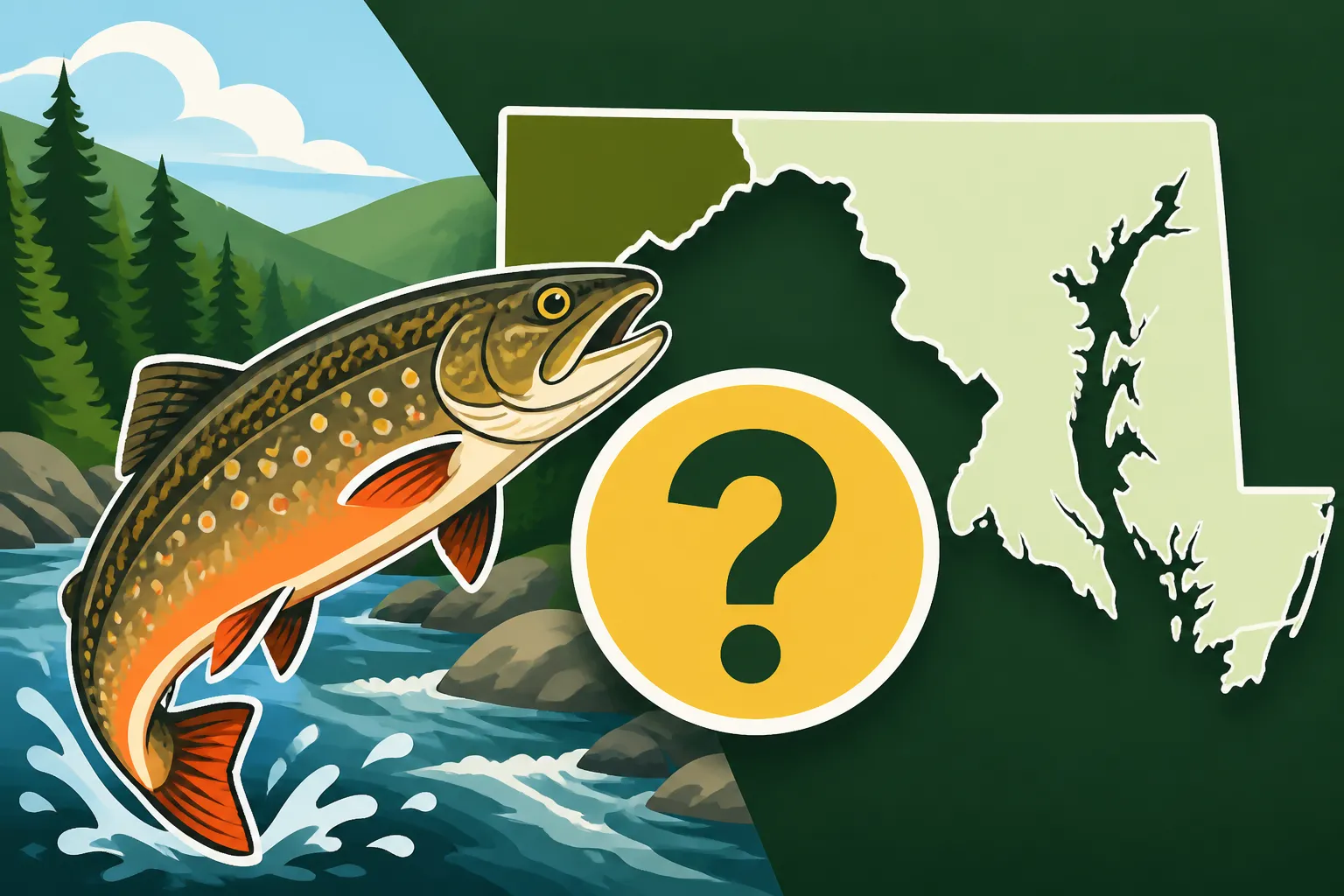
Let me tell you, when you find a stream tucked away in the Appalachian foothills of Western Maryland, sparkling clean and shaded by ancient hemlocks, and you pull out a brook trout with its iridescent spots and worm-like markings, you're holding a piece of Maryland's natural history. These fish, Salvelinus fontinalis, are absolutely, unequivocally native to Western Maryland, and they have been here long before any European settlers or, for that matter, any other trout species were introduced.
They are an indicator species, meaning their presence signifies a healthy, pristine aquatic environment. You won't find wild brook trout just anywhere; they demand specific, unblemished conditions. This native status isn't just a fun fact for your next fishing trip; it's a critical component of why conservation efforts focus so heavily on preserving their remaining habitats in our region.
Historical Presence and Geographic Range
For millennia, brook trout have thrived in the cold, clear headwater streams of the Appalachian Mountains, which include a significant portion of Western Maryland. Think about the rugged terrain of Garrett and Allegany counties, the dense forests, and the steep gradients that feed countless small creeks and tributaries. These were, and in many cases still are, the ancestral homes of the brook trout. Before modern transportation, before agriculture reshaped landscapes, these fish populated stream after stream, existing as a vital part of the natural ecosystem.
Their populations were once far more widespread across the Eastern seaboard, but human development has significantly fragmented their range. In Maryland, their presence is now concentrated in the most pristine and untouched sections of streams flowing off the Allegheny Plateau and surrounding mountains. These aren't fish that were brought in from elsewhere; they evolved right here, perfectly adapted to the unique characteristics of our mountain waterways. When you're fishing in a spot like the upper reaches of the Savage River or some of the hidden gems near Deep Creek Lake, you’re stepping into a truly ancient landscape for these fish.
Eastern Brook Trout Conservation Efforts
Because of their native status and the challenges they face, brook trout are a focal point for numerous conservation initiatives. Organizations and state agencies, including the Maryland Department of Natural Resources (DNR), work tirelessly to protect and restore brook trout populations. These efforts often involve identifying critical habitats, improving water quality, and removing barriers to fish passage. Sometimes, this even means undertaking stream restoration projects, like planting trees along banks to reduce water temperature or stabilizing eroding streambeds.
It's a huge undertaking, driven by the understanding that these aren't just any fish; they are a legacy. When you see signs about specific regulations in certain trout streams, like Barbless Hook Rules on Maryland Trout Streams or Which Maryland Streams Are Catch and Release Only?, it's often directly related to safeguarding these precious native populations. Anglers play a vital role too, through responsible fishing practices and supporting conservation groups. Many dedicated fly anglers, for instance, are passionate advocates for native brook trout, always practicing catch and release and minimizing stress on the fish. You can find excellent resources and gear for practicing ethical catch and release on platforms like Amazon, from knotless nets to specialized forceps.
Understanding Brook Trout Habitat in Maryland
If you want to find native brook trout, you need to understand their home. These aren’t fish that can just pop up anywhere. They are incredibly particular about their environment, acting as natural barometers for ecosystem health. Their presence, or absence, tells a story about the stream itself.
Cold, Clean Water Requirements
The most crucial factor for brook trout is cold, clean water. I mean really cold and really clean. These fish thrive in water temperatures typically below 68°F (20°C), and ideally much colder, often in the 50s and low 60s Fahrenheit. This is why you primarily find them in the headwaters of streams, where groundwater springs keep the temperatures consistently low, even during the warmest summer months.
Think about a hot August day in Maryland. While most of us are dreaming of a dip in the ocean, these tiny tributaries in Western Maryland remain frigid, often thanks to heavy forest canopy providing shade and natural springs bubbling up from underground. Pollution, even subtle changes in water chemistry from agricultural runoff or residential development, can be devastating to brook trout. They need high dissolved oxygen levels, which cold, clear water naturally provides. So, if you're exploring a stream and it feels bathwater warm or looks cloudy, chances are, you won't find native brookies there. That's one of the key differences you'll notice compared to, say, bass fishing in a warmer, slower moving river.
Ideal Stream Characteristics
Beyond temperature and purity, brook trout are particular about the physical structure of their stream habitat. They prefer small, shallow streams with a moderate to steep gradient, creating a series of riffles, runs, and small pools. These streams typically have gravel or rocky bottoms, which are essential for spawning and provide plenty of nooks and crannies for insect larvae, their primary food source.
Overhanging vegetation, undercut banks, and fallen logs are also incredibly important. These features provide shade, cover from predators (like birds of prey and larger fish), and thermal refuges where trout can hide if water temperatures rise unexpectedly. A healthy brook trout stream often feels like a miniature jungle, with dense foliage right down to the water's edge. You might even find some sections that are difficult to access because of the natural wildness – and that's usually a good sign! It means the habitat is less disturbed. These are the kinds of places where you might need a good pair of waders and some sturdy wading boots, perhaps found with a quick search on Amazon for fishing gear.
Distinguishing Wild Brook Trout from Stocked Fish
This is where things can get a little tricky, especially for new anglers. Maryland stocks a lot of trout – rainbow, brown, and even some brook trout – in many waters. So, how do you tell if you've caught a true native wild brook trout, a direct descendant of the original inhabitants, versus one that was raised in a hatchery and released? It's a skill that comes with observation and experience, but there are some tell-tale signs.
Visual Cues and Markings
Wild brook trout often have a distinct appearance that sets them apart from their hatchery-raised cousins. Here's what to look for:
| Feature | Wild Brook Trout | Stocked Brook Trout (or other trout) |
|---|---|---|
| Coloration | Vivid, intense colors; dark olive/green back, often with intricate worm-like (vermiculation) patterns; bright red/orange lower fins with white leading edges (sometimes called "brookie white"). Spots are usually blue-haloed red spots. | Often duller, paler colors; less distinct patterns; sometimes a 'washed out' look. Spots may be less defined. |
| Fin Quality | Pristine, fully formed fins, especially the tail (caudal) fin. Smooth and undamaged. | Fins can be frayed, worn, or stubby, especially the dorsal and pectoral fins, due to rubbing against concrete raceways in hatcheries. |
| Body Shape | Sleeker, more streamlined, and muscular. Adapted to fighting currents. | Often chunkier, less athletic build, sometimes with slight deformities from hatchery conditions. |
| Smell | Fresh, clean, earthy smell. | May have a slight "hatchery" or "pellet food" odor, though this fades over time. |
The vermiculation pattern on their backs is a dead giveaway – it looks like intricate, winding paths of darker green or black, unlike the distinct spots of rainbows or browns. The vibrant reds and oranges on their bellies and lower fins, often edged with a brilliant white stripe followed by a black stripe, are also characteristic. These colors are far more muted or absent on fish that haven't lived their lives in the wild.
Behavior and Location Differences
Aside from physical appearance, the behavior and location where you catch a fish can also strongly suggest whether it's wild or stocked.
Wild brook trout are typically found in those truly remote, pristine, and often smaller headwater streams we talked about earlier. These are streams that are often inaccessible by vehicle, requiring a hike to reach. They'll be skittish, darting for cover at the slightest disturbance – a testament to their survival instincts honed in the wild. They are also highly territorial, often holding in specific pockets of current or beneath cover.
Stocked fish, on the other hand, are often found in easily accessible, larger streams or rivers, particularly in areas designated as "put-and-take" fisheries where they are regularly released. They might be less wary, having grown up without natural predators. While some stocked fish can "go wild" and adapt over time, especially if released into suitable habitat, those recently stocked tend to be less cautious. If you're catching fish one after another in a well-known, easily reached spot right after a stocking event, chances are they're not native wild brookies. However, if you're bushwhacking deep into the woods to a tiny trickle, and you pull out a small, brilliantly colored trout, you’re likely in native territory. Learning about Maryland's Put-and-Take Trout Waters, What That Means can help you understand where to expect these different scenarios.
Threats to Maryland's Native Brook Trout Populations
Despite their resilience and long history in our state, Maryland's native brook trout populations face a myriad of threats. It's a tough world out there for these delicate fish, and understanding these challenges is key to appreciating why conservation is so vital.
Habitat Degradation and Fragmentation
One of the biggest adversaries for brook trout is habitat degradation. This comes in many forms, from pollution to physical alteration of their streams. Sediment runoff from construction sites, agricultural fields, or poorly managed logging operations can smother the gravel beds where trout lay their eggs and feed. Chemical pollutants, even in small doses, can be lethal or impair their ability to reproduce.
Another major issue is habitat fragmentation. Imagine a pristine stream that's home to a healthy population of brook trout. Now, imagine a culvert is installed under a road, but it's perched too high, creating a waterfall barrier that the trout cannot jump. Or perhaps a dam is built. Suddenly, that population is cut off from other populations upstream or downstream. This "fragmentation" limits genetic diversity, makes populations more vulnerable to localized disturbances (like a single pollution event), and prevents fish from moving to find better spawning grounds or cooler waters during heatwaves. It’s like breaking a large, thriving community into isolated, struggling neighborhoods. You can read more about efforts to protect these fish by looking into topics like How Maryland Decides Which Rivers Get Stocked and how that impacts native populations.
Competition from Non-Native Species
While we love all our trout in Maryland, the introduction of non-native brown trout (Salmo trutta) and rainbow trout (Oncorhynchus mykiss) has presented significant challenges for native brook trout. Brown trout, originally from Europe, are often more tolerant of warmer water and less pristine conditions than brook trout. They are also highly aggressive and can outcompete brook trout for food and prime habitat, sometimes even preying on juvenile brook trout.
Rainbow trout, native to the Pacific Northwest, are also hardier than brook trout in many environments. When stocked in the same waters, both brown and rainbow trout can displace the more sensitive native brookies, pushing them into increasingly marginal habitats or simply outcompeting them to the point where brook trout populations dwindle.
The Maryland DNR often tries to manage stocking programs carefully to minimize impact on native populations, sometimes stocking non-native trout only in "put-and-take" streams where native brook trout are not present, or in specific waters where the habitat is marginal for brook trout anyway. But the reality is that once established, these non-native species can be incredibly difficult to remove and continue to pose a threat to our precious native fish. It’s a delicate balance that fishery managers constantly strive to maintain.
Disclaimer
This article is for general informational purposes only and does not constitute professional advice. Laws, prices and regulations vary by location and change over time. Consult a qualified professional for guidance on your specific situation.