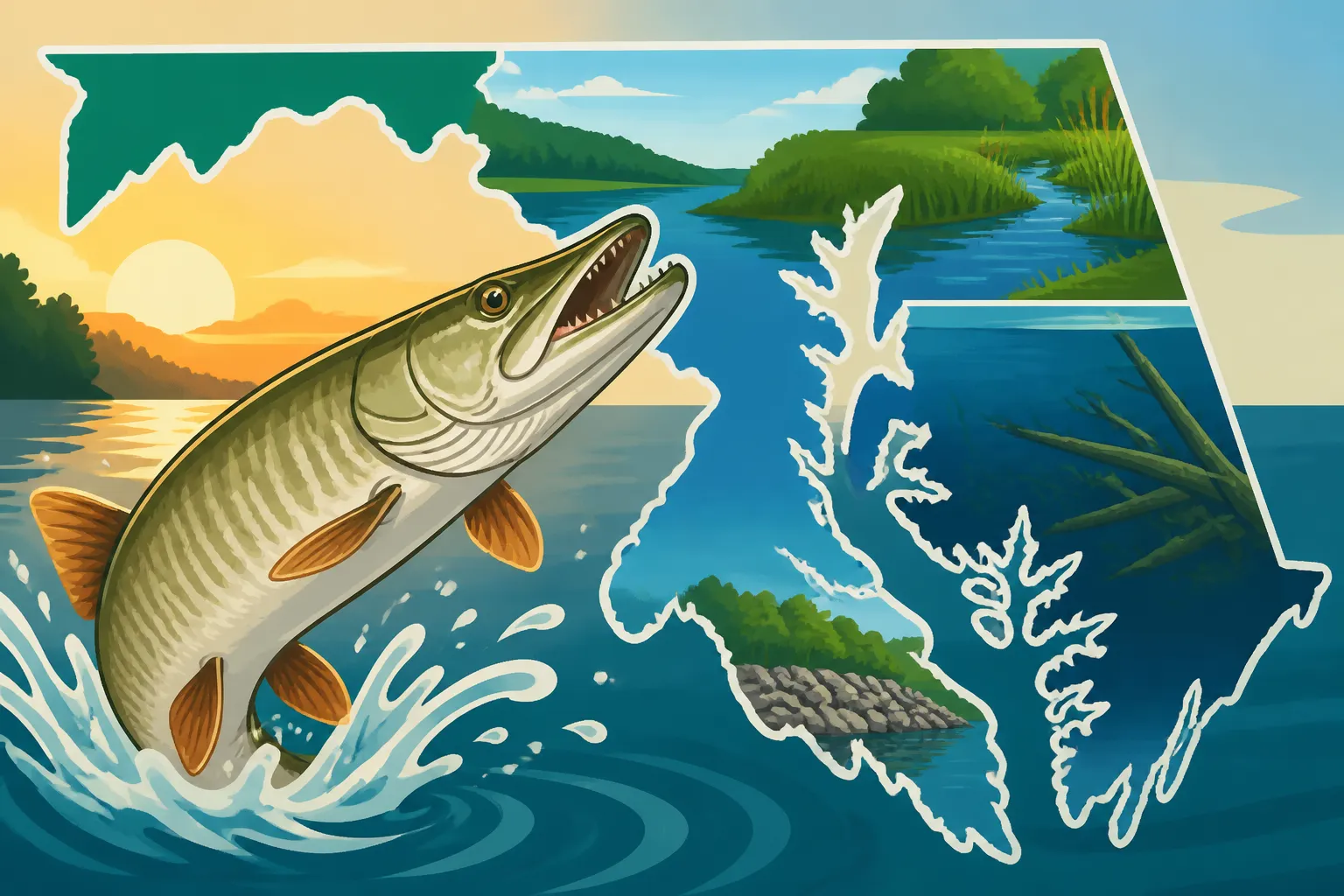
Where Might You Catch a Musky in Maryland?
Oh, the musky! Just the mention of that name conjures up images of giant, toothy predators lurking in the shadows, a true challenge for any angler. If you've ever dreamed of tangling with one of these freshwater giants right here in Maryland, you're not alone. While Maryland isn't exactly known as a musky hotspot like some other states, there are whispers, rumors, and even confirmed catches that prove these elusive fish do exist in our waters. This guide will take a deep dive into where you might encounter a musky in Maryland, what makes them so special, and how to prepare for the hunt.
Understanding Musky in Maryland's Waters
Catching a musky is often called "the fish of 10,000 casts," and for good reason! They are incredibly wary, powerful, and notoriously difficult to entice. But that challenge is exactly what draws so many dedicated anglers to pursue them. In Maryland, the quest for musky holds a unique appeal because they aren't as prevalent as in some of the more traditional musky states.
A Brief History of Musky in Maryland
Unlike our native striped bass, which are synonymous with the Chesapeake Bay, musky aren't a native species to Maryland. Their presence here is largely due to past stocking efforts by the Department of Natural Resources (DNR) to create a trophy fishery. These programs often targeted specific waterbodies that mimicked the cold-water, ample forage conditions musky thrive in. It wasn't about establishing a widespread population, but rather creating pockets where these magnificent fish could grow to impressive sizes, offering a unique challenge to anglers.
These stocking initiatives were strategic. Maryland DNR fisheries biologists carefully selected locations with suitable water temperatures and a robust prey base of various panfish and smaller game fish to give the musky the best chance to survive and thrive. While ongoing large-scale stocking might not be a current focus, the legacy of these past efforts means that viable, albeit elusive, populations can still be found. It’s a testament to these fish's resilience and adaptability that they've been able to persist and grow in their introduced homes.
The idea behind introducing musky wasn't just to add another game fish; it was to create a specialized, high-demand fishery. These fish grow large and put up an incredible fight, making them a bucket-list species for many. Understanding this history helps set realistic expectations: you won't find them everywhere, but where they are, they’re often trophy-sized and fiercely guarded secrets among a small, dedicated angling community. It's not about quantity but about the sheer quality and challenge of the pursuit.
Identifying a Maryland Musky
Before you even cast a line, knowing what you're looking for is half the battle. Maryland waters are also home to other esox species like northern pike and chain pickerel, which can sometimes be confused with musky, especially by less experienced anglers. However, there are distinct differences that, once you know them, make identification much clearer. Misidentification can lead to confusion, especially with regulations, so paying close attention to detail is crucial.
Musky are generally larger than pike and pickerel, but size alone isn't a reliable identifier. The key lies in their markings and the scaling on their cheek and gill plates. Musky typically have dark spots or bars on a lighter background, while northern pike usually have lighter, bean-shaped spots on a darker body. Chain pickerel, true to their name, display a distinctive chain-like pattern. Beyond coloration, examine the lower half of the gill cover and cheek: musky usually have scales on both the top and bottom halves of their cheek and gill covers. Pike will have scales on the top half of the gill cover but not the bottom, and pickerel will have scales fully covering both.
Another interesting point for Maryland anglers is the potential for "tiger musky," which are a sterile hybrid of a musky and a northern pike. These hybrids often exhibit a distinctive tiger-stripe pattern and can grow quite large. They were sometimes stocked because they grow quickly and aggressively, making them excellent sport fish without the concern of them overpopulating or disrupting native ecosystems through natural reproduction. While less common than pure musky or pike, encountering a tiger musky is certainly a thrill and a testament to the diverse fish species you might stumble upon in our waters. Knowing these identification markers is key not just for bragging rights, but for adhering to proper Maryland Fishing Size and Catch Limits by Species regulations, as limits can differ for various esox species.
Key Maryland Waterbodies for Musky
When it comes to musky fishing in Maryland, there’s one particular waterbody that stands head and shoulders above the rest as the most likely place to connect with one of these elusive predators. However, there are whispers and historical notes about other potential spots, so let’s dive into where you might actually have a shot.
The Upper Potomac River's Musky Population
If you ask any seasoned musky angler in Maryland where to begin their quest, the Upper Potomac River will undoubtedly be the first answer. This magnificent river, forming much of Maryland's western border, is widely considered the state's premier musky fishery. It's a vast, diverse waterway, and its musky population is a testament to dedicated stocking programs from decades past. The challenge here isn't just catching a musky; it's finding them within such an expansive and dynamic system.
The Upper Potomac offers a variety of habitats that musky favor. Look for them in deeper pools, especially those with rocky ledges, submerged timber, or current breaks where they can ambush unsuspecting prey. Sections with extensive weed beds or sudden depth changes are also prime territory. Anglers often focus on stretches of the river from the Great Falls area upstream into Western Maryland, where the water maintains cooler temperatures and clearer conditions, ideal for musky survival and growth. Navigating the river requires knowledge of its contours and currents, making it a true adventure for those seeking the ultimate freshwater challenge. If you're planning a trip to this region, our Fishing the Potomac River in Maryland guide offers even more insights into the river's unique characteristics.
Success on the Upper Potomac doesn't come easy; it requires immense patience and persistence. Many dedicated musky anglers spend countless hours meticulously casting over prime habitat before finally getting a strike. It's a game of strategy, where understanding the fish's behavior, seasonal movements, and preferred lies is paramount. The reward, however, is truly spectacular: a chance to battle one of freshwater fishing's most formidable adversaries, often a fish of impressive size that will push your tackle and skill to their limits.
Reservoirs and Lakes with Potential
While the Upper Potomac holds the crown for musky fishing in Maryland, it's natural to wonder if other water bodies might harbor these giants. Historically, some larger, cooler reservoirs in Western Maryland were considered for or received experimental stockings. However, the success and persistence of these populations have been far less documented than those in the Potomac.
One lake that often comes up in discussions about potential musky habitat is Deep Creek Lake. While primarily known for its Fishing Deep Creek Lake for Walleye and trout, its cold, deep waters and abundant forage could theoretically support musky. However, there isn't active, widespread management or consistent stocking of musky in Deep Creek Lake, meaning any encounters would be exceedingly rare and likely the result of very old stockings or isolated private introductions. It’s more of a hopeful thought than a reliable fishery. Still, many anglers who target other species here might keep a musky lure handy, just in case.
For other smaller lakes or reservoirs, the possibility of encountering a musky is even more remote. These would typically be isolated instances, perhaps from private stockings that were never widely publicized, or from very early state programs that didn't establish self-sustaining populations. While it’s always fun to dream of a surprise catch in an unexpected place, serious musky hunters in Maryland know that the Potomac River is truly where their efforts are best concentrated. Always refer to the latest Maryland's DNR Fishing and Boating Guide, Explained to confirm current regulations and any potential new stocking information for all water bodies.
| Feature | Musky | Northern Pike | Chain Pickerel |
|---|---|---|---|
| Markings | Dark spots/bars on light background | Light, bean-shaped spots on dark background | Distinct chain-like pattern |
| Cheek Scales | Fully scaled | Fully scaled | Fully scaled |
| Gill Plate Scales | Fully scaled (upper & lower half) | Scales on upper half only (lower half bare) | Fully scaled (upper & lower half) |
| Snout | Often slightly curved or duckbill-shaped | More pointed, elongated | Very pointed, elongated |
| Size | Largest of the three (often >30 inches) | Medium (often 20-30 inches) | Smallest (typically <25 inches) |
| Habitat | Cooler rivers, large lakes, dense cover | Cooler lakes, slower rivers, weed beds | Weedy ponds, sluggish streams, shallow areas |
Gear and Tactics for Maryland Musky
Hunting musky isn't like your typical day fishing for panfish. These are apex predators, and they demand a specific kind of respect, both in the gear you use and the techniques you employ. If you're serious about tackling a Maryland musky, you'll need to gear up appropriately and learn some specialized tactics. This isn't a sport for light tackle; it's about brute strength, heavy lures, and unwavering dedication.
Essential Musky Gear for River Fishing
Musky fishing gear is robust, plain and simple. You're dealing with a powerful fish, often weighing in the double digits, that can easily snap inadequate tackle. Forget your ultralight spinning rod; you'll need heavy-duty equipment built to handle massive lures and violent strikes. A typical musky setup includes a stout baitcasting rod, usually 7 to 9 feet long, with a heavy or extra-heavy power rating. This isn't just about fighting the fish; it's about effectively casting huge, heavy lures all day long. Many anglers find a good selection of specialized rods and reels on Amazon that can withstand the abuse of musky fishing.
Your reel needs to match the rod's power. A high-quality, low-profile baitcasting reel with a strong drag system and a high line capacity is crucial. Pair this with braided line, typically 65 to 100-pound test, to handle the stress of casting big lures and the incredible power of a hooked musky. This strong line also gives you the leverage needed to pull them out of heavy cover, which is where they often reside. Remember, the goal is to land the fish quickly and safely for release, and under-gunning your setup can lead to prolonged fights that exhaust the fish.
Perhaps the most iconic piece of musky gear is the lure itself. Musky lures are notoriously large: think oversized bucktails, massive crankbaits, glide baits, and huge soft plastics. These aren't just for show; they're designed to trigger the predatory instincts of a musky. You'll also need a heavy fluorocarbon or wire leader, at least 80-pound test, to prevent those razor-sharp teeth from cutting your line. Don't skimp on leaders; losing a trophy fish to a bite-off is a heartbreaker. Equipping yourself properly is the first step in seriously pursuing these elusive fish, far different from simply heading out with your Maryland Fishing License for Non-Boat Anglers for a casual day on the pier.
Recommended Techniques for Potomac Musky
Fishing for musky, especially in a river environment like the Upper Potomac, is an active and physically demanding pursuit. It typically involves a lot of casting, covering water methodically, and paying close attention to every retrieve. Most anglers prefer to cast and retrieve large lures, focusing on prime areas where musky are likely to lie in ambush. This means targeting current breaks, fallen trees, rocky outcrops, and the edges of deeper pools. It’s a constant dance of casting, twitching, reeling, and hoping for that explosive strike.
While trolling is a popular musky technique in larger lakes, it's less common in the tighter, often shallower confines of the Upper Potomac. However, in wider, deeper stretches, slow trolling with large crankbaits can be effective, especially if you're trying to cover a lot of water. Some anglers also find success with jigging heavy spoons or soft plastics near deep structure, particularly during colder water periods when musky might be less active and holding tighter to the bottom. No matter the technique, the name of the game is repetition and precision, presenting your lure exactly where a musky might be lurking.
Patience and persistence are perhaps the most vital "techniques" for musky fishing. These fish truly earn their "fish of 10,000 casts" nickname. It's not uncommon to fish for hours, or even days, without a single bite. However, when that strike finally comes, it's usually unforgettable. Pay attention to prime fishing times, like dawn and dusk, or periods of stable weather, as these can often increase your odds. Just like with general fishing, understanding how Best Time of Day to Fish Maryland's Chesapeake Bay concepts apply to musky can make a difference, as can leveraging knowledge of Fishing Maryland Waters at Dawn vs Dusk.
Safety and Handling for Musky
Catching a musky is an exhilarating experience, but handling these powerful, toothy fish requires extreme caution and a commitment to their safe release. Musky are incredible fighters and can be quite dangerous in the boat if not handled properly. Your safety and the fish's well-being should always be the top priority. Proper handling ensures these majestic creatures can continue to thrive and offer future angling opportunities.
The absolute essential tools for musky handling are a large, rubberized landing net and long-nosed pliers or a jaw spreader. A net designed specifically for musky is crucial, as it provides a secure way to subdue the fish while minimizing harm to its scales and fins. Once netted, keep the fish in the water as much as possible. Prolonged air exposure can be detrimental to a musky, so work quickly and efficiently. If you must bring the fish into the boat for a quick photo, ensure its body is fully supported, especially under the belly. Many anglers also use large, wet gloves for better grip and to protect their hands from the sharp gill plates and teeth. You can find excellent musky handling tools on Amazon that are designed for both angler and fish safety.
Never, ever handle a musky by the gills or eyes. These are delicate areas vital for the fish's survival. Use your long-nosed pliers or jaw spreader to remove hooks safely and quickly while the fish is still in the water, if possible. If you want a photo, prepare your camera beforehand, hoist the fish for a quick shot (seconds, not minutes!), and then immediately return it to the water. Gently hold the musky upright in the water until it regains its strength and swims off on its own. This commitment to catch and release not only respects the fish but also helps sustain the limited musky populations in Maryland's waters.
Regulations and Conservation for Musky Anglers
As with any species, especially one as unique and sought-after as the musky in Maryland, understanding and adhering to regulations is paramount. These rules are put in place for a reason: to protect the species and ensure that future generations of anglers have the opportunity to pursue these incredible fish. Beyond just following the law, a strong conservation ethic is vital for musky fishing.
Maryland's Musky Regulations
Maryland's regulations for musky are typically very specific and often include a high minimum size limit, sometimes quite generous, and a very restrictive possession limit. These regulations reflect the rarity of the species and the effort to manage it as a trophy fishery. It’s absolutely essential to consult the most current Maryland DNR fishing regulations before heading out. Laws can change, and what was true last year might be different today. Our comprehensive Maryland Fishing License Guide for 2026 is a great place to start, and always ensure you have a valid What Happens If You Fish in Maryland Without a License? when you hit the water.
In many cases, musky regulations in Maryland will stipulate a "one fish per angler" daily limit, often with a significant minimum length to ensure that only mature fish are kept, allowing younger fish to grow and contribute to potential spawning. Many dedicated musky anglers practice catch and release exclusively, even when legal to keep a fish, because they value the chance for that fish to grow even larger or to be caught again by another angler. This approach helps conserve the limited stock and perpetuates the challenging nature of the sport. Also, be aware that if you're fishing the Potomac, you might need to be familiar with rules set by the Potomac River Fisheries Commission, so checking What Is the Potomac River Fisheries Commission License? is a good idea.
The strictness of these regulations serves a critical purpose. Musky are long-lived, slow-growing fish. Allowing them to reach maturity and spawn is crucial for any natural reproduction that might occur, even if limited. By respecting these rules and understanding their conservation intent, anglers play a direct role in protecting Maryland's unique musky fishery. Always remember that knowledge of the rules is your responsibility, so taking the time to review the Maryland's DNR Fishing and Boating Guide, Explained before your trip is a must.
Conservation Ethic for Musky Fishing
Musky anglers often embody a strong conservation ethic, perhaps more so than in many other fisheries. This isn't surprising, given the "fish of 10,000 casts" reputation and the understanding that these are relatively rare and special fish in Maryland. The thrill isn't just in the catch, but in the respect for the species and its habitat. Preserving these opportunities for the future is a driving force behind their commitment.
This conservation mindset extends beyond just following the rules. It means actively working to protect musky habitat, which in the Upper Potomac often includes minimizing disturbance to riverbanks, being mindful of water quality, and practicing "leave no trace" principles. Anglers should also be vigilant about reporting any suspicious activities, such as illegal harvesting or disregard for regulations, to the proper authorities. Protecting the musky's environment is just as important as protecting the fish itself.
Ultimately, the future of musky fishing in Maryland rests on the shoulders of responsible anglers. By educating ourselves, using proper catch and release techniques, and fostering a deep respect for these majestic creatures, we ensure that the challenge and thrill of pursuing a Maryland musky can continue for generations to come. It’s a privilege to fish for such a powerful and elusive species, and with that privilege comes the responsibility to be its greatest advocate.
Disclaimer
This article is for general informational purposes only and does not constitute professional advice. Laws, prices and regulations vary by location and change over time. Consult a qualified professional for guidance on your specific situation.