Are Smallmouth Bass Native to Maryland Rivers?
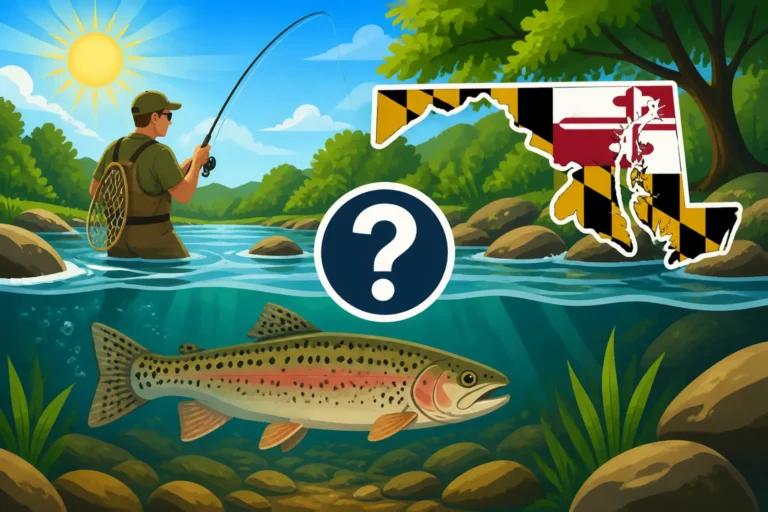
Many anglers, myself included, have spent countless hours casting for smallmouth bass in Maryland's beautiful rivers, enjoying the thrill of their powerful fights and acrobatic leaps. But have you ever paused to wonder about their origins? It's a question that often sparks debate among conservationists and recreational anglers alike: are smallmouth bass truly native to Maryland's winding waterways, or are they a more recent introduction? This guide will dive deep into the fascinating history of smallmouth bass in Maryland, shedding light on their past, their current status, and what it all means for our precious aquatic ecosystems and fishing traditions.
The Curious Case of Maryland's Smallmouth Bass Origins
When we talk about a species being "native," it refers to those plants or animals that occurred naturally in a specific region, evolving there over millennia without human intervention. These are the bedrock species that have shaped the local ecosystems, establishing complex relationships with other flora and fauna. An "introduced" or "non-native" species, on the other hand, is one that has been transported to a new habitat, either intentionally or accidentally, by human activity. The difference isn't just academic; it has profound implications for biodiversity and ecological balance.
Distinguishing Native from Introduced Species in Maryland
It's easy to look at a thriving population of smallmouth bass in a river like the Potomac and assume they've always been there. They're so well-adapted, so seemingly ingrained in the angling culture, that their non-native status can be quite surprising to many. For a species to be considered truly native to Maryland, there must be historical and scientific evidence of its presence before significant European settlement and human-mediated introductions. This often involves looking at historical records, fossil evidence, and analyzing genetic markers in existing populations.
The issue with smallmouth bass is that their current range in Maryland overlaps with areas where they were heavily stocked and introduced in the past. While some natural migration might have occurred from adjacent native ranges, particularly in western Maryland, the widespread distribution we see today is largely a result of human efforts. It's a complex picture, and it highlights how challenging it can be to untangle natural distribution from historical human influence, especially for popular game fish that have been moved around for sport.
The Historical Journey of Smallmouth into Maryland
The story of how smallmouth bass became so abundant in Maryland's rivers is a testament to the popularity of sport fishing and early conservation efforts that, while well-intentioned, often overlooked ecological consequences. The smallmouth bass, or Micropterus dolomieu, is indeed native to the central and eastern United States, primarily originating from the Mississippi River basin and the Great Lakes region. However, its historical native range didn't extensively cover the Atlantic coastal drainages, including much of Maryland.
The widespread introduction of smallmouth bass into Maryland began in the late 19th and early 20th centuries. Anglers and early fish commissions saw the smallmouth as a prized game fish, known for its tenacious fight and delicious taste, and sought to establish populations in waters where they didn't naturally occur. Rivers like the Potomac and the Susquehanna, with their rocky bottoms and cooler, flowing water, seemed like ideal candidates for this new species. These introductions were often done via railway, with live fish being transported in specialized cars and then released into target waterways. It was an exciting time for anglers, marking the dawn of widespread freshwater sport fishing as we know it today. Over time, these introduced populations thrived, expanding their range and becoming a dominant force in many riverine ecosystems across the state. The smallmouth bass quickly became one of the most beloved and sought-after fish in Maryland's rivers.
Where Smallmouth Bass Thrive (and Impact) in Maryland Today
Today, smallmouth bass are firmly entrenched in many of Maryland's major river systems, providing fantastic recreational opportunities for countless anglers. Their adaptability and preference for certain river characteristics have allowed them to establish robust populations.
Key Rivers and Habitats for Smallmouth
When you think of smallmouth bass fishing in Maryland, two rivers immediately come to mind: the Potomac River and the Susquehanna River. These rivers, particularly their nontidal sections, offer the perfect blend of habitat features that smallmouth absolutely adore. You'll find them congregating around rocky riffles, swift currents, deep pools, and areas with submerged timber and boulders. They love that current, always facing upstream, ready to ambush unsuspecting prey.
The Upper Potomac River, especially above Great Falls, is a legendary smallmouth fishery. The river here is characterized by long stretches of ledges, rock gardens, and rapids, providing an endless array of ambush points. Anglers who spend time exploring Fishing the Nontidal Upper Potomac for Smallmouth Bass know that patience and understanding the river's structure are key. Similarly, the Susquehanna River, particularly its upper reaches before it widens into the Chesapeake Bay, also holds strong populations. While Fishing the Susquehanna Flats in Maryland is often associated with striped bass, the upstream sections offer excellent smallmouth opportunities, especially for those who enjoy Fly Fishing for Smallmouth Bass on the Susquehanna. These areas mirror the riverine environments of their native ranges, making them ideal adopted homes.
Ecological Implications of Non-Native Status
While smallmouth bass provide immense recreational value, their presence as an introduced species isn't without ecological considerations. Any time a non-native species becomes established, there's a potential for ripple effects throughout the ecosystem. Smallmouth bass are apex predators in their preferred habitats, and their introduction can lead to competition with native fish species for food resources and spawning grounds.
In some cases, this competition can put pressure on native species that aren't as aggressive or as well-adapted to competing with a new, efficient predator. For instance, native darters, minnows, and other smaller fish that serve as prey for smallmouth might face increased predation pressure. There's also the concern of potential impacts on native sport fish, though in Maryland's prime smallmouth rivers, the ecological role they've assumed has largely stabilized over decades. The long-term effects are always complex, and scientists continue to study these interactions to understand the full picture. It's a delicate balance between enjoying a fantastic sport fish and acknowledging its place within the broader ecosystem. This is part of the ongoing discussion around Maryland Invasive Fish Rules: Blue Catfish and Snakehead, though smallmouth bass are not typically managed with the same aggressive eradication strategies as highly destructive invaders like blue catfish.
Conservation and Management Perspectives
Given their popularity and established status, Maryland's Department of Natural Resources (DNR) manages smallmouth bass primarily as a valuable game fish. This means setting regulations that ensure sustainable populations for future angling enjoyment. Unlike truly invasive species, which often have no natural predators and cause widespread ecological harm, smallmouth bass have integrated into many Maryland river systems and are generally seen as a desirable component of the freshwater fishery.
Management strategies focus on monitoring population health, habitat protection, and responsible angling practices. This includes size and creel limits, which help ensure enough fish survive to reproduce. For anglers, practicing catch and release, especially for larger breeding fish, is often encouraged to maintain healthy populations. The goal is to sustain a robust smallmouth fishery while minimizing any negative impacts on native species where possible. When you’re out on the water, you'll often see signs or hear discussions about specific regulations that change to reflect the health of the fish stocks, ensuring that both resident and Maryland Nonresident Fishing License Cost anglers can continue to enjoy this challenging fish.
Targeting Smallmouth Bass in Maryland's Rivers
Fishing for smallmouth bass in Maryland is a quintessential freshwater experience. These fish are known for their feisty nature, strong runs, and aerial acrobatics, making them a favorite target for many. Knowing where and how to fish for them can significantly increase your chances of success.
Prime Locations and Best Times
Maryland offers exceptional smallmouth bass fishing, particularly in its western and central river systems. As mentioned, the Potomac River is arguably the crown jewel. From the upper nontidal stretches near Harpers Ferry down to the tidal influence, there are miles of prime smallmouth habitat. Anglers targeting this river often find success wading or drifting in kayaks through rocky sections. Similarly, the Susquehanna River, especially upstream of Port Deposit and the Conowingo Dam, provides excellent opportunities. Other smaller tributaries and creeks in western Maryland can also hold surprising numbers of smallmouth, offering a more secluded experience.
Timing is crucial for smallmouth success. While you can catch them year-round, spring and fall are typically the most productive seasons. In spring, as water temperatures rise, smallmouth become increasingly active, moving into shallower areas to feed heavily before and during their spawn. They'll readily strike a variety of lures. Summer can be good too, especially during early mornings, late evenings, or after a good rain when the current picks up. During the heat of the day, they'll retreat to deeper, cooler pools or shady spots. Fall sees another surge in activity as fish fatten up for winter, making it another prime time. Understanding Best Time of Year to Fish the Potomac for Smallmouth can drastically improve your outing.
Comparison of Maryland's Top Smallmouth Rivers
| Feature | Upper Potomac River | Upper Susquehanna River |
|---|---|---|
| Primary Access | Wading, Kayak, Canoe, Small Jon Boats | Wading, Kayak, Canoe, Small Boats |
| Key Habitat | Rock ledges, riffles, deep pools, current | Rock gardens, swift runs, eddies, boulders |
| Best Seasons | Spring, Fall, Summer (early/late) | Spring, Fall |
| Common Lures | Tubes, jigs, crankbaits, soft plastics, topwater | Spinnerbaits, crankbaits, soft plastics, topwater |
| Typical Size | 10-18 inches, with larger fish present | 12-20 inches, trophy potential |
| Unique Challenge | Strong currents, navigational hazards | Access points can be limited, strong currents |
| Popular Techniques | Fishing Techniques for Smallmouth Bass in the Potomac | Fly Fishing for Smallmouth Bass on the Susquehanna |
Essential Gear and Techniques
When it comes to smallmouth bass, having the right gear can make all the difference. Their aggressive nature and preference for current demand tackle that can handle strong pulls and potential snags.
- Rods and Reels: A medium-light to medium-power spinning or casting rod, typically 6'6" to 7'6" in length, with a fast action tip is ideal. This setup provides the sensitivity to detect subtle bites and the backbone to fight a strong fish in current. Pair it with a reliable spinning reel in the 2500-3000 size or a baitcasting reel with good casting distance. You can find excellent options for every budget on platforms like Amazon, which often has deals on popular brands.
- Line: Eight to twelve-pound test fluorocarbon or monofilament line is generally a good choice. Fluorocarbon offers excellent sensitivity and abrasion resistance, crucial for fishing around rocks. If you prefer braided line, consider a 15-20 lb test with a fluorocarbon leader for stealth.
- Lures and Baits: Smallmouth bass are not particularly picky, but they do have favorites.
- Soft Plastics: Tubes, creature baits, and senko-style worms are highly effective, especially when fished on a jig head. They mimic crawfish and baitfish, which are staple foods.
- Jigs: Football jigs or swim jigs, often tipped with a plastic trailer, are excellent for probing deeper holes and ledges.
- Crankbaits: Small, shallow-diving crankbaits in crawfish or minnow patterns work wonders, especially in rocky areas. For the Susquehanna, you might want to explore specific recommendations like Best Crankbaits for Susquehanna Smallmouth Bass.
- Spinnerbaits and Chatterbaits: These are great for covering water and triggering reaction strikes, especially in stained water or on overcast days.
- Topwater Lures: Poppers, walking baits, and prop baits can provide explosive strikes during low-light conditions.
- Live Bait: Minnows, crayfish, and hellgrammites are irresistible to smallmouth and can be highly effective when other lures fail.
Remember to bring a selection of hooks, sinkers, and swivels. It's always a good idea to check Amazon for tackle boxes and lure kits that are specifically designed for bass fishing, ensuring you have a diverse range of options. If you're wading, a good pair of sturdy waders and wading boots are essential for safety, especially if you're exploring areas like Wading the Susquehanna River Safely.
While smallmouth bass might not be strictly native throughout all of Maryland's rivers, they have certainly carved out a significant niche, becoming an integral part of the state's freshwater fishing landscape. Their continued presence provides thrilling angling adventures and reminds us of the dynamic nature of our aquatic environments. Understanding their origins only adds another layer of appreciation for these magnificent fish.
Disclaimer
This article is for general informational purposes only and does not constitute professional advice. Laws, prices and regulations vary by location and change over time. Consult a qualified professional for guidance on your specific situation.