Techniques for Catching Bluefish in Maryland
If you've ever found yourself on the water in Maryland, watching those tell-tale splashes and boils, you know the exhilarating chaos that bluefish can bring. These aggressive, toothy predators are a blast to catch, but they can also be a bit finicky if you don't know their habits or how to properly present your offerings. This guide is all about equipping you with the knowledge and techniques to consistently hook into those hard-fighting bluefish in Maryland's diverse waters.
Understanding Bluefish Behavior in Maryland Waters
Bluefish are truly a force of nature in the Chesapeake Bay and along the Maryland coast. They're built for speed and aggression, and understanding their typical patterns and preferences is your first step to a successful day on the water. They're not always in the same place, and their moods can shift with the tides and seasons, but there are definitely common threads to their behavior.
Where and When to Find Bluefish
Bluefish are migratory fish, meaning they move in and out of Maryland waters with the changing seasons. Generally, you'll start seeing them in the Chesapeake Bay and coastal waters from late spring, peaking in abundance through the summer and into early fall. Their arrival often coincides with warmer water temperatures and the presence of their favorite baitfish, like menhaden, spot, and mullet. In the Bay, they tend to frequent areas with good current, structure like channel edges, drop-offs, and around major points where baitfish congregate. Along the coast, they'll patrol the surf, inlets, and nearshore wrecks. Sometimes, they'll push far up into the Bay, providing fantastic action even for anglers further north.
One of the most exciting phenomena with bluefish is their "runs" or "blitzes." These occur when large schools of bluefish aggressively feed on baitfish, often pushing them to the surface. You'll see birds diving, baitfish scattering, and the water erupting with splashes. Spotting this activity is like hitting the jackpot. During these times, location is less about specific structure and more about finding the feeding frenzy itself. Keep an eye out for these tell-tale signs, especially during tidal changes when baitfish are more vulnerable. Understanding when these Bluefish Runs in Maryland's Chesapeake Bay occur can dramatically increase your chances.
Reading the Water for Bluefish Activity
Being able to "read the water" is an invaluable skill for any angler, and especially when targeting bluefish. Beyond the obvious surface blitzes, there are more subtle cues. Look for changes in water color, which can indicate current lines or areas where baitfish are concentrating. Discoloration from runoff, for instance, might push bait (and therefore predators) to cleaner edges. Pay attention to changes in bird activity – gulls circling high might be waiting, while birds actively diving usually mean there's food below. Even temperature breaks, which you might only notice with a fish finder, can hold schools of bait and the bluefish that follow them.
Beyond visual cues, listening can also play a part. Sometimes, you'll hear the distinctive "smashing" sound of bluefish hitting the surface before you even see them. It's a sound that gets any angler's heart pumping! Observing other boats or commercial watermen can also give you clues. If a fleet of charter boats is gathered in one area, chances are they're on to something. However, always be respectful of other anglers and maintain a safe distance. Combining all these sensory inputs helps you piece together the puzzle of where the fish might be hiding.
Their Aggressive Feeding Habits
Bluefish are not shy eaters. They are notoriously aggressive, often slashing through schools of baitfish, sometimes even taking multiple bites out of their prey. This ferocity is both their charm and their challenge. It means they'll often hit lures and baits with incredible force, providing an exhilarating fight. However, it also means they have incredibly sharp teeth, capable of slicing through monofilament line like butter. Their aggressive nature means they're usually not too picky about what they eat, as long as it looks like a distressed baitfish or something they can easily overpower.
Because of this, presentation often matters less than simply getting a lure in front of them during a feeding frenzy. Fast retrieves and erratic movements can mimic fleeing baitfish, triggering an instinctual strike. They're also known to strike out of sheer aggression, even if they aren't particularly hungry. This is why when you find a school, you can often catch multiple fish in quick succession. Understanding this "attack first, ask questions later" mentality will help you choose the right lures and retrieval techniques to capitalize on their nature.
Essential Gear and Tackle for Maryland Bluefish
When gearing up for bluefish in Maryland, you need to think tough. These fish pull hard, have razor-sharp teeth, and can quickly destroy inadequate tackle. Investing in the right equipment will save you frustration and lost lures, making your fishing experience much more enjoyable.
Rods, Reels, and Line Choices
For bluefish, you'll want a rod and reel combination that can handle powerful runs and aggressive strikes. A medium-heavy to heavy action spinning or baitcasting rod, typically 6 to 7.5 feet long, is ideal. This rod will provide enough backbone to cast heavier lures and enough power to turn a fighting fish away from structure. Paired with a reel that has a smooth, strong drag system and a fast retrieve ratio, you're in business. Look for reels in the 4000-6000 size range for spinning, or comparable baitcasting reels. Brands like Penn, Shimano, and Daiwa are popular choices and you can often find great deals and a wide selection on Amazon.
When it comes to line, braided line is a game-changer for bluefish. Its incredible strength-to-diameter ratio means you can spool on much heavier line without sacrificing casting distance. I typically use 30 to 50 lb test braided line. The lack of stretch in braid also gives you excellent sensitivity to detect even subtle bites and better hook-setting power. However, because braid is visible and bluefish have keen eyesight, you'll almost always want to tie on a fluorocarbon or monofilament leader. This leads us to our next crucial component: terminal tackle.
Lures and Baits That Bluefish Can't Resist
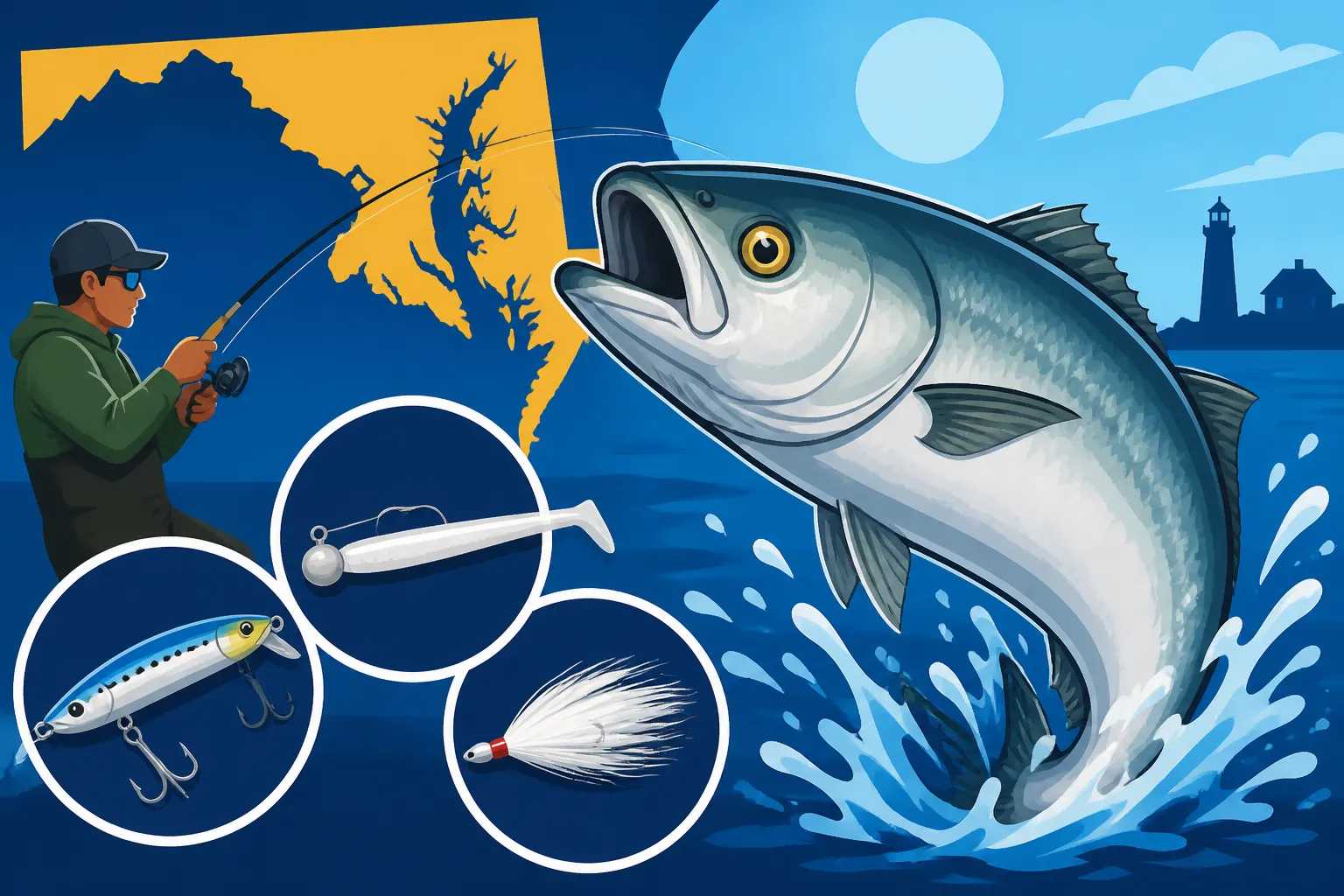
Bluefish aren't particularly fussy, but certain lures and baits are consistently more effective. For lures, you can't go wrong with metal jigs, topwater poppers, and diving plugs.
- Metal Jigs: These are versatile and can be cast a mile. Think about flutter spoons, Kastmaster-style lures, or specialized jigging spoons. When bluefish are busting on the surface, a fast retrieve with a jig can often trigger a strike. For deeper fish, let it sink and jig it vertically. Many anglers swear by silver or chartreuse colored jigs, which are readily available.
- Topwater Poppers: There's nothing quite like a bluefish explosion on a topwater lure. These create a lot of commotion on the surface, mimicking a struggling baitfish. Work them with a "pop-pop-pause" retrieve. White, silver, or bright chartreuse are excellent color choices.
- Diving Plugs: These are great for covering water and targeting fish just below the surface or at mid-depth. Long, slender minnow imitations or lipped plugs are very effective. Again, silver, blue, or chartreuse patterns tend to perform well.
For natural bait, fresh menhaden (bunker), spot, or mullet are bluefish magnets. You can fish them live, as cut bait (chunks), or even whole. When bluefish are scattered or less aggressive, a well-presented natural bait can often outperform lures. You can buy quality hooks, swivels, and leader material in bulk from places like Amazon to ensure you're always ready. For more specific lure recommendations, checking out Best Lures for Bluefish Blitzes in the Bay can give you an edge.
Terminal Tackle for Tooth Protection
This is where many new bluefish anglers learn a hard lesson: those teeth are no joke! A bluefish will make short work of standard monofilament leader. To prevent bite-offs, you need wire leader or very heavy fluorocarbon.
- Wire Leader: This is the most reliable option. A 6-inch to 12-inch section of 30-60 lb test single-strand wire or a multi-strand braided wire leader will protect your line. Attach it to your main line (or fluorocarbon leader) with a strong barrel swivel and to your lure or hook with a strong snap swivel or a haywire twist.
- Heavy Fluorocarbon Leader: If you prefer fluorocarbon for its stealth, you'll need to step up to at least 50-80 lb test. While not entirely bite-proof, it offers significantly more abrasion resistance than standard mono. Keep your leader length relatively short, around 12-18 inches, to make casting easier.
Always use heavy-duty swivels and snaps to connect your leaders and lures. Bluefish fight dirty and will twist and turn, so weak connection points are often the first to fail. Don't skimp on quality here; losing a good fish (and your favorite lure) due to cheap terminal tackle is incredibly frustrating.
| Terminal Tackle Item | Purpose | Recommended Strength/Size | Notes |
|---|---|---|---|
| Wire Leader | Prevent bite-offs from sharp teeth | 30-60 lb test | Single-strand or multi-strand wire |
| Fluorocarbon Leader | Stealth & abrasion resistance | 50-80 lb test | For anglers preferring non-wire; shorter length |
| Barrel Swivels | Connect main line to leader; prevent twist | 50-100 lb test | Essential for line management and strength |
| Snap Swivels | Quick lure changes | 50-100 lb test | Heavy-duty for durability; attach to wire leader |
| Hooks | Secure bait/lure | 4/0 to 8/0 J-hooks/Trebles | Strong, corrosion-resistant; choose based on lure/bait size |
Top Techniques for Landing Bluefish in Maryland
Catching bluefish often comes down to matching your technique to their current mood and location. They might be blitzing the surface one moment and lurking deeper the next. Having a few go-to methods in your arsenal will make you a more versatile and successful bluefish angler.
Casting and Retrieving for Surface Bites
When you see bluefish actively feeding on the surface, whether it's a full-blown blitz or just sporadic splashes, casting and retrieving is your prime tactic. The key here is often speed and erratic movement. Use topwater poppers or fast-retrieved metal jigs. Cast your lure beyond the active area and reel it in quickly, mimicking a baitfish fleeing for its life. Don't be afraid to experiment with different retrieve speeds – sometimes a super-fast retrieve is key, other times a quick jerk and pause is what triggers the strike.
For poppers, a "walk-the-dog" retrieve or a series of aggressive pops can be incredibly effective. The goal is to create as much commotion as possible to grab their attention. With metal jigs, a steady, fast retrieve that makes the lure flash and wobble is usually best. Don't worry if you miss a strike; bluefish often miss on their first attempt but will typically turn right around and hit it again. Keep that lure moving! This is precisely how to react when you encounter a How to Fish a Chesapeake Bay Bluefish Blitz. These fish are opportunistic, and a lure that looks like easy prey is almost irresistible.
Trolling for Scattered Schools
When bluefish aren't actively showing on the surface or you're trying to cover a lot of water to find them, trolling can be a highly effective method. This involves dragging lures behind a boat at a relatively slow speed. Trolling allows you to present multiple lures at different depths and speeds, increasing your chances of finding a scattered school of fish. Use diving plugs, spoons, or even rigged baits like frozen spoons behind planers or inline weights.
Vary your trolling speed until you find what the fish prefer, usually between 4-7 knots. Different lures will have different optimal speeds to achieve their action. You can run multiple lines with varying lengths of line out to explore different depths and cover a wider spread. Pay attention to your fish finder for baitfish schools or arches that indicate predatory fish. Once you hook one bluefish while trolling, mark the spot and consider making another pass or switching to casting in that area, as there are likely more fish around. This approach is particularly useful in larger bodies of water like Fishing Maryland's Chesapeake Bay, A Complete Guide.
Bottom Fishing and Chunking Strategies
While bluefish are often associated with surface feeding, they will also readily feed on the bottom, especially larger "gators" (big bluefish). This is where chunking comes in. Chunking involves creating a chum slick to attract fish to your boat, then presenting fresh cut bait (chunks of menhaden, mackerel, or spot) on the bottom or suspended in the water column. Start a chum slick by slowly releasing ground bait or chopped pieces of fish. As the scent trail drifts with the current, it will draw fish closer.
Once you have a slick going, rig a piece of fresh cut bait on a strong circle hook with a wire or heavy fluorocarbon leader and enough weight to get it to the bottom. Let your bait drift back naturally with the chum slick. You can fish multiple rods at different depths, some on the bottom, some suspended with bobbers or balloons, to cover the water column. This method is often productive in deeper channels, around wrecks, or near bridge pilings. Be patient, as it can take some time for the chum to work its magic, but when it does, the action can be furious.
Handling Your Catch and Safety Tips
Bluefish are fantastic game fish, but their sharp teeth and feisty nature demand careful handling. Knowing how to safely unhook, handle, and prepare them is crucial for both your safety and the quality of your catch.
Safely Unhooking and Handling Bluefish
Bluefish have incredibly sharp teeth that can inflict a nasty bite. Never, ever stick your hand in a bluefish's mouth. The number one rule for handling bluefish is caution. Always use long-nosed pliers or a dedicated dehooking tool to remove hooks. If the fish is particularly feisty, a fish gripper or lip gaff can help you control its head while you work on the hook. Some anglers even carry a small wooden bat or "priest" to quickly dispatch a fish intended for the cooler, making handling much safer.
Once you've removed the hook, if you plan to release the fish, do so quickly and carefully, minimizing its time out of the water. If you're keeping it, place it immediately on ice in a cooler. This not only preserves the quality of the meat but also quickly subdues the fish, preventing it from flopping around and potentially injuring someone or damaging gear. Always have your tools ready before you even bring the fish into the boat. Safety first is paramount when dealing with this particular species.
Preparing Bluefish for the Table
Bluefish have a strong, distinct flavor that some anglers love and others find a bit too "fishy." The key to good-tasting bluefish is proper care immediately after catching. As mentioned, getting them on ice quickly is essential. The quicker they cool down, the better the flesh will be. When you fillet bluefish, you'll notice a dark red "blood line" or lateral line running through the middle of the fillet. Many anglers choose to remove this section entirely, as it contributes significantly to the strong, oily flavor.
Bluefish are excellent when grilled, smoked, or baked. Their firm, flaky meat holds up well to robust seasonings. Try marinating fillets in citrus juice or a vinaigrette before grilling to cut down on some of that strong flavor. Freshness is key with bluefish; they don't store as well as some other species, so it's best to eat them within a day or two of catching. Smoking bluefish is a popular way to prepare them, as the smoking process mellows out the oils and creates a delicious, savory treat.
Respecting Regulations and the Resource
As with all fishing, understanding and adhering to current regulations is not just good practice, it's the law. Bluefish populations fluctuate, and regulations are put in place to ensure sustainable fishing for future generations. Before you head out, always check the Maryland Department of Natural Resources (DNR) website or their current fishing guide for the most up-to-date Maryland Bluefish Daily Limit and any size restrictions. These can change seasonally or annually, so what was valid last year might not be this year.
Beyond legal limits, practicing good stewardship is important. Take only what you need and what you will eat. If you're releasing fish, learn proper catch and release techniques to maximize their survival rate. This includes using circle hooks when bait fishing, which are less likely to gut-hook a fish, and minimizing handling time. Being a responsible angler ensures that the thrill of catching bluefish in Maryland continues for everyone.
This article is for general informational purposes only and does not constitute professional advice. Laws, prices and regulations vary by location and change over time. Consult a qualified professional for guidance on your specific situation.