Best Time of Year for Red Drum Near Assateague
One of the most exciting and challenging pursuits for any angler in Maryland is hooking into a powerful Red Drum, especially when you're casting lines in the legendary surf of Assateague Island. It can be incredibly frustrating to plan a trip, drive all that way, and find the conditions aren't right or the fish just aren't there. This guide is dedicated to helping you pinpoint the absolute best times of year to target Red Drum near Assateague, giving you the insights you need to maximize your chances of a truly memorable catch.
Understanding the Red Drum Migration to Assateague
Red Drum, also affectionately known as Redfish, are a highly migratory species that traverse coastal waters in search of food and suitable spawning grounds. Their presence near Assateague Island is far from a year-round phenomenon; it's heavily influenced by water temperature, baitfish availability, and their internal biological clock. Understanding these patterns is key to being in the right place at the right time.
The Thermal Comfort Zone for Red Drum
Just like us, Red Drum have a preferred temperature range where they are most active and comfortable. For them, it's typically between 65 and 85 degrees Fahrenheit. As Maryland's coastal waters warm up in late spring and peak in summer, and then cool down through the fall, the Red Drum are constantly on the move to stay within this ideal range. Assateague Island, with its dynamic surf zone and proximity to deeper ocean waters, becomes a key stopover during these migrations. When the water temperatures align, baitfish like mullet and spot become abundant, drawing the Red Drum closer to shore where surf anglers have a real shot at them. If the water is too cold, they'll be offshore in deeper, more stable temperatures. If it gets too hot, they might move further out or into cooler inlets and channels.
Following the Baitfish Bonanza
Red Drum are opportunistic feeders, and their movements are intrinsically linked to the migration of their primary food sources. Near Assateague, this often means following schools of mullet, spot, croaker, and even some of the smaller menhaden. As these baitfish move along the coast, either into the shallower waters of the bays and inlets to spawn or out to the ocean for wintering, the Red Drum are right on their heels. The fall migration of mullet, in particular, is a well-known event that signals prime Red Drum time for surf anglers. Imagine waves of baitfish moving down the coast, and just behind them, larger predators like Red Drum, ready to feast. Why Are Menhaden Important Bait Fish in the Chesapeake Bay? This predator-prey relationship dictates much of the annual fishing calendar.
The Prime Seasons for Red Drum Action Near Assateague
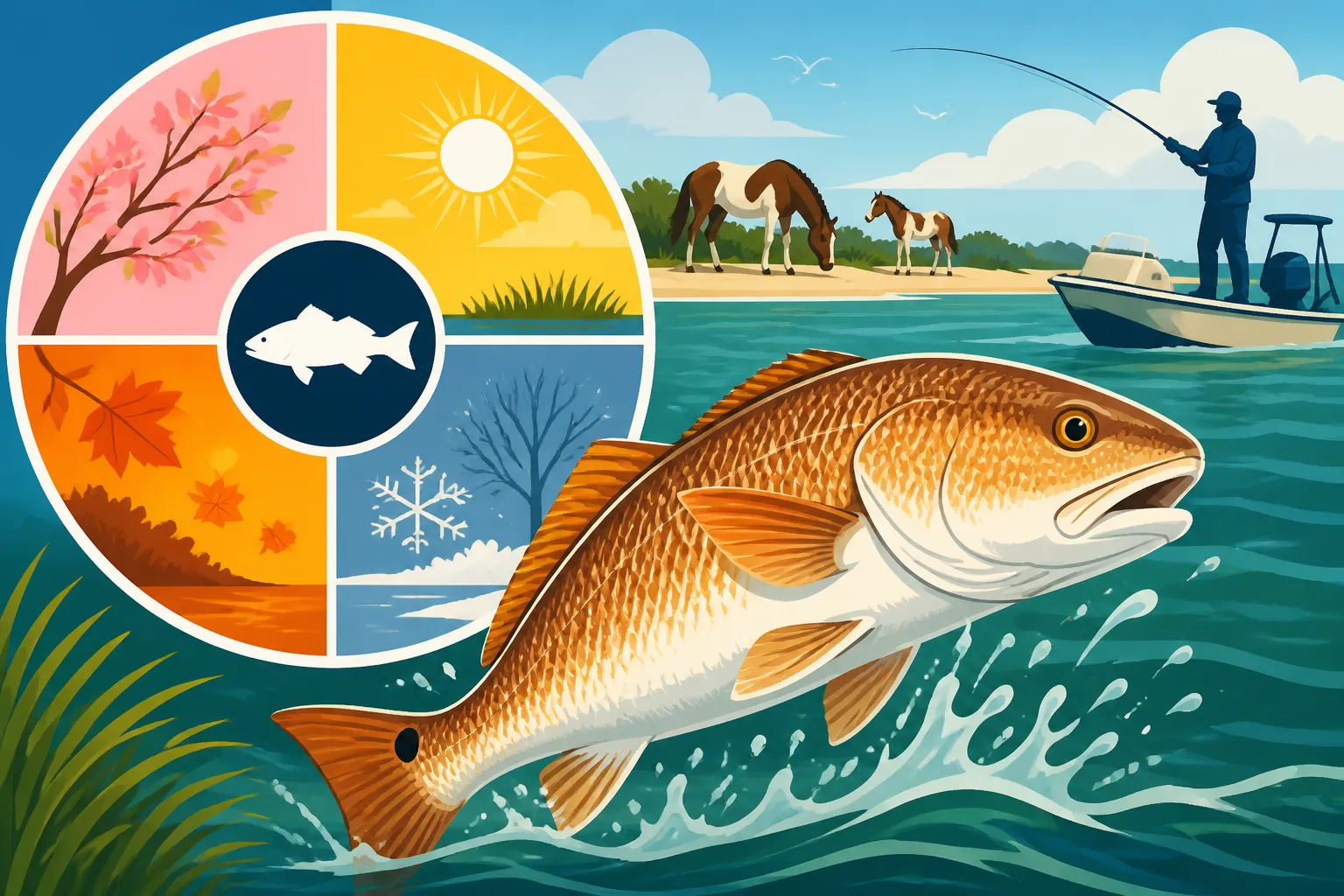
While Red Drum can be caught during several months, there are distinct windows that offer the best opportunities for surf anglers at Assateague. These windows are primarily in the spring and, more significantly, the fall.
Spring Migration: A Fleeting Opportunity
The spring can offer a brief, often overlooked, chance at Red Drum. As ocean waters begin to warm up, usually from late April through May, the first wave of migratory Red Drum may pass by Assateague. These fish are typically moving north after overwintering in warmer southern waters. It's not usually as consistent as the fall run, and the fish might be smaller, but it's certainly worth noting. Anglers fishing for other species might stumble upon them during this period. The challenge here is the variability of spring weather; a cold snap can quickly send them back offshore, making consistent targeting difficult.
Fall Run: The Absolute Best Time for Red Drum
Without a doubt, the late summer and fall months, specifically September through November, represent the absolute best time of year for Red Drum near Assateague. This is when the "bull reds"—the larger, mature breeding fish—make their grand appearance in the surf.
September: The Transition Begins
As summer wanes and water temperatures begin their gradual descent, usually in the low to mid-70s, September marks the beginning of the prime Red Drum season. The baitfish are still incredibly abundant, and the Red Drum are actively feeding to bulk up for their spawning migrations. Early September can still feel very much like summer fishing, but by mid-month, you'll start seeing a noticeable increase in Red Drum activity. The days are still relatively long, and the weather can be glorious for a day out on the beach.
October: Peak Season for Big Bull Reds
October is often considered the undisputed champion for Red Drum fishing near Assateague. The water temperatures are ideal, typically in the high 60s to low 70s, and the mullet run is usually in full swing. This is when the largest Red Drum, often weighing 30-50 pounds or more, move close to the shore. These "bull reds" are magnificent fighters and a true trophy for any surf angler. How Big Do Red Drum Get Near Assateague Island? The fishing can be intense, with multiple hookups possible if you hit the timing just right. Storms, particularly nor'easters, can sometimes push fish in even closer, creating epic fishing conditions right after the blow subsides, though fishing during the storm itself is generally unsafe.
November: The Late Season Push
Even into November, especially the first half, the Red Drum action can remain strong, though it starts to taper off as water temperatures continue to drop. The fish are still feeding aggressively, but their numbers might thin out, and you might need to adjust your tactics to slower presentations as they become a bit more sluggish. By late November, many of the larger fish will have moved offshore to deeper, warmer waters for the winter. However, for those willing to brave the cooler temperatures, there can still be some fantastic days.
Here’s a quick overview of the seasons:
| Season | Typical Months | Water Temperature Range | Red Drum Activity | Target Size (General) | Bait Availability (Key) |
|---|---|---|---|---|---|
| Spring | April – May | 55-65°F | Moderate, migratory fish, less consistent | Smaller "puppy drums" | Emerging schools of bunker |
| Summer | June – August | 70-85°F | Sporadic, often nocturnal, or in deeper cuts | Mixed, few large bulls | Spot, croaker, small mullet |
| Early Fall | September | 68-75°F | Increasing activity, good numbers of smaller to medium fish | Medium (15-30 lbs) | Mullet run begins |
| Peak Fall | October | 60-70°F | HIGH activity, large "bull reds" close to shore | Large "bull reds" (30-50+ lbs) | Mullet run in full swing, spot, croaker |
| Late Fall | Early November | 55-65°F | Tapering off, still good potential on warmer days | Large (30-50 lbs) | Mullet thinning out |
Factors That Supercharge Your Red Drum Chances
Knowing the general prime seasons is a great start, but serious anglers understand that several specific factors can make or break a Red Drum trip, even during peak times. Best Time of Year to Fish in Maryland
Tides and Currents: Reading the Ocean's Rhythm
For surf fishing, especially for a powerful fish like the Red Drum, understanding the tides is paramount. The incoming and outgoing tides create currents that move baitfish and can concentrate predators. Often, the last two hours of an incoming tide and the first two hours of an outgoing tide are the most productive. This is when the moving water pushes bait into accessible zones and allows the Red Drum to ambush prey more easily. Look for cuts, sloughs, and sandbars that are being washed by the moving water; these are prime feeding lanes. How Tides Affect Fishing in Maryland's Chesapeake Bay A strong current can also mean you'll need heavier sinkers to hold your bait in place, which you can easily find on Amazon.
Weather Patterns: Friend or Foe?
While nobody wants to fish in a hurricane, certain weather patterns can actually improve Red Drum fishing. A few days of consistent, moderate winds, especially out of the northeast, can churn up the surf, dislodge bait from the bottom, and create the kind of turbulent, food-rich environment that Red Drum love. A light chop on the water is often much better than a completely flat, glassy surface. Conversely, periods of very calm, clear water can make the fish more skittish and harder to tempt with a bait. Always check the marine forecast before heading out to Assateague.
Water Clarity and Temperature
As mentioned, water temperature is critical. Too cold, and the fish aren't there. Too hot, and they'll be lethargic or move to deeper water. The sweet spot is roughly 65-75°F. Water clarity also plays a role. While Red Drum don't necessarily need crystal clear water, overly muddy or sediment-filled water after heavy rains can push them away. A nice, slightly stained water with a little bit of "tea color" from the marsh runoff can be perfect, offering a bit of cover for the fish to hunt without hindering their vision too much.
Essential Gear and Techniques for Assateague Red Drum
Targeting big Red Drum in the Assateague surf requires specialized gear and a methodical approach. You can't just show up with a freshwater spinning rod and expect success.
Rod and Reel Setup for the Surf
You'll need a heavy-duty surf rod, typically 10 to 12 feet long, capable of casting heavy weights (4-8 ounces) and large baits. Pair this with a robust spinning reel in the 6000-8000 series or a conventional reel, spooled with 30-50 lb braided line, often with a monofilament or fluorocarbon shock leader. The braid provides casting distance and sensitivity, while the shock leader absorbs the tremendous force of casting heavy weights and helps prevent cut-offs. Many anglers find great deals on these longer rods and heavy-duty reels through online retailers like Amazon.
Baits of Choice
For Red Drum near Assateague, fresh cut bait is king. Fresh mullet is perhaps the most effective bait during the fall run. Cut it into chunks or use a half mullet. Other excellent options include fresh menhaden (bunker), spot, and even large peeler crab. While artificial lures can work for smaller "puppy drum," the big bull reds in the surf overwhelmingly prefer natural, smelly baits. Remember, the fresher the better! Best Bait for Surf Fishing at Assateague Island
Rigging for Red Drum
A standard fish-finder rig is a go-to for Red Drum. This rig allows the fish to pick up the bait and run with it without feeling the resistance of the sinker immediately. It typically consists of a pyramid or Sputnik sinker (4-8 oz, depending on conditions) on a slider, followed by a barrel swivel, a heavy monofilament or fluorocarbon leader (30-80 lb test, 2-3 feet long), and a strong 6/0 to 9/0 circle hook. Circle hooks are crucial for protecting these magnificent fish, as they greatly reduce gut-hooking and typically hook the fish in the corner of the mouth, making for an easy release. You can find pre-tied rigs or all the components to tie your own on Amazon.
Reading the Beach and Casting Techniques
Don't just cast blindly. Take some time to "read the beach." Look for darker, deeper water, areas where waves are breaking further out then reforming closer to shore (indicating a sandbar), and rip currents or sloughs where baitfish might be concentrated. These are the fish highways. How to Read a Sandbar for Surf Fishing Your casting needs to be powerful to get your bait out past the first few breakers, especially if targeting deeper troughs or outer sandbars. Techniques for Surf Casting at Assateague
Handling and Releasing Your Catch
When you do hook into a bull red, prepare for a fight! These fish are incredibly strong. Once landed, handle them with care. Use wet hands if you need to touch them, and try to keep them in the wash as much as possible. A quick photo is fine, but get them back into the water promptly. Red Drum, especially the larger ones, are vital for breeding, and proper release ensures the health of the fishery for years to come. Remember to check current Maryland fishing regulations for any slot limits or harvest restrictions for Red Drum.
Disclaimer
This article is for general informational purposes only and does not constitute professional advice. Laws, prices and regulations vary by location and change over time. Consult a qualified professional for guidance on your specific situation.