What to Wear on a Chesapeake Bay Fishing Charter
Oh, the Chesapeake Bay! There's nothing quite like spending a day out on those beautiful waters, rod in hand, waiting for that telltale tug. But if you're like many anglers, especially those new to charter fishing, you might be scratching your head trying to figure out just what to wear to stay comfortable and safe. Trust me, the Bay has a way of surprising you with sudden weather shifts, and being unprepared can turn a fantastic day into a miserable one. This guide is all about helping you understand the ins and outs of dressing for success on a Maryland fishing charter, ensuring you're ready for whatever Mother Nature decides to throw your way.
The Unpredictable Nature of Chesapeake Bay Weather
Let's face it, the weather forecast is often just a suggestion, especially when you're dealing with a large body of water like the Chesapeake Bay. One minute, it can be sunny and calm, and the next, a squall can roll in, bringing wind, rain, and a sudden drop in temperature. This isn't your backyard pond; conditions on the open Bay can change dramatically and quickly, making preparedness absolutely crucial for an enjoyable trip. Many a seasoned captain, when you book through platforms like FishingBooker, will tell you the first rule of Bay fishing is to expect the unexpected.
Why Layering is Your Best Friend
Layering isn't just a buzzword for fashionistas; it's a survival strategy on the Bay. The key is to have multiple thin layers that you can easily add or remove as conditions change. Imagine starting your morning run out to the fishing grounds – it might be chilly with the boat speeding along. As the sun climbs higher and you start reeling in fish, you'll warm up. Then, a cloud bank moves in, or the wind picks up, and suddenly you're feeling a chill again. Having those adaptable layers means you can maintain a comfortable body temperature without having to retreat into the cabin or shiver through the day.
This approach is particularly vital during the transitional seasons like spring and fall. A crisp 40-degree morning can quickly turn into a 60-degree afternoon, and without layers, you're either roasting or freezing. It’s all about being able to adjust on the fly, keeping you focused on the fishing, not on your discomfort.
Common Mistakes First-Timers Make
I’ve seen it countless times: new anglers, eager to get out on the water, show up in cotton sweatpants and a thin hoodie, completely unprepared for the reality of Bay fishing. One of the biggest mistakes is underestimating the wind chill, especially when the boat is moving. Even on a seemingly warm day, the combination of boat speed and open water can create a biting wind that cuts right through inadequate clothing. Another common error is forgetting about the sun's intensity, even on overcast days. The water reflects UV rays, meaning you're getting a double dose of exposure.
Furthermore, many forget that fishing can be a wet activity. Whether it's spray from waves, rain, or just handling wet fish, you're likely to get damp. Cotton, while comfortable when dry, absorbs water and stays wet, leading to a rapid drop in body temperature. You'll hear us old-timers say, "Cotton kills," and while that might be dramatic, it's a good reminder that once wet, cotton offers very little thermal insulation. So, ditch the everyday jeans and sweatshirts for more performance-oriented gear.
Essential Clothing for Any Bay Charter
Regardless of the season, there are foundational pieces of clothing that form the core of a smart Bay fishing wardrobe. Think of these as your year-round staples, with variations in thickness depending on the weather. These aren't just about staying warm; they're about staying dry, comfortable, and protected so you can enjoy every moment of your Maryland Chesapeake Bay Fishing Charters, What to Expect.
Base Layers: Comfort is Key
Your base layer is the foundation, worn directly against your skin. Its primary job is to manage moisture, wicking sweat away from your body to keep you dry. This is crucial because even in cool weather, physical activity can make you sweat, and if that moisture sits on your skin, it will make you feel cold once you stop moving. Look for materials like synthetic fabrics (polyester, polypropylene) or merino wool. These materials excel at moisture-wicking and often have odor-resistant properties, which is a bonus after a long day of fishing.
For colder months, a thicker thermal base layer will provide additional warmth. In warmer weather, a lightweight, breathable, and quick-drying base layer is still important to prevent sweat buildup and keep you cool. Think of a comfortable, long-sleeved shirt that offers UV protection – many brands make excellent options specifically for anglers.
Mid-Layers: For Warmth and Insulation
The mid-layer's role is to provide insulation and trap body heat. This is where you adjust your warmth level based on the temperature. Fleece jackets or vests are fantastic mid-layers because they're lightweight, warm even when damp, and dry relatively quickly. Another excellent option is a puffy jacket filled with synthetic insulation, which offers a great warmth-to-weight ratio.
You might bring one or two mid-layers, allowing you to fine-tune your comfort. On a mild spring day, a single light fleece might be enough over your base layer. But on a chilly fall morning, you might layer a heavier fleece over a lighter one before putting on your outer shell. The beauty of the mid-layer is its versatility; it can often be worn as an outer layer if conditions are calm and dry.
Outer Layers: Your Shield Against the Elements
This is arguably the most critical part of your Bay fishing ensemble. Your outer layer, often called a shell, is your primary defense against wind, rain, and sea spray. It needs to be waterproof and windproof to protect your inner layers from getting soaked, which would defeat the purpose of your base and mid-layers. A good quality fishing bib and jacket set is an investment, but it pays dividends in comfort and protection.
Look for features like sealed seams, adjustable cuffs, and a hood that can be cinched down tightly to keep water out. Many fishing-specific outer layers also include reinforced areas, extra pockets, and D-rings for attaching tools. While a basic rain suit can work in a pinch, dedicated fishing foul-weather gear is designed to withstand the rigors of a day on the water, allowing for freedom of movement while keeping you bone dry. There are excellent options at various price points, and they’ll serve you well whether you're battling a squall or simply cruising against a stiff breeze.
Footwear: Protecting Your Soles on Deck
What you put on your feet is just as important as what you wear on your body. Boat decks can be slippery, wet, and unforgiving, and the wrong footwear can lead to discomfort, cold feet, or even an unfortunate slip and fall.
The Importance of Non-Slip Soles
Safety first! This is non-negotiable on a boat. Your footwear must have non-marking, non-slip soles to provide good traction on wet, potentially slimy decks. Think boat shoes, deck boots, or athletic shoes designed for water activities. Avoid flip-flops, sandals, or shoes with smooth, worn-out soles, as these are accidents waiting to happen. You need stable footing when casting, reeling, or simply moving around the boat, especially if the Bay gets choppy.
Good footwear also provides protection. Dropping a sinker on your bare foot or stubbing a toe on deck hardware is a quick way to ruin a trip. Closed-toe shoes are always the best bet.
Seasonal Footwear Choices
Your choice of socks and shoes will vary depending on the season:
- Warm Weather: In summer, breathable, quick-drying boat shoes or water sandals with good grip are ideal. Many anglers opt for lightweight, quick-dry athletic shoes. Just make sure they offer good arch support if you plan on standing for hours. Don't forget moisture-wicking socks to prevent blisters and keep your feet comfortable.
- Cool/Cold Weather: This is where waterproof boots become essential. Deck boots, often made of rubber or neoprene, keep your feet completely dry from splashes, rain, and fish slime. Pair these with warm, moisture-wicking wool or synthetic socks. You might even consider bringing an extra pair of socks in a dry bag, just in case your feet get wet and need a refresh. There's nothing worse than cold, damp feet on a chilly Bay day!
Headwear, Handwear, and Eye Protection
These might seem like minor details, but they make a huge difference in overall comfort and safety, especially during prolonged exposure to the elements.
Hats and Headbands: More Than Just Fashion
A good hat serves multiple purposes on the Bay. In sunny conditions, a wide-brimmed hat or a cap with a neck flap provides crucial protection from the sun's relentless UV rays on your face, ears, and neck. These are often the first places to get sunburned. In colder or windier weather, a warm beanie or a fleece headband can prevent significant heat loss from your head, keeping you much warmer.
A neck gaiter or "buff" is also an incredibly versatile piece of gear. It can be pulled up to protect your face and neck from sun, wind, or cold, offering an extra layer of defense that a hat alone can't provide. Many captains who list their services on FishingBooker will often suggest these small but mighty additions to your gear list.
Gloves for Grip and Warmth
Gloves are often overlooked but can be invaluable. In colder weather, insulated, waterproof gloves or mittens keep your hands warm and functional. Trying to tie knots or handle tackle with numb fingers is frustrating and inefficient. For all seasons, fishing gloves with exposed fingers (or fingerless gloves) can offer better grip on wet rods, protect your hands from line cuts, and guard against minor scrapes from fish or tackle. Some also offer UV protection for the backs of your hands.
Sunglasses: Guarding Your Vision
Polarized sunglasses are an absolute must. They do more than just reduce glare; they significantly cut down the glare reflecting off the water's surface, allowing you to see into the water much better. This can help you spot structure, weed lines, or even fish swimming below the surface. More importantly, they protect your eyes from harmful UV radiation, which is amplified by water reflection, and from stray hooks or lures flying through the air. Choose a pair that fits securely or use a strap to keep them from falling off when the boat bounces or if you lean over to net a fish.
Don't Forget the Sun and Rain Gear!
It's easy to get caught up in the excitement of fishing and forget about these basic necessities, but they are crucial for a comfortable and healthy trip.
Sunscreen, Lip Balm, and UV Protection
I cannot stress this enough: always bring and apply high SPF sunscreen, even on cloudy days. The combination of direct sun and reflection off the water means you're getting a double dose of UV exposure. Apply it generously to all exposed skin – face, neck, ears, hands, and any other areas not covered by clothing. Reapply every few hours, especially after getting wet. Don't forget a lip balm with SPF to protect your lips from burning and chapping. Long-sleeved shirts made from UV-protective fabric (often rated UPF 30 or 50+) are also an excellent choice, as they provide continuous protection without needing reapplication. Consider options like a Maryland Saltwater Angler Registration Requirements sticker for your cooler, and UV clothing for yourself!
The Lifesaving Power of Good Rain Gear
Even if the forecast is clear, a sudden shower can pop up quickly on the Bay. Having a reliable set of rain gear (your outer layer, as discussed earlier) can make the difference between a minor inconvenience and a thoroughly miserable experience. It’s not just about staying dry; it’s about staying warm. Getting soaked on a boat can lead to a rapid drop in body temperature, even in moderately cool weather, increasing the risk of hypothermia.
Pack a waterproof jacket and pants (or bibs) that are easy to put on quickly. Look for gear that allows for movement without feeling restrictive. It's better to have it and not need it than to need it and not have it. Trust me, you'll be glad you brought it when that unexpected squall blows through. You'll thank yourself for packing it, especially if you're out for a full day of Chesapeake Bay charter fishing.
Seasonal Considerations for Your Chesapeake Bay Wardrobe
The Chesapeake Bay offers fantastic fishing year-round, but your wardrobe will definitely need to adapt to the seasons. What you wear for Winter Fishing for White Perch in Maryland is vastly different from a summer striped bass trip.
Spring and Fall: The Layering Challenge
These are the quintessential layering seasons. Mornings can be quite chilly, sometimes even frosty, especially in early spring or late fall. As the day progresses, the sun can warm things up considerably. You need to be prepared for this wide temperature swing.
- Spring: Think thermal base layers, a fleece mid-layer, and a waterproof/windproof outer shell. Consider a warm beanie and gloves for the morning boat ride. Don't forget your polarized sunglasses.
- Fall: Similar to spring, but often with more consistent cold fronts. Thicker base layers, substantial fleece or even a light insulated jacket as a mid-layer, and robust foul-weather gear are advisable. Waterproof deck boots are almost a necessity. A neck gaiter will be your best friend against biting winds.
You might even want to pack a small soft-sided cooler with some warm drinks like coffee or hot chocolate to sip on during the chillier parts of the day.
Summer: Battling the Heat and Sun
Summer on the Bay can be hot and humid, but don't let that fool you into thinking you don't need to be prepared. Sun protection becomes the paramount concern.
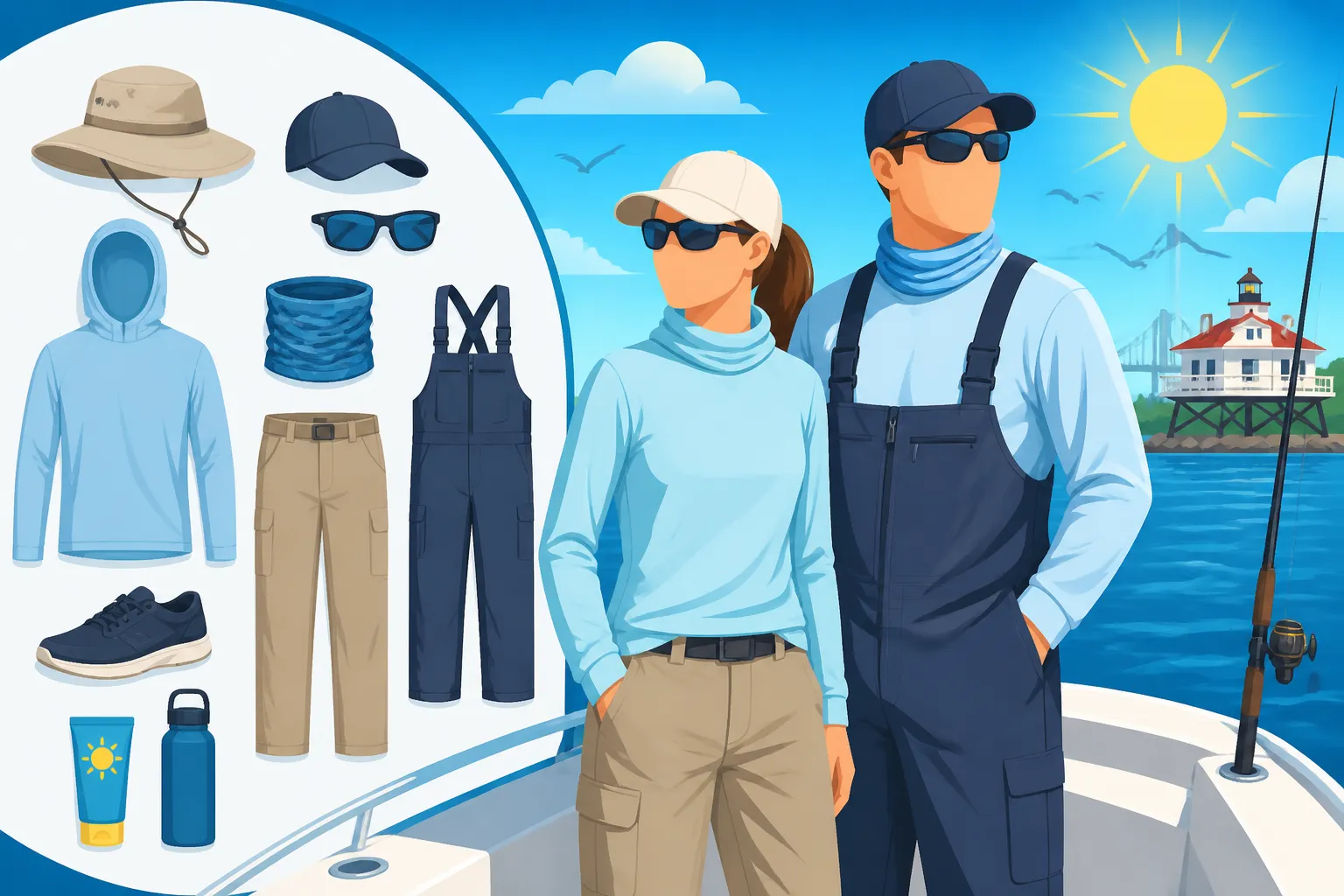
- Clothing: Lightweight, breathable, long-sleeved shirts made from UPF-rated synthetic materials are ideal. They protect you from the sun while wicking sweat away. Light pants or shorts (again, quick-drying synthetics are best) are great.
- Headwear: A wide-brimmed hat to protect your face and neck from the intense sun.
- Footwear: Breathable, non-slip boat shoes or quick-drying athletic shoes with good ventilation.
- Extras: Plenty of sunscreen, a neck gaiter for extra sun protection, and a lightweight, packable rain jacket for pop-up thunderstorms. Even in the summer, a sudden downpour can be chilly if you're not protected. Remember to hydrate constantly!
Winter: Braving the Cold for a Catch
Winter fishing on the Chesapeake Bay is not for the faint of heart, but it can be incredibly rewarding. The key is to dress like you're going skiing, but with more emphasis on waterproofness.
- Base Layers: Heavyweight thermal base layers (synthetic or wool) are crucial.
- Mid-Layers: Multiple thick fleece layers or an insulated jacket. The more insulation, the better.
- Outer Layers: Heavy-duty, insulated, waterproof/windproof bibs and a matching jacket. This is where investing in top-tier foul-weather gear truly pays off.
- Headwear: A warm fleece or wool beanie that covers your ears, possibly worn under the hood of your jacket. A thick neck gaiter is essential.
- Handwear: Insulated, waterproof gloves or mittens.
- Footwear: Heavy-duty, insulated, waterproof deck boots with thick wool socks. Hand warmers and foot warmers can be a game-changer.
- Extras: Bring a thermos of hot coffee, tea, or soup. Consider a Cold-Weather Fishing Tips for Maryland's Chesapeake Bay article for more detailed advice.
Packing Smart for Your Charter Trip
Now that you know what to wear, let's talk about how to pack it and what else to consider for a smooth charter experience.
The Dry Bag Essential
This is a piece of gear you'll never regret bringing. A dry bag, ranging from a small one for your phone and wallet to a larger one for a change of clothes, is indispensable on a boat. It ensures that your crucial items stay absolutely dry, regardless of spray, rain, or a rogue wave. I recommend having a small one for electronics and personal items you might need quick access to, and a larger one stashed below deck with a full change of clothes, just in case. Accidents happen, and having dry clothes to change into at the end of a wet trip is pure bliss.
Think about this: you've just landed a monster striped bass, and in the excitement, you get completely soaked from a wave. If you don't have a dry change of clothes, that ride back to the dock is going to be incredibly uncomfortable. Many charters will have limited space, so a soft-sided bag or backpack that can be stowed easily is preferable to a hard-sided suitcase.
What to Avoid Wearing
Just as important as knowing what to wear is knowing what to leave at home.
- Cotton Clothing: We've covered this, but it bears repeating. Jeans, cotton sweatshirts, cotton socks, and t-shirts are poor choices because they absorb water and take forever to dry, making you cold.
- Open-Toed Shoes/Sandals: A recipe for stubbed toes, dropped hooks, and slippery falls.
- Nice Clothes: This is a fishing trip, not a fashion show! You're likely to get fish slime, bait guts, or even blood on your clothes. Wear old clothes or dedicated fishing apparel that you don't mind getting dirty.
- Too Much Bulk: While layering is good, don't overdo it with excessively bulky items that restrict your movement. You need to be able to cast, reel, and move around the boat safely and efficiently.
When you're browsing different charter options on FishingBooker, don't hesitate to reach out to the captain directly beforehand if you have specific questions about what to wear for the forecasted conditions. They're the experts on their local waters! For additional context on how charter boats work, you might want to read Does the Charter Captain's License Cover Passengers in Maryland? and What's Included in a Maryland Charter Fishing Price.
Quick Reference: Chesapeake Bay Charter Attire
Here's a handy table to help you plan your wardrobe for your next fishing adventure on the Bay:
| Item Type | Warm Weather (Summer) | Cool/Mild Weather (Spring/Fall) | Cold Weather (Winter) | Why It's Important |
|---|---|---|---|---|
| Base Layer | Lightweight, UV-protective, quick-dry synthetic | Medium-weight synthetic or merino wool | Heavyweight thermal synthetic or wool | Wicks moisture, prevents chafing, provides initial warmth. |
| Mid-Layer | (Optional) Light long-sleeve, breathable hoodie | Fleece jacket/vest, light insulated jacket | Thick fleece, insulated jacket, puffer vest | Provides insulation, traps body heat. Easily added/removed for temperature control. |
| Outer Layer | Lightweight, packable rain jacket/pants | Waterproof/windproof jacket & pants (bibs preferred) | Heavy-duty insulated, waterproof/windproof bibs & jacket | Primary defense against wind, rain, and spray. Keeps inner layers dry. |
| Headwear | Wide-brimmed hat or cap, neck gaiter | Warm beanie/cap, neck gaiter | Insulated beanie (under hood), heavy neck gaiter | Sun protection, heat retention, blocks wind. |
| Handwear | Fingerless fishing gloves (UV/grip) | Light waterproof gloves, fingerless fishing gloves | Insulated, waterproof gloves/mittens | Grip, protection from sun/cuts/cold, keeps hands warm and functional. |
| Footwear | Non-slip boat shoes/quick-dry athletic shoes | Waterproof deck boots, non-slip athletic shoes | Heavy-duty insulated waterproof boots | Crucial for traction on wet decks, protects feet from injury, keeps feet dry and warm. |
| Socks | Moisture-wicking athletic socks | Wool or synthetic moisture-wicking socks | Thick wool or thermal synthetic socks | Prevents blisters, wicks moisture, adds insulation. Bring an extra pair! |
| Eye Protection | Polarized sunglasses | Polarized sunglasses | Polarized sunglasses | Reduces glare, improves visibility into water, protects eyes from UV rays and errant hooks. |
| Extras | Sunscreen (high SPF), lip balm (SPF), dry bag | Sunscreen, lip balm, dry bag, extra socks, warm drink thermos | Sunscreen, lip balm, dry bag, hand/foot warmers, hot drink thermos | Essential for comfort, health, and protecting valuables. Preparedness for unforeseen changes. |
By following these guidelines and thinking carefully about the conditions you're likely to encounter, you'll be well on your way to a comfortable, enjoyable, and successful fishing trip on the magnificent Chesapeake Bay. Happy angling!
Disclaimer
This article is for general informational purposes only and does not constitute professional advice. Laws, prices and regulations vary by location and change over time. Consult a qualified professional for guidance on your specific situation.