Are Blue Catfish Good to Eat From Maryland Rivers?
Maryland blue catfish offer a firm white flesh and mild flavor, providing sustainable local seafood while helping the Chesapeake Bay ecosystem.
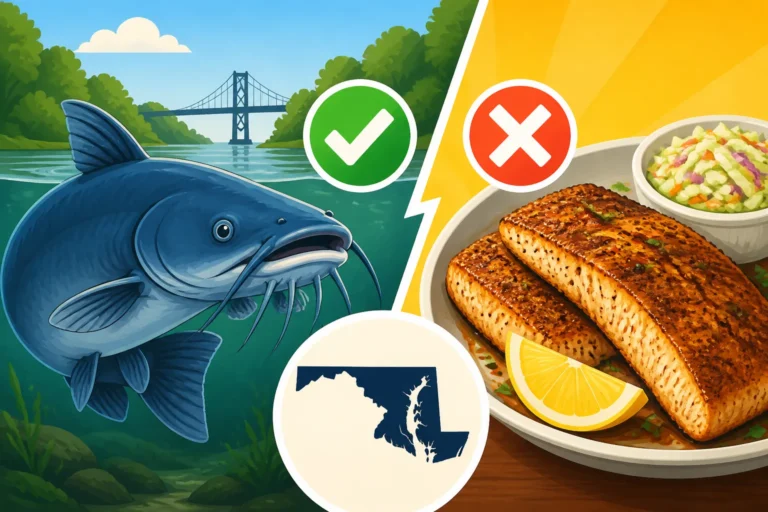
Maryland blue catfish offer a firm white flesh and mild flavor, providing sustainable local seafood while helping the Chesapeake Bay ecosystem.
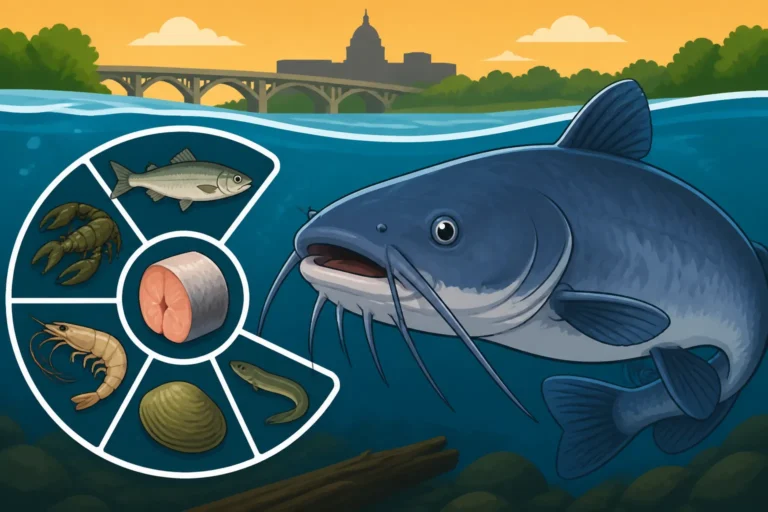
Potomac blue catfish diets and opportunistic feeding habits explain their impact on native species and Maryland ecosystems.

Maryland state record blue catfish tales and locations in the Potomac River where anglers catch massive invasive giants.
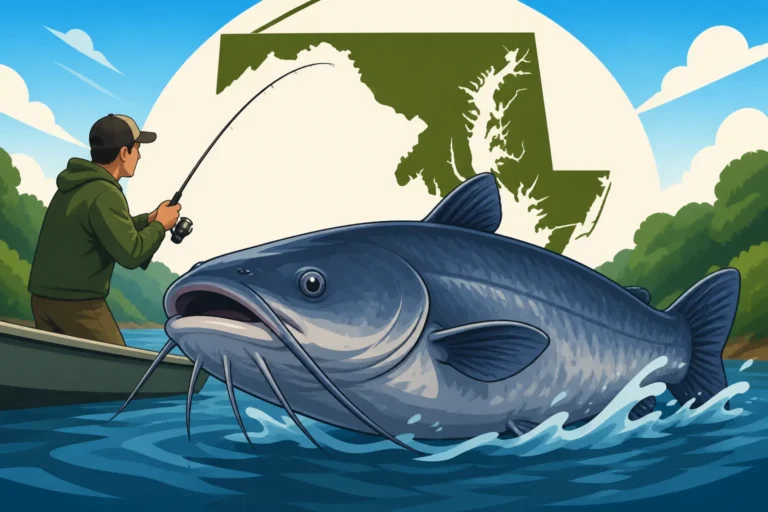
Maryland blue catfish grow over eighty pounds in rivers like the Potomac, with state records exceeding one hundred pounds.
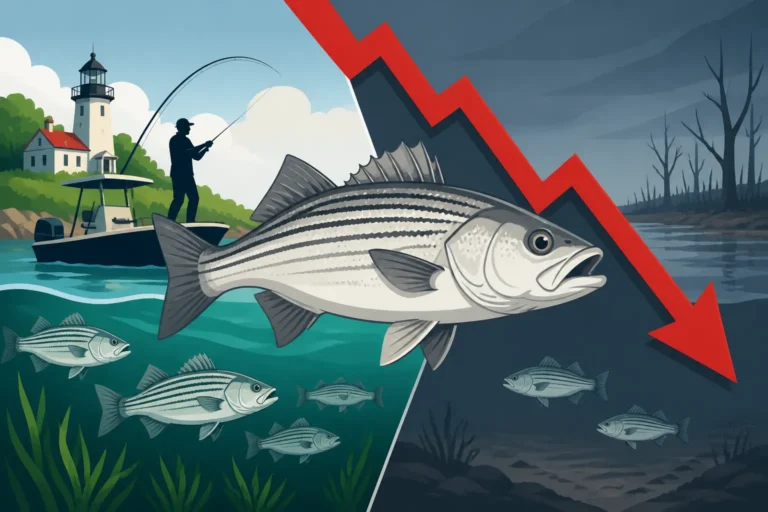
Chesapeake Bay striped bass population trends, history, and stock assessments by fisheries scientists explained for anglers.
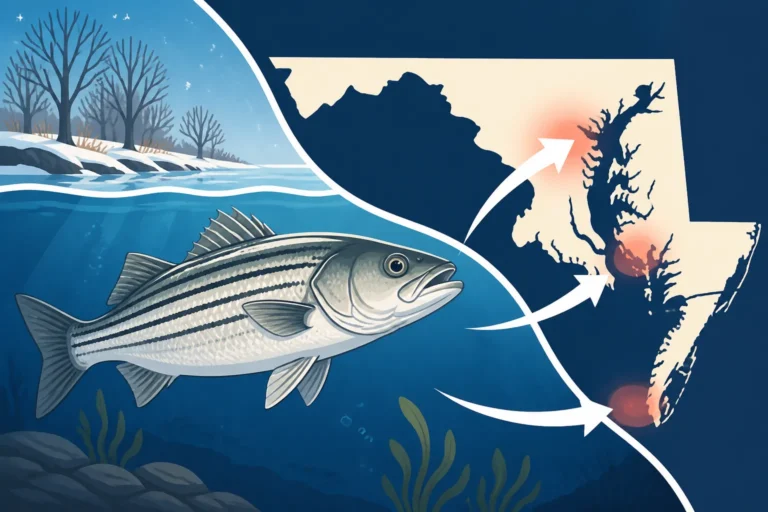
Striped bass winter behavior in Maryland involves migrating to deeper bay channels and slowing their metabolism to survive.
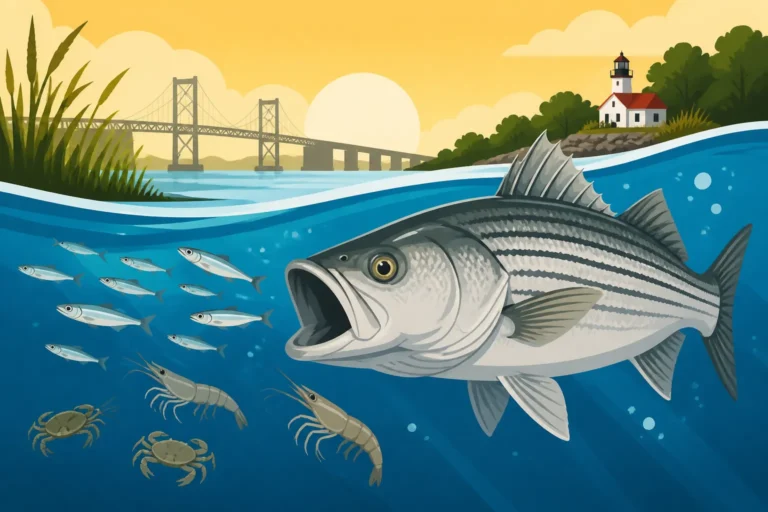
Striped bass diet details explain how Atlantic menhaden, spot, and bay anchovies help anglers catch rockfish in the Chesapeake Bay.
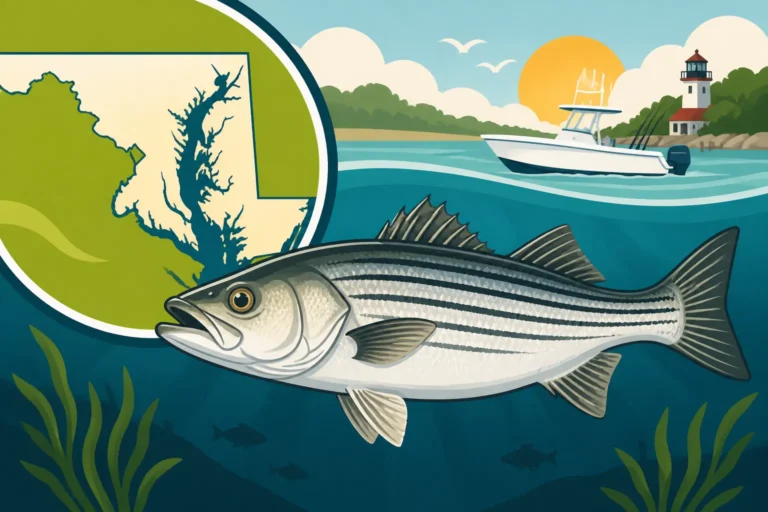
Chesapeake Bay striped bass typically live ten to twenty years, though older females can reach thirty years of age while males mature earlier.
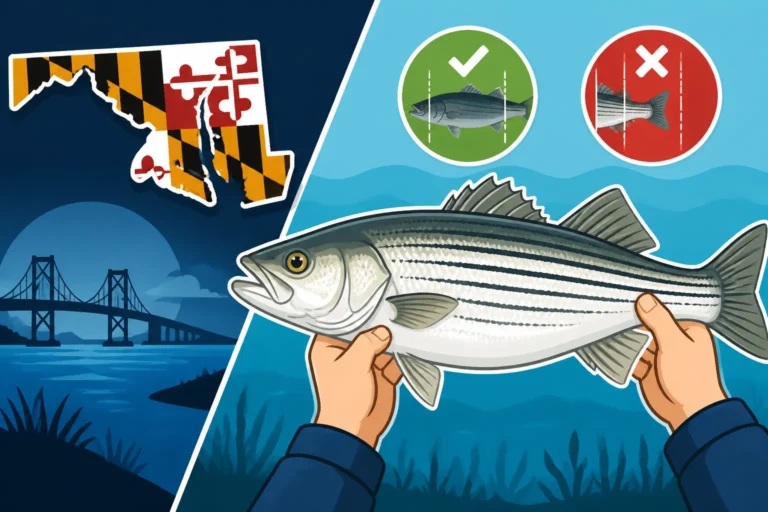
Maryland striped bass size limits help protect Chesapeake Bay rockfish populations and ensure sustainable fishing seasons.
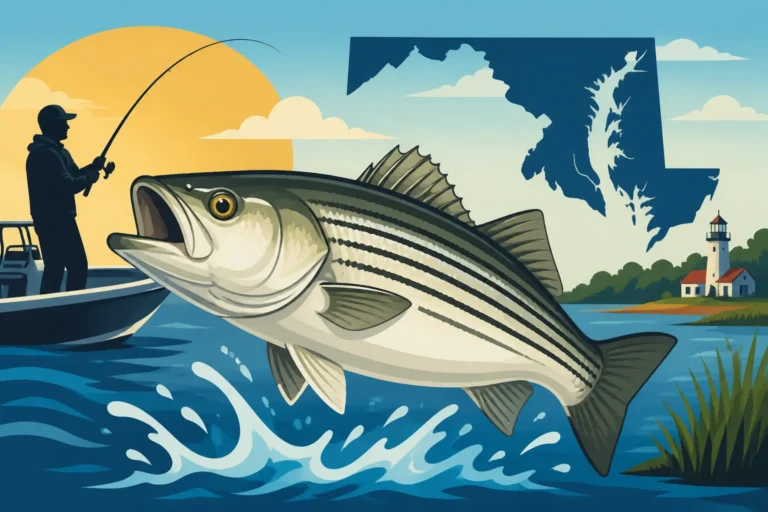
Chesapeake Bay striped bass lifespans of twenty to thirty years and growth factors like menhaden and water temperature are explained.