Techniques for Catching Yellow Perch in the Upper Bay
There’s a special kind of excitement that comes with chasing yellow perch in Maryland’s Upper Chesapeake Bay. Many anglers, myself included, have spent countless hours searching for those sweet spots, sometimes coming up empty, sometimes hitting a motherlode. It can be frustrating when you know they're there, but they just aren't biting, or you can't seem to locate their schools. This guide is here to cut through that frustration, offering detailed techniques and insights to help you consistently catch yellow perch in the Upper Bay.
Understanding Yellow Perch Behavior in the Upper Bay
Before you even cast a line, it's incredibly helpful to get into the mind of a yellow perch. These fish aren't just randomly swimming around; they have patterns, preferences, and behaviors that dictate where they'll be and what they'll bite. Understanding these nuances is the first step to a successful day on the water.
Seasonal Movements and Spawning Habits
Yellow perch in the Upper Bay are creatures of habit, particularly when it comes to their annual spawning migration. Typically, as winter thaws into early spring, usually late February through April, these fish begin their move from deeper bay waters into shallower, freshwater tributaries like the Susquehanna River, the Northeast River, and the Bush River. This is their annual pilgrimage to deposit their distinctive ribbon-like egg masses on submerged brush, fallen trees, and other underwater structure. This pre-spawn and spawn period is often when they are most concentrated and aggressive, making it prime time for anglers.
Once spawning is complete, usually by late April or early May, the yellow perch disperse. Some will linger in the lower reaches of these rivers and creeks, particularly where there’s a good mix of brackish and fresh water, and plenty of forage. Others will slowly migrate back into the main stem of the Upper Bay, often seeking out cooler, deeper pockets during the summer months. As fall approaches, they start to school up again, feeding aggressively to prepare for winter. Knowing these patterns, especially during the peak of the Yellow Perch Runs in Maryland's Upper Chesapeake Bay, is critical to finding them.
Preferred Habitats and Structure
Yellow perch aren't picky eaters, but they are particular about where they hang out. In the Upper Bay, you'll find them gravitating towards areas that offer both food and protection. Think about places with submerged logs, fallen trees, brush piles, dock pilings, and bridge abutments. These structures provide cover from predators and ambush points for their prey, which includes small baitfish, crustaceans, and insect larvae. During their spawning runs, they will stack up in river channels, particularly along bends and drop-offs, or near submerged vegetation in slower-moving waters.
Outside of the spawning season, especially in the main body of the Upper Bay, look for them along channel edges, oyster reefs, and humps or bumps on the bottom. These depth changes and structural elements create current breaks and food-collecting areas that yellow perch find irresistible. Often, if you find one perch, you'll find a whole school, so paying attention to your depth finder and even what other anglers are doing can provide valuable clues.
Reading the Water: Tides and Clarity
Tides play a significant role in fishing the Chesapeake Bay, and yellow perch are no exception, especially in the tidal rivers of the Upper Bay. Moving water, whether incoming or outgoing, tends to activate fish by stirring up bait and concentrating forage. Often, the hour before and after a high or low tide can be particularly productive. The current will sweep food past their hiding spots, making them more likely to ambush a passing bait or lure. Understanding How Tides Affect Fishing in Maryland's Chesapeake Bay can greatly improve your success.
Water clarity is another factor. Yellow perch are visual predators, so clearer water generally makes them more active. However, too clear and they might be wary. A slight stain or tint to the water can actually be ideal, offering them a bit of camouflage without hindering their visibility. After heavy rains, the water can become muddy, pushing perch into deeper, less turbid areas or making them less willing to bite until the water settles. Always observe the water conditions when you arrive at your spot and adjust your approach accordingly.
Essential Gear for Upper Bay Yellow Perch
Having the right tools for the job can make all the difference, and yellow perch fishing is no exception. While you don't need highly specialized gear, a few thoughtful choices can significantly increase your comfort and catch rate.
Rods, Reels, and Line Selection
For yellow perch, a light to medium-light action spinning rod is generally your best bet. A rod in the 6 to 7-foot range offers a good balance of casting distance and sensitivity, allowing you to feel those subtle bites. Look for a rod with a fast or extra-fast tip, which will help detect light strikes and provide a quick hook set. My go-to is often a 6'6" medium-light rod.
Pair that rod with a small spinning reel, something in the 1000 to 2500 size range. These reels are lightweight, balance well with lighter rods, and provide enough drag and line capacity for even the biggest Maryland Yellow Perch. For line, I prefer a 6 to 10-pound braided line as my main line. The thin diameter and lack of stretch offer incredible sensitivity, which is paramount for feeling those light perch taps. I always attach a 4 to 6-pound fluorocarbon leader, about 2-3 feet long, using a small swivel or a knot like the FG knot. Fluorocarbon is nearly invisible underwater and more abrasion-resistant, a real plus when fishing around oyster shells or submerged wood. You can find excellent options for all these components on Amazon, making it easy to get geared up.
Baits and Lures That Get Bites
Yellow perch aren't terribly picky, which is great news for anglers. Their diet is varied, and your bait selection can depend on the season and what they're naturally feeding on.
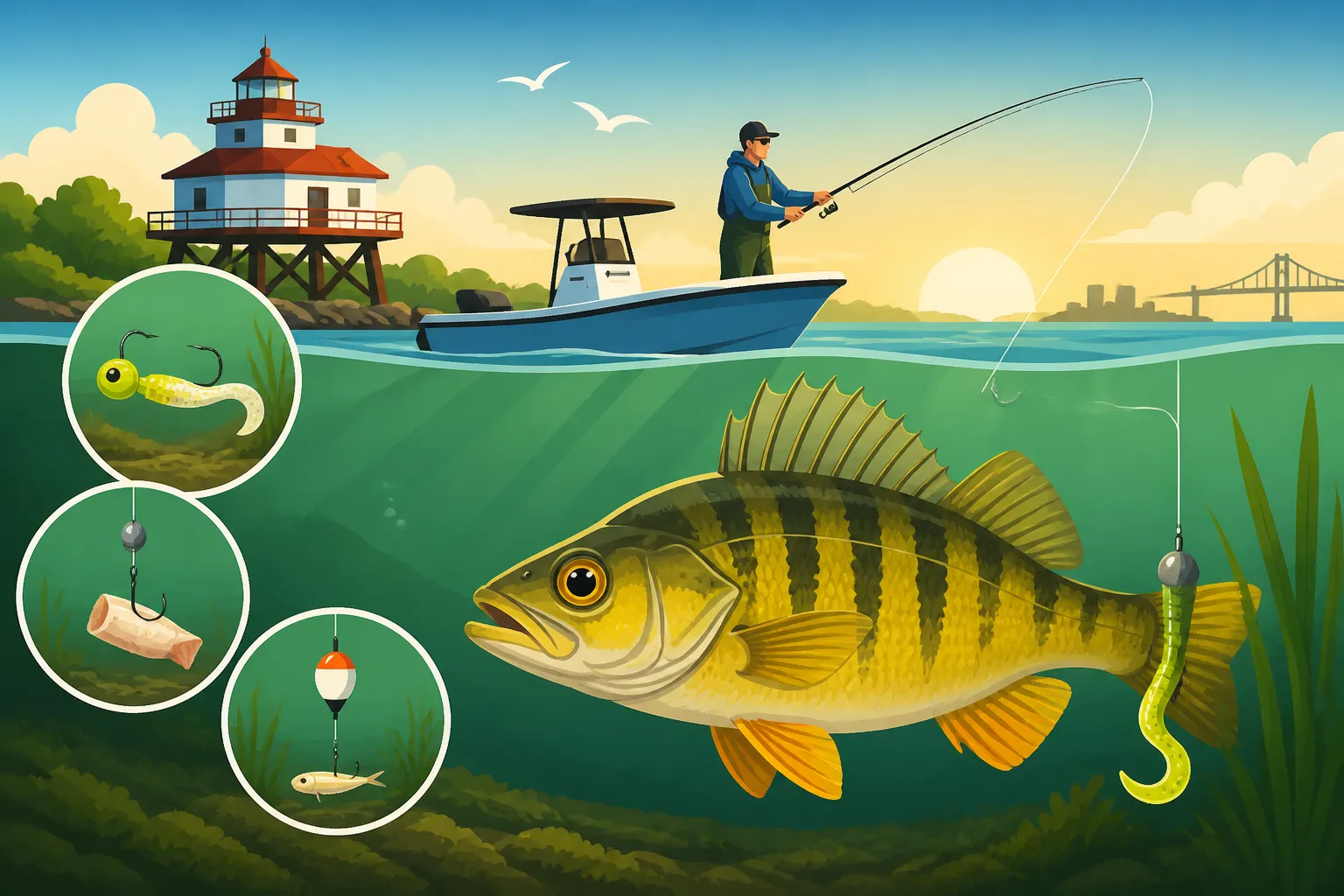
- Live Bait: This is often the undisputed king for yellow perch. Small minnows (fathead minnows or shiners) are incredibly effective, especially during the colder months and spawning runs. Grass shrimp are another fantastic live bait, particularly in brackish waters. Nightcrawlers or bloodworms, cut into smaller pieces, can also tempt hungry perch.
- Artificial Lures: When perch are actively feeding, artificials can be a lot of fun.
- Small Jigs: Think 1/16 to 1/8 ounce jig heads tipped with small soft plastics like a 1-inch grub, a tiny paddle tail, or even a piece of Gulp! Alive! minnow. White, chartreuse, and clear with glitter are perennial favorites.
- Blade Baits: These small, vibrating lures, often 1/8 to 1/4 ounce, can be incredibly effective when jigged vertically, mimicking a struggling baitfish.
- Spoons: Tiny Kastmasters or similar casting spoons, especially in silver or gold, can be deadly when retrieved slowly or jigged.
- Crappie Jigs: Many of the jigs used for crappie are perfectly sized for yellow perch, making them a versatile choice.
Experimentation is key here. If one bait isn't working, don't be afraid to switch it up!
Terminal Tackle and Rigging Strategies
Keeping your terminal tackle simple and effective is always a good strategy for yellow perch.
- Hooks: For live minnows, a small, sharp Aberdeen hook (size 6 or 8) is excellent. Its thin wire makes it less likely to gut-hook the fish and bends out easily if snagged. For baits like grass shrimp or worms, a small bait holder hook or a fine-wire circle hook in a similar size works well.
- Weights: Depending on the current and depth, small split shot, a sliding egg sinker (1/8 to 1/4 ounce), or a bell sinker are commonly used.
- Rigs:
- Bottom Rig: This is perhaps the most popular and effective rig. Tie a dropper loop a foot or so above your sinker for your hook, or use a three-way swivel with a short leader to the sinker and another short leader to the hook. This keeps your bait near the bottom where perch feed.
- Jig Rig: Simply tie your jig head directly to your fluorocarbon leader. This offers the most direct feel for bites.
- Float Rig (Bobber): While less common in deeper Upper Bay waters, a slip bobber rig can be very effective in shallower creeks or over submerged structure, allowing you to suspend your bait at a specific depth. This is especially useful in the spawning tributaries where you might be targeting them in shallower runs.
Always check your knots and leader for nicks and abrasions, especially after catching a few fish or getting snagged. Small adjustments can mean the difference between a missed fish and a full cooler.
Proven Techniques for Targeting Yellow Perch
Knowing their habits and having the right gear is half the battle; the other half is putting it all into action. There are several reliable techniques for catching yellow perch in the Upper Bay, whether you’re fishing from shore or a boat.
Bottom Fishing and Jigging
These two techniques are arguably the most effective for yellow perch, as they spend a significant amount of time feeding near the bottom.
- Bottom Fishing: This is a classic for a reason. Using a traditional bottom rig with live minnows or cut bait is incredibly simple and deadly. Cast your rig out, let it sink to the bottom, and then reel in any slack until your line is taut. The key here is patience and feeling for those subtle taps. Yellow perch often don't hammer the bait; they'll often just "tick" it or cause a slight wiggle in your rod tip. When you feel a bite, give it a moment, then reel down and gently lift to set the hook. This is often the best approach during colder water periods when perch are less active. If you're using circle hooks, just slowly reel in once you feel the weight of the fish.
- Jigging: Jigging is a more active approach and can be incredibly rewarding. Whether you're using small lead jigs tipped with soft plastics or blade baits, the idea is to mimic a struggling baitfish. Drop your jig to the bottom, then lift your rod tip a foot or two, letting the jig fall back on a semi-slack line. Most bites happen on the fall, so pay close attention. Vary your retrieve speed and the height of your lifts until you find what the fish prefer. Sometimes a slow, methodical lift-and-drop is best, while other times a more aggressive twitch can trigger a strike. For feeling those light bites, a sensitive graphite rod is a must. Many anglers will hold the rod tip high and watch their line for any unnatural movement as the jig falls.
Shore and Pier Fishing Tactics
You don't need a boat to find success with yellow perch in the Upper Bay. There are numerous shore and pier access points where these fish can be caught, especially during their spawning runs. Public piers in Havre de Grace or along the Susquehanna River are popular spots.
When fishing from shore or a pier, your casting distance can be a limiting factor, so focus on areas closer to the bank or structure within reach. Look for visible changes in depth, submerged structure like rocks or pilings, or areas where current eddies form. A standard bottom rig with live minnows or a small jig can be very effective. Try casting in a fan pattern to cover different depths and sections of water until you locate a school. Remember, during the spring run, yellow perch will often stack up heavily in river channels, so areas where a pier extends over deeper water can be goldmines. Don't overlook quieter coves or creek mouths, especially on an incoming tide, where perch might move in to feed.
Boat Fishing Strategies
Having a boat gives you the ultimate flexibility to chase yellow perch across the vastness of the Upper Bay and its tributaries. This means you can target specific contours, deeper channels, and isolated structures that are inaccessible from shore.
- Anchoring and Chumbags: Find a promising spot – perhaps a channel edge, a sunken brush pile, or a congregation of boats – and anchor up. Deploying a small chumbag filled with crushed mussels, clam snouts, or even stale bread can create a scent trail that attracts perch to your location. This is a classic method often used when fishing for White Perch in Maryland's Chesapeake Bay and works just as well for their yellow cousins.
- Drifting: If you're struggling to locate schools, or the fish are scattered, drifting can be a great search technique. Allow your boat to drift with the current or wind, dragging bottom rigs or jigs behind you. This allows you to cover a lot of water and identify productive areas. Once you hook a fish, mark the spot on your GPS and consider anchoring up or repeating the drift.
- Electronics and Mapping: A good fish finder is an invaluable tool for boat anglers. Learn to interpret your sonar screen to identify bait balls, schools of fish (often appearing as "clouds" or distinct arches near the bottom), and bottom structure. Combine this with detailed nautical charts or GPS mapping on your unit to pinpoint channel edges, humps, and submerged contours. If you notice a concentration of boats in a particular area, it's often a good sign that the Yellow Perch Runs in Maryland's Upper Chesapeake Bay are active there.
Tips for a Successful Yellow Perch Outing
Beyond the basic techniques, a few extra tips can truly elevate your yellow perch fishing game in the Upper Bay. It’s all about attention to detail and being prepared.
Best Time of Day and Weather Considerations
While yellow perch can be caught throughout the day, certain times often prove more productive. Early morning, just after sunrise, and late afternoon into dusk are generally prime feeding times. During these periods, light levels are lower, and perch often move into shallower water to feed more aggressively. Of course, this can shift depending on the season. During the colder months, a sunny midday can warm the water slightly and spur activity. Conversely, in the heat of summer, deeper, cooler waters might be more active during the brighter parts of the day. For more insights on the ideal fishing times, check out our guide on the Best Time of Day to Fish Maryland's Chesapeake Bay.
Weather fronts also play a role. A stable period of weather, especially a few days of consistent conditions, often leads to more predictable fishing. A sudden cold front can shut down the bite, making fish lethargic and less willing to chase. Overcast days can sometimes be excellent, as the reduced light penetration makes perch feel more secure in shallower water. Always check the forecast and dress appropriately; a comfortable angler is a more patient and successful angler!
Locating Schools and Maximizing Your Catch
The biggest secret to consistently catching yellow perch is finding the schools. These fish are highly gregarious, meaning where there's one, there are often dozens.
- Observation: Keep an eye out for other anglers. If you see a cluster of boats or people fishing intently from a pier, chances are they're on the fish. While respecting their space, you can often pick up clues on depth or bait choices. Watch for bird activity – diving birds can indicate baitfish being pushed to the surface, and perch often aren't far behind.
- Electronics: As mentioned, a fish finder is your best friend on a boat. Learn to identify the tell-tale signs of a perch school on your screen. They often appear as dense blobs or arcs close to the bottom.
- Fan Casting and Grid Search: If you're in a new area or haven't found fish, systematically cover the water. Cast your bait or jig to different distances and angles, working your way around your boat or position on shore. If drifting, try to cover a "grid" pattern to ensure you're not missing a prime holding area. Once you get a bite, quickly get another line back in the water near that same spot, as there are likely more fish. A reliable castable sonar device, often available on Amazon, can also be a game-changer for shore anglers looking to locate submerged structure and fish schools.
- Bait Presentation: Once you find them, present your bait naturally. If using live minnows, allow them to swim freely on a light rig. For jigs, ensure your retrieve matches what the fish want – sometimes a subtle twitch, sometimes a more aggressive hop. Don't be afraid to change jig colors or bait types if the bite slows down. Sometimes a slight variation can make all the difference.
Respecting Limits and Conservation
Catching a mess of yellow perch is a lot of fun, but it's crucial to always be mindful of conservation. Check Maryland's DNR Fishing and Boating Guide, Explained for the most current regulations on Maryland Yellow Perch Season and Limit before you head out. These rules are in place to ensure healthy fish populations for future generations of anglers.
- Size and Creel Limits: Understand the minimum size limits and daily creel (possession) limits. Keep a tape measure or a marked ruler handy to quickly check your catch.
- Responsible Release: For any fish you intend to release, handle them with care. Wet your hands before touching them to protect their protective slime coat. Use de-hooking tools if the hook is deep. Release them gently back into the water, ensuring they swim away strongly.
- Minimize Waste: Only keep what you can realistically eat or process. Avoid overfishing just for the sake of it.
- Leave No Trace: Always pack out everything you pack in, including discarded fishing line, bait containers, and any other trash. Our waterways are precious, and it’s up to all of us to keep them clean.
By understanding the yellow perch's world, equipping yourself properly, and employing effective techniques, you'll be well on your way to enjoying some fantastic fishing for these delicious panfish in Maryland’s Upper Chesapeake Bay. Good luck out there!
Disclaimer
This article is for general informational purposes only and does not constitute professional advice. Laws, prices and regulations vary by location and change over time. Consult a qualified professional for guidance on your specific situation.