Best Jigs for Crappie at Loch Raven
Ah, Loch Raven Reservoir! It's one of those magical places in Maryland that draws anglers in, promising excellent fishing, especially for those elusive crappie. But let's be real, showing up with just any old jig and hoping for the best usually leads to disappointment. If you've ever felt overwhelmed by the sheer number of options at the tackle shop, or wondered why your buddy is always out-fishing you for crappie on the same lake, you're not alone. This guide is going to strip away the confusion and help you pinpoint the best jigs for crappie at Loch Raven, turning those frustrating days into memorable catches.
Understanding Crappie at Loch Raven: Behavior and Habitat
To truly master crappie fishing at Loch Raven, you first need to understand the fish themselves and how they interact with their environment. Crappie aren't just swimming aimlessly; they have routines, preferred hangouts, and specific feeding patterns that change throughout the year. Knowing this foundational information is key to selecting the right jig at the right time.
Why Loch Raven is a Crappie Hotspot
Loch Raven Reservoir, with its sprawling waters, numerous coves, and abundance of submerged structure, provides an almost ideal environment for both black and white crappie. This reservoir is known for its incredible depth in some areas, but also for its vast shallow flats and creek arms that become teeming with life, and fish, during warmer months. It's a large, fertile body of water, offering plenty of forage for crappie to grow large and healthy. Many anglers consider Loch Raven one of the premier crappie destinations in the state, and for good reason—the crappie populations here are robust, and the fish can reach impressive sizes. If you're looking for How Big Do Crappie Get in Maryland Reservoirs? you'll find Loch Raven often produces some real slabs.
The challenge, however, lies in its size and varied topography. Unlike a smaller pond, Loch Raven demands a more strategic approach. You can't just throw a jig anywhere and expect results. You need to know where the crappie are likely to be, which often depends on the season, water temperature, and time of day. This is where understanding their behavior truly comes into play.
Seasonal Shifts and Depth Preferences
Crappie, much like many other freshwater species, are creatures of habit when it comes to seasonal movements. Their depth preferences shift dramatically throughout the year, and your jig choice and presentation must adapt accordingly.
- Spring: As water temperatures begin to rise, crappie move from deeper wintering holes into shallower waters to spawn. They'll seek out protected coves, creek arms, and areas with submerged brush or laydowns where they can lay their eggs. During this time, you might find them in just a few feet of water. This is when they are often most aggressive and easiest to target, but you still need to find those specific staging and spawning areas.
- Summer: Once the spawn is over and water temperatures really heat up, crappie often retreat to deeper, cooler waters, particularly during the day. They'll hold tight to structure along channel edges, deep brush piles, or around bridge pilings where they can find shade and ambush baitfish. Early mornings and late evenings might see them push shallower to feed.
- Fall: As temperatures cool again, crappie become more active and start feeding heavily in preparation for winter. They often move back into shallower to mid-depth ranges, especially around structure that still holds baitfish. This can be another fantastic time to fish for them, as they are actively chasing food.
- Winter: During the coldest months, crappie will typically school up in deeper parts of the reservoir, often suspending over deep channels or holding tight to major underwater structures. Their metabolism slows down, so presentations need to be subtle and slow. Ice fishing, if conditions allow at Loch Raven, can also be productive during this time, targeting these deep schools. You might find more information on specific tactics in our guide on Fishing Loch Raven in Winter.
Key Structures Where Crappie Hide
Crappie are known for being structure-oriented fish, meaning they love to relate to underwater features that offer cover, ambush points, and protection. Loch Raven is full of such spots, both natural and man-made.
- Submerged Timber and Brush Piles: These are crappie magnets. Fallen trees, brush piles, and sunken stumps provide excellent cover and attract baitfish, which in turn attracts crappie. Many anglers even sink their own brush piles, a common practice that can create phenomenal fishing spots. When you're fishing these areas, expect to get snagged, but also expect to find fish.
- Creek Channels and Drop-offs: Crappie often use deeper creek channels and sharp drop-offs as highways between deep and shallow water. During transitions, or when holding in deeper areas, they'll often suspend along these edges, waiting for baitfish to pass by.
- Bridge Pilings and Docks: Man-made structures like bridge pilings and the support structures of docks provide vertical cover that crappie adore, especially during midday heat when they seek shade. These areas often attract dense schools of crappie.
- Rock Piles and Ledges: Natural rock formations can also hold crappie, providing crevices for hiding and attracting crayfish and other forage.
- Weed Lines and Aquatic Vegetation: While Loch Raven isn't heavily vegetated in all areas, where aquatic plants do exist, they offer excellent cover for crappie and their prey, particularly in shallower coves during the warmer months. Our guide on Best Coves at Loch Raven for Crappie delves deeper into specific locations.
Understanding these seasonal movements and preferred habitats is the foundation. Now, let's talk about the tools of the trade: the jigs themselves.
Deciphering the Perfect Crappie Jig for Loch Raven's Waters
With so many jigs on the market, it's easy to get lost. But for Loch Raven crappie, certain characteristics make a jig stand out. It's not just about what looks good to you; it's about what appeals to a crappie's instincts and fits the fishing conditions.
The Critical Role of Jig Weight and Hook Size
The weight of your jig head and the size of its hook are foundational decisions that impact everything from your casting distance to how your bait falls and feels underwater.
-
Jig Head Weight:
- 1/32 oz to 1/16 oz: These lighter weights are perfect for shallow water (under 10 feet), especially during the spring spawn when crappie are in the skinny water. They provide a slower, more natural fall, which can be crucial when crappie are finicky. They're also excellent for fishing light line and ultra-light tackle, giving you maximum feel.
- 1/8 oz to 1/4 oz: These are your workhorse weights for Loch Raven. They allow for good casting distance, penetrate deeper water effectively, and offer a faster descent rate, which can be beneficial when crappie are active or holding at mid-depths (10-25 feet). They provide more "feel" on the retrieve, helping you detect subtle bites.
- Heavier than 1/4 oz: While less common for crappie, sometimes if you're targeting truly deep crappie in strong currents (though less of an issue in Loch Raven than tidal waters) or fishing in windy conditions, you might go heavier. However, for most crappie scenarios at Loch Raven, you'll rarely need to exceed 1/4 oz.
The goal is always to use the lightest jig head possible that still allows you to reach the desired depth and maintain contact with your lure. This gives the jig a more natural, lifelike presentation.
-
Hook Size and Type:
- Size 4 to Size 1: These hook sizes are generally ideal for crappie jigs. A smaller hook (size 4 or 2) is good for smaller plastics and finicky crappie, while a larger hook (size 1) can accommodate bigger plastics and target those true slab crappie.
- Sharpness is Paramount: Crappie have relatively delicate mouths, and a dull hook will result in missed bites. Always check your hook points and sharpen or replace jigs as needed.
- Wire Gauge: A strong, but not overly thick, wire hook is best. You want enough strength to handle a good-sized crappie, but not so thick that it impedes penetration. Many crappie-specific jigs come with light-wire hooks that are designed to penetrate easily.
Soft Plastic Shapes: Tubes, Grubs, and Minnow Imitations
The body of the jig, or the soft plastic trailer you add to the jig head, is what provides the action and profile that attracts crappie. Each style has its strengths.
-
Tube Jigs: These are a perennial favorite among crappie anglers for a reason. Their hollow, tentacled design creates a subtle, pulsating action even with minimal movement. They mimic small baitfish or invertebrates perfectly.
- Why they work: The tentacles flutter on the fall and on the retrieve, making them incredibly versatile. They can be fished vertically, cast and retrieved, or trolled. They're especially effective when crappie are neutral or less aggressive, requiring a subtle presentation.
- Rigging: Typically threaded onto the jig head so the hook comes out the top, allowing the tentacles to trail.
- Brands to consider: You'll find a wide variety of tube jigs from brands like Bobby Garland or Bass Pro Shops, readily available online. Many anglers find a huge selection of these specialized jigs on platforms like Amazon, making it easy to experiment with different sizes and colors without breaking the bank.
-
Curly Tail Grubs: These jigs feature a singular, sickle-shaped tail that creates a vibrant, swimming action as it moves through the water.
- Why they work: The constant tail movement is excellent for attracting active crappie and covering water. It's a great choice when crappie are chasing baitfish and respond well to a more aggressive presentation.
- Rigging: Threaded onto the jig head with the tail facing downwards, allowing it to "swim" freely.
- Variations: You'll find single-tail, double-tail, and even triple-tail variations, each offering a slightly different action.
-
Minnow Imitations (Paddle Tails, Shad Bodies): These soft plastics are designed to closely resemble small baitfish, often featuring a paddle tail that creates a thumping action.
- Why they work: When crappie are actively feeding on schools of minnows, these imitations can be deadly. Their realistic profile and swimming action can trigger aggressive strikes. They excel when jigged horizontally or slowly trolled.
- Rigging: Typically rigged straight on a jig head, ensuring the bait swims true without spinning.
- Size matters: Match the size of your minnow imitation to the local baitfish, usually 1 to 2.5 inches for crappie.
Choosing the Right Color for Clarity and Light Conditions
Jig color is one of the most debated topics in crappie fishing, and for good reason—it can make a huge difference! While there's no single "magic" color, understanding a few principles can guide your choices at Loch Raven.
- Water Clarity:
- Clear Water: In clear water, natural colors tend to excel. Think greens, browns, clear with flecks, ghost minnow, or shades of gray. These colors mimic natural forage without appearing too artificial or alarming to the fish.
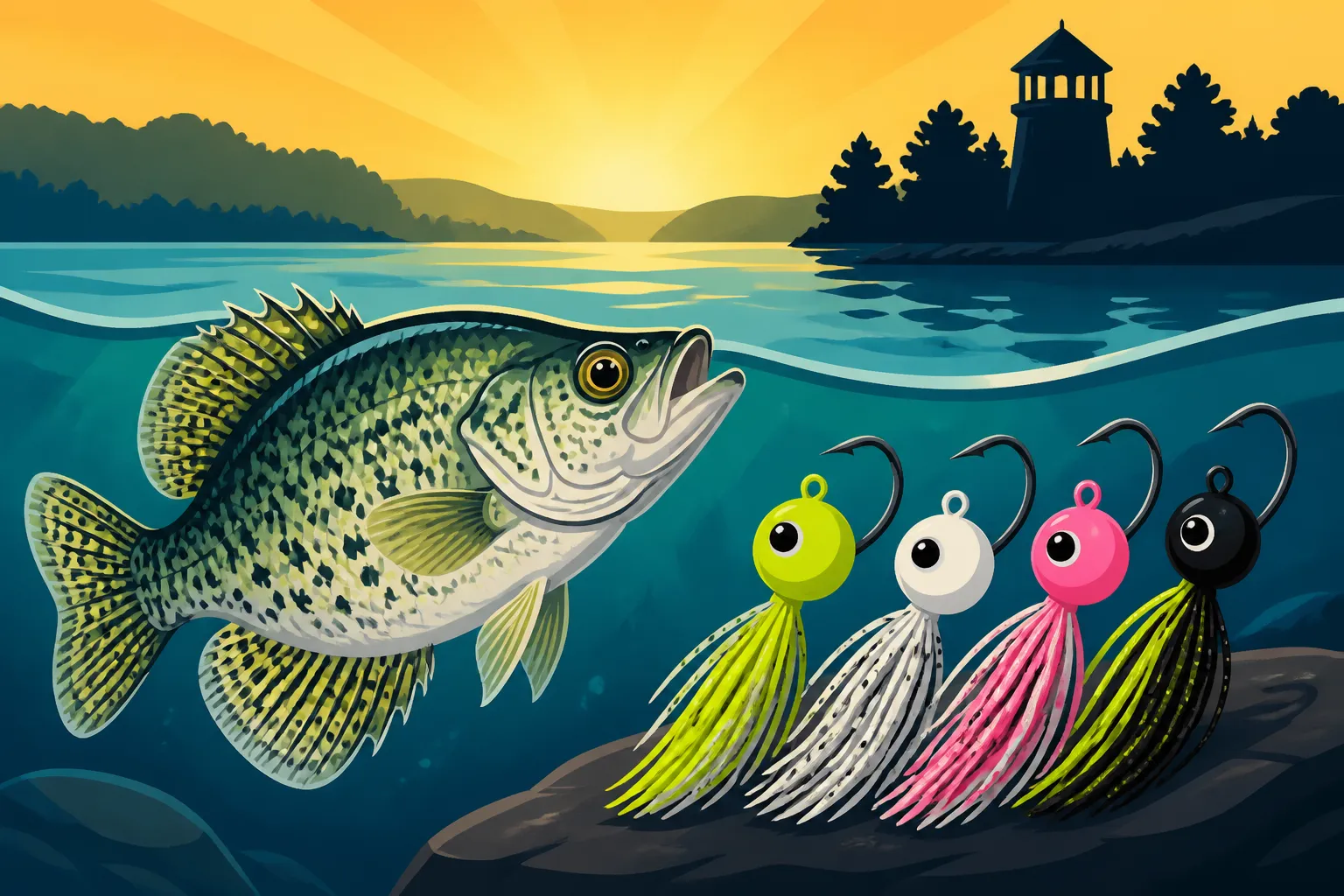
- Stained or Murky Water: When the water is dirty or stained, you need colors that offer contrast and visibility. Chartreuse, orange, bright pink, and electric chicken (a mix of chartreuse and pink) are fantastic choices. White can also be very effective, as it stands out well.
- Light Conditions:
- Bright Sunlight: In bright conditions, crappie can be sensitive to color. Often, more muted or translucent colors work well. However, some anglers swear by bright, reflective colors that flash, particularly when crappie are aggressive.
- Cloudy Days or Low Light (Dawn/Dusk): These conditions often call for brighter or glow-in-the-dark colors to ensure the crappie can see your jig. Chartreuse, white, and pink are good starting points.
- Time of Year/Season:
- Spring: During the spawn, crappie can be territorial and aggressive. Bright colors (chartreuse, orange) often provoke a strike.
- Summer: When crappie are deeper, sometimes a more subtle, natural color is preferred, or a glow jig if fishing very deep.
- Fall: Active crappie will hit a wide range of colors, but often something with a hint of red or orange can mimic dying baitfish.
- Winter: Subtle is often key in cold water. Natural colors, or white, are common choices. Sometimes a dark color can provide contrast against a light sky.
Ultimately, color choice often comes down to experimentation. Start with a few proven colors (like chartreuse, white, and a natural minnow pattern) and adjust based on what the crappie are telling you. Many anglers have their "confidence colors" that just seem to work, regardless of conditions. For Maryland Panfish: Crappie, Perch and Sunfish, color can be a real game-changer.
Here's a quick comparison of popular jig types for Loch Raven crappie:
| Jig Type | Best Conditions | Action | Primary Forage Mimicked | Pros | Cons |
|---|---|---|---|---|---|
| Tube Jig | Finicky crappie, slow bite, shallow to deep | Subtle flutter, pulsating tentacles | Small baitfish, insects | Highly versatile, subtle, effective in clear water | Can be easily bitten off, less "flashy" than grubs |
| Curly Tail Grub | Active crappie, searching for schools, varying depths | Aggressive swimming motion, vibrating tail | Minnows, shad | Covers water quickly, strong vibration, highly visible | Less subtle for finicky fish, can twist line if rigged improperly |
| Paddle Tail Jig | Actively feeding crappie, clear water, shallow | Realistic baitfish swim, thumping tail | Minnows, juvenile fish | Very realistic profile, strong thumping action | Less effective on slow days, requires more aggressive retrieve |
| Marabou Jig | Cold water, suspended crappie, subtle presentation | Natural breathing action, slow fall | Insects, small baitfish | Extremely lifelike, excellent in cold water, durable | Can be harder to cast, less action on fast retrieves |
Top Jigging Strategies for Success at Loch Raven
Having the right jig is only half the battle; knowing how to present it effectively is crucial. Crappie fishing with jigs can involve various techniques, each suited to different depths, structures, and fish moods at Loch Raven.
Vertical Presentations for Deep Structure
When crappie are holding tight to deep structure, such as submerged brush piles, deep creek channels, or bridge pilings in the warmer months or winter, a vertical presentation is often the most effective way to put your jig right in front of them. This technique is all about precision and stealth.
- Understanding the Setup: You'll typically use a longer, sensitive rod (6-8 feet, light to medium-light action) paired with a spinning reel spooled with 4-8 lb monofilament or fluorocarbon line. Braided line with a fluorocarbon leader can also be excellent for sensitivity and strength.
- Locating the Fish: The first step is to use your fish finder to locate schools of crappie or significant structure. At Loch Raven, this might mean marking brush piles in 15-30 feet of water or finding suspended fish over a deep channel.
- The Drop: Once you're positioned directly over the fish or structure, drop your jig straight down. Pay close attention as it falls; many crappie bites occur on the initial descent, as the jig mimics a dying baitfish. Keep your thumb lightly on the spool to control the fall and feel for any tap or sudden slack in the line.
- The Jigging Motion: Once your jig reaches the desired depth (or just above where you see fish on your sonar), impart a subtle jigging motion. This isn't about wild jerking. Think gentle lifts of 6-12 inches, followed by controlled drops. Allow the jig to pause briefly after each drop, as this is often when crappie will strike. The key is to keep your jig in the strike zone for as long as possible.
- Feeling the Bite: Crappie bites can be incredibly subtle – sometimes just a light tap, a feeling of "mush," or simply the line going slack as the fish swims upwards with the jig. If anything feels unusual, set the hook!
- Targeting Bridge Pilings: For bridge pilings, drop your jig right alongside the pilings, allowing it to flutter down. Crappie will often be holding in the shade created by the structure, or directly adjacent to it. This can be especially effective for Fishing the Bay Bridge Pilings for Striped Bass but it also holds true for crappie on reservoir bridge structures.
Casting and Retrieving for Cover and Coves
When crappie are shallower, especially during the spring spawn or in the fall, casting and retrieving jigs can be incredibly effective for covering water and targeting specific pieces of cover. This is a more active fishing style that allows you to explore various areas.
- Targeting Key Areas: Focus your casts on areas with submerged brush, fallen trees, weed lines, and dock pilings within coves or along shorelines. These are the prime ambush points for crappie.
- Fan Casting: If you're unsure exactly where the fish are, "fan cast" an area. Make casts in a fan-like pattern, covering the water from left to right or vice versa. This helps you locate active schools.
- Retrieve Speed and Action: The most common retrieve is a slow, steady reel with occasional pauses and subtle twitches of the rod tip. The goal is to make your jig look like an easy meal. If the crappie are aggressive, you might speed up your retrieve slightly, but generally, slower is better for crappie.
- Pitching and Flipping: For extremely tight cover, like dense brush piles or thick laydowns, pitching or flipping your jig can be effective. This involves a short, underhand cast that allows for precise placement of your lure into small openings without making a big splash. This can be a great Techniques for Crappie in Maryland Reservoirs in heavy cover.
- Utilizing a Slip Bobber: For suspended crappie in shallow to mid-depths, or when you want to keep your jig in a specific depth zone around cover, a slip bobber rig can be invaluable. It allows you to cast your jig out and suspend it at a predetermined depth, keeping it in the crappie's strike zone for longer. The bobber acts as a visual strike indicator.
Slow Trolling and Spider Rigging to Find the Schools
For covering large expanses of water and efficiently locating schools of crappie, particularly when they are spread out or suspended in open water, slow trolling or "spider rigging" (a specialized form of trolling) can be a deadly tactic at Loch Raven.
- Slow Trolling Basics:
- Boat Speed: Keep your boat speed very slow, typically 0.5 to 1.5 mph. The idea is to just barely move, allowing your jigs to have a natural, enticing action.
- Multiple Rods: Utilize multiple rods (where legal) spread out from the boat. This allows you to present different jig colors, sizes, and depths simultaneously, helping you quickly determine what the crappie prefer on a given day.
- Depth Control: Use various jig weights, or even add split shot or small in-line weights, to get your jigs to different depths. Watch your fish finder to see where the crappie are suspending and adjust your jig depth accordingly.
- Structure Edges: Focus your trolling along known creek channel edges, underwater humps, or the perimeter of large submerged brush flats.
- Spider Rigging: This technique takes slow trolling to the next level. It involves mounting numerous long rods (often 10-16 feet or more) around the perimeter of your boat, creating a "spider" web of lines.
- Rod Holders: Specialized rod holders are essential for spider rigging, holding rods securely at various angles.
- Presentation: Each rod typically presents a single jig (sometimes a double-jig rig where legal) at a precise depth. The long rods keep the lines spread out, preventing tangles and allowing for a wide coverage area.
- Benefits: Spider rigging is incredibly efficient for finding nomadic schools of crappie in open water. It's often used when crappie are suspended over deep water or scattered across a flat.
- Jig Selection for Trolling: When trolling, curly tail grubs and small minnow imitation jigs are excellent choices because their tails provide constant action even at slow speeds. Sometimes, a tiny spinner blade added to the jig can create extra flash and vibration, especially in stained water.
By understanding these jigging strategies and how they relate to crappie behavior and habitat at Loch Raven, you'll be well on your way to filling your cooler with some delicious panfish. Remember, crappie fishing is often about patience, observation, and adapting your tactics to what the fish are telling you on any given day. Good luck out there!
Disclaimer
This article is for general informational purposes only and does not constitute professional advice. Laws, prices and regulations vary by location and change over time. Consult a qualified professional for guidance on your specific situation.