Best Gear for Winter Striped Bass Fishing in Maryland
Trying to hook into a feisty striped bass in Maryland's chilly winter waters can be incredibly rewarding, but let's be honest, it's also brutally cold and often uncomfortable if you're not properly prepared. Many anglers shy away from winter fishing, thinking it's too harsh, but with the right gear, you can stay warm, safe, and significantly increase your chances of landing that trophy rockfish. This guide will walk you through the essential equipment you need to make your winter striped bass expeditions productive and, dare I say, even enjoyable.
The Unique Challenges of Winter Striped Bass Fishing
Winter fishing for striped bass in Maryland is a completely different ballgame compared to the warmer months. The water temperatures plummet, the air is crisp, and the fish behave differently. It's not just about casting a line; it's about enduring the elements while trying to outsmart a less active predator. Ignoring these realities means you'll likely be heading home early, miserable, and empty-handed.
Understanding Winter Striped Bass Behavior
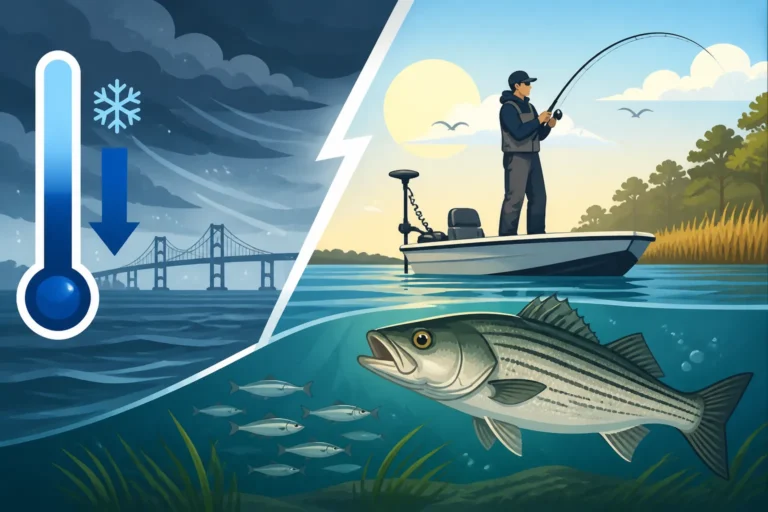
When the mercury drops, striped bass, often affectionately called rockfish here in Maryland, tend to become much more lethargic. Their metabolism slows down, and they're less inclined to chase fast-moving baits. Instead, they often congregate in deeper channels, around submerged structures, or in warmer thermal pockets, waiting for an easy meal. This means your approach has to change dramatically. You're no longer looking for aggressive surface strikes or chasing blitzing schools. It's a game of finesse, patience, and precisely presenting a lure to a fish that might only nibble instead of striking aggressively. Understanding how cold water affects striped bass behavior in the Bay is crucial for selecting the right gear and techniques. Their movements become more predictable, often relating to bottom structure and current breaks, making sonar an invaluable tool.
The Impact of Cold on Gear and Anglers
The cold doesn't just affect the fish; it profoundly impacts your fishing gear and, more importantly, you. Mono-filament lines can stiffen and retain memory, reels can become sluggish, and rod guides can ice up. Your hands become numb, making knot tying a nightmare, and your fingers lose dexterity, turning simple tasks into frustrating struggles. Staying warm and dry is not just about comfort; it's a critical safety concern. Hypothermia is a real danger on the water, even on days that seem mild on shore. Your gear needs to be robust, reliable, and able to perform flawlessly in sub-freezing conditions, and your clothing needs to be an impenetrable fortress against the elements.
Essential Rods and Reels for Cold Weather
Your rod and reel setup needs to be up to the task of not only battling a strong striped bass but also resisting the corrosive and performance-degrading effects of cold, saltwater environments.
Rod Specifications for Winter Jigging and Trolling
For winter striped bass, especially when jigging in deeper water or working baits slowly, sensitivity is paramount. You need to feel those subtle "taps" that signify a lethargic rockfish mouthing your lure. A medium-heavy to heavy power spinning or casting rod, typically between 6'6" and 7'6" in length, with a fast or extra-fast action is usually ideal. The fast action allows the tip to be highly sensitive for detecting light bites, while the robust backbone provides the power to set the hook and fight a strong fish in the current. Graphite composite blanks are excellent as they transmit vibrations well, allowing you to feel every bump and scrape on the bottom. When choosing a rod, consider one with larger guide rings. These help prevent ice build-up that can impede line flow and lead to frustrating tangles, especially on those truly frigid days. If you're looking into Maryland Striped Bass Fishing Techniques, you'll find jigging and trolling are key, and a good rod makes all the difference.
If trolling is your preferred method for winter striped bass, you'll want a slightly different rod setup. Trolling rods are typically longer and have a more moderate action to handle the constant drag of lures and the shock of a fish strike while moving. A medium-heavy to heavy conventional trolling rod, usually 7 to 8 feet long, is a good choice. Look for rods with durable guides and comfortable grips, as you might be holding onto them for extended periods. The flexibility in the tip helps absorb the shock, preventing pulled hooks, while the strong butt section allows you to crank in even the largest fish. When you're Trolling vs Jigging for Maryland Striped Bass, your rod choice can heavily influence your success rate and how tiring the day feels.
Reels Designed for Icy Conditions
Just like your rod, your reel needs to be ready for the cold. Saltwater-specific spinning or baitcasting reels are a must. Look for models constructed with corrosion-resistant materials, such as anodized aluminum or carbon composite frames. The internal gears should be robust, preferably stainless steel or high-grade brass, to prevent seizing or grinding in the cold. More importantly, focus on reels with sealed drag systems. This prevents water from getting into the drag washers, freezing, and causing the drag to stick or become erratic, which can be disastrous when fighting a big fish.
A smooth, reliable drag is non-negotiable, especially when the fish are less active but still capable of strong runs. The reel's bearings should also be sealed or made of high-quality stainless steel to resist corrosion and maintain smooth operation in icy conditions. While a higher number of bearings generally means smoother operation, the quality of those bearings matters more. If you're looking for a new cold-weather reel, checking Amazon reviews for cold-weather reels can give you a good idea of their performance in real-world scenarios. A common size for spinning reels targeting winter rockfish might be a 4000-6000 series, offering a good balance of line capacity and cranking power. For baitcasting or conventional reels, something in the 20-30 size range would be appropriate, capable of holding plenty of line for deeper jigging or trolling applications.
Line, Lures, and Terminal Tackle for Winter Rockfish
The best rod and reel are useless without the right connection to the fish. Your line and lures are your direct interface with the striped bass, and in winter, subtlety and strength are key.
The Right Fishing Line for Cold Water
When fishing in cold water, line selection becomes even more critical. Monofilament can stiffen, making it prone to tangles and reducing sensitivity. Fluorocarbon is an excellent leader material due to its near-invisibility underwater and abrasion resistance, but for main line, many anglers prefer braided line. Braided line has almost zero stretch, offering superior sensitivity to detect those light winter bites, and it's incredibly strong for its diameter, allowing for longer casts and more line capacity on your reel. A good 20-40 lb test braided line is a versatile choice for most winter striped bass scenarios.
However, braid does have a downside in extreme cold: it can absorb water and freeze on your rod guides, creating friction and potentially damaging your line or even breaking guides. To mitigate this, some anglers apply a silicone-based line conditioner or use a long monofilament or fluorocarbon top shot (20-50 feet) to prevent the braid from freezing in the guides. You might also want to size up your braided line slightly more than you would in summer; a 30lb braid might feel more manageable and less prone to freezing than a 20lb. Always remember to check your knots frequently, as cold, numb fingers and stiff lines can compromise even the best knot.
Go-To Lures for Winter Striped Bass
Since winter striped bass are less active, your lure selection should focus on presentations that are slow, enticing, and mimic their natural forage, which primarily includes baitfish like bunker, herring, or perch.
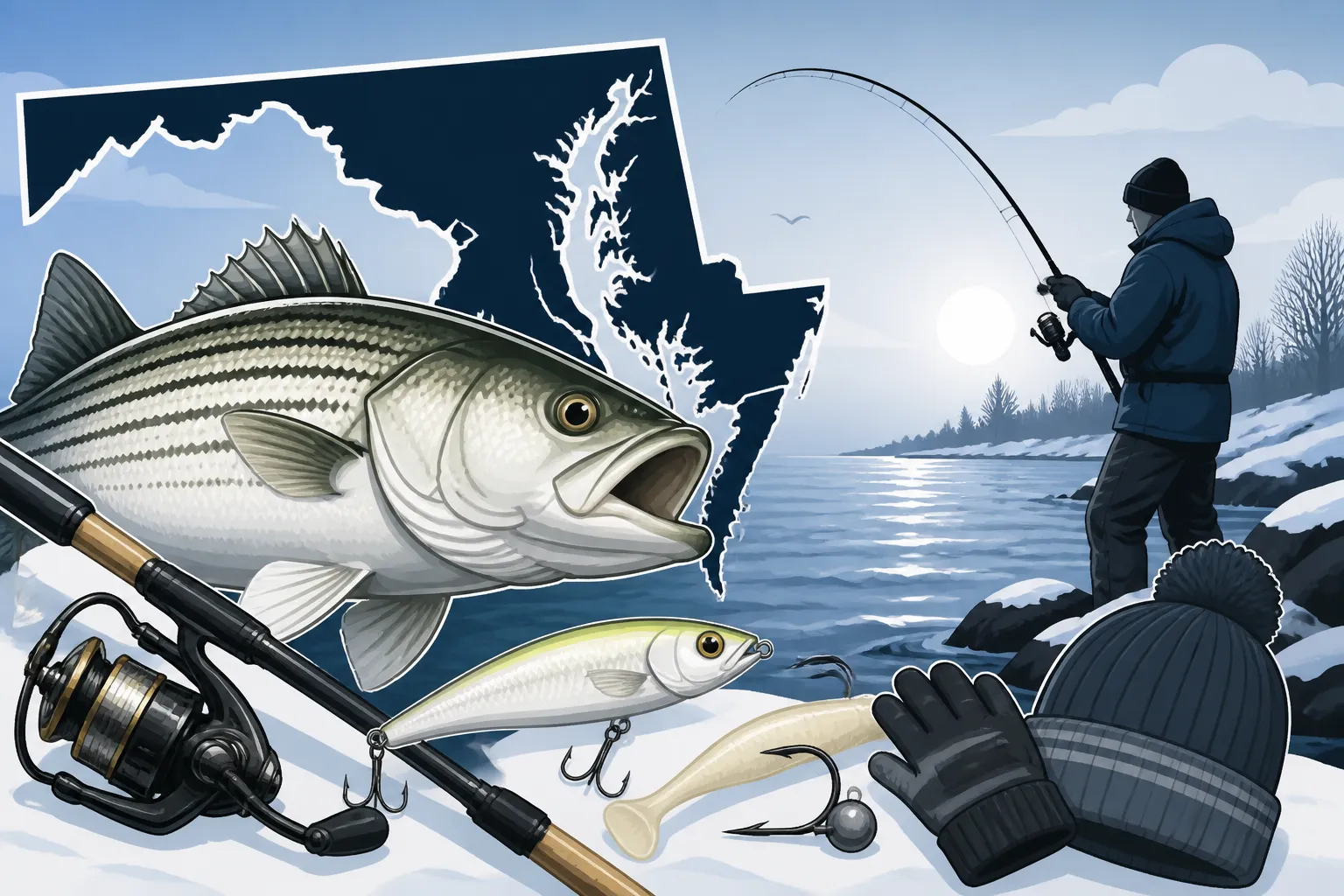
- Jigging Lures: Vertical jigging is incredibly effective in winter when fish are holding deep. Metal jigs like diamond jigs, often in silver, chartreuse, or white, are classics. Weight will depend on current and depth, but having a range from 1 to 4 ounces is smart. Work them slowly, jigging them just off the bottom, then letting them flutter down. Pairing them with soft plastic "stingers" or twister tails can add extra appeal. Soft plastic paddle tails, typically 4-6 inches, rigged on a heavy jig head (3/4 to 2 ounces) are also deadly. Colors like white, chartreuse, pearl, and darker natural patterns (like "opening night" or "motor oil" for baitfish imitations) often perform well in the clearer winter water. Remember, the presentation is key: a slow, methodical retrieve or subtle jigging motion is usually better than an aggressive retrieve. For more details on effective choices, check out Best Lure Colors for Jigging Chesapeake Bay Rockfish.
- Suspended Baits: Sometimes striped bass will suspend in the water column. In these situations, suspending jerkbaits or lipless crankbaits can be very effective. These lures can be cast out, retrieved slowly with pauses, and allowed to suspend at a certain depth, mimicking a struggling baitfish. These are especially useful around docks, bridge pilings (like the Bay Bridge), or rock structures where fish might be holding.
- Live Bait/Cut Bait: When all else fails, or if you're targeting truly lethargic fish, live or fresh cut bait can be unbeatable. Pieces of fresh alewife, bunker, or even a whole live spot can be fished on a bottom rig or a fish-finder rig. This method requires patience but often yields larger, less aggressive fish. You'll need appropriate hooks and sinkers to hold your bait near the bottom where the fish are likely to be.
Critical Terminal Tackle Considerations
Your terminal tackle is the unsung hero of your setup. In winter, every component needs to be robust and reliable.
- Hooks: Use strong, sharp, corrosion-resistant hooks. Circle hooks are mandatory in many Maryland tidal waters for striped bass, especially if you're live-lining or chunking bait, as they greatly reduce gut-hooking and improve catch-and-release survival. For jigs, ensure your jig heads have quality hooks that can withstand a strong fight.
- Leaders: As mentioned, fluorocarbon leaders are essential. They offer invisibility and excellent abrasion resistance against sharp teeth or rough structures. A 30-50 lb test fluorocarbon leader, about 3-5 feet long, is a good starting point. Tie it to your main braided line with a strong knot like an FG knot or a double uni knot.
- Swivels and Snaps: Use high-quality, corrosion-resistant barrel swivels or ball bearing swivels to prevent line twist, especially when using jigging lures that spin or trolling. Snaps allow for quick lure changes, which is beneficial when your fingers are cold. Make sure they are rated for the breaking strength of your line and leader.
- Weights/Sinkers: Have a good assortment of sinkers on hand, from ½ ounce up to 4 ounces or more, depending on the depth and current you're fishing. Bank sinkers and pyramid sinkers are common for bottom fishing, while dart heads are typical for jigging soft plastics. Knowing How Deep to Jig for Striped Bass in the Bay will help you choose the correct weight.
Winter Striped Bass Gear Checklist
| Gear Category | Key Winter Considerations | Recommended Specifications |
|---|---|---|
| Rods | Sensitivity for light bites, strong backbone, large guides | Medium-Heavy to Heavy, 6'6" – 7'6" (spinning/casting) or 7'-8' (trolling), Fast/Extra-Fast Action |
| Reels | Corrosion-resistant, sealed drag, smooth operation in cold | Saltwater-specific, 4000-6000 series (spinning) or 20-30 (conventional), sealed bearings |
| Main Line | Zero stretch for sensitivity, resistant to freezing | 20-40 lb Braided line (with conditioner or mono/fluoro top shot) |
| Leader | Abrasion resistance, invisibility | 30-50 lb Fluorocarbon, 3-5 ft length |
| Lures (Jigging) | Slow presentation, deep water, flutter action | 1-4 oz Metal Jigs (diamond jigs), 4-6" Soft Plastic Paddle Tails (heavy jig heads) |
| Lures (Other) | Suspended action, natural forage imitation | Suspending Jerkbaits, Lipless Crankbaits, Live/Cut Bait |
| Terminal Tackle | Strong, sharp, corrosion-resistant, mandatory circle hooks | Quality Hooks (circle hooks for bait), Barrel/Ball Bearing Swivels, Snaps, Assorted Sinkers |
| Clothing (Layers) | Warmth, dryness, breathability, wind/waterproof | Thermal Base Layers, Fleece Mid-Layers, Waterproof/Windproof Outer Shell |
| Hand Protection | Warmth, dexterity, waterproof | Neoprene gloves, fingerless gloves with mitts, hand warmers |
| Footwear | Insulated, waterproof, good grip | Insulated waterproof boots (e.g., neoprene waders for boat/shore) |
| Headwear | Retains body heat | Insulated beanie, balaclava |
| Safety Gear | Flotation, communication, first aid, emergency | PFDs (worn!), marine radio, fully charged phone, first aid kit, spare clothes |
Dressing for Success: Staying Warm and Safe
The most critical piece of "gear" for winter fishing isn't a rod or a reel; it's your personal attire. You can't fish effectively if you're shivering uncontrollably. Staying warm and dry is paramount, not just for comfort, but for your safety.
Layering for Extreme Cold
The key to staying warm in cold weather is layering. This allows you to adjust your insulation as conditions change or as your activity level fluctuates.
- Base Layer: Start with a moisture-wicking base layer. This is crucial because it pulls sweat away from your skin, keeping you dry. Wet skin, even from sweat, leads to rapid heat loss. Look for synthetic materials like polypropylene or merino wool, which retain insulating properties even when damp. Avoid cotton directly against your skin, as it absorbs moisture and stays wet. You can find excellent options for thermal base layers on Amazon.
- Mid-Layer: The mid-layer provides insulation. Fleece jackets, wool sweaters, or insulated vests are excellent choices. Depending on how cold it is, you might opt for one or even two mid-layers. These trap warm air close to your body, creating a thermal barrier.
- Outer Shell: Your outermost layer needs to be completely waterproof and windproof. This protects you from rain, snow, spray, and biting winds. A good quality fishing bib and jacket or a heavy-duty cold-weather flotation suit is highly recommended. These suits are often insulated and provide an extra layer of warmth, along with the added safety benefit of built-in flotation. Look for suits with sealed seams and adjustable cuffs to keep water out. Remember, wind chill can make a 30-degree day feel like 15 degrees, so a windproof outer layer is non-negotiable.
Footwear and Hand Protection
These often-overlooked areas are where heat loss is most significant and where discomfort can quickly set in.
- Footwear: Your feet need to stay warm and dry. Invest in insulated, waterproof boots, preferably rated for sub-zero temperatures. Neoprene boots or boots with thick rubber soles and insulated liners are excellent. Wear thick wool or synthetic blend socks (again, avoid cotton!) underneath. Some anglers even use chemical foot warmers for extra comfort. If you're fishing from a boat, particularly a smaller vessel, consider insulated neoprene waders for added protection against splashes and cold deck surfaces.
- Hand Protection: This is perhaps the trickiest part because you need warmth and dexterity. No one wants to fumble with knots or small lures with numb fingers. A multi-pronged approach is best:
- Thin Liner Gloves: Wear thin, moisture-wicking gloves as a base layer.
- Insulated Waterproof Gloves: Over your liner gloves, wear a pair of insulated, waterproof fishing gloves. Neoprene gloves or those with waterproof membranes are popular. Some designs feature fold-back fingertips for tying knots, though these can still be cold.
- Hand Warmers: Chemical hand warmers are a lifesaver. Keep a few in your pockets or inside your gloves.
- Mitts: Consider a pair of insulated mittens that you can slip your gloved hands into when not actively fishing. These offer superior warmth compared to gloves alone.
Safety Gear You Can't Afford to Skip
Winter fishing, especially on open water like the Chesapeake Bay, carries inherent risks that are amplified by the cold. Ice-cold water can incapacitate you in minutes, making safety gear absolutely essential.
- Personal Flotation Device (PFD): Wear a Coast Guard-approved PFD, or life jacket, at all times when on the water. In cold water, a PFD is not just about staying afloat; it buys you precious time before hypothermia sets in. Inflatable PFDs are less bulky and more comfortable, encouraging continuous wear.
- Communication Devices: Always carry a fully charged cell phone in a waterproof case, and ideally, a marine VHF radio. Cell service can be spotty on the water, so a radio offers a more reliable way to call for help. Let someone know where you're going and when you expect to return.
- Emergency Kit: A small dry bag with spare, dry clothing (including socks and gloves), a first aid kit, a flashlight, and a whistle should always be on board. A thermal blanket can also be a literal lifesaver.
- Spare Fuel: Ensure you have enough fuel, plus a reserve. You don't want to be stranded on the water in winter.
- Buddy System: Never fish alone in winter if possible. An extra set of hands can be crucial in an emergency.
- Check the Forecast: Pay close attention to marine forecasts, especially wind and wave conditions. Winter squalls can appear suddenly, and the cold water makes capsizing far more dangerous. If the forecast looks iffy, it’s always best to err on the side of caution. Staying safe Kayak Fishing Safety Tips for Maryland's Chesapeake Bay apply to boaters too, especially in winter.
By equipping yourself with the right gear, from sensitive rods and reliable reels to appropriate clothing and essential safety equipment, you can transform a potentially miserable winter fishing trip into a truly memorable and productive adventure on Maryland's waters. The fish are there, but catching them means being prepared for the conditions Mother Nature throws your way.
Disclaimer
This article is for general informational purposes only and does not constitute professional advice. Laws, prices and regulations vary by location and change over time. Consult a qualified professional for guidance on your specific situation.